

The best barfussbalance.de alternatives for barefoot shoes 2026
Which alternatives to barfussbalance.de are genuinely recommendable?
Those looking to buy barefoot shoes in Germany will find a range of verified brands and retailers besides barfussbalance.de, which are at least equivalent in quality, selection, and service. The strongest alternatives come from Vivobarefoot, Leguano, Xero Shoes, Vibram FiveFingers, Groundies, and Wildling. For children, Affenzahn, Froddo, and Ebmini are particularly well-suited.
| Brand / Model | Best for | Material Quality | Sole Flexibility | Availability in Germany |
|---|---|---|---|---|
| Vivobarefoot Primus Lite III | Everyday, Sustainability | Recycled materials | Very thin, very flexible | Direct + Retailers |
| Leguano aktiv | Everyday, Sport, Leisure | Synthetic, lightweight | Extremely flexible | Direct + Specialist retailers |
| Xero Shoes Mesa Trail | Outdoor, Trail running | Synthetic/Mesh | Thin, grippy | Direct + Online |
| Vibram FiveFingers Trail 2.0 | Sport, Trail running | Rubber/Textile | Maximally flexible | Direct + Retailers |
| Groundies Milano | Everyday, Business | Leather/Synthetic | Medium, flexible | Direct + Specialist retailers |
| Merrell Vapor Glove 3 Luna Leather | Outdoor, Sport | Leather | Thin, stable | Direct + Retailers |
| Wildling Barefoot Shoes | Everyday, Children | Natural fabrics | Very flexible | Direct |
| Affenzahn Barefoot Shoes | Children, Everyday | Textile/Leather | Flexible | Direct + Specialist retailers |
| Froddo (Children) | Children, Everyday | Leather | Flexible | Direct + Retailers |
| ZAQQ Barefoot Shoes | Everyday, Comfort | Handmade, Leather | Flexible | Direct |
| Joe Nimble Sneaker | Everyday, Foot health | Leather/Synthetic | Medium | Direct + Specialist retailers |
| SAGUARO Barefoot Shoes | Everyday, Outdoor | Synthetic | Thin, flexible | Online |
| Meindl Pure Freedom | Hiking, Outdoor | Leather | Medium | Specialist retailers |
The most important selection criteria at a glance:
- Wide toe box: Toes must be able to splay freely without pressure from the sides.
- Zero drop: Heel and forefoot at the same height, no heel lift.
- Thin, flexible sole: The less cushioning, the more ground feel and muscle activation.
- Material quality: Breathable, non-toxic materials protect skin and environment.
- Availability: Direct purchase from the manufacturer or through specialized retailers in Germany.
Detailed comparison of the most popular barefoot shoe brands in Germany
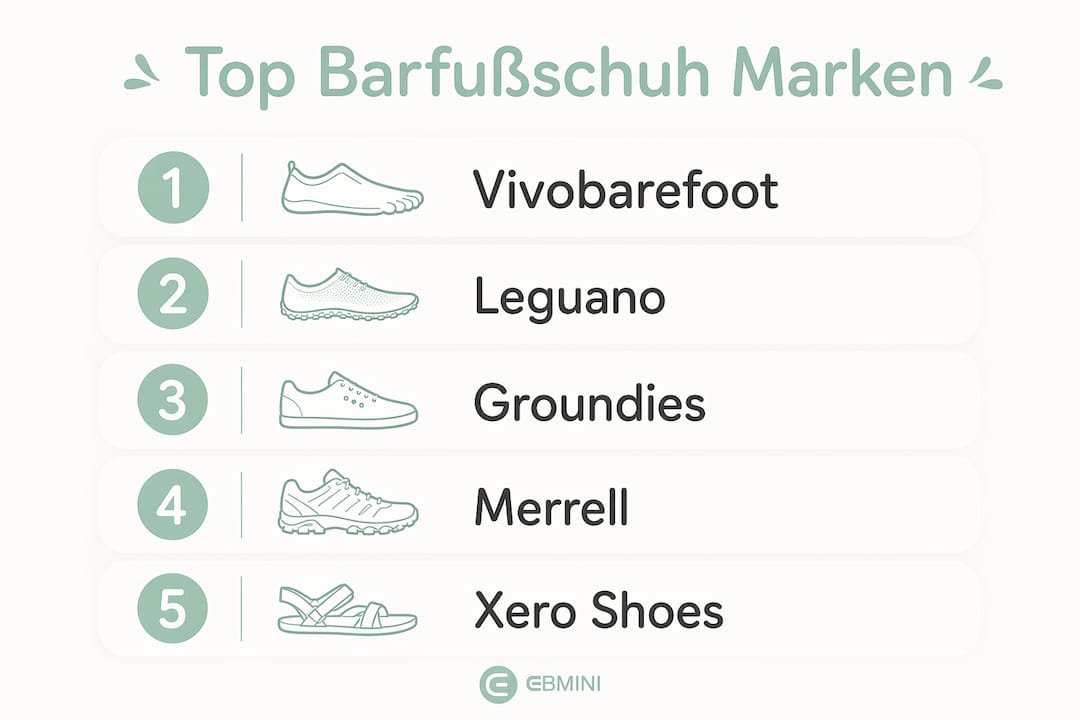
According to the CHIP test 2026, Leguano aktiv, Merrell Vapor Glove 3 Luna Leather, Vivobarefoot Primus Lite III, Vibram FiveFingers Trail 2.0, Groundies Milano, WHITIN Canvas, SAGUARO Barefoot Shoes, and Joe Nimble Sneaker are among the most recommended models on the German market.
Vivobarefoot
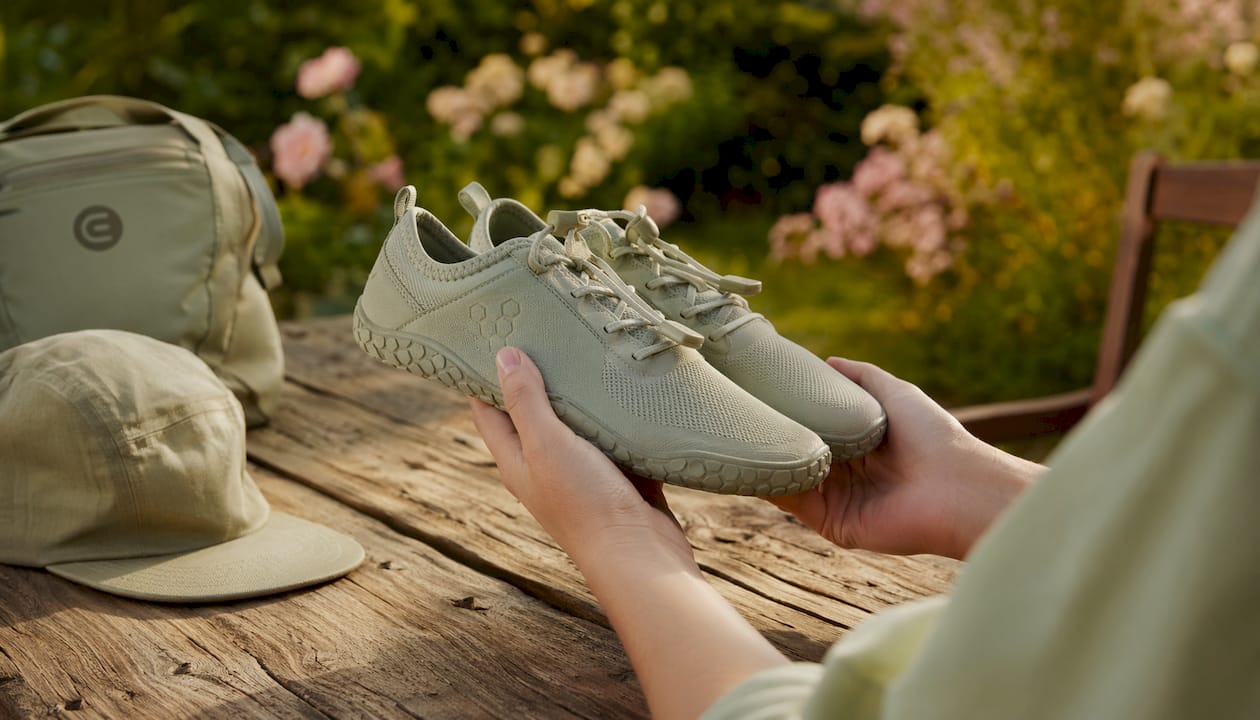
Vivobarefoot is probably the best-known brand for genuine barefoot shoes worldwide. The Primus Lite III impresses with recycled materials, a sole thickness of just 3 mm, and a fit that accommodates wide feet. For those needing more traction, the Gobi II is available for urban terrain or the Tracker II Firm Ground for demanding outdoor environments. All three models are available in Germany directly through the Vivobarefoot webshop.
Leguano
Leguano is a German brand and thus particularly well-established in its home market. The Leguano aktiv is considered a classic: lightweight, with a wide toe box and a sole that feels like a second skin. The Leguano Scio is suitable for warm months thanks to its air-permeable material, while the Leguano Husky is designed for wet weather with water-repellent features. For those who prefer a German manufacturer and value direct customer contact, this is a good choice.
Xero Shoes
Xero Shoes has made a name for itself primarily in the trail running segment. The Xero Shoes Mesa Trail offers a grippy sole that holds reliably on roots and gravel, while being very lightweight. The brand ships to Germany and offers a wide range of models from sandals to closed everyday shoes.
Vibram FiveFingers
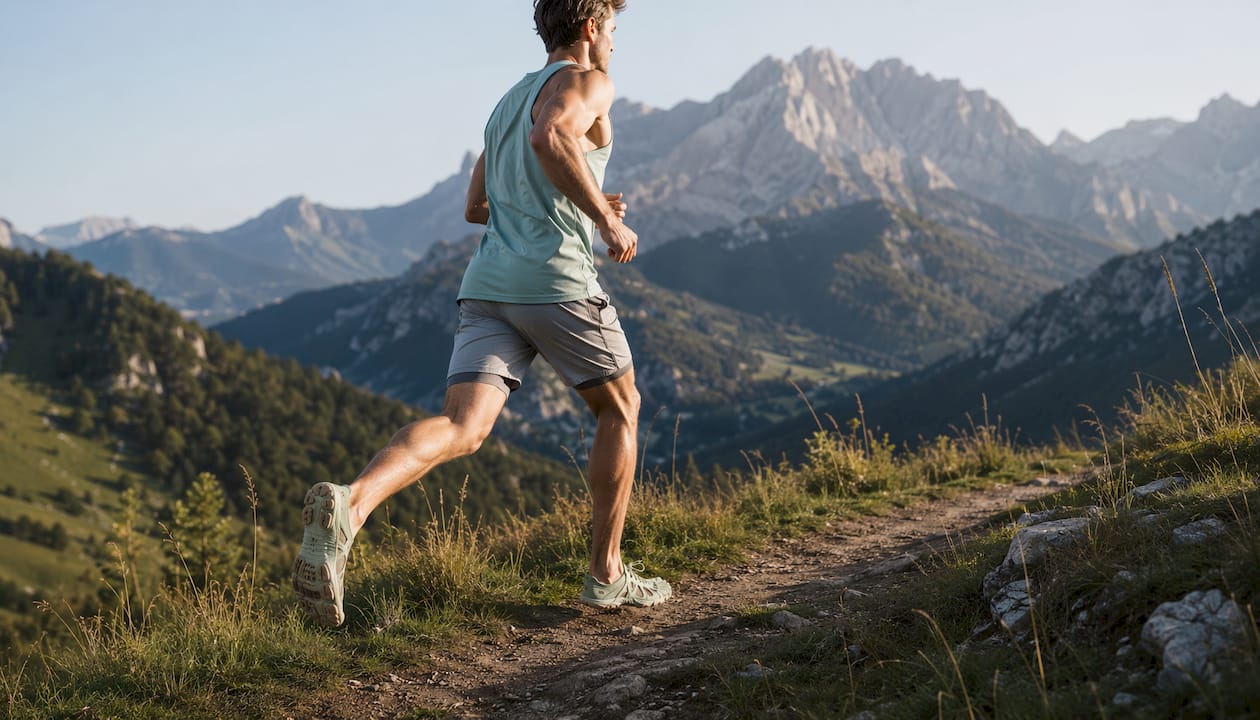
Vibram FiveFingers is polarizing. The toe design takes some getting used to, but once you run in them, you appreciate the unparalleled ground feel. The Trail 2.0 is made for off-road use, the KSO EVO for fitness and everyday wear. Both models are available in Germany via the Vibram webshop and selected sports retailers.
Groundies
Groundies fills a gap left by many other barefoot shoe brands: stylish models for the office and city. The Groundies Milano looks like a normal sneaker but has a wide toe box and a non-slip sole. For anyone who wants to wear barefoot shoes not as sports equipment but as everyday footwear, this is one of the few truly convincing options.
Merrell
The Merrell Vapor Glove 3 Luna Leather is made from genuine leather, offering durability that many synthetic models cannot match. The zero-drop and thin sole make it a true barefoot shoe. Merrell is available through many sports retailers in Germany, which simplifies returns and exchanges.
Further models at a glance
WHITIN Canvas and SAGUARO Barefoot Shoes are more affordable entry-level options, available in Germany via Amazon and other online platforms. Both have a flexible sole and sufficient toe room, but due to their materials, they don't match the quality of Vivobarefoot or Leguano. For those who want to try barefoot shoes without a large investment, these offer a sensible starting point.
IceUnicorn Barefoot Shoes and HOBIBEAR cater to a similar price segment with modern designs. Both are primarily available through online marketplaces.
Lems Shoes is from the USA but can be ordered in Germany. The models are particularly lightweight and have a wide fit, suitable for beginners.
BÄR Schuhe stands for traditional craftsmanship and anatomically shaped lasts. Those who value German manufacturing and durable materials will find a niche offering with a loyal following here.
Magical Shoes and Koel Shoes supplement the range in children's and sandal categories. Magical Shoes specializes in child-friendly fits, while Koel focuses on barefoot sandals with classic strap designs.
ZAQQ Barefoot Shoes are handcrafted and target buyers who appreciate artisanal quality. The models are available in Germany directly via the ZAQQ webshop.
Joe Nimble relies on patented fit technology with an extra wide toe box and zero drop. The Joe Nimble Sneaker is designed for everyday wear and is also suitable for people with foot problems.
Meindl Pure Freedom is the outlier on this list: a hiking boot with barefoot principles from an established German manufacturer. For anyone who wants ground feel on long treks without sacrificing protection.
Pro-Tip: If you are torn between two brands, you should first check if a local brick-and-mortar retailer carries the models. A short trial run in the store saves a lot of hassle with returns.
How to find the right barefoot shoe alternative for your needs
Choosing the right barefoot shoe depends on a few crucial factors. Knowing these will lead to a better decision than being guided by aesthetics or brand names.
Fit and toe freedom: The shoe must be wide enough at the front for all toes to lie flat and splay easily. A narrow toe area completely negates the advantage of a barefoot shoe.
Sole thickness: True barefoot shoes have very thin soles. Compromise models with slightly thicker soles are a good starting point, but offer less ground sensory feedback. Those transitioning from conventional shoes should not immediately start with the thinnest sole.
Area of use: Trail running requires tread and grip, office wear calls for an understated design, and children's shoes primarily need flexibility and light weight. No single model is equally good for all situations.
Size selection: Barefoot shoes should be chosen half to one size larger than regular street shoes. The rule of thumb is: a thumb's width of space in front of the toes.
Sustainability: Brands like Vivobarefoot and Naturcontact focus on vegan materials, recycled components, and non-toxic adhesives. If this is important to you, you should specifically look for these certifications.
Special considerations for children's shoes: For children, sole flexibility is even more important than for adults. Their feet are growing and need maximum freedom of movement. Wide toe boxes, zero drop, and flexible material are not extras for children's shoes, but rather basic requirements.
Common buying mistakes:
- Buying models that are too tight because they "will break in" (they won't).
- Starting immediately with the thinnest sole without planning for an adjustment period.
- Prioritizing appearance over fit.
- Choosing children's shoes based on adult criteria.
Where to buy barefoot shoes in Germany? Online shops and retailers at a glance
Direct purchase from the manufacturer is the first choice for most barefoot shoe brands. Vivobarefoot, Leguano, Xero Shoes, Groundies, ZAQQ, and Wildling operate their own webshops with size advice, detailed product information, and often generous return policies. Those unsure if a model fits benefit from this direct purchase option.
Specialized online retailers like barfuss-shop.de or barfussschuhe-entdecken.de consolidate several brands under one roof and offer comparison options. This is practical if you don't yet have a strong brand preference. Barfussparadies.de is another example of a German provider with its own assortment and free shipping within Germany.
Brick-and-mortar specialist retailers for barefoot shoes are rarer than for conventional shoes. Orthopedic shoemakers and specialized running stores often carry Leguano, Merrell, or BÄR shoes. If you want to buy Meindl Pure Freedom, you'll almost exclusively find that model in mountain sports retailers.
Amazon and other marketplaces are the most common sources for entry-level brands such as SAGUARO, WHITIN, IceUnicorn, and HOBIBEAR. The advantage: fast delivery and easy returns. The disadvantage: no expert advice and sometimes unclear size information.
Customer service and return policies: What differentiates the providers
When buying barefoot shoes, customer service is more important than with regular shoes. Because fit and acclimatization take time, generous return periods are not a luxury, but a real buying aid.
Vivobarefoot offers a 100-day return period, which is exceptional in the market. So, if you realize after four weeks that a model doesn't fit, you can still return it. Leguano and Groundies operate with the legal minimum standard of 14 days, but according to customer experiences, often offer accommodating solutions for fit issues.
ZAQQ and Wildling score points with personal customer service. Both brands are small enough to address individual inquiries. If you have questions about fit or size, you often get a direct answer, not an automated email.
Marketplace purchases on Amazon go through Amazon's return system, which works reliably but does not offer expert advice. In case of size or quality problems, returns are uncomplicated, but no one explains which model would have fit better.
Pro-Tip: Before buying, it's worth checking the return policy of the respective provider. Especially with barefoot shoes, which require an adjustment period, a period of at least 30 days is advisable.
Delivery times and availability from various providers
German manufacturers like Leguano usually deliver within two to four business days. Vivobarefoot and Xero Shoes ship from European warehouses, limiting delivery time to three to five business days. Wildling and ZAQQ are smaller manufacturers, where it can sometimes take a week, depending on stock levels.
For models sold via Amazon, Prime delivery applies: often next-day. This applies to SAGUARO, WHITIN, IceUnicorn, and HOBIBEAR. If you need shoes quickly, that's the fastest option.
Meindl Pure Freedom is available in specialized mountain sports stores, but online often only by order. If you want to try the model, you should look for a retailer nearby.
Koel Shoes and Magical Shoes ship to Germany but do not have German warehouses. Delivery times of five to ten business days are realistic here.
Warranty and sustainability: What the brands promise
Sustainability is no longer a marginal issue for barefoot shoes. Vivobarefoot has publicly committed to climate goals and uses recycled PET bottles as upper material. Vegan materials, recycled components, and REACH-compliant adhesives are now standard for several brands, not exceptions.
ZAQQ produces in small quantities with a focus on craftsmanship. This means longer durability and less of a throwaway mentality. Wildling sources materials from certified origins and transparently communicates its supply chain on its website.
Leguano offers a two-year warranty on its shoes, which corresponds to the legal standard. Vivobarefoot and Xero Shoes handle this similarly. In the event of defects attributable to manufacturing, most direct suppliers are accommodating.
For parents buying children's shoes, sustainability is often doubly relevant: once for the environment, and once because non-toxic materials are directly on children's feet. Brands like Affenzahn and Froddo have corresponding certifications and communicate them openly.
What other buyers report: Experiences with the alternatives
Customer reviews show a clear pattern: those who take the adjustment period seriously are satisfied in the long run. Those who immediately start with long runs or full workdays complain about sore calf muscles and foot arches. This is not a product defect but a physiological reaction to unaccustomed strain.
Vivobarefoot buyers praise the fit and material quality, but occasionally criticize the price. Leguano users appreciate the easy care and everyday usability. Groundies regularly receives praise for its design, which doesn't stand out in an office environment.
Reviews for SAGUARO and WHITIN are more mixed. Many buyers are satisfied given the price, but report faster wear and tear than with more expensive brands. This is honest and consistent with what can be expected for the price.
Wildling has built a particularly loyal community. Parents recommend the brand because the shoes still look good even after intensive use by children. Affenzahn and Froddo receive similar feedback in the children's segment.
What Experts and Orthopedists Say About Barefoot Shoes, Especially for Children
Orthopedists generally recommend barefoot shoes for people without existing foot problems. For hallux valgus, flat feet, or other deformities, the transition should be slow and ideally accompanied by professional guidance. Barefoot shoes train foot muscles and can prevent deformities, but they are not a panacea.
For children, the earlier, the better. Children's feet are still malleable, and a shoe with a wide toe box and flexible sole actively supports natural development. A narrow shoe, on the other hand, can permanently affect toe alignment.
Important quality features for children's shoes:
- Wide toe box that allows toes to splay.
- Zero drop, meaning no heel elevation.
- Sole that can be easily bent by hand.
- Lightweight, so the child doesn't tire.
- Pollutant-free materials, tested according to REACH or comparable standards.
| Criterion | Why it's important |
|---|---|
| Wide toe box | Prevents toe compression and promotes natural foot position |
| Zero drop | Even weight distribution from heel to forefoot |
| Sole flexibility | Allows natural rolling motion and muscle activation |
| Weight | Lightweight shoes tire children less |
| Material certification | Protection against harmful substances directly on the child's foot |
Froddo has proven support for foot development and corresponding certifications. Affenzahn combines playful design with foot-healthy properties. For children's barefoot shoes, a toe box, zero drop, and flexible material are not optional features, but the foundation of a healthy shoe.
Those who want to accustom their child to barefoot shoes should proceed gradually: first short wearing times, then longer ones. More on this can be found in the Transition Guide.
Ebmini: Children's Barefoot Shoes for Healthy Feet from the Start
If you're looking for a barefoot shoe for your child that meets all foot-healthy criteria and is also suitable for everyday use, you should get to know Ebmini.
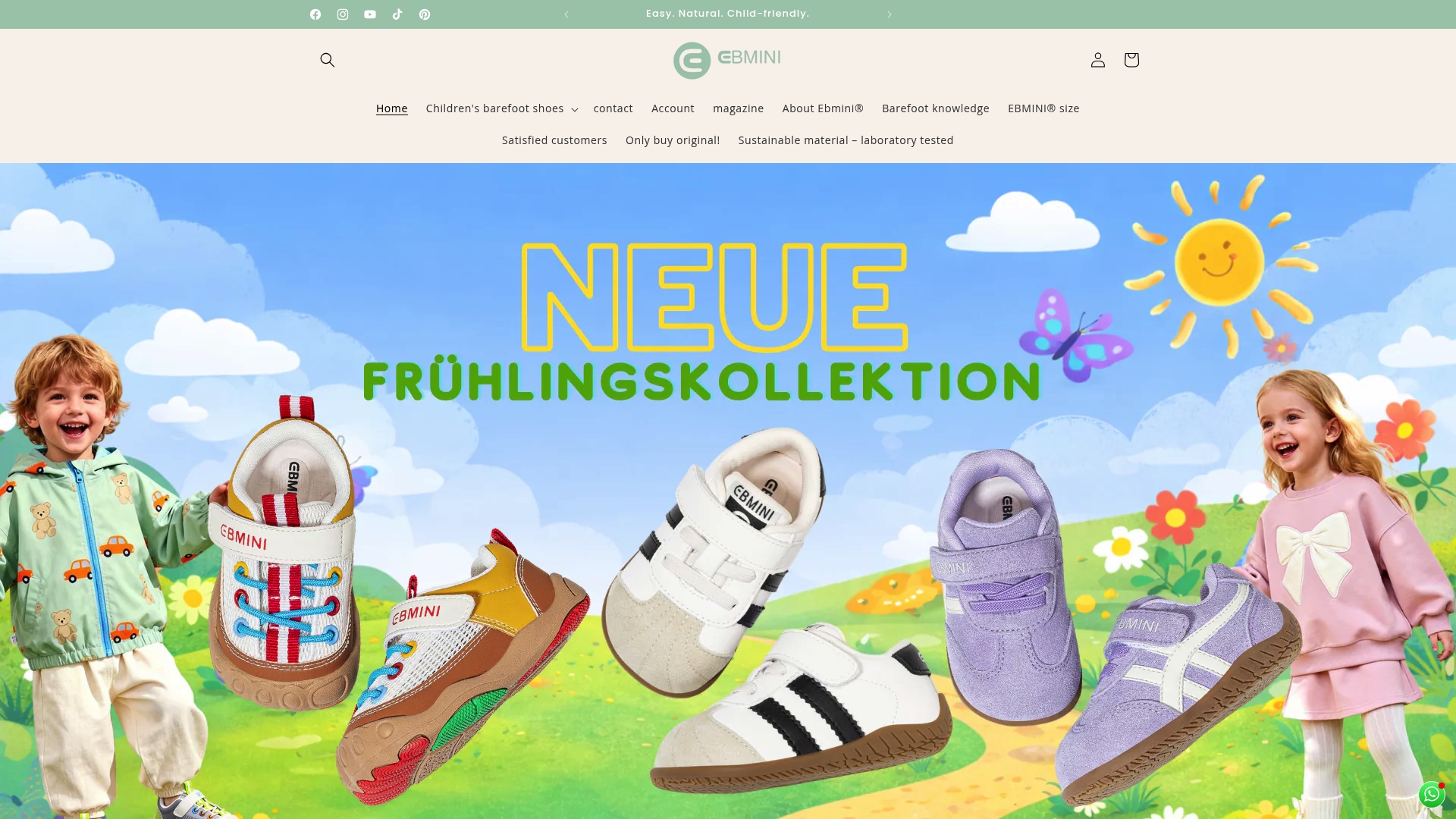
Ebmini specializes in children's barefoot shoes that are ultra-light, flexible, and waterproof. The models have a wide toe box, zero drop, and non-slip soles. The range includes all-weather models for year-round use as well as lightweight variants for spring and summer. All shoes are designed for natural foot development and are suitable for children who play outdoors a lot.
The children's barefoot shoe collection offers a wide selection for different age groups and uses. If you are specifically looking for summer, you will find lightweight models with the same foot-healthy properties in the children's barefoot sandals.
Key Takeaways
The best barefoot shoe alternative to barfussbalance.de depends on the application: For everyday use and sustainability, Vivobarefoot leads; for children, Affenzahn, Froddo, and Ebmini are the strongest options.
| Topic | Details |
|---|---|
| Best everyday brands | Vivobarefoot, Leguano, and Groundies offer the strongest combination of quality and everyday suitability. |
| Children's shoes | Wide toe box, zero drop, and flexible sole are mandatory; Affenzahn, Froddo, and Ebmini meet all three criteria. |
| Size selection | Choose half to one size larger than usual, with a thumb's width of space in front of the toes. |
| Sustainability | Vivobarefoot, Wildling, and ZAQQ communicate material origins and production conditions transparently. |
| Ebmini for children | Ebmini offers ultra-light, waterproof children's barefoot shoes with a wide toe box and zero drop for year-round use. |
What Really Matters When Buying and What the Market Often Conceals
The barefoot shoe market has boomed in recent years. And with the boom came models that, while bearing "barefoot shoe" in their name, have neither zero drop nor a truly flexible sole. This is not a marginal phenomenon.
Those who want to buy a real barefoot shoe should not be swayed by marketing terms like "minimalist shoe" or "ergonomic." The decisive characteristics are measurable: sole thickness, drop in millimeters, toe box width. Brands that openly communicate these values are more trustworthy than those that only use feel-good terms.
Another point that is often underestimated: the break-in period. Anyone who has worn cushioned shoes for years has weakened foot muscles. This is not a criticism, but a fact. The switch to real barefoot shoes takes weeks, sometimes months. Ignoring this risks overuse injuries to the Achilles tendon and plantar fascia.
For children, the opposite is true: their feet are not yet shaped by years of wearing incorrect shoes. A good barefoot shoe from the start is the best investment in foot health. Brands like Froddo, Affenzahn, and Ebmini have understood this and offer models that are truly child-friendly, not just visually.
My advice for anyone who is unsure: start with a mid-range model that has a slightly thicker, but flexible sole. SAGUARO or Lems Shoes are good entry points. If you find that the concept works, you can then switch to Vivobarefoot or Leguano.


