

Barefoot Shoes During the Transitional Period: What Parents Should Look Out For
Many parents think that barefoot shoes for children are just normal shoes, only flatter. However, the misconception that you simply buy and put on the shoes often leads to frustration, because the child complains or the hoped-for benefits do not materialize. When it comes to barefoot shoes for the transition period, what to look out for, it's about much more than just the right size. It's about fit, acclimatization, materials, and understanding what these shoes can do. This article provides you with sound knowledge to ensure a successful transition and truly benefit your child's foot development.
Table of Contents
- Key Insights
- What Defines Barefoot Shoes
- Selection Criteria for Transitional Barefoot Shoes
- Step-by-Step Acclimatization
- Models and Applications Compared
- My Experience from Consulting and Everyday Life
- Discover Barefoot Shoes for Children at Ebmini
- FAQ
Key Insights
| Point | Details |
|---|---|
| Know the features | Barefoot shoes need a wide toe box, thin sole, and zero drop to truly be effective. |
| Check the fit | Measure feet every eight to twelve weeks and plan for a growth reserve of 0.8 to 1.2 cm. |
| Acclimatize slowly | Gradually increase wear time over the first few weeks to avoid pain and overuse. |
| Plan barefoot phases | Barefoot shoes complement barefoot walking but do not replace it for optimal foot development. |
| Choose model for the occasion | For changeable weather, choose waterproof models with lining; for everyday wear, light sneakers. |
What Defines Barefoot Shoes
Barefoot shoes are not a fashion trend. They follow a clear principle: the foot should move as naturally as possible, even when a shoe protects it. The three central features are a wide toe box, a flexible and thin sole, and a zero drop, meaning no height difference between the heel and forefoot.
This construction directly influences the foot muscles. A shoe with thick cushioning and a raised heel takes over much of the stabilizing work that the small muscles in the foot should be doing. A barefoot shoe returns this task to the foot. This sounds simple but has noticeable consequences for development.
Important: Barefoot shoes are not a panacea, but a valuable tool for healthy foot development and muscle strengthening. They only work if the child is truly active. A child who sits half the day will hardly benefit. Barefoot shoes unleash their benefits when walking, climbing, and playing on different surfaces.
What to look out for in materials:
- Breathability: Feet sweat, especially in active children. Materials like mesh or high-quality leather allow air to pass through.
- Absence of harmful substances: Quality seals like OEKO-TEX Standard 100 show that no harmful substances have been used.
- Weight: The lighter the shoe, the less self-weight the child has to lift when walking. This protects muscles and joints.
- Flexibility: A good barefoot shoe can be easily rolled up. If it remains stiff, it is too inflexible.
Pro-tip: Place the shoe on a flat surface and press the toe towards the heel. It should bend without much resistance. If it doesn't, the sole is too stiff for a true barefoot feel.
For children with foot deformities, a specialist orthopedist should always be consulted before making the switch. This is no cause for concern, but an important step.
Selection Criteria for Transitional Barefoot Shoes
When buying barefoot shoes for children, parents encounter a confusing variety. Here are the criteria that really matter, clear and in the correct order.
Fit and Size
Children's feet grow quickly, so measuring should be repeated every eight to twelve weeks. The recommended growth reserve is 0.8 to 1.2 cm. Too little space harms toe growth. Too much space causes the child to slide in the shoe, which is particularly problematic with barefoot models without a firm heel counter.
Always measure the foot in the afternoon, as it will be slightly swollen from movement and warmth then. Have the child stand upright when measuring. This will give you the most realistic value.
Sole and Ground Contact
The sole is the heart of a barefoot shoe. It should protect, but restrict as little as possible. The following table shows the difference to conventional shoes at a glance:
| Feature | Conventional Children's Shoe | Barefoot Shoe |
|---|---|---|
| Sole thickness | 8 to 15 mm | 3 to 6 mm |
| Heel elevation | 8 to 20 mm | 0 mm (Zero Drop) |
| Toe box | narrow to medium | wide, anatomical |
| Flexibility | low to medium | very high |
| Weight | 150 to 300 g | 80 to 180 g |
A thin sole allows the child to feel the ground. This improves perception and trains balance.
Toe Box and Forefoot Fit
The toe box is the front part of the shoe. It must be wide enough for the toes to spread naturally. Many conventional shoes force the toes together, which restricts development in the long run. Parents who opt for barefoot shoes particularly value this toe freedom.
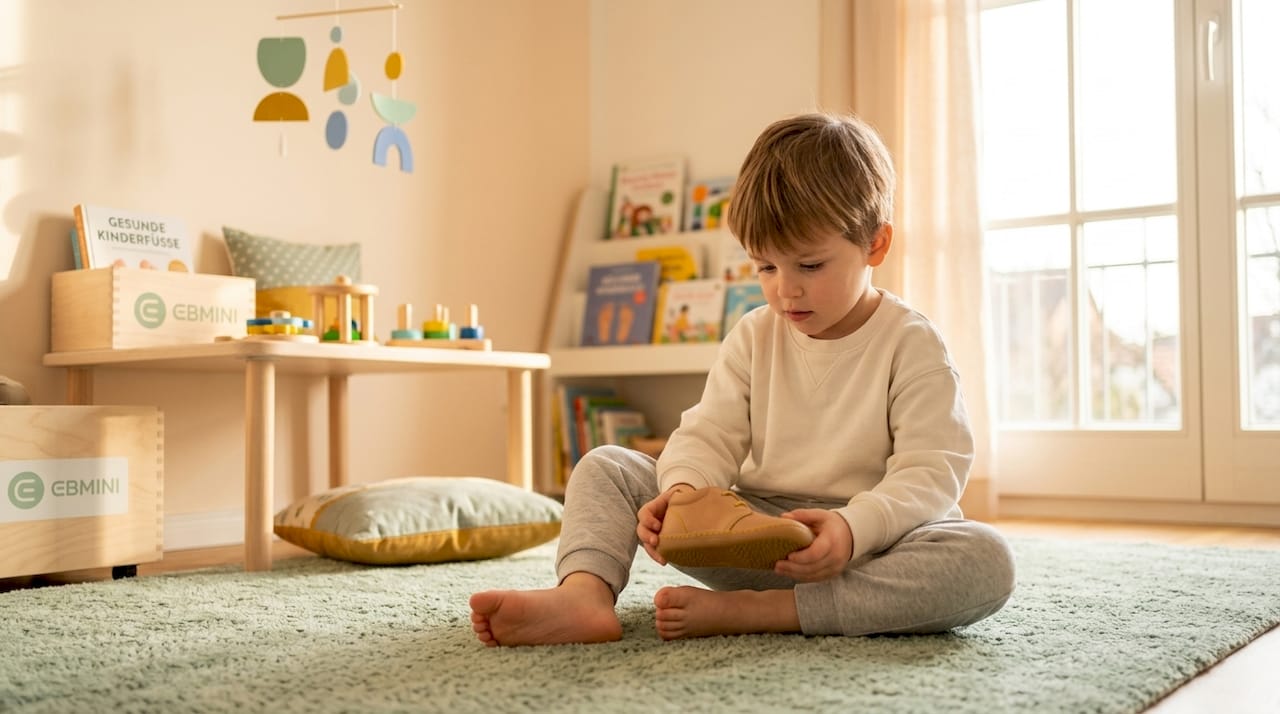
Look at the shoe from above. The silhouette should resemble the shape of a human foot, not a pointed shoe.
Pro-tip: Have your child stand on a white sheet of paper and trace their foot outline. Then place the shoe sole next to it. The sole should be at least a few millimeters wider on all sides than the outline.
- Closure system: Velcro fasteners are easy for small children to use. Laces offer more adjustability but are less suitable for toddlers.
- Seasonal material: For damp and cool transitional days, water-repellent outer materials are needed. For warm days, light mesh is sufficient.
- Non-slip sole: Especially important on smooth indoor floors, as the thin sole offers less grip than a thick tread sole.
Typical mistakes when buying: buying shoes that are too small because they are cheap; buying shoes that are too big so they last longer; choosing models that are called "barefoot shoes" but have stiff soles.
Step-by-Step Acclimatization
The most common mistake during the transition is to ask too much too quickly. Children who have worn cushioned shoes for years have foot muscles that are accustomed to this support. The switch to barefoot shoes changes the gait from heel-striking to a gentler forefoot strike. This takes time.
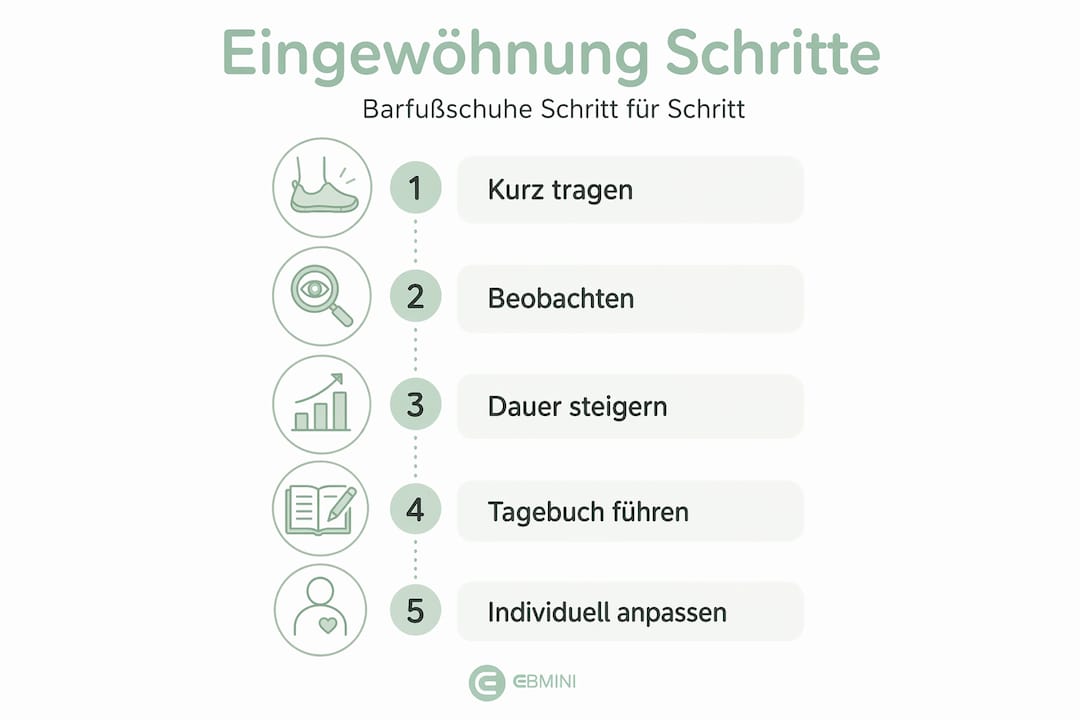
Here's how to make the transition gradually:
- Weeks one and two: The child wears the new shoes daily for 30 to 60 minutes during familiar activities, such as playing in the garden or a short walk.
- Weeks three and four: Increase wearing time to two to three hours daily. Pay attention to reactions: Does the child take off the shoes? Does he or she complain of pain in the calf or heel?
- From week five: The shoes can be worn for normal everyday activities if no discomfort has occurred.
- Always in parallel: Plan barefoot phases. At home, in the garden, on playgrounds. Barefoot walking complements the shoe and provides additional stimulation for the foot.
- In case of problems: Immediately reduce wearing time. Achilles tendon pain or fatigue are clear signs that the muscles are not yet ready.
Children whose foot muscles are still weak or who have coordination problems require particularly careful introduction. For them, barefoot shoes can more quickly lead to fatigue or sprains if the acclimatization is too fast.
Pro-tip: Keep a short activity diary for the first four weeks. Note how long the child wore the shoes, what they did, and if there were any noticeable issues. This way, you can identify patterns and react early.
Observe your child's gait. Do they trip more often than before? Do they walk differently than usual? Small changes are normal, persistent problems are not.
Models and Applications Compared
Not every barefoot shoe is suitable for every occasion. Finding barefoot shoes for every occasion is the goal, and an overview of the different types helps.
| Model Type | Suitable for | Special Feature |
|---|---|---|
| Light Sneaker | Everyday, school, playground | Especially light, easy to put on |
| Lined Barefoot Shoe | Autumn, mild winter days | Warm and water-repellent |
| Waterproof Boot | Rain, puddles, mud | Complete protection, yet flexible |
| Sandals with Barefoot Sole | Summer, beach, holiday | Maximum air circulation |
Materials at a Glance
Leather and breathable textiles offer good protection and comfort. Vegan materials are gaining importance because they are produced without animal suffering and are often easier to care for. Material choice influences durability, wearing comfort, and ecological aspects.
For the transitional period, i.e., autumn and spring with changeable weather, models with water-repellent properties are recommended. They keep the foot dry without compromising the typical barefoot shoe features.
What Really Motivates Children
An underestimated factor: design. Children who like their shoes wear them more often and for longer. This is no small matter. A child who doesn't like their barefoot shoes will take them off at every opportunity, and then the acclimatization effect is lost. Let your child have a say in the selection, within the correct size and quality, of course.
Other practical features that matter in everyday life:
- Easy to put on and take off: Velcro fasteners with a wide area are significantly better suited for toddlers than laces.
- Machine washable: Children's daily life means dirt. Shoes that can be put in the washing machine save time.
- Reflectors: On short winter days, they increase safety on the way to school or during evening walks.
Knowing the parent's guide to choosing the right models makes the difference between a random purchase and a well-considered decision.
My Experience from Consulting and Everyday Life
For years, I've been guiding parents in choosing barefoot shoes, and one pattern always strikes me: impatience. Parents buy the shoes, the child wears them all day from day one, and after two weeks, the complaints are significant enough to abandon the project. This is not an exception; it's the most common mistake of all.
What I've learned from this: The transition isn't the obstacle; it's the journey. Children who are gradually acclimatized benefit much more than those for whom things are rushed. I've seen children with slightly flattened arches show significant improvements after consistent wear and daily barefoot phases. This isn't a guarantee, but a realistic picture of what's possible.
What parents usually underestimate is the importance of the right model for the occasion. A barefoot shoe for summer is not a barefoot shoe for autumn. Those who economize and use one model for everything risk wet feet in the rain or too little warmth in October. This leads to the child rejecting the shoes and reverting to old habits.
My most important practical lesson: Educate yourself about the basics of foot development before you buy. A well-informed parent makes better decisions and sees the transition through, even if it initially seems bumpy.
— Ebmini
Discover Barefoot Shoes for Children at Ebmini
If you now know what to look for when buying, the next step is the right choice. Ebmini has developed a wide collection of children's shoes that consistently implement all the core principles of barefoot walking. A wide toe box, zero drop, flexible soles, and tested materials are standard, not an exception, for every model.
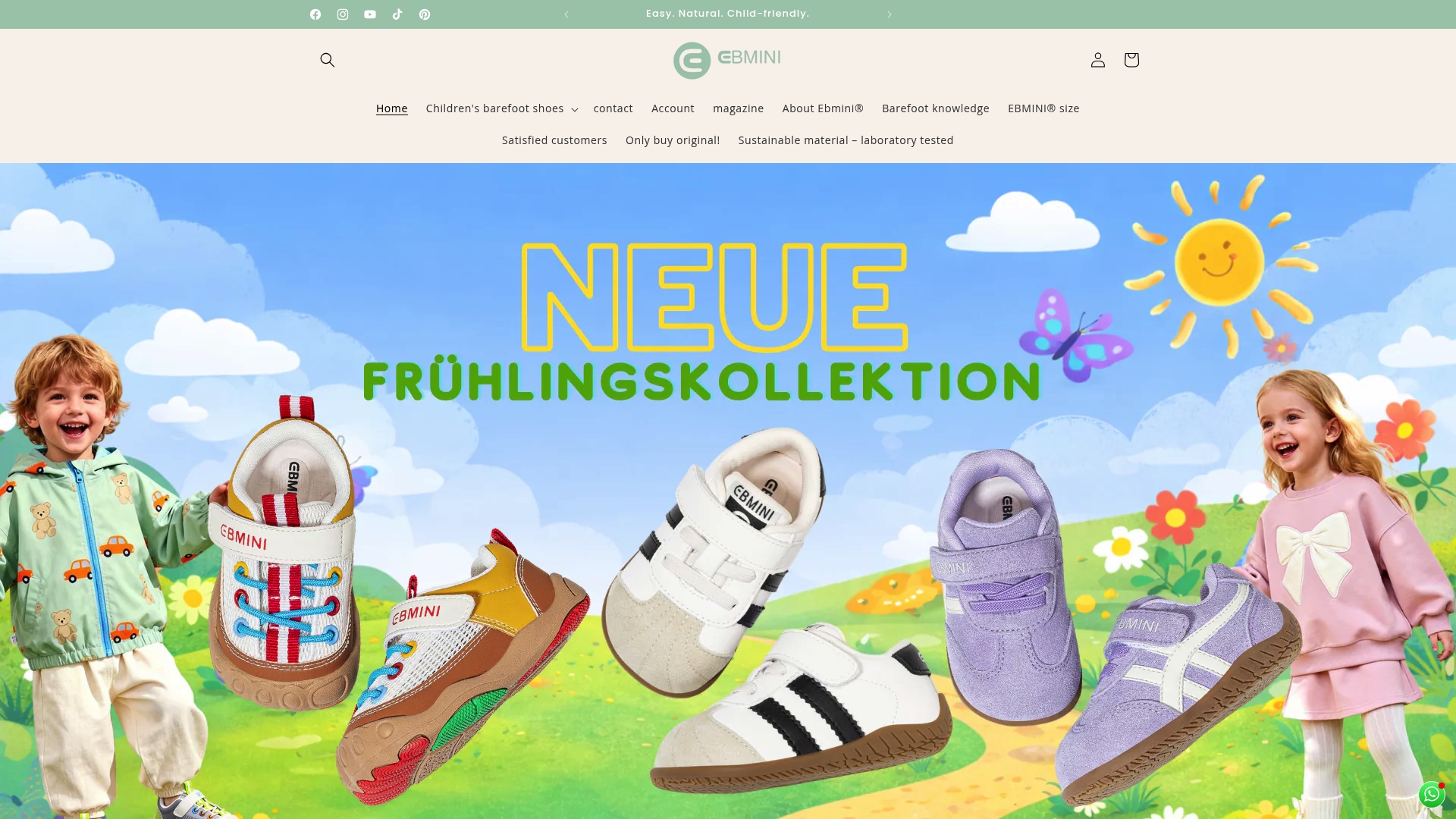
For the first steps, Ebmini offers specially designed baby barefoot shoes for toddlers, perfectly adapted to the crawling and first walking phases. For older children in kindergarten and school age, the collection of children's barefoot shoes offers models for every occasion, from light sneakers for everyday wear to waterproof models for autumn. Size advice and detailed product information will help you make the right decision for your child.
FAQ
What does Zero Drop mean for barefoot shoes?
Zero drop means there is no height difference between the heel and the forefoot. This promotes a natural posture and a gentle walking style.
How long does it take to get used to barefoot shoes?
Experts recommend a gradual introduction over at least four to six weeks, with daily increasing wear time and attention to potential discomfort.
How often do I need to measure my child's feet?
Measuring every eight to twelve weeks is recommended because children's feet grow quickly. The appropriate growth reserve is 0.8 to 1.2 cm.
Are barefoot shoes suitable for all children?
Barefoot shoes promote natural foot development, but for children with foot deformities or medical conditions, an orthopedist should be consulted first.
Which barefoot shoes are suitable for the transitional season?
For autumn and spring, models with water-repellent outer materials and light lining are suitable to keep the foot dry and warm without restricting flexibility.


