

Integrating barefoot shoes into everyday life: Step by step
Many parents eventually realize that conventional children's shoes with thick soles and constricted toe boxes offer little room for their child's feet. This can lead to weakened foot muscles, an unnatural gait, and potentially long-term deformities. Barefoot shoes in everyday life can change this, but only if the transition is well-planned and gradual. This guide shows you how to integrate barefoot shoes into daily life without overwhelming your child. You'll get specific tips, an acclimatization plan, and important warnings about signs to watch out for along the way.
Table of Contents
- Key Takeaways
- What are Barefoot Shoes and Why are They Beneficial?
- Preparation Before First Wear
- Gradually Integrating Barefoot Shoes into Everyday Life
- Monitoring Progress and Early Problem Detection
- My Experience with Children's Barefoot Shoes
- Discover Ebmini Barefoot Shoes for Your Everyday Life
- FAQ
Key Takeaways
| Point | Details |
|---|---|
| Gradual Start | Begin with short wear times and soft surfaces to prevent overstraining foot muscles. |
| The Right Shoe Matters | Look for a wide toe box, thin flexible sole, and no heel elevation for maximum freedom of movement. |
| Observation is Essential | Regularly check toe splay, gait, and watch for persistent pain as a warning sign. |
| Playful Practice | Barefoot exercises like toe gripping and balancing promote coordination and are fun for children. |
| Professional Advice for Problems | Always consult an orthopedist for deformities or persistent discomfort. |
What are Barefoot Shoes and Why are They Beneficial?
Barefoot shoes are not just regular shoes with a little less padding. They follow a completely different principle. The sole is thin and flexible, the toe box is wide enough for all toes to move freely, and the heel is at the same height as the forefoot. This feature is called zero drop. No cushioning foam, no stiff reinforcement, no elevated heel.
These properties are particularly valuable for children. Natural foot development requires stimuli: pressure, warmth, unevenness, freedom of movement. A conventional shoe removes these stimuli from the foot and takes over stabilizing tasks that the foot muscles should actually perform.
What barefoot shoes specifically provide in everyday life:
- The thin sole returns ground feel to the foot without leaving it unprotected.
- The wide toe box allows natural toe splay when rolling off.
- The lack of a heel promotes midfoot striking instead of heel striking.
- The flexibility of the sole allows the foot muscles to actively participate.
Barefoot-like walking strengthens foot muscles, balance, and coordination in children, thus supporting motor development in a playful and safe way. This is not marketing; this is movement science.
Pro Tip: Bend test when buying: A good barefoot shoe can be easily folded in half with two fingers. If a shoe cannot do this, it is too stiff for a true barefoot effect.
An important note you should know if you want honest information: Children's barefoot shoes come close to barefoot walking, but are not a substitute for healthy barefoot walking on natural surfaces. Barefoot shoes complement barefoot walking in everyday life. They do not replace it.
Preparation Before First Wear
Before simply putting barefoot shoes on your child and letting them go, it's worth investing a few minutes in preparation. Your child's feet may have been in conventional shoes for years, which have taken over much of the muscle work. An abrupt change would be too much for the tendons and muscles all at once.
Assessing Foot Condition
Take a close look at your child's feet. Do their toes spread when standing on the floor? Are there areas of calluses or pressure points that indicate incorrect loading? Does your child walk on the inner edges or do their feet point strongly outwards? If you see clear abnormalities, speak with a pediatric orthopedist before starting with barefoot shoes.
Here's a checklist to make getting started easier:
| Preparation Step | Description |
|---|---|
| Foot Check | Briefly observe toes, arch, and gait |
| Measure Shoe Size | Inner length of the shoe should be foot length plus 10 to 15 mm |
| Barefoot Phases at Home | Walk barefoot on parquet or carpet for 15 to 30 minutes daily |
| Introduce Foot Exercises | Simple exercises like toe gripping or picking up a cloth with toes |
| Check Surface | Choose soft, safe floors without splinters or sharp edges |
Choosing the right shoe is not a minor matter. Barefoot shoes for children should feel like a second skin, not a protective shell. A helpful guide for transitional periods will help you find the right model for the respective season and everyday life.
Barefoot shoes have a wide toe box and thin, flexible soles, but they are not unconditionally suitable for all foot types. If your child already suffers from deformities, medical advice is not an optional step, but a necessary one.
Pro Tip: Before the first barefoot shoe, let your child walk barefoot daily on various surfaces: grass in the garden, sand in the sandbox, rough carpet indoors. This trains the soles of their feet and significantly shortens the later acclimatization period.
Gradually Integrating Barefoot Shoes into Everyday Life
Here begins the real work, and the good news is: it's fun if you approach it playfully. The key is slow, consistent, and without pressure.
-
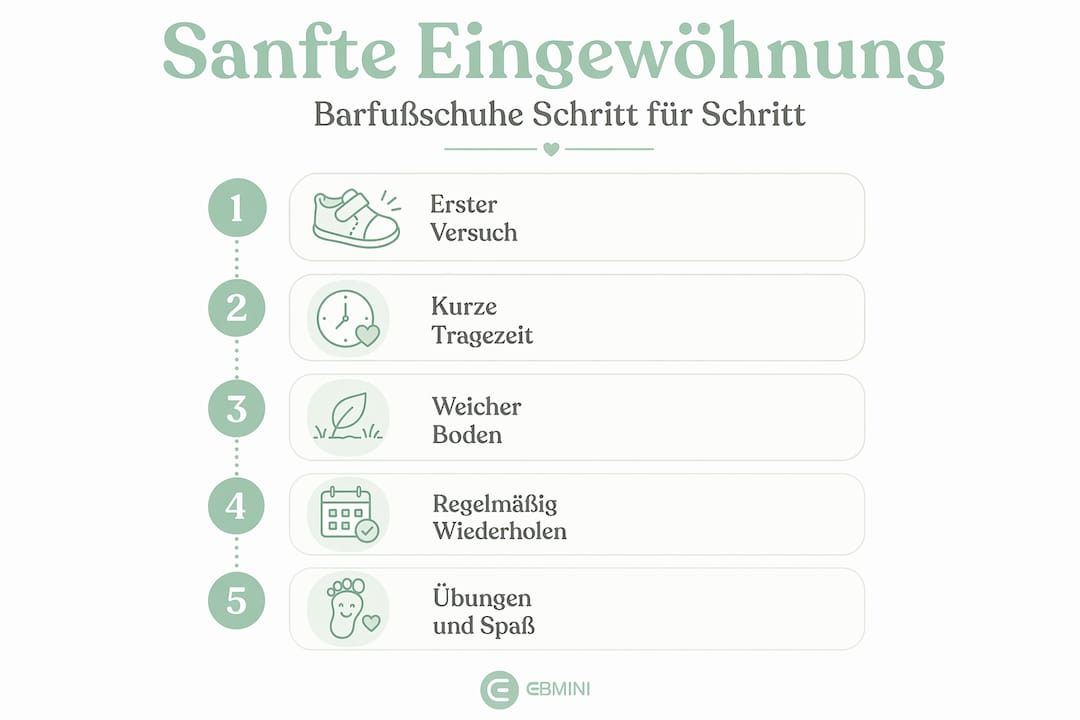
Weeks 1 and 2: Wear barefoot shoes daily for 20 to 30 minutes while playing at home. Parquet, carpet, or grass are ideal first surfaces. No pavement or city sidewalks yet.
-
Weeks 3 and 4: Extend wear time to 45 to 60 minutes per day. Now, short walks on soft surfaces can be added. Sand areas at the playground are very suitable.
-
Week 5: Alternate between barefoot shoes and conventional shoes depending on the activity. Barefoot shoes can now also be worn on firm surfaces, but still to a limited extent.
-
Week 6 and beyond: Barefoot shoes become the preferred everyday shoe. Conventional shoes are reserved for special situations such as formal occasions or very rough terrain.
| Week | Wear Time per Day | Recommended Surface |
|---|---|---|
| 1 to 2 | 20 to 30 minutes | Parquet, carpet, grass |
| 3 to 4 | 45 to 60 minutes | Playground, sand, gravel path |
| 5 | 60 to 90 minutes | Mixed, short sidewalks |
| 6 and beyond | Possible all day | All surfaces as needed |
Experts recommend a slow start with short sessions and varied surfaces to achieve long-term benefits. This is especially true for children whose muscles and tendons are still developing.
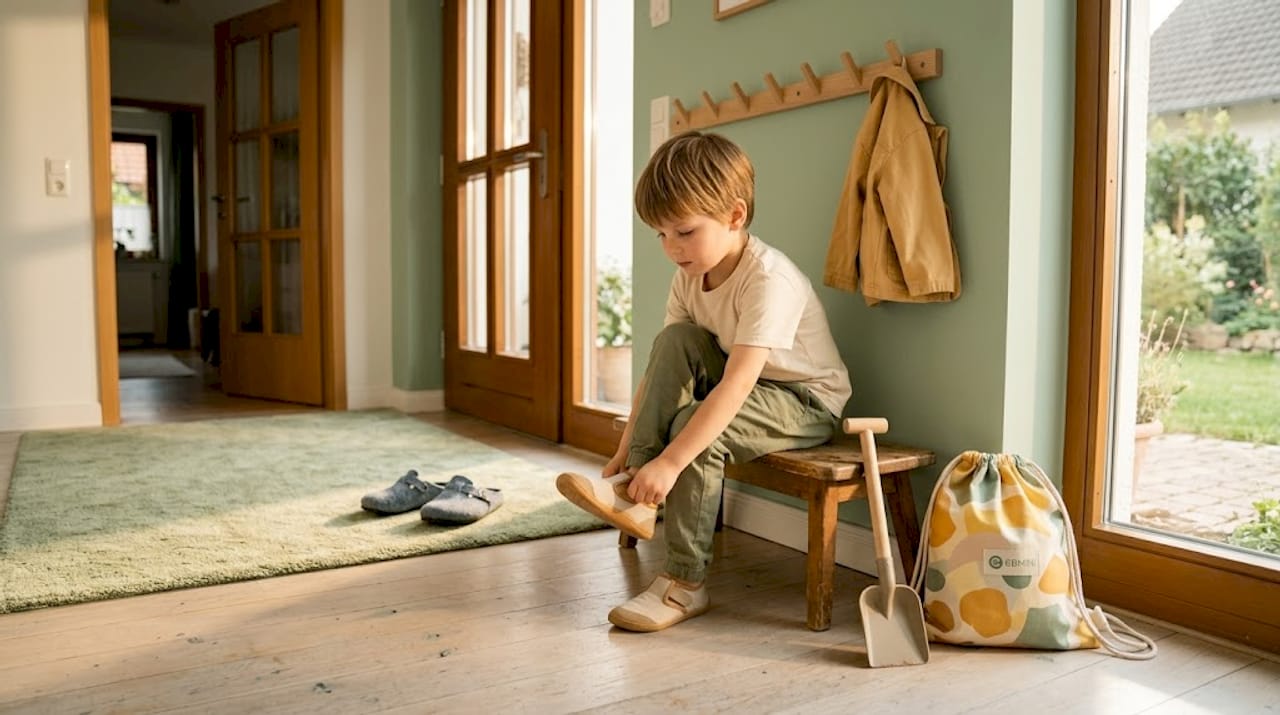
Typical mistakes when starting are impatience, too long an initial wear time, and hard surfaces too early. Barefoot walking promotes the musculoskeletal system, but too quick a start can lead to tendon irritation and injuries. Give your child the time they need.
Playful exercises can facilitate the transition. Barefoot walking during learning to walk combines movement promotion with genuine fun. Exercises like gripping with toes with a cloth, balancing on a log, or walking through sand specifically engage the foot muscles without the child perceiving it as training.
Pro Tip: Regular barefoot walking and the use of barefoot shoes enhance body awareness and create a better body sense. Consciously use walks as short barefoot moments without shoes on grass or sand before putting shoes back on.
Monitoring Progress and Early Problem Detection
Wearing barefoot shoes correctly also means keeping your eyes open. Your child can't always tell you when something is wrong. Therefore, a brief daily observation is worthwhile, especially in the first few weeks.
Signs that the acclimatization is going well:
- The toes visibly spread outwards when standing and walking.
- The gait appears more stable and even than before.
- Your child voluntarily and happily walks in barefoot shoes.
- The foot muscles under the midfoot become noticeably stronger after a few weeks.
Warning signs that should prompt action:
- Your child complains of persistent pain in the heel, arch, or toes.
- The feet become very red or show pressure marks after wearing.
- The gait worsens instead of improving.
- Your child refuses to wear the shoes because they are uncomfortable.
With heel pain in children, you should be particularly attentive. Heel pain can be promoted by improper footwear. If you notice discomfort, a short break and a conversation with the pediatrician are the right next steps.
A simple method for monitoring progress is a footprint on paper. Lightly dip your child's bare feet in water and have them step on a sheet of paper. Repeat this after four to eight weeks. A more defined arch or stronger toe imprints are concrete signs of muscle development.
Actively motivate your child. Children who associate walking in barefoot shoes with a positive experience will stick with it. A small success diary, stickers for days with barefoot shoes, or walking barefoot together in the park make the difference between resistance and enthusiasm.
Exercises like toe gripping, balancing, and barefoot walking on various surfaces promote development playfully and safely. Make it a shared ritual, not a chore.
My Experience with Children's Barefoot Shoes
I regularly receive messages from parents who give up frustrated after two weeks because their child doesn't like barefoot shoes or complains of tired legs. My honest assessment: This is not a sign that barefoot shoes are useless. It's a sign that the foot is finally starting to work.
What I've learned in practice: Acclimatization is not an exercise in patience; it is the very core of the process. Those who skip it risk precisely the problems that barefoot shoes are supposed to prevent. Children need time, and muscles need time.
A common misconception I see repeatedly: Parents buy high-quality barefoot shoes, put them on their child daily, and wonder after four weeks why nothing has improved. The shoe alone is not enough. Active footwork, barefoot walking in nature, exercises in between—that's the engine. The shoe is the tool.
What motivates me anew every time: When parents write after two to three months that their child suddenly takes stairs without holding on, stands more stably, or can keep up better in sports. This is not an advertisement. These are real reports from families who took the process seriously.
My advice: Be patient, be consistent, and participate. If you yourself walk barefoot in the garden for a few minutes daily while your child does the same, they will learn faster through imitation than through any advice in the world.
— Ebmini
Discover Ebmini Barefoot Shoes for Your Everyday Life
If you've understood the theory and are now looking for reliable footwear that combines all these principles, check out Ebmini children's shoes.
Ebmini develops barefoot shoes specifically for children: ultra-light, flexible, with a wide toe box and zero-drop sole. The models are designed for all seasons and surfaces, from kindergarten to an afternoon in the park. For daily use, children's barefoot sneakers are particularly suitable because they are practical and robust enough for the school commute and playground. For the very youngest, Ebmini also offers shoes for first steps, which promote natural foot development from the start. You'll also find an extensive guide for children's feet with further tips on sizes, care, and shoe selection.
FAQ
What are barefoot shoes for children?
Barefoot shoes for children are shoes with a thin, flexible sole, a wide toe box, and no heel elevation. They allow natural foot movements and actively promote foot muscles instead of replacing them.
How long does it take to get used to barefoot shoes?
Acclimatization usually takes four to six weeks. During this time, wear times and surface requirements should be gradually increased to avoid overstraining.
At what age are barefoot shoes suitable for children?
Barefoot shoes are generally suitable from the first steps, as babies and toddlers particularly benefit from free foot movement. For very young children, there are specially adapted models for their first steps.
What warning signs should parents look out for?
Persistent pain in the heel or toes, significant pressure marks after wearing, and a worsening gait are signs that a doctor should be consulted. Occasional muscle fatigue in the initial period is normal.
Do barefoot shoes replace actual barefoot walking?
No. Barefoot shoes complement barefoot walking but do not entirely replace it. Regular barefoot walking on natural surfaces such as grass or sand remains the most effective form of foot muscle stimulation for children.


