

Wide Toe Box Shoes: Benefits for Children's Feet
When buying children's shoes, you first look at the length. Almost all parents do this. But this is precisely where the problem lies: The toe box, i.e., the front part of the shoe that encloses the toes, largely determines whether a shoe promotes or hinders natural foot development. Pediatric orthopedists increasingly emphasize shoes with wide toe boxes and their benefits, as narrow models can compress the toes and, in the long term, promote deformities. This article shows you what you really need to look out for.
Table of Contents
- Key Takeaways
- 1. What a Toe Box Is and Why It's So Important
- 2. Selection Criteria for Children's Shoes with a Wide Toe Box
- 3. Top Benefits of Wide Toe Boxes for Children's Feet
- 4. Popular Shoe Types with Wide Toe Boxes for Children
- 5. Practical Tips: How to Find the Right Toe Box for Your Child
- 6. Comparison: Wide Toe Box vs. Conventional Children's Shoes
- My Conviction: Wide Toe Boxes Are Not a Trend, But a Necessity
- Ebmini® Barefoot Shoes with Toe Box for Small Feet
- FAQ
Key Takeaways
| Point | Details |
|---|---|
| Toe box determines foot health | A wide toe box promotes natural toe splay and prevents deformities in children. |
| Use the WMS system | The width measurement system helps select the correct shoe width, especially for wide children's feet. |
| Thumb width as a rule of thumb | There should be at least a thumb's width of space between the toes and the shoe tip. |
| Combine support and width | Width alone is not enough. Heel support and foot volume must also fit to avoid instability. |
| Barefoot shoes as the best choice | Barefoot shoes combine a wide toe box, flexible sole, and minimal drop for optimal development. |
1. What a Toe Box Is and Why It's So Important
The toe box is the front area of a shoe where the toes reside. In many conventional children's shoes, this area tapers to a point or is narrow, which looks stylish but is problematic for small feet.
Children's feet are not yet fully developed. Until the age of ten, the bones are still largely cartilage and very pliable. This means: pressure from tight shoes leaves its marks. If a child wears shoes with tight toe boxes for years, there is a risk of permanent changes in toe alignment.
A wide toe box allows the toes to remain in their natural position. They can splay, grip, and actively participate in walking. This is precisely the difference between a shoe that shapes feet and one that protects feet.
2. Selection Criteria for Children's Shoes with a Wide Toe Box
When buying shoes for children, several factors are important simultaneously. Here are the most important ones:
- Toe freedom: There should be at least a thumb's width of space between the longest toe and the tip of the shoe. Optimal toe freedom allows for freedom of movement and compensates for foot swelling during the day.
- WMS width system: The WMS system (Width, Measure, Shoe) classifies shoes into widths S (narrow), M (medium), and W (wide). Children with wide feet need at least width M or W.
- Heel support: The heel must be held securely without slipping. Without heel support, the wide toe box becomes a tripping hazard.
- Foot volume: Some children have generally thicker feet, not just wider toes. The shoe must also fit in the instep.
- Side panels: They should touch the foot but never constrict or press.
Pro Tip: Always try on shoes for your child in the afternoon. Feet tend to swell slightly during the day, and a shoe that fits perfectly in the morning may already be tight in the afternoon.
A common mistake: Parents only buy based on length. However, the three-dimensional fit of length, width, and volume is crucial. Those who overlook this end up buying the wrong shoe, even if the size is correct.
3. Top Benefits of Wide Toe Boxes for Children's Feet
A wide toe box is not a luxury. It is a prerequisite for healthy foot development. The evidence for this is clear:
- Less bunions: Shoes with a wide toe box have been shown to reduce bunion cases in children. An analysis of 115,000 3D foot scans from 2025 shows improved joint mechanics due to more toe space.
- Better balance: When toes are allowed to splay, they increase the standing surface. This significantly improves balance and pressure distribution, especially when walking on uneven ground.
- Muscle building: Wide toe boxes promote muscle building and mobility in children because the toe muscles can work actively instead of being constricted.
- Fewer pressure points: Tight toe boxes cause blisters, corns, and pain. Comfortable shoes with a toe box prevent these discomforts from the outset.
- Reduced joint strain: A wide toe box can reduce strain on the joints and prevent discomfort when standing or walking for long periods.
Particularly important: These advantages apply not only to children with already wide feet. Experts emphasize that wide toe boxes contribute to natural development for all children, regardless of individual foot width.
4. Popular Shoe Types with Wide Toe Boxes for Children
The market offers many options, but not every one suits every child and every daily routine. Manufacturers now offer a wide range of models with wide toe boxes. Here's an overview:
| Shoe Type | Advantages | Suitable For |
|---|---|---|
| Barefoot shoes | Wide toe box, flexible sole, minimal drop, promotes motor development | Everyday, playing, kindergarten |
| Sneakers with a wide box | Good support, versatile, fashionable | School, leisure, active children |
| Sandals | Maximum air circulation, lightweight | Summer, beach, short distances |
| Orthopedic shoes | Custom fitted, for deformities | Children with medical needs |
Barefoot shoes are the first choice for children between one and ten years old. They combine a wide toe box with a flat, flexible sole, thus directly supporting the development of motor skills. The child feels the ground, the muscles work, and the toes move freely.
Sneakers with a wide toe box are a good addition for older children from four years of age who are already walking confidently and need a shoe for various activities. Pay attention to sufficient heel support and a flexible, not too thick sole.
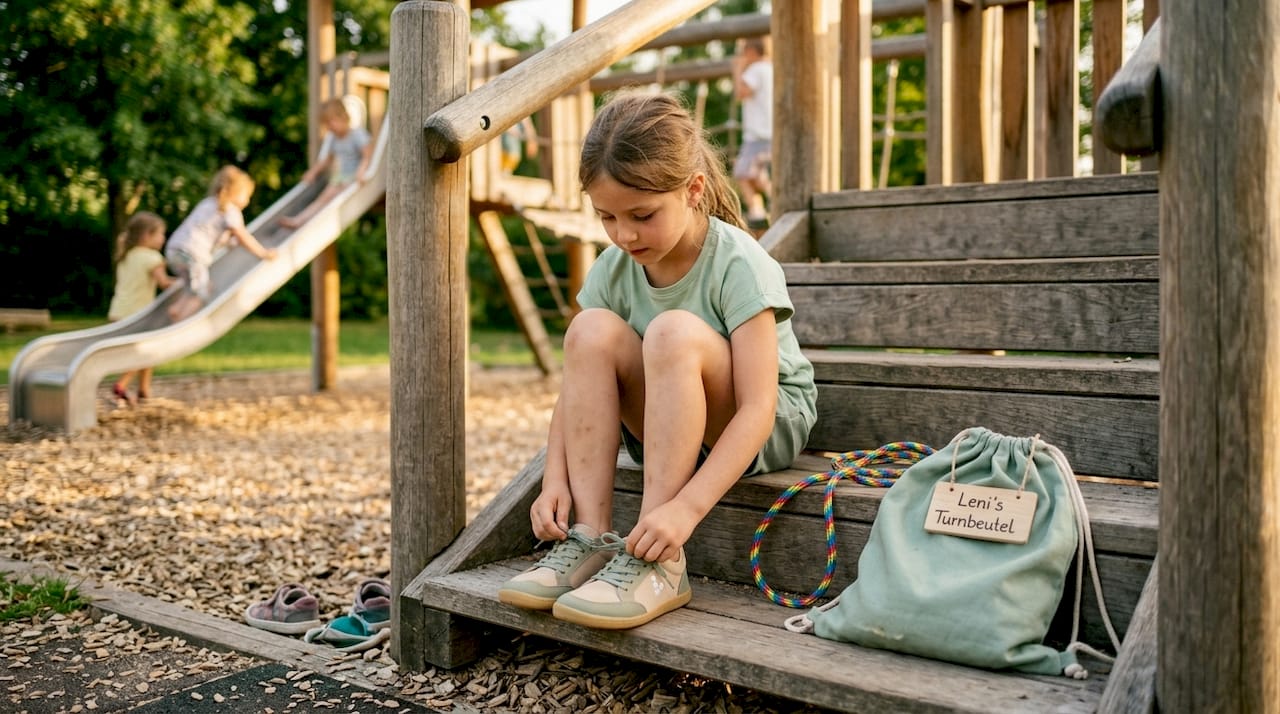
Sandals are great in summer, but not every sandal has a clearly defined toe box. Choose models with a wide forefoot area and Velcro fasteners that can be individually adjusted. Finding the right sandal fit for your child is especially worthwhile for active summer children.
Orthopedic shoes with a wide toe box are recommended by pediatric orthopedists if deformities already exist. They are not a substitute for well-chosen everyday shoes but a supplement for specific problems.
5. Practical Tips: How to Find the Right Toe Box for Your Child
Theory is one thing. Buying shoes with a child in a store or online is another. Here are concrete steps that really help:
- Measure foot length and width: Have your child stand on a piece of paper and trace their outline. Measure the length from the heel to the tip of the longest toe and the width at the widest point. Special measuring devices like Zentimetrix make this even easier.
- Determine WMS width: Compare your width measurement with the WMS tables of the respective manufacturer. For wide children's feet, width W is the correct choice.
- Thumb width test: After putting on the shoe, press your thumb on the tip of the shoe. There should be exactly a thumb's width of space between the toe and the shoe tip.
- Remove the insole: Place your foot on the removed insole. If the foot protrudes at the front or side, the shoe is too tight.
- Do the toe test: The child should be able to move all toes within the shoe. If not, the toe box is too narrow.
- Let them walk and run: Observe how your child walks in the shoe. Does the heel slip? Does the ankle buckle? Both are warning signs.
Pro Tip: A good walking shoe guide helps you systematically check all criteria before buying, especially if your child is just starting to walk.
When do you need a specialist? If your child complains of repeated pain, walks unusually, or you observe visible toe deformities, pediatric orthopedic consultation is advisable. Good shoes are not a substitute for medical diagnosis, but they can prevent many problems from the outset.
6. Comparison: Wide Toe Box Versus Conventional Children's Shoes
Many parents wonder if the difference is really that big. It is. Here you can see where the decisive differences lie:
| Feature | Wide Toe Box | Conventional Shoes |
|---|---|---|
| Toe Freedom | Toes can splay | Toes are compressed |
| Foot Muscle Development | Active toe musculature | Passive, weakened musculature |
| Balance | Improved standing surface | Restricted standing surface |
| Risk of Deformity | Significantly reduced | Increased long-term risk |
| Comfort on long walks | Fewer pressure points | More frequent blisters and pain |
| Fit for wide feet | Directly suitable | Often a compromise solution |
The numbers speak for themselves: shoes with a wide toe box reduce bunion cases by up to 18 percent. This is not a marginal effect. This is a tangible health difference over many years.
Important to understand: Conventional shoes are not automatically bad. But their narrow toe boxes were originally designed for a fashionable appearance, not for the biomechanics of a growing child's foot. For children between one and ten years old, whose feet are still actively developing, this difference is particularly relevant.
A common argument against wide toe boxes: "My child doesn't have wide feet, so they don't need them." This falls short. Wide toe boxes not only help with wide feet but also promote natural toe movement in every child, leading to better balance and foot function.
For children with genuinely narrow feet: Make sure the width isn't too large. A toe box that is too wide without adequate support can cause instability. The goal is a combination of appropriate width and good heel support. A comprehensive overview of the correct shoe size for healthy children's feet can be found as a checklist to read.
My Conviction: Wide Toe Boxes Are Not a Trend, But a Necessity
Over the past few years, I have accompanied and observed many parents buying shoes. Again and again, I see the same pattern: a beautiful shoe is bought because it looks good and the length is right. The fact that the toe box is too narrow is only noticed when the child complains, and sometimes it is not noticed at all because children often cannot articulate themselves or are simply used to shoes pinching.
What really concerns me is that many deformities we see in adolescents could have been prevented by better shoe choices in the first ten years of life. This is not an exaggeration. This is the assessment of pediatric orthopedists worldwide.
I am convinced that barefoot shoes with a wide toe box are the best investment in your child's foot health. Not because they are more expensive or look trendy. But because they allow the foot to do what it was built for: to move freely, build strength, and develop balance.
My advice: Don't be guided by appearances. A shoe that harms your child's foot is not a good shoe, no matter how it looks.
— Ebmini
Ebmini® Barefoot Shoes with Toe Box for Small Feet
Ebmini® has developed barefoot shoes that implement exactly what is described in this article: a wide toe box, zero drop, flexible sole, and secure heel support. The shoes are designed for children between one and ten years old, tested for harmful substances, and available in various widths. Whether for everyday use, kindergarten, or the playground: The range of children's barefoot shoes covers all needs. For active children, there are also specially designed barefoot sneakers that combine freedom of movement and comfort. Take a look now and find the right size for your little one's feet.
FAQ
What is the most important advantage of wide toe box shoes?
The greatest advantage is the natural toe splay, which enables muscle building, better balance, and the prevention of deformities like bunions. Studies show a reduction in bunion cases by up to 18 percent in children who wear wide toe box shoes.
How much space does a toe box need for children?
There should be at least a thumb's width of space between the longest toe and the tip of the shoe. It's best to measure this in the afternoon when the feet are slightly swollen.
Do all children need shoes with a wide toe box?
No, it's not just children with wide feet who benefit. A wide toe box promotes natural toe movement, better balance, and healthy foot development in every child.
What does the WMS system mean for children's shoes?
WMS stands for Weite, Maß, Schuh (Width, Measure, Shoe) and classifies shoes into widths S (narrow), M (medium), and W (wide). Children with wide feet should choose width W for an optimal fit without pressure points.
Why are barefoot shoes particularly suitable?
Barefoot shoes combine a wide toe box, a flat and flexible sole, and minimal drop. This directly promotes motor development and allows the child's foot maximum freedom of movement.


