

Choosing the right first running shoes for your baby
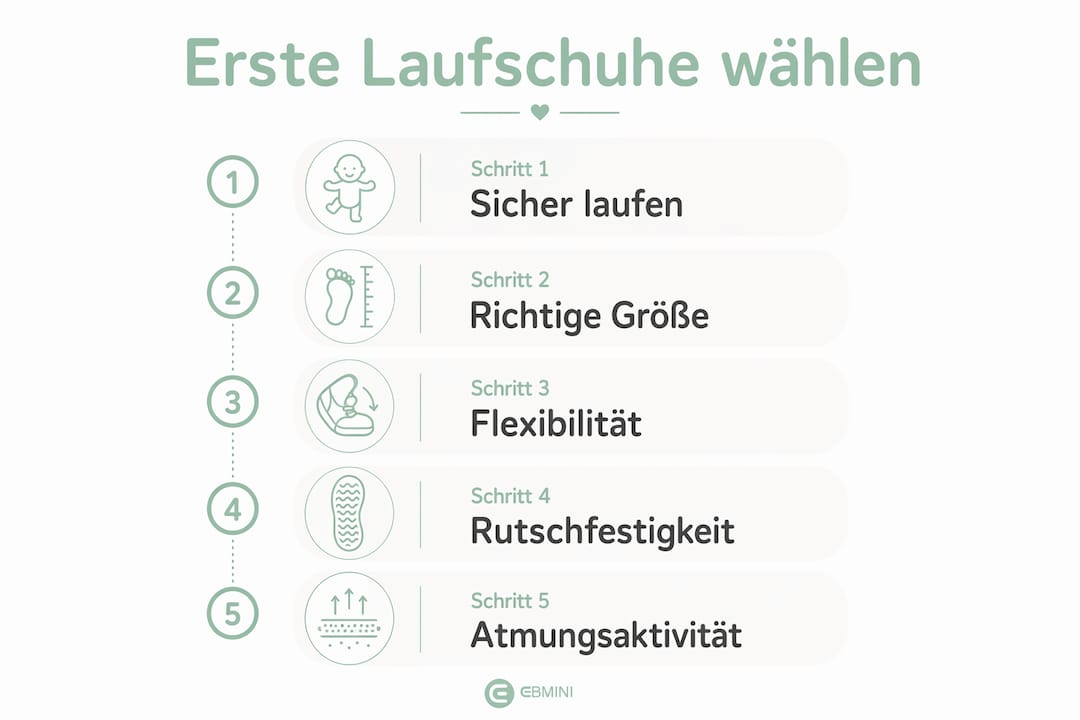
The most important rule of thumb first: The best first walking shoes for babies are light, flexible, and breathable, and they do not restrict natural foot movement. No shoe in the world teaches a child to walk. But the wrong shoe can hinder development. What really matters:
- Flexibility: The sole must be easy to bend with one hand.
- Lightness: The lighter the shoe, the more naturally the child moves.
- Wide Toe Box: Enough space for all toes, without pressure.
- Non-Slip Sole: Secure grip without blocking the rolling motion.
- Easy Closure: Velcro or a wide opening makes putting them on and taking them off easier.
- Growth Allowance: 8–12 mm of space in front of the big toe is ideal.
Table of Contents
- How a child's foot develops and why freedom of movement is so important
- When should babies wear their first walking shoes?
- What characteristics make a good first walking shoe?
- What is the difference between crawling shoes and walking shoes?
- What to consider in wet or changeable weather?
- How to care for first walking shoes properly?
- Common myths about first baby shoes
- Ebmini® Barefoot Shoes: What's behind them?
- How to correctly measure a baby's feet?
- What materials are suitable for first walking shoes?
- What safety features are important for first walking shoes?
- How to find the best value for money in walking shoes?
- Trying on and Buying: What to consider when buying in-store or online
- Key Takeaways
- Ebmini® Barefoot Shoes: Healthy First Shoes for Little Feet
How a child's foot develops and why freedom of movement is so important
A baby's foot is largely made of cartilage, not bone. It is soft, malleable, and above all, needs space. Every hour barefoot on the floor trains balance, muscles, and the perception of the ground. Stiff or too-tight shoes can disrupt precisely this process.
Many parents underestimate how much a toddler gains from simply walking barefoot. The toes actively grip the ground, the small foot muscles work, and the brain constantly processes new stimuli. A shoe with thick cushioning or a rigid shaft interrupts precisely this feedback. Flexible soles are therefore not a comfort feature, but a developmental-biological necessity.
When should babies wear their first walking shoes?
Many parents buy the first shoes too early, often even when the child is pulling themselves up or attempting to crawl for the first time. This is understandable, but unnecessary. For indoors, socks or soft leather slippers are completely sufficient. The right time for actual walking shoes only comes when the child is walking outdoors.
- Crawling phase (approx. 6–10 months): Socks or crawling socks are sufficient. No shoes needed.
- Pulling up and walking sideways (approx. 9–12 months): Soft crawling shoes or slippers are useful for colder floors.
- First independent steps (approx. 10–14 months): The child is still walking unsteadily. Continue barefoot indoors, first soft shoes outdoors.
- Secure, independent walking for 2–3 weeks: Now is the right time for the first proper walking shoe.
- Active outdoor use: As soon as the child is regularly outdoors, they need protection from cold, wet, and injuries.
The signal is clear: It's not age that decides, but whether the child is walking safely and independently.
What characteristics make a good first walking shoe?
The sole is the core. It must be able to bend in all directions so that the foot is not hindered when rolling. Rubber boots or rigid winter boots do not meet this criterion and are therefore unsuitable for toddlers learning to walk.
- Flexible sole: Easily compressible with one hand, without much effort.
- Lightweight: Heavy shoes quickly tire little legs.
- Wide toe box: All toes must be able to spread freely.
- Breathable upper material: Leather or breathable synthetics keep feet dry.
- Non-slip sole profile: Especially important on smooth floors and damp surfaces.
- Velcro closure or wide opening: Easy to put on promotes the child's independence.
- No excessive cushioning: Too much padding interrupts ground feel.
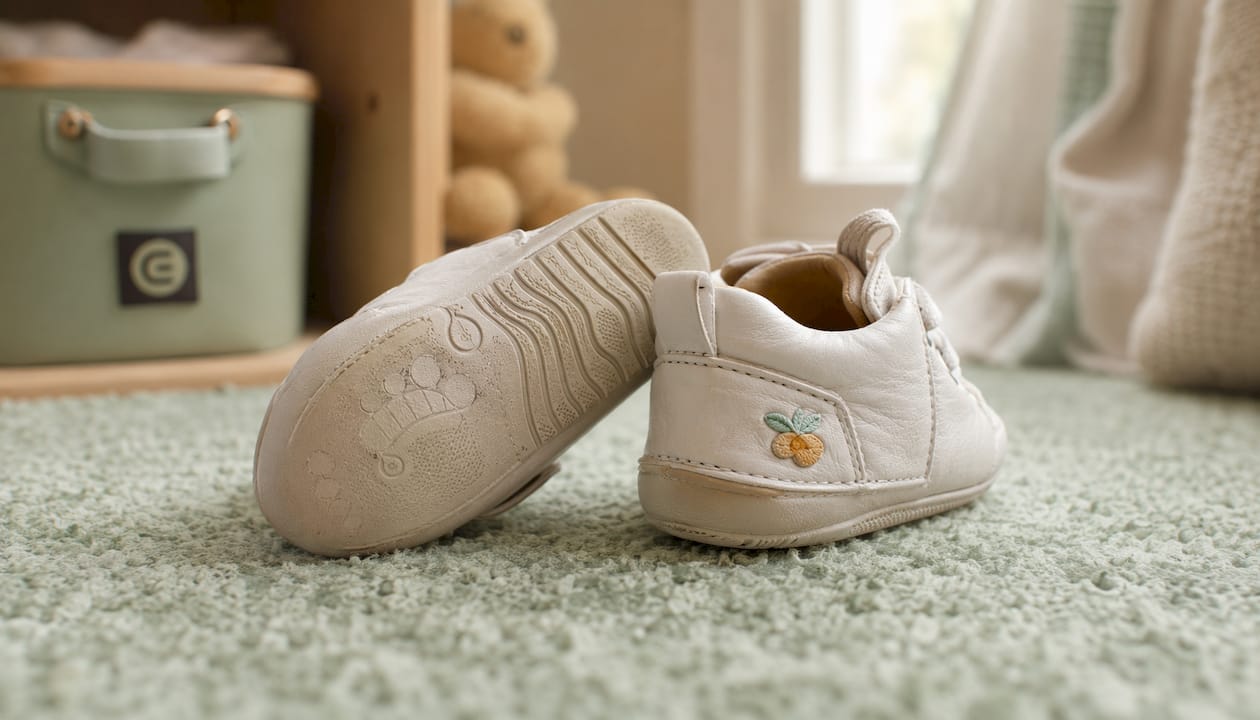
Pro-Tip: Some models have an image on the insole that forms a motif when the shoes are correctly placed together. This helps children distinguish left from right and saves parents daily headaches.
What is the difference between crawling shoes and walking shoes?
Both types of shoes look similar, but serve different purposes. The confusion is common and can lead parents to opt for rigid shoes too early or, conversely, to stick with soft models for too long.
| Feature | Crawling Shoes | Walking Shoes |
|---|---|---|
| Sole | Very soft, hardly any tread | Slightly firmer, non-slip tread |
| Shaft | Low, sock-like | Often ankle-high for more support |
| Area of Use | Indoors, crawling phase | Outdoors, first walking phases |
| Age (approx.) | 6–12 months | From secure independent walking |
| Protective Function | Warmth, hygiene | Cold, wet, injuries |
| Flexibility | Maximum | High, but slightly more structured |
The transition is fluid. As soon as the child regularly walks outdoors and navigates various surfaces, switching to walking shoes makes sense.
What to consider in wet or changeable weather?
Autumn and winter place special demands on the first shoe. But even here, flexibility comes before protection. A waterproof block is useless if the child cannot walk in it.
- Prefer water-repellent materials: Smooth leather or shoes with a waterproof membrane keep feet dry without completely sacrificing breathability.
- Non-slip tread is essential: Damp floors, wet leaves, slippery cobblestones. The sole profile must handle this.
- Have a second pair ready: Breathable materials need time to dry. A spare pair is not a luxury, but hygiene.
- Change socks: Even with good shoes, feet can sweat. Dry socks after being outdoors prevent pressure points.
- Check feet after wearing: Redness or pressure points indicate that the shoe does not fit or has been worn for too long.
Lined walking shoes for winter sometimes need to be bought one size larger because the lining takes up space.
How to care for first walking shoes properly?
Baby shoes wear out quickly because toddlers often revert to crawling mode, heavily stressing the toe of the shoe. Regular care extends their lifespan and protects the feet.
- Dry them after each wear: Never put damp shoes away. Germs quickly develop in moist shoes.
- Use removable insoles: They can be washed separately and help check the fit.
- Regularly check the sole tread: A worn tread no longer provides grip on smooth surfaces.
- Treat leather shoes with suitable care products: Uncared-for leather cracks and loses its water repellency.
- Don't delay changing shoes: As soon as there's less than 8 mm of space in front of the big toe, it's time for a new pair. Too-tight shoes can contribute to foot deformities.
Children's feet grow quickly. In the first year of life, often by several sizes. A fit check every two to three months is worthwhile.
Common myths about first baby shoes
Persistent misconceptions circulate around the topic of baby shoes. Some of them can cause real harm.
- Myth: Shoes must support the foot. False. Healthy children's feet do not need support. Flexible shoes promote muscle development better than stiff models.
- Myth: The more expensive, the better. Price and quality are not automatically correlated with children's shoes. Flexibility, fit, and material are crucial, not the price tag.
- Myth: Shoes help children learn to walk. Children learn to walk through practice, not through shoes. The shoe protects, it does not teach.
- Myth: A little too big is okay so the child can grow into them. Too much space is a tripping hazard. More than 12 mm of growth allowance in front of the toe is too much.
- Myth: High shafts provide more stability. A high shaft restricts ankle movement, which the child needs for balance training. For toddlers learning to walk, low to ankle-high models are more suitable.
Ebmini® Barefoot Shoes: What's behind them?
Ebmini specializes in barefoot shoes for children, designed consistently according to the principles of natural foot development. This specifically means: a wide toe box, zero-drop sole (no heel, no slope), maximum flexibility, and ultra-lightweight design. The materials are breathable and designed for durability.
What distinguishes Ebmini from many standard models is the absence of any form of support structure. No integrated footbed, no elevated heel area, no stiffeners. This sounds radical, but it corresponds to what pediatric orthopedists and podiatrists have been recommending for years: The foot should work, not be carried.
Pro-Tip: Ebmini offers detailed sizing advice with measuring instructions on its website. If you are unsure, you can hold the removable insole directly against the child's foot to check the fit before putting on the shoe.
All models are available via ebmini.de, including customer service and sizing advice.
How to correctly measure a baby's feet?
A baby's shoe size cannot be determined by pressing on the toe of the shoe. This is one of the most common and at the same time most unreliable methods, because baby feet are still so soft that they deform in the shoe without the child showing pain.
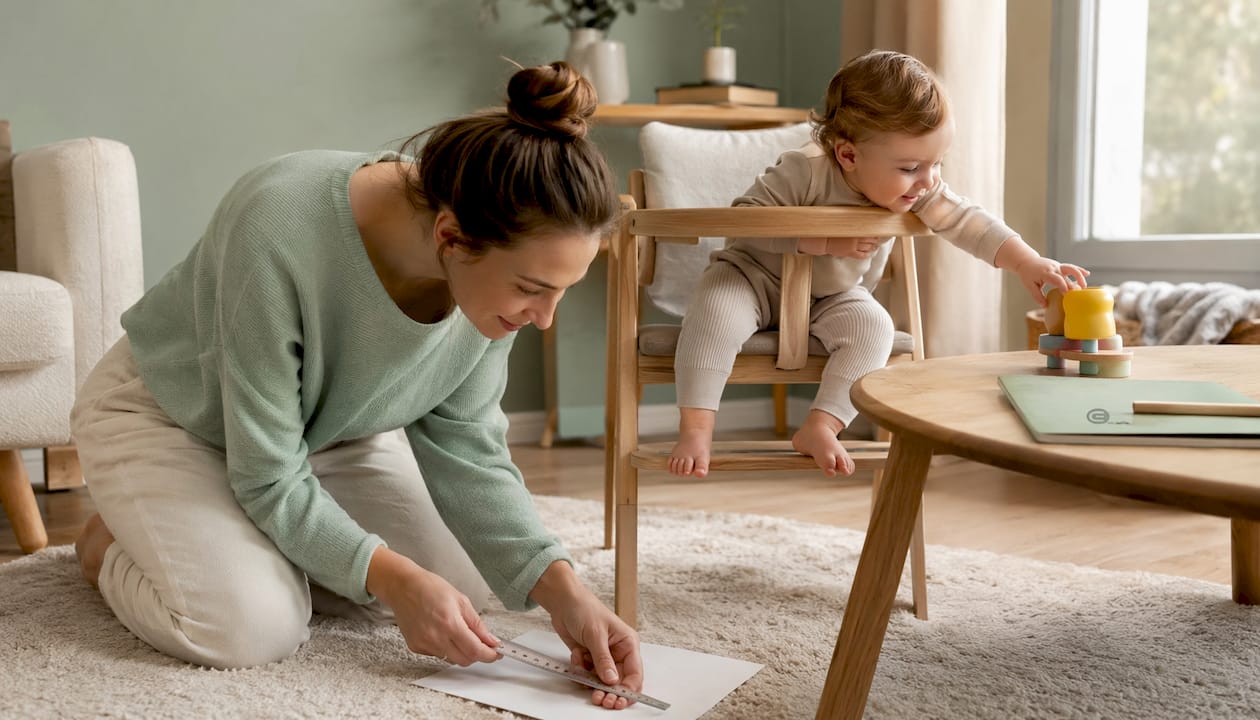
The most reliable method: Take the removable insole out of the shoe and place it directly next to the foot. There should be 8–12 mm of space between the tip of the toes and the end of the sole. Always measure the larger foot, as most people have two different-sized feet, and this also applies to toddlers.
If you don't have a shoe with a removable sole, you can place the foot on a piece of paper and measure the length. Make sure the child stands upright, not sitting, as the foot lengthens slightly under weight. Also measure the width: The shoe should allow a few millimeters of wiggle room on the sides without the foot swimming in it. The WMS system of the German Shoe Institute helps classify foot width, but it is not used by all manufacturers.
What materials are suitable for the first walking shoes?
Leather is the classic material for baby shoes, and for good reason. Natural leather is inherently breathable, conforms to the foot's shape, and is durable. Important: Leather should not be coated with plastic, otherwise it will completely lose its breathability.
Breathable synthetics are a good alternative, especially if sustainability or animal welfare play a role. It is crucial that the material wicks moisture outwards and does not trap it. For autumn and winter, water-repellent materials or shoes with a waterproof membrane are suitable. Lined models with lambskin keep feet warm but often need to be bought one size larger.
What to avoid: completely synthetic materials without breathability, plastic coatings on leather, and materials that do not adapt to warmth. Good walking shoes are characterized by breathable materials that prevent sweating and simultaneously offer protection.
What safety features are important for first walking shoes?
Slip resistance is the most important safety feature. Toddlers often stumble, and a sole profile without grip on smooth surfaces makes this even more dangerous. The profile should also grip on damp surfaces.
A raised sole in the toe area protects the upper material when crawling and significantly extends the life of the shoe. Children who are just learning to walk often switch back to crawling mode, and this is where a shoe wears out fastest.
No loose parts, no long laces that could cause tripping. Velcro fasteners are safer for toddlers than laces because they don't come undone and don't form loops. And: The shoe must stay on the foot, even when the child runs or stumbles. A shoe that slips off the foot while walking is more dangerous than no shoe at all.
How to find the best value for money in walking shoes?
Baby shoes quickly become too small. This makes expensive models difficult to justify if the child no longer wears them after three months. At the same time, it's not worth saving money in the wrong places: A shoe that doesn't fit or is too stiff can cause harm.
A good guideline: Mid-range models that meet the essential criteria (flexible sole, breathable material, non-slip tread, wide toe box) are the best choice for most families. Brands like Ebmini offer specially developed barefoot shoes for children that are consistently geared towards natural foot development.
Used first-walking shoes should be approached with caution. The sole tread might be worn down, the shoe may have adapted to the previous owner's foot shape, and hygiene is another concern. If you want to save money, you can make an exception for siblings with similar foot shapes, but you should carefully check the tread and fit.
Trying on and Buying: What to consider when buying in-store or online
When buying in-store, you have the advantage that the child can try on the shoe directly. Pay attention to the following: The child should stand in the shoe, not sit, so that the foot is measured under load. Put on both shoes and let the child walk a few steps. Is the shoe pressing on the sides? Is the heel slipping? Can the child move their toes?
For online purchases, accurate foot measurement beforehand is essential. Most reputable providers offer measuring instructions and size charts. Important: Check the return policy. Children cannot describe their feet, and a shoe that fits on paper may pinch in practice. A generous return period is not a nice-to-have but a prerequisite for buying children's shoes online. Ebmini offers detailed size advice and clear return conditions on its website.
Key Insights
The most important insight: First-walking shoes protect the foot, but do not shape it. Flexibility and fit determine healthy foot development, not the price or the brand.
| Topic | Details |
|---|---|
| Right time | Only buy when the child has been walking securely and independently for 2–3 weeks. |
| Fit and size | 8–12 mm growth allowance in front of the big toe, always measure the larger foot. |
| Most important features | Flexible sole, wide toe box, breathable material, non-slip tread. |
| Avoid myths | Shoes don't support, they protect. Too large is just as problematic as too small. |
| Ebmini® Barefoot Shoes | Ultralight models with zero drop and a wide toe box, specially developed for natural foot development. |
Ebmini® Barefoot Shoes: Healthy first shoes for little feet
For parents looking for shoes that are consistently geared towards natural foot development for their child, Ebmini offers a clear alternative to conventional first-walking shoes. No footbed, no heel, no stiffeners. Instead: ultralight construction, wide toe box, zero drop sole, and breathable materials.
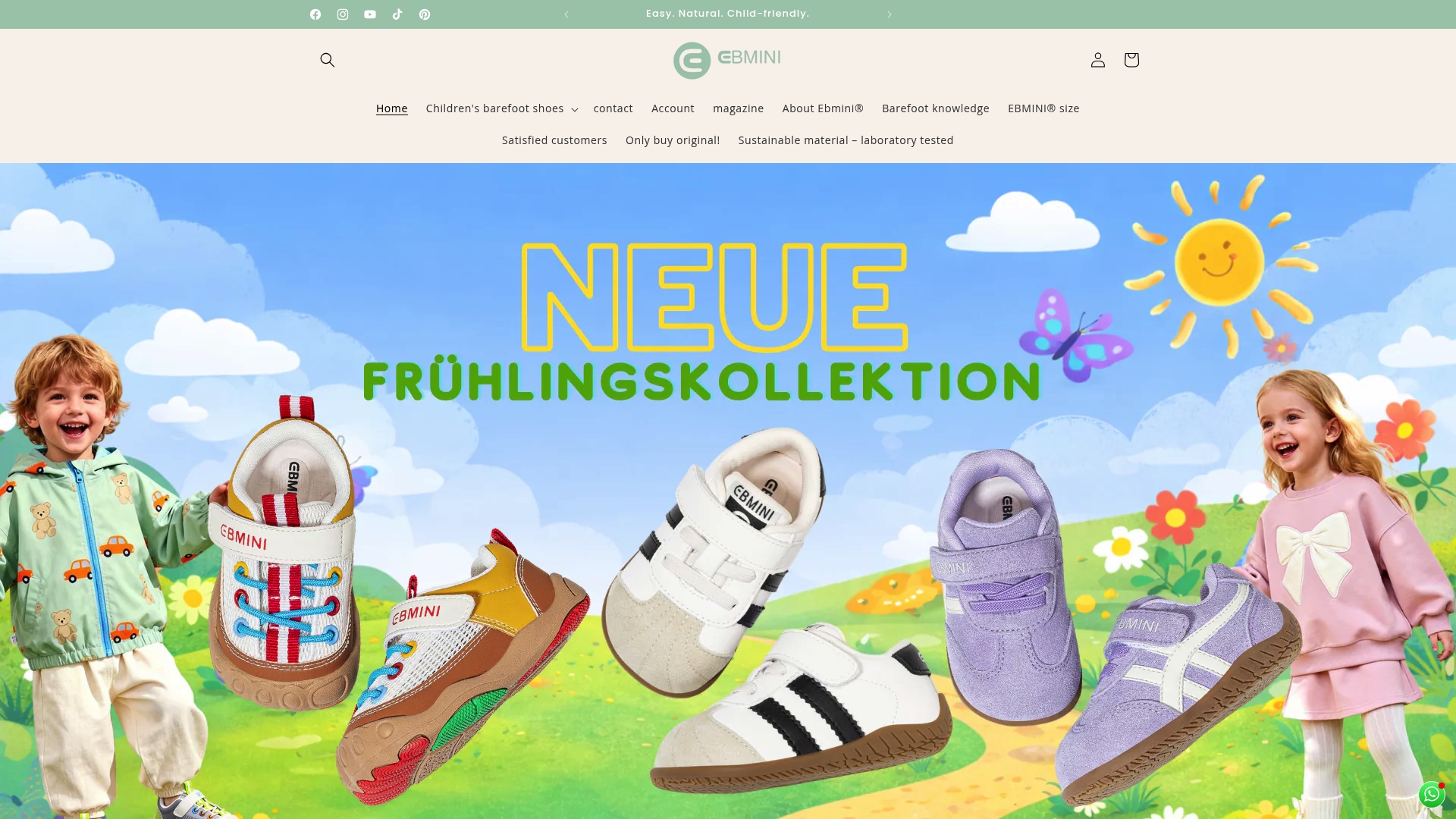
What is special about Ebmini is its consistency. Many children's shoe brands advertise flexibility but still incorporate supportive structures. Ebmini completely foregoes this, because the foot itself is the best support if given the chance. The models are made for everyday use, for outdoors, and for changeable weather. Waterproof variants like the OTD Trekking Barefoot Shoe keep feet dry even in rain and muddy conditions, without sacrificing flexibility.
All models, size advice, and care instructions are available directly on ebmini.de.


