

Fairly Produced Children's Shoes: Importance for Foot Health
Fairly produced children's shoes are shoes manufactured under minimum social standards: living wages throughout the supply chain, no child labor, safe working conditions, and transparent production processes. The term "fair" is not legally protected, which is why parents need to know which criteria truly matter. Standards from Fairtrade International and the World Fair Trade Organization (WFTO) provide reliable guidance. However, fairly produced children's shoes mean more than just ethical consumption: those who focus on fair production often also get shoes made from high-quality, breathable materials that actively support healthy foot development.
What Do Fairly Produced Children's Shoes Really Mean?
Fairly produced shoes meet specific minimum social and ecological conditions that go beyond mere marketing promises. Because the term "fair" is not legally protected, any manufacturer can use it. This makes critical scrutiny by parents essential.
Fair production specifically means: seamstresses and workers receive wages they can actually live on. Child labor is excluded. Working hours are regulated. Production facilities are transparent and verifiable. And the materials used conserve resources wherever possible.
For children's shoes, another aspect is added. Fair production often goes hand-in-hand with higher material quality, because manufacturers who adhere to social standards also pay closer attention to raw materials. The result is shoes that are softer, more flexible, and more durable. This is exactly what children's feet need during their growth phase.
Which Criteria Determine Fairness in Children's Shoes?
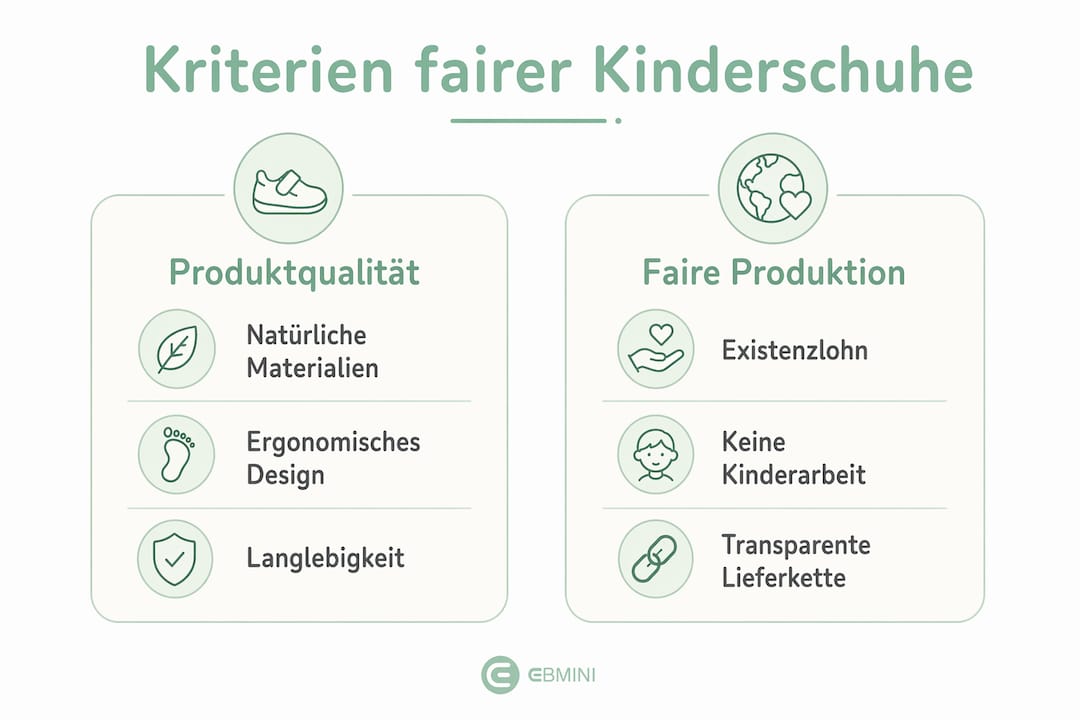
Fair children's shoes cannot be recognized by price alone. The decisive criteria can be divided into three areas: social standards, transparency, and material choice.
Social Standards:
- Living wages for all employees along the supply chain, not just in the final assembly plant
- No child labor, even in supplier companies
- Regulated working hours and the right to union representation
- Safe working conditions that exceed legal minimum requirements
Transparency:
- Disclosure of production facilities, ideally with addresses and audit reports
- Independent third-party controls, not just self-declarations from the manufacturer
- Traceable supply chain from raw material to finished shoe
Material Choice:
- Breathable natural materials such as organic cotton, natural rubber, or cork
- Vegan alternatives made from hemp or recycled rubber, often fairly produced
- Absence of harmful substances that are problematic for children's skin
Certifications like GOTS (Global Organic Textile Standard) or the WFTO seal provide initial guidance. But here too: meta-labels like the Green Button do not fully guarantee adherence to fairness along the entire supply chain. Consumer protection agencies therefore recommend also checking corporate values and the disclosure of production conditions.
Pro Tip: Check the brand's website for a specific supplier list or a sustainability report. Those who truly produce fairly will have this information publicly available, not hidden in the fine print.
Why is Supply Chain Transparency So Important?
Transparency is the foundation of fair production. Without it, every claim of fairness remains just that – a claim.
Around 90% of global shoe production takes place in Asian countries. This means that between the raw material and the finished children's shoe on the shelf, there are often thousands of kilometers and dozens of suppliers. Each of these steps is a potential weak point for social standards. This extent makes independent controls indispensable.
How can parents recognize genuine transparency? These four points help:
- Production facilities are named. Manufacturers who produce fairly name countries, cities, and often specific factories.
- Independent audits are available. Self-declarations are not enough. External audit reports from recognized organizations make the difference.
- Certifications are current and verifiable. A seal from 2019 says little about current production conditions.
- The company responds to inquiries. Those who produce fairly are not afraid of direct questions about wages or working conditions.
Shoes manufactured in the EU often offer higher social standards because legal labor and health and safety rights in countries like Portugal or Spain go beyond global minimum requirements. This is not a guarantee of complete fairness, but a structural advantage compared to productions without comparable legal frameworks.
Caution is advised with pure marketing terms. Terms like "ethically produced" or "socially responsible" without evidence are worthless. If parents want to check sustainable brands, they should demand concrete proof, not promises.
How Does Fair Production Influence Healthy Foot Development?
Fair production and healthy foot development are more closely linked than many parents might suspect. The connection is not a coincidence, but the result of conscious material selection and careful craftsmanship.
Manufacturers who pay fair wages and control working conditions generally also invest in the quality of their products. Cheap goods are created under time and cost pressure. Fair shoes, on the other hand, are processed more carefully, which directly impacts fit, flexibility, and durability.
What this specifically means for children's feet:
- Flexible soles support natural movements. Flexible soles promote healthy foot development because they allow the foot to roll naturally when walking and running, instead of fixing it in a rigid shape.
- Breathable materials like natural rubber or organic cotton regulate moisture and prevent heat buildup, which can lead to skin problems.
- Wide toe boxes give toes room to spread out. This is particularly crucial during the growth phase, as constricting shoes can lead to deformities.
- Robust, repairable constructions extend the lifespan. Repairability reduces resource consumption and also means that a shoe doesn't fall apart after three months.
Barefoot shoes, as developed by Ebmini, directly combine these principles. Zero drop, meaning no height difference between the heel and forefoot, and a thin, flexible sole mimic natural barefoot walking. This strengthens the foot muscles and promotes a healthy gait from the start.
Pro Tip: Before buying, bend the shoe in the middle. A fair, high-quality children's shoe should fold easily. If it remains stiff, it restricts natural foot movement, no matter how many seals it has.
How Can Parents Check and Properly Care for Fair Children's Shoes?
Buying fair children's shoes is a decision that becomes much easier with the right checklist. And properly caring for your shoes significantly extends their lifespan.
Buying Criteria at a Glance
| Criterion | What to look for |
|---|---|
| Certification | Check GOTS, WFTO or comparable independent seals |
| Transparency | Production facilities named, audit reports available |
| Material | Natural rubber, organic cotton, cork or recycled fibers |
| Construction | Flexible sole, wide toe box, no rigid heel area |
| Repairability | Replaceable soles or manufacturer's repair service |
| Price-Lifespan | Fair shoes cost more but last significantly longer |
Fair children's shoes cost more than mass-produced goods. That's a fact. But high-quality, fair shoes pay for themselves through durability and repairability compared to cheap goods. A shoe that lasts two years and can be repaired is more economically viable in the long run than three cheap pairs that are worn out after eight months each.
What parents should specifically check when buying:
- Is there a sustainability report or supplier list on the website?
- Is the seal current and verifiable with the issuing organization?
- Can the sole be replaced or the shoe repaired?
- Is the material tested for children's skin, for example, according to OEKO-TEX Standard 100?
Regarding care: Fair shoes made from natural materials do not like aggressive cleaning agents. Lukewarm water and a soft brush are sufficient for most models. If you have shoes made of natural rubber or cork, avoid direct sunlight when drying, as the material can become brittle. And if you use a repair service, do so in good time before the damage is too great.
Assessing the quality of children's shoes is a skill worth developing. Because a well-made shoe shows its quality not only in the price, but also in seams, material transitions, and the flexibility of the sole.
Key Insights
Fairly produced children's shoes combine social justice, transparency, and ergonomic design, making them the most sensible long-term choice for healthy children's feet.
| Topic | Details |
|---|---|
| Term "fair" | Not legally protected; reliable guidance provided by Fairtrade International and WFTO. |
| Supply chain transparency | 90% of shoe production is in Asia; independent audits are indispensable. |
| Foot health | Flexible soles and wide toe boxes promote natural foot development in children. |
| Economic viability | Fair shoes cost more but pay for themselves through durability and repairability. |
| Critically examine seals | No single seal guarantees complete fairness; assess corporate values and transparency as well. |
What I Have Learned After Years with Children's Shoes
At Ebmini, we've had many conversations with parents who were frustrated. Not because fair shoes are bad, but because they didn't know what they were really buying. A seal on the box reassured them. But a seal isn't a promise, it's a beginning.
What truly convinced me: Parents who once saw a genuine barefoot shoe with a flexible sole and a wide toe box on their child rarely go back to stiff mass-produced goods. The difference is visible. The child moves differently. Freer. More naturally. That's not a marketing promise; that's biomechanics.
Fair production is not a panacea. I say that deliberately. Fair shoes are a step away from a throwaway mentality towards care, durability, and social awareness. But anyone who believes that buying an expensive pair means they've done everything right is half wrong. Care, repair, and the willingness to truly use a shoe until it's worn out are all part of it.
What sometimes bothers me about the debate over seals and certificates is that it distracts from what's essential. Parents shouldn't rely solely on seals but should assess an overall picture of corporate values and transparency. A manufacturer who names their factories, answers questions, and allows for repairs is more credible than one with five seals and an empty sustainability page.
— Ebmini
Barefoot Shoes for Children That Are Truly Fair and Healthy
Ebmini develops barefoot shoes for children that are consistently designed for healthy foot development: wide toe box, zero drop, flexible and non-slip soles. The shoes are ultra-light, waterproof, and built for everyday use, whether on the playground, in the forest, or in the rain.

Those looking for fair children's clothing and shoes that not only sound good but are also ergonomically well-designed will find a range at Ebmini that combines both. Quality you can touch, and transparency you can verify. Ebmini's barefoot shoes for children are available in various models, from all-weather shoes to light barefoot sandals for summer. If you want to use the size guide and customer reviews, you'll find everything directly on the website.
FAQ
What exactly are fairly produced shoes?
Fairly produced shoes are manufactured under conditions that ensure living wages, no child labor, regulated working hours, and transparent supply chains. The term is not legally protected, so certifications from Fairtrade International or the WFTO serve as guidance.
Which seals are truly reliable for children's shoes?
GOTS and the WFTO seal are considered particularly strict because they require independent audits. Meta-labels like the Green Button offer initial guidance but do not guarantee complete fairness throughout the entire supply chain.
Are fair children's shoes really better for foot development?
Fair shoes are often made from high-quality, breathable materials and processed more carefully, which promotes flexible soles and a wide toe box. These very characteristics support natural foot development in children.
Is investing in more expensive fair children's shoes worth it?
Fair children's shoes cost more, but due to their quality and repairability, they last significantly longer than cheap mass-produced goods. In the long run, the investment is economically sensible and also reduces resource consumption.
How do I properly care for fair children's shoes?
Fair shoes made of natural materials are best cleaned with lukewarm water and a soft brush. Avoid direct sunlight when drying, especially for cork and natural rubber, and address repairs early before the damage becomes too great.


