

Heel-to-toe walking vs. tip-toe walking in children: What parents need to know
Heel-toe gait is the normal rolling movement in which the child lands on the heel and then rolls the foot over the forefoot. Toe walking, also medically known as tip-toe walking, means that the child predominantly walks on the forefoot or tiptoes, without putting weight on the heel. In toddlers up to about three years of age, this is often harmless. If it persists beyond this age or occurs only on one side, a pediatrician should clarify the cause.
Quick Checklist for Parents: Observe your child walking on different surfaces. Document whether tip-toe walking occurs on one side or both. Contact the pediatrician if the child still predominantly walks on their toes after their third birthday, if they show pain, started walking late, or if neurological abnormalities are noticeable.
According to AOK, children normally develop a physiological foot roll within the first two years of life. Toe walking that persists beyond toddlerhood should be medically evaluated.
Key Takeaways
Heel-toe gait is the physiological foot roll pattern that children develop by about 24 months; toe walking after 3-4 years of age or unilateral toe walking requires medical clarification.
| Topic | Details |
|---|---|
| Age Limit for Clarification | Persistent toe walking after 3-4 years of age or unilateral toe walking: consult a pediatrician. |
| Spontaneous Normalization | About 50% normalize by school age, almost 80% by 10 years without treatment. |
| Red Flags | Unilateral toe walking, delayed walking, neurological abnormalities, pain: immediate clarification. |
| Home Measures | Barefoot walking, playful heel exercises, and flexible shoes support learning heel-toe gait. |
| Ebmini | Barefoot shoes with zero drop and a wide toe box complement everyday measures for natural foot development. |
Table of Contents
- What exactly distinguishes heel-toe gait and toe walking?
- Until when is toe walking still normal in children?
- What are the causes behind toe walking?
- How is the diagnosis made and who is the right contact person?
- What treatment options are available?
- What can parents do at home?
- What happens if toe walking remains untreated?
- When should parents see a doctor immediately?
- A word on serenity that should not lead to carelessness
- Barefoot shoes as a complementary measure for foot development
- Sources
What exactly distinguishes heel-toe gait and toe walking?
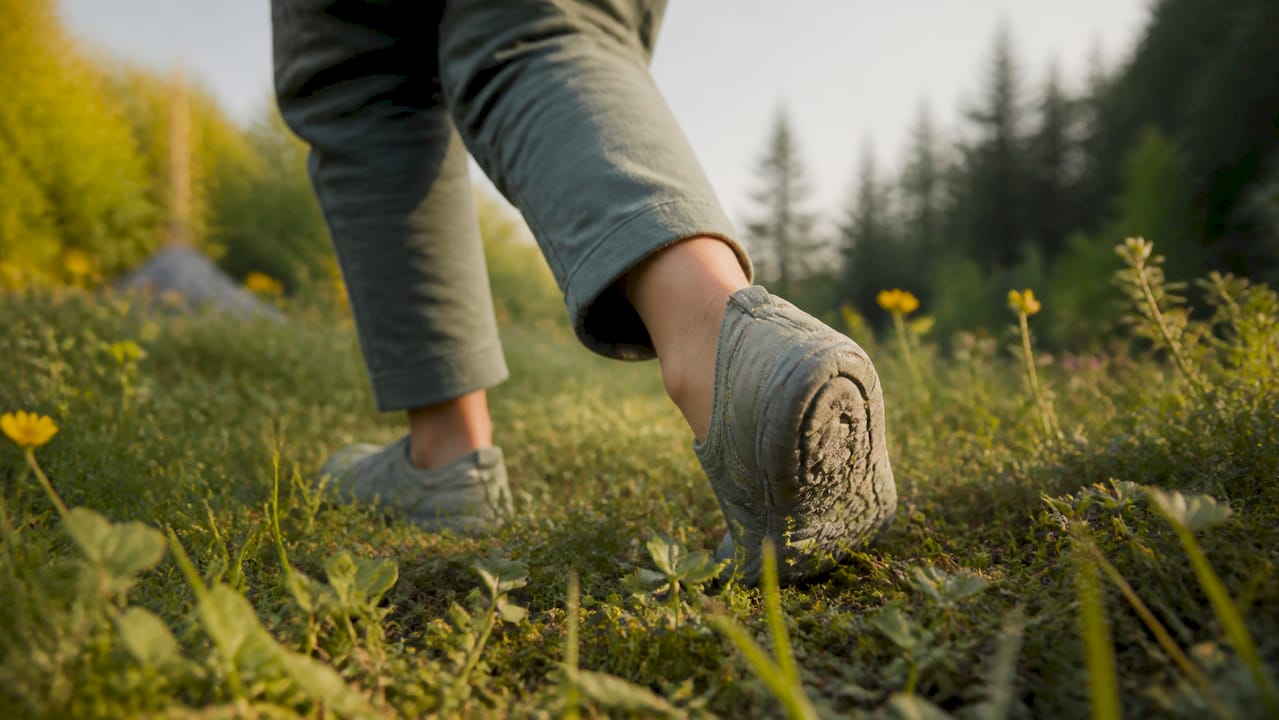
In heel-toe gait, the foot lands on the heel, then rolls over the outer edge and forefoot, and pushes off with the toes. This is the physiologically mature gait and the goal of a child's gait development. Observing a child with this pattern reveals a fluid, springy movement.
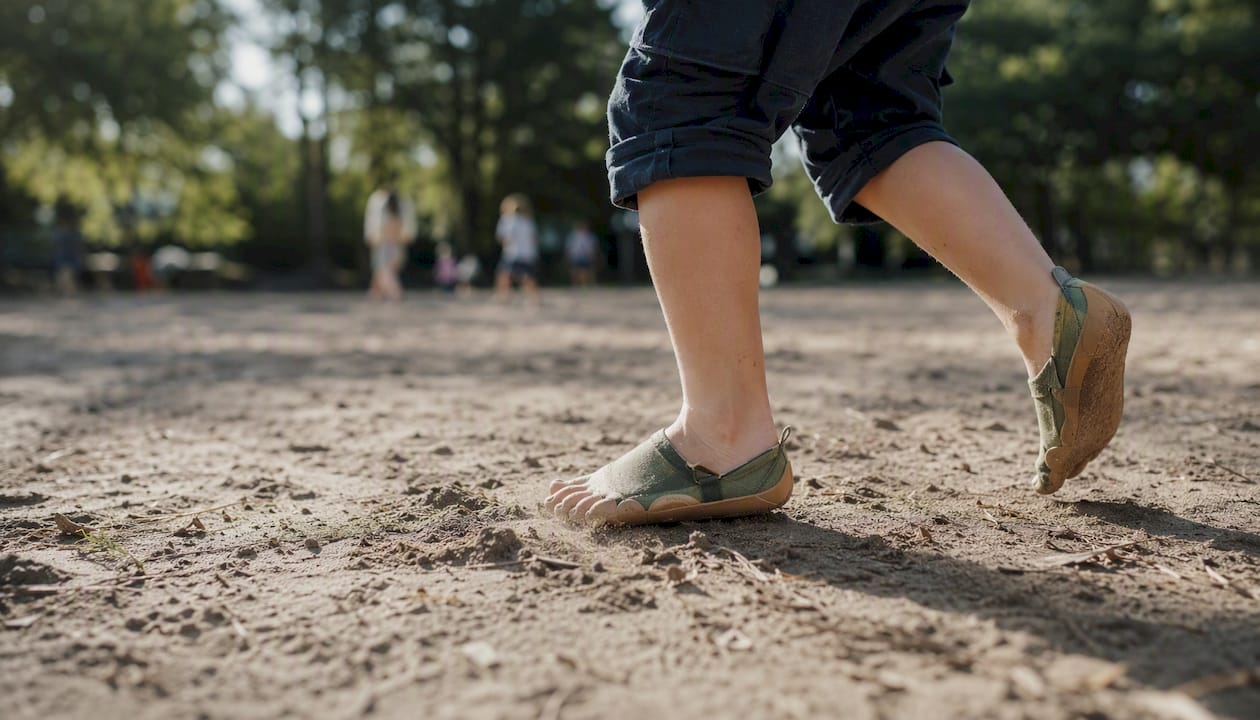
In toe walking, this rolling is completely or partially absent. The child lands directly on the forefoot or tiptoes. The heel either doesn't touch the ground at all or only briefly. Sometimes the gait is slightly bouncy, sometimes it appears tense.
Important for parents: There are gradations. Some children only walk on their toes on smooth floors, but normally on grass. Others do it consistently on every surface. And some only walk on their toes on one foot, which is a clearer warning sign than bilateral toe walking.
Common confusion of terms: "Forefoot gait" and "tip-toe walking" often mean the same thing in everyday life but are not identical. In forefoot gait, the heel may still occasionally touch the ground; in true tip-toe walking, it remains elevated permanently. This distinction is relevant for medical assessment.
Typical characteristics at a glance:
- Heel-toe gait: heel first, rolling over the outer edge, toe push-off, relaxed calf muscles
- Toe walking: forefoot first or exclusively, heel remains elevated, often tense calves
- Unilateral toe walking: always warrants investigation, regardless of age
- Intermittent toe walking: common in toddlers, observe in older children
Until when is toe walking still normal in children?
The answer largely depends on age. Up to about two years, occasional tip-toe walking is a normal part of gait development. Many toddlers try out different gait patterns before solidifying the physiological foot roll.
By the age of three, heel-toe rolling should be the norm. If a child of this age still predominantly walks on their toes, a pediatric assessment is advisable, even if there are no warning signs yet. After the fourth birthday, persistent toe walking is considered to require clarification.
| Age | Expected Gait Pattern | Recommendation |
|---|---|---|
| Up to 24 months | Occasional toe walking possible | Observe |
| 2–3 years | Foot roll should increase | Observe, discuss if persistent |
| 3–4 years | Heel-toe gait should predominate | Inform pediatrician |
| From 4 years | Heel-toe gait expected | Medical clarification recommended |
Regarding prognosis: Expert overviews at SpringerMedizin report that in about 50% of affected children, toe walking normalizes spontaneously by school entry, and in almost 80% by the age of 10.
Statistic: Approximately 50% of children with idiopathic toe walking normalize their gait pattern by school entry, almost 80% by the age of 10, without targeted treatment.
However, this does not mean that waiting is always the right strategy. Early observation and documentation can provide valuable information to the doctor and allow for faster action in case of doubt.
What are the causes behind toe walking?
The causes range from completely harmless to serious. It is helpful for parents to know the main categories without getting lost in worst-case scenarios.
Idiopathic (habitual) toe walking is the most common form. The child walks on their toes without any physical or neurological cause being found. There is often a familial clustering: if a parent or sibling also walked on their toes as a child, the probability increases. This form is a diagnosis of exclusion, meaning it can only be made after other causes have been ruled out.
Structural causes primarily involve a shortened Achilles tendon or shortened calf muscles. This restricts the mobility of the ankle joint, making it difficult or impossible to place the heel. Congenital deformities such as clubfoot may also be present.
Neurological and neuromuscular causes must be actively ruled out in persistent toe walking. These include cerebral palsy, muscular dystrophy, peripheral neuropathies, and spinal cord malformations. These conditions require early diagnosis and specialized treatment.
Developmental correlations: Toe walking is more common in children with autism spectrum disorder or ADHD than in the general population. The exact connection is not yet fully understood, but in these cases, toe walking may indicate peculiarities in sensory processing.
- Idiopathic/habitual: most common form, familial clustering, diagnosis of exclusion
- Shortened Achilles tendon or calf muscles: structural limitation
- Cerebral palsy, muscular dystrophy, neuropathy: must be ruled out
- Autism spectrum, ADHD: increased incidence, possible sensory component
- Unilateral toe walking: always suspected structural or neurological cause
Pro Tip: Film your child walking on various surfaces, barefoot and with shoes. A short video of 30 to 60 seconds provides the pediatrician with significantly more information at the first appointment than a verbal description.
How is the diagnosis made and who is the right contact person?
The first step is always the pediatrician. They will perform an initial assessment and decide whether a referral to a pediatric orthopedist or a neuropediatric department is appropriate. Specialized toe walking clinics, such as those offered by the kbo-Kinderzentrum München, allow for standardized clarification and treatment planning.
The typical examination procedure involves several steps:
- Anamnesis: How long has the child been walking on their toes? Unilaterally or bilaterally? Are there family members with a similar gait pattern? When did the child start walking?
- Physical examination: Inspection of the feet and legs, assessment of foot position at rest and under load.
- Mobility testing: Measurement of dorsiflexion in the ankle joint, assessment of calf muscles and Achilles tendon for shortening.
- Gait analysis: Observation of gait pattern barefoot and with shoes, on different surfaces, spontaneously and on command.
- Basic neurological examination: Reflexes, muscle tone, coordination.
- Additional examinations if necessary: Gait analysis in the laboratory, imaging procedures (X-ray, MRI), electromyography (EMG), or further neurodiagnostics if neurological causes cannot be ruled out.
According to Kinderaerzte-im-netz, parents should inform the pediatrician if a two- to three-year-old child predominantly walks on their toes. Warning signs such as unilateral walking, delayed walking, or neurological abnormalities require prompt further diagnostics.
What parents should prepare before the appointment:
- Video recordings of the gait pattern (barefoot, with shoes, different surfaces)
- Notes on the frequency and situations in which toe walking occurs
- Information on whether walking is unilateral or bilateral
- Family history: toe walking in parents or siblings?
What treatment options are available?
Therapy options range from observation, physiotherapy, and orthoses to botulinum toxin A and surgical interventions, depending on the cause and course.
| Treatment | Principle of Action | Typical Indication |
|---|---|---|
| Wait and Observe | Wait for spontaneous normalization | Idiopathic, under 3 years old, no warning signs |
| Physiotherapy | Stretching, strengthening, coordination | Persistence, mild shortening, all age groups |
| Orthoses / Insoles | Correction of foot position, stretching | Moderate shortening, insufficient response to physio |
| Botulinum Toxin A | Temporary muscle relaxation | Spasticity, fixed contracture, before surgical decision |
| Surgery | Achilles tendon lengthening | Fixed equinus, no improvement with conservative measures |
Physiotherapy is the most common initial measure for persistent toe walking after the observation period. Goals include stretching the calf muscles and Achilles tendon, strengthening the foot extensors, and improving coordination. Exercises are usually incorporated playfully so that children participate.
Orthoses are used when physiotherapy alone is insufficient or if there is a structural shortening. Night orthoses hold the ankle joint in dorsiflexion and passively stretch the Achilles tendon for hours.
Botulinum Toxin A is used for spastic toe walking, for example, in cerebral palsy. The injection temporarily relaxes the calf muscles and creates a window for intensive physiotherapy.
Surgical interventions are rare and reserved for fixed equinus that have not responded to all conservative measures.
What can parents do at home?
Playful exercises can be easily integrated into daily life without the child feeling like they are being trained. The "penguin walk" is a classic: The child walks on their heels, with toes pointed upwards, waddling like a penguin through the room. Short distances, lots of laughter, no pressure. Similarly, walking backward on a line on the heels or rolling down a slightly sloped surface can be effective.
Barefoot walking on natural surfaces such as grass, sand, or forest floor is one of the most effective measures. The uneven surface activates the foot muscles and promotes proprioception, which is the perception of one's own body position. If you want to learn more about the connection between proprioception and shoe choice, you will find a detailed explanation there.
When choosing shoes, the rule is: flexible sole, wide toe box, zero-drop construction. Stiff shoes with raised heels can hinder foot roll and shorten the calf muscles. Shoes with a wide toe box allow the foot to spread naturally and support muscle development. Tips for strengthening toddlers' foot muscles complement playful exercises effectively.
Pro Tip: Keep a short observation log: When does toe walking occur, for how long, on what surface? Two weeks of documentation will give the pediatrician a clear picture and save time during the appointment.
What happens if toe walking remains untreated?
year of life without targeted treatment. This is a solid basis for a watchful waiting approach in younger children without warning signs.
However, if toe walking persists, secondary problems can develop over time:
- Achilles tendon shortening: The most common long-term consequence. The tendon adapts to the continuously shortened position, which makes placing the heel increasingly difficult or painful.
- Joint misalignment: Knees, hips, and lumbar spine compensate for the altered gait pattern, which can lead to pain and deformities in the long term.
- Foot deformities: A high arch or a splayed forefoot can develop.
- Limitations in sports and daily life: Running, jumping, and climbing stairs become increasingly difficult with fixed equinus.
Early physiotherapy can prevent or significantly alleviate these consequences in many cases. If a child with persistent toe walking starts targeted stretching exercises early, the Achilles tendon remains flexible and the body has a chance to correct the gait pattern.
When should parents see a doctor immediately?
Not every case of toe walking requires immediate action. But there are clear signals where waiting would be wrong.
- Toe walking after 3 to 4 years of age, which occurs predominantly or exclusively, should be discussed with a pediatrician.
- Unilateral toe walking is always a warning sign, regardless of age. It indicates a structural or neurological cause.
- Delayed walking acquisition in combination with toe walking significantly increases the need for clarification.
- Neurological abnormalities: Muscle weakness, abnormal reflexes, coordination problems, or balance disorders require timely diagnosis.
- Pain when walking or visible tension in the calves and legs.
- Significant shortening of the Achilles tendon: If the child can no longer get the heel to the ground even when standing.
- Sudden onset of toe walking in a child who previously walked normally.
Practical approach: Schedule a pediatrician appointment, bring video recordings, and present an observation log. In case of warning signs, the pediatrician can directly refer to a pediatric orthopedist or a neuropediatric department.
A word on composure, which should not lead to carelessness
Many parents who see their child walking on their toes react with concern. That is understandable. And yet: In most cases, it is a harmless developmental variation that resolves itself. The numbers speak for themselves.
What really helps is not panic, but targeted observation. Documenting when and how the child walks on their toes provides concrete information for the doctor's appointment. And playfully practicing, allowing barefoot walking, and choosing flexible shoes actively supports foot development without putting pressure on the child.
The line between "still normal" and "now clarify" is clear. After the third birthday, with unilateral walking, or with warning signs, it is better to see a pediatrician too early than too late. This is not overcautiousness, but sensible action.
Barefoot shoes as a complementary measure for foot development
Flexible children's shoes with a wide toe box and zero-drop sole support natural foot muscles because they allow the foot to move as if barefoot when walking. Stiff soles and elevated heels, on the other hand, restrict movement and can make it harder to learn a physiological roll-off.

Ebmini develops children's shoes in collaboration with orthopedists, based on these very principles: ultra-light, waterproof sole, wide toe box, zero drop, non-slip. Not a substitute for medical treatment, but a useful everyday supplement. In case of warning signs, the pediatrician should still be the first point of contact.
Check out the Ebmini children's barefoot shoes and use the free sizing consultation to find the right shoe for your child.
Sources
All of the following sources are medically reviewed or published by recognized professional organizations. In case of medical uncertainty, the pediatrician remains the first point of contact.
- Equinus and Toe Walking: Causes and Therapies
- Toe Walking — eMedpedia (SpringerMedizin)
- Kinderaerzte-im-netz
- Toe Walking in Children — Dr-Gumpert
This article serves for general information and does not replace medical advice. In case of uncertainties or warning signs, contact your pediatrician or a specialized pediatric orthopedic practice.
This article contains general information and does not replace advice from a qualified medical professional. Consult a qualified medical professional about your personal situation before acting on the basis of this content.


