

Children's Shoes for Natural Movement: The Parent's Guide
Children's shoes for natural movement, also known as barefoot shoes or minimalist shoes in technical jargon, are shoes with a flexible sole, a wide toe box, and no heel elevation, which allow the foot to move as if without a shoe. Brands like Ebmini and Groundies have consistently implemented this concept for children aged 1 to 10. Research clearly shows that paying attention to the right shoe choice early on lays the foundation for healthy feet, an upright posture, and a strong core. This guide explains what really matters, the most common mistakes parents make, and how to make the transition.
What features make children's shoes conducive to natural movement?
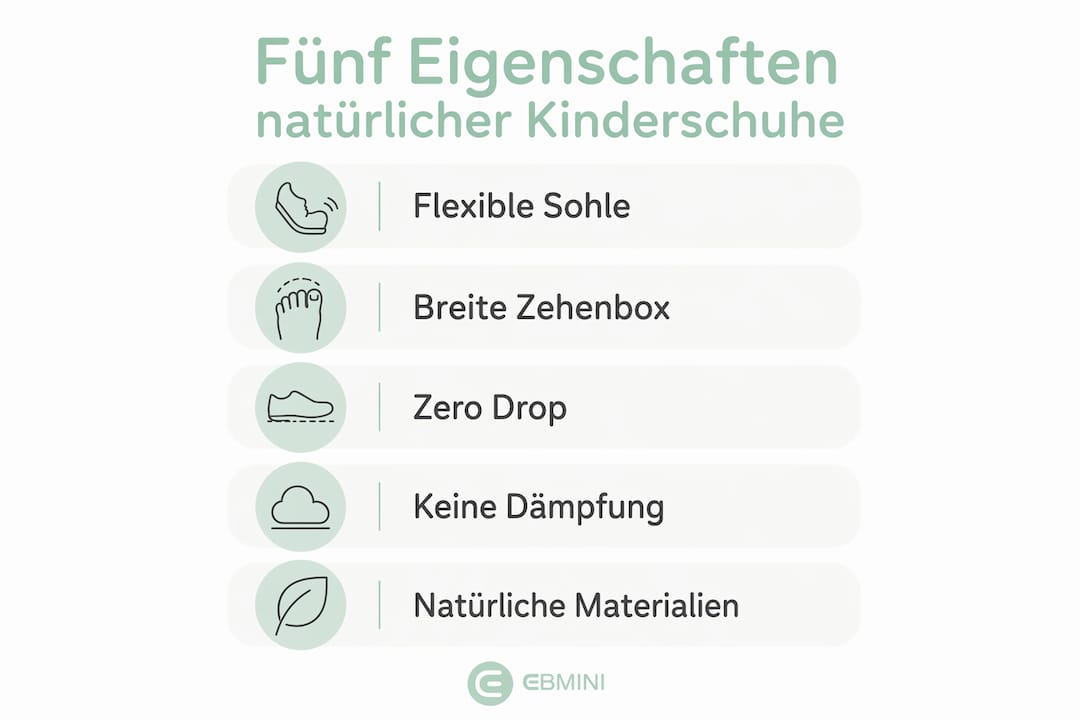
The most important characteristics of shoes that support natural walking in children can be reduced to five key features. Knowing these will help you make the right decision when buying, regardless of brand or price.
The five decisive characteristics
- Wide, ergonomic toe box: The toes must be able to spread out like a fan. A shoe that squeezes the toes inhibits muscle activity and can lead to long-term deformities such as hallux valgus.
- Flexible, thin sole: Flexible, thin soles allow direct ground contact and promote the natural function of the feet. The sole should be easy to bend with two fingers.
- Zero Drop: No height difference between heel and forefoot. Prof. Dr. Thomas Wessinghage emphasizes that barefoot shoes should have no drop and no cushioning midsole so that the body can actively stabilize itself.
- No thick midsole: Soft cushioning systems switch off the foot muscles. The foot does not learn to stabilize itself if the shoe takes over this task.
- Secure heel fit without constriction: The foot must not slip, but it must not be pinched either. A good heel fit keeps the foot in position without restricting freedom of movement.
Natural materials such as leather, textile, or natural rubber are another quality feature. They regulate moisture better than synthetic alternatives and reduce the risk of pressure points. Soft goat leather and flexible rubber soles, as used by Groundies in the Noto 2.0 Kids model, are an example of this combination of comfort and durability.
Professional tip: Place the sole of the shoe on the floor and press on the tip of the shoe with your thumb. If the shoe cannot be bent at least halfway, the sole is too stiff for a child.
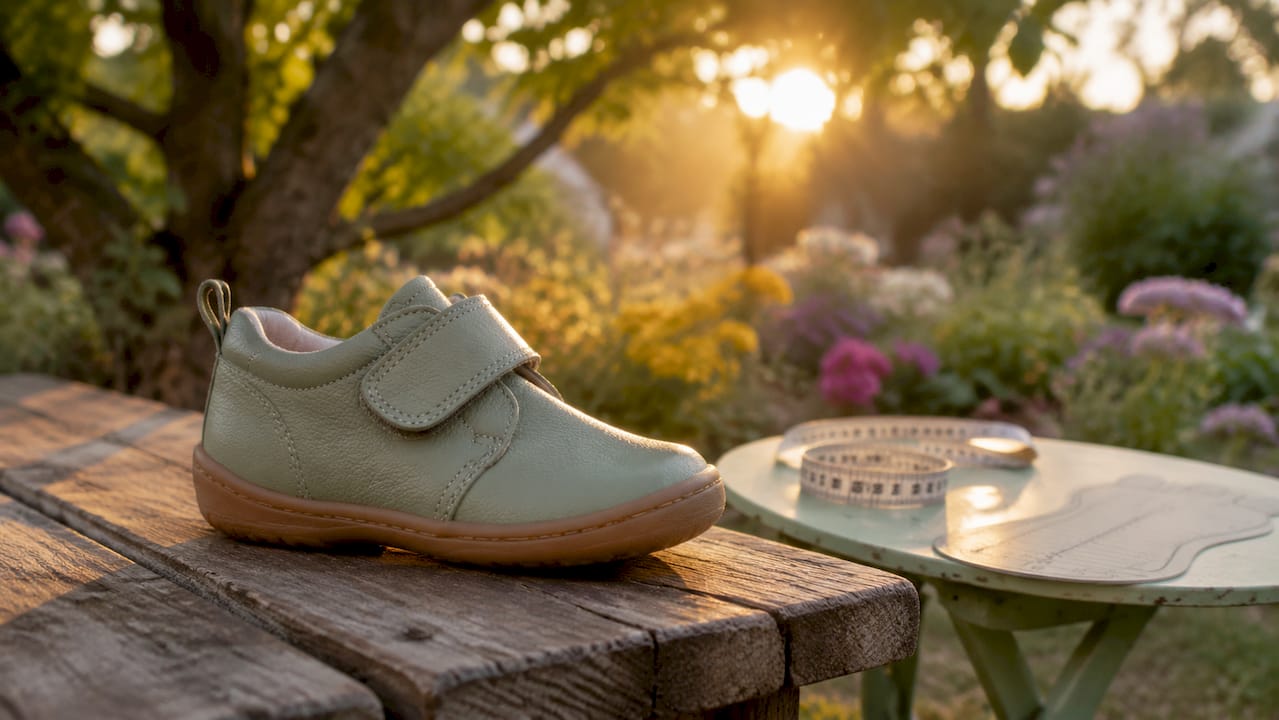
How does barefoot walking support the natural development of children's feet?
Barefoot walking is the most effective method for healthy foot development. Barefoot shoes are a good addition for everyday use, but they do not fully replace real barefoot walking. The difference lies in sensory stimulation: on grass, sand, or forest floor, the soles of the feet receive thousands of nerve impulses that train balance, body awareness, and muscle coordination.
Barefoot shoes do not replace barefoot walking. Sensory foot stimuli on different surfaces are essential for muscular development. Therefore, parents should actively encourage both.
Here's how to combine barefoot walking and barefoot shoes in everyday life:
- Barefoot at home: Let your child walk without shoes indoors. Smooth floors, carpets, and tiles offer different stimuli.
- In the garden and park: Grass, soil, and sand are ideal surfaces. Check the area beforehand for shards or sharp objects.
- On the beach and in the forest: These surfaces offer the strongest sensory stimulation. Even 15–20 minutes daily makes a difference.
- Barefoot shoes for on the go: On asphalt, in shopping centers, or in cool weather, barefoot shoes protect the foot without blocking natural movement. Barefoot shoes protect against shards and sharp stones without restricting natural foot function.
Professional tip: Create a fixed barefoot time of at least 30 minutes daily. Children who regularly walk barefoot have been shown to develop stronger foot muscles and a better sense of balance than children who consistently wear shoes.
Why is the right shoe size crucial for freedom of movement?
The biggest problem with children's shoes is not the wrong design, but the wrong size. Around two-thirds of children wear shoes that are too small, which restricts natural movement and impairs foot development. This figure comes from a study by the German Shoe Institute and shows how widespread this problem is. Shoes that are too tight prevent the toes from spreading, put pressure on the nail roots, and can permanently initiate deformities.
Regular measurement and checking of shoe size prevent deformities caused by tight shoes and ensure natural freedom of movement. Children's feet grow quickly and irregularly. Parents often underestimate the pace because children rarely complain about pain.
Fit at a glance
| Criterion | Guideline | Common mistake |
|---|---|---|
| Toe room | approx. 1 cm in front of the big toe | Too little space, toes bump |
| Toe width | Toes spread freely | Shoe presses together sideways |
| Heel fit | No slipping when walking | Shoe too big, heel lifts off |
| Measuring frequency | every 2–3 months | Shoe worn too long |
| Insole test | Remove insole, place foot on it | Rarely used |
Groundies recommends approx. 1 cm of toe room as the optimal fit. This distance prevents pressure when rolling off and gives the foot room to spread. Size control every 2–3 months is particularly important for children under 5, as their feet grow fastest at this age.
A simple method for checking at home: Remove the insole from the shoe and have your child stand on it. If the toes extend beyond the insole or bend sideways, the shoe is too small. Also use the size checklist from Ebmini for structured instructions.
What are the risks when switching to barefoot shoes?
The transition from conventional children's shoes to barefoot shoes is not a step to be taken overnight. A too rapid transition can overload foot joints and tendons. Doctors recommend a daily acclimatization period of 30–60 minutes, which is gradually increased. Soreness in the calves and soles of the feet is a common sign that the muscles are not yet ready.
"Parents should pay attention to a slow adjustment, as the unfamiliar walking in barefoot shoes stresses foot muscles and joints." Source: ad-hoc-news.de
The following points help parents make the transition safely:
- Increase slowly: Start with 30 minutes daily indoors. Increase the wearing time over 4–6 weeks.
- Choose suitable surfaces: Soft surfaces like grass or carpet are better for the start than hard asphalt.
- Consider risk groups: Children with diagnosed foot deformities, flat feet, or pre-existing orthopedic conditions should consult a pediatric orthopedist before making the switch.
- Take symptoms seriously: Complaints of heel, knee, or back pain are a signal to reduce the pace.
- Gradual guidance: The Ebmini blog explains acclimatization step by step with specific weekly goals for parents.
Common fitting errors in children can cause permanent damage, as children's feet grow quickly and require constant monitoring. Those who approach the transition patiently give the body the time it needs.
Which brands offer sustainable children's shoes for natural walking?
The market for children's shoes with natural freedom of movement has grown in recent years. Three brands stand out for their clear concepts and sustainable materials: Ebmini, Groundies, and Pololo. Each follows the barefoot principle but focuses differently on material, area of application, and price.
| Brand | Sole | Material | Special feature | Price level |
|---|---|---|---|---|
| Ebmini | Ultra-flexible, non-slip | Breathable, water-repellent | All-weather, Zero Drop, wide toe box | Medium |
| Groundies | Flexible rubber sole | Goat leather, natural rubber | High material quality, adult design | Medium to high |
| Pololo | Flexible leather sole | Natural leather | Classic look, good fit | Medium |
Ebmini focuses on all-weather models that are ultra-light and waterproof. The shoes consistently follow the Zero-Drop principle and offer a wide toe box that also fits wider children's feet. The range includes sandals, sneakers, and winter shoes, so parents can rely on one brand all year round.
Groundies uses high-quality goat leather and natural rubber. The models are durable and particularly suitable for children who spend a lot of time outdoors. The price is slightly higher but justified by the material quality.
Pololo offers a more classic look with natural leather soles. The shoes are particularly suitable for children who are still in the acclimatization phase, as the sole offers a bit more structure than pure minimalist shoes. If you also pay attention to matching clothing when buying children's shoes, Minoti offers additional advice on ergonomic children's clothing for all seasons.
All three brands share the basic principle: barefoot shoes promote active stabilization and strengthen foot muscles, which is particularly important for children's feet. The difference lies in the details of workmanship and the area of application.
Key insights
Children's shoes for natural movement most strongly promote healthy foot development when they combine flexible soles, a wide toe box, and zero drop, and are regularly checked for the correct size.
| Point | Details |
|---|---|
| Observe five key characteristics | Flexible sole, wide toe box, zero drop, no cushioning system, and secure heel fit are crucial. |
| Check shoe size every 2–3 months | Two-thirds of children wear shoes that are too small; approx. 1 cm of toe room is the correct guideline. |
| Plan barefoot walking daily | At least 30 minutes of barefoot walking strengthens muscles and sensory perception better than any shoe. |
| Make the transition slowly | Acclimatize for 30–60 minutes daily in barefoot shoes and increase over 4–6 weeks. |
| Compare sustainable brands | Ebmini, Groundies, and Pololo offer tested barefoot shoes with natural materials for all seasons. |
What I really learned after years with barefoot shoes
The most honest statement we can make at Ebmini is: most parents first buy the wrong shoe, not because they don't want to know better, but because the market is flooded with terms like "ergonomic" and "child-friendly" that mean nothing if the sole is still stiff.
What we observe again and again: children who grow up in barefoot shoes from the beginning have noticeably better posture and stumble less often. This is no coincidence. A foot that can feel what is happening beneath it reacts faster and more precisely.
The second point we underestimated: patience during acclimatization is not an option, it is a must. We have seen parents give up after a week because the child complained of calf pain. This is not a sign that barefoot shoes are wrong. It is a sign that the foot muscles are finally working.
Our honest advice: Start small. Don't buy five pairs immediately. Test one model, observe your child walking, and adjust the wearing time. The developmental promotion through barefoot shoes is real, but it takes time and the right guidance.
— Ebmini
Ebmini Barefoot Shoes: Healthy Feet for Every Season
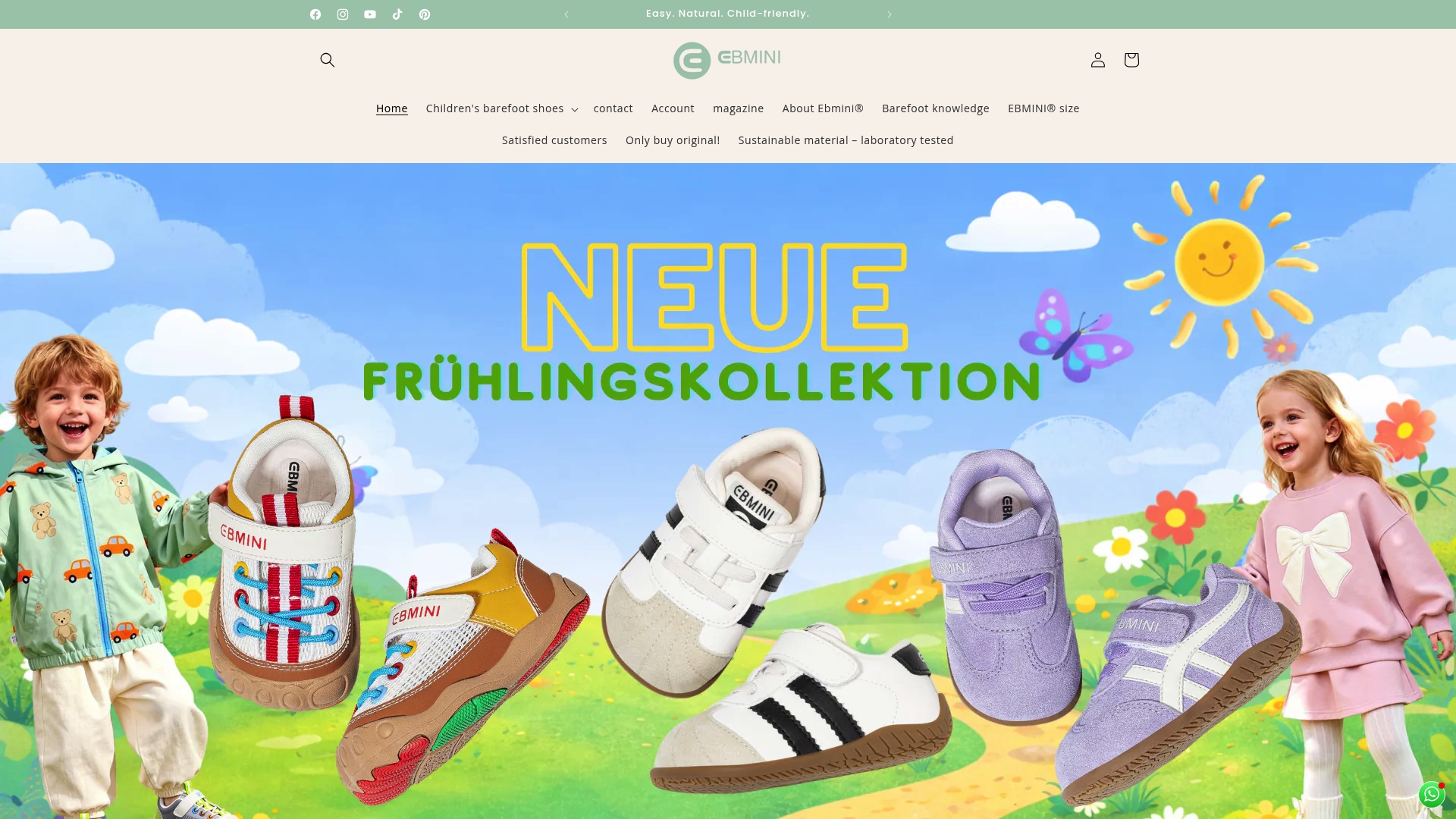
Ebmini has developed a complete collection of sustainable children's barefoot shoes that meet all five key characteristics from this guide: flexible sole, wide toe box, zero drop, breathable materials, and secure heel fit. The range includes lightweight barefoot sandals for summer, robust barefoot sneakers for everyday wear, and waterproof winter barefoot shoes for cold months. All models are ultra-light and designed for children aged 1 to 10. Healthy feet start with the first shoe.
FAQ
What exactly are barefoot shoes for children?
Barefoot shoes for children are shoes with a flexible, thin sole, a wide toe box, and no heel elevation, which allow the foot to move as if walking barefoot. They protect against injuries without restricting natural foot function.
From what age are barefoot shoes suitable for children?
Barefoot shoes are suitable from the first independent steps, i.e., from about 10–14 months. It is important that the shoe fits the foot size and that the sole is flexible enough for the still weak foot muscles.
How often should I measure my child's shoe size?
Parents should check shoe size every 2–3 months, as children's feet grow quickly. Around two-thirds of all children wear shoes that are too small, which promotes deformities.
Are barefoot shoes also suitable for flat feet?
For mild flat feet, barefoot shoes can strengthen foot muscles and support natural foot development. For pronounced deformities, parents should consult a pediatric orthopedist before switching to barefoot shoes.
How long does it take to get used to barefoot shoes?
The adjustment period usually lasts 4–6 weeks. Start with 30–60 minutes daily and gradually increase the wearing time so that foot muscles and tendons can adapt.


