

How to Properly Care for Children's Shoes in Autumn and Winter
Your child comes home after a long autumn day with muddy, wet shoes, and you simply place their expensive winter boots on the radiator because you want them dry by tomorrow. That one moment can make all the difference between a shoe that lasts two winters and one that falls apart after six weeks. Many parents consciously invest in high-quality children's shoes but neglect regular care because they don't know how to do it properly. This guide will show you step-by-step how to clean, dry, waterproof, and maintain autumn and winter shoes for long-term health.
Table of Contents
- Important Prerequisites and Materials for Care
- Step-by-Step Guide: Cleaning and Care
- Drying and Waterproofing for Autumn and Winter Weather
- Sustainability, Flexibility, and Expert Tips: The Icing on the Cake for Healthy Children's Shoes
- Why Care Routine and Material Awareness Are the Real Game Changers – Our Perspective
- Discover Flexible and Healthy Children's Shoes for All Weather Conditions in the EBMINI® Shop
- Frequently Asked Questions
Key Insights
| Point | Details |
|---|---|
| Gentle Cleaning | Never treat children's shoes with aggressive chemicals; instead, clean with mild soap and a soft brush. |
| Gentle Drying | Always let children's shoes air dry slowly and never on the radiator. |
| Consider Material | Each material requires special care – waterproof, condition, and match products accordingly. |
| Regular Care | Consistency significantly extends the lifespan of shoes. |
| Sustainable Products | For children, use natural and environmentally friendly care products whenever possible. |
Important Prerequisites and Materials for Care
Before you start with the actual care, it's worth taking a moment to gather the right materials. If you start unprepared, you might quickly reach for the wrong products that do more harm than good to the shoe.
What Utensils Are Really Needed
The basic shoe care kit doesn't require expensive special products. Often, what you already have at home, supplemented by a few targeted care products, is sufficient. The following table provides an overview of which materials are useful for which type of shoe:
| Shoe Type | Cleaning Agent | Care Product | Additional |
|---|---|---|---|
| Smooth Leather | Damp sponge, mild leather soap | Leather cream or wax | Soft cloth for polishing |
| Suede/Nubuck | Dry suede brush | Suede spray care | No direct water |
| Membrane Shoes (e.g., Gore-Tex) | Damp cloth, mild soap | Waterproofing spray (membrane-suitable) | No oil, no grease |
| Textile/Synthetic | Soft brush, lukewarm water | Waterproofing spray | Air drying |
For children's barefoot shoes, which often consist of a combination of flexible materials, particular attention should be paid to the sole and upper material used.
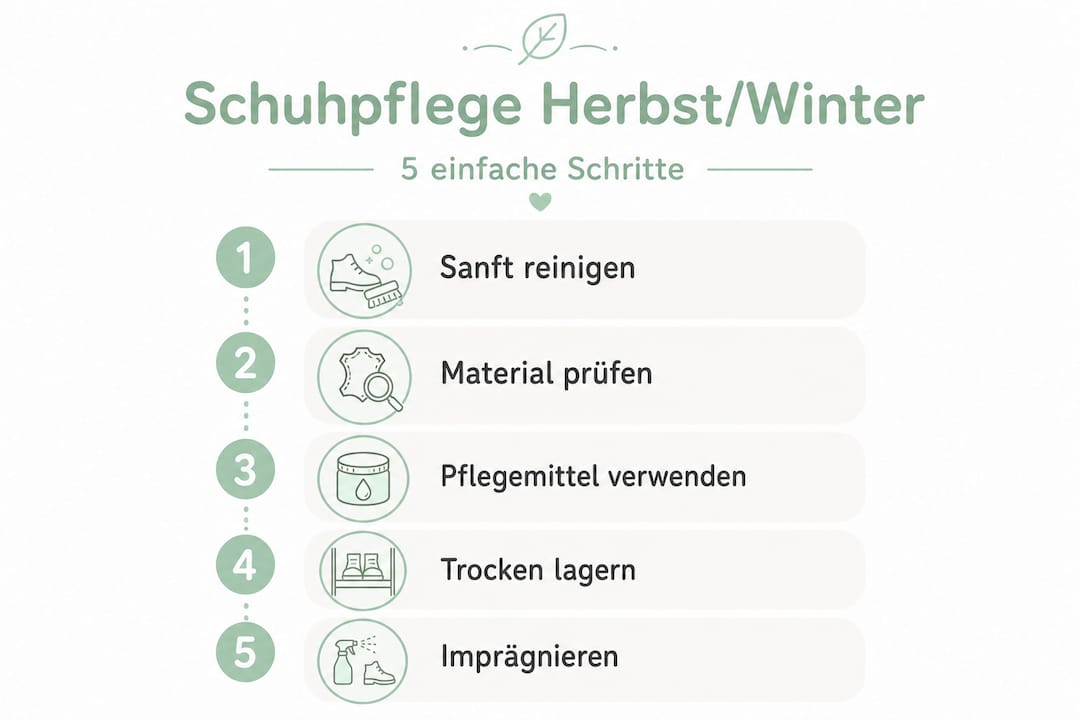
Material Knowledge as a Foundation
Many parents only realize when buying that there's a huge difference whether a shoe is made of smooth leather, nubuck, or a modern membrane material. Each material reacts differently to moisture, cleaners, and mechanical treatment. Smooth leather, for example, can be excellently cleaned with leather soap and then cared for with a leather cream that keeps the material supple. Suede, on the other hand, cannot tolerate damp cloths because the fibers can clump together and create unsightly marks.
Membrane shoes, i.e., shoes with a waterproof but breathable inner layer, require special attention. Oils and greasy care products can permanently damage the membrane and destroy its waterproofing. Instead, special membrane-compatible, water-based waterproofing sprays are recommended.
Knowing the material of each shoe saves money in the long run and protects the investment. When buying, specifically look at the label or ask the retailer what material the shoe is made of.
- Important: For coarse dirt, first use a dry dirt brush, then clean with mild soap or leather soap and a damp sponge; never use aggressive chemicals.
- No aggressive solvents, bleaches, or alcohol.
- For membrane shoes, do not apply oil or greasy wax to the outer surface.
- Prefer soft brushes to avoid scuffing the material.
Pro Tip: Keep a small box with the necessary care utensils right next to the shoe rack. If the materials are within reach, care becomes a matter of course and not a laborious special project.
Step-by-Step Guide: Cleaning and Care
Once the material is prepared, the actual care work follows step-by-step. This procedure serves as a basis and can be slightly varied depending on the type of shoe.
The Basic Cleaning Process
- Empty shoes and remove insoles. Small stones, sand, or damp sock remnants inside are common causes of odor and loss of shape.
- Brush off coarse dirt dry. Use a sturdy brush and brush the foam in before using water. Wet leather absorbs dirt much deeper.
- Clean with moisture. Lather a damp sponge or cloth with mild soap or leather soap, clean the upper material in circular motions.
- Wipe off residue. Completely remove soap residue with a clean, damp cloth, as soap residue can soften the material long-term.
- Care for material individually. Depending on the shoe type, now carry out the specific care measure (leather cream, suede care, waterproofing spray).
- Let dry. And here is the crucial step: always air dry, never on the radiator or with a hairdryer. Newspaper or a shoe tree help maintain the shape and absorb moisture evenly.
Differences by Shoe Type
Not every material reacts the same to the same cleaning process. The following comparison table shows what is particularly important for each shoe type:
| Shoe Type | Cleaning | Care | Avoid |
|---|---|---|---|
| Smooth Leather | Damp sponge, leather soap | Leather cream, shoe wax | Too much water, direct sun |
| Suede/Nubuck | Dry brush, little water | Suede spray care | Damp cloths, oils |
| Membrane Shoes | Mild soap, little water | Membrane-suitable waterproofing spray | Greasy products |
| Sneakers/Textile | Brush with soap | Waterproofing spray | Dryer, radiator |
Regularly caring for winter barefoot shoes not only extends their lifespan but also protects the natural flexibility of the material. This is particularly important for children because stiffened soles hinder natural foot movement.
“Shoes that are consistently cared for and properly stored often last two to three winter seasons without significant wear and tear.”
Pro Tips for Stubborn Stains
Salt and water stains on smooth leather can often be removed with a mixture of lukewarm water and a splash of white vinegar. Gently dab, do not rub. For suede, a special suede eraser, used like a normal eraser, removes stains without water. For chewing gum or resin on the sole, a short time in the freezer will make the material brittle and easy to remove.
A common mistake many parents make is waiting to clean until the dirt is completely dry. Fresh dirt is always easier to remove. Briefly brushing the shoes after a walk saves a lot of effort later. It also helps to increase resale value by keeping shoes in good condition regularly.
Pro Tip: Children as young as 4 can help with simple brushing. This not only promotes motor skills but also teaches them early on to take care of their belongings.
Drying and Waterproofing for Autumn and Winter Weather
Immediately after care, proper drying and protective treatment against moisture follow. These two steps are often underestimated but are crucial for the long-term preservation of the shoe.
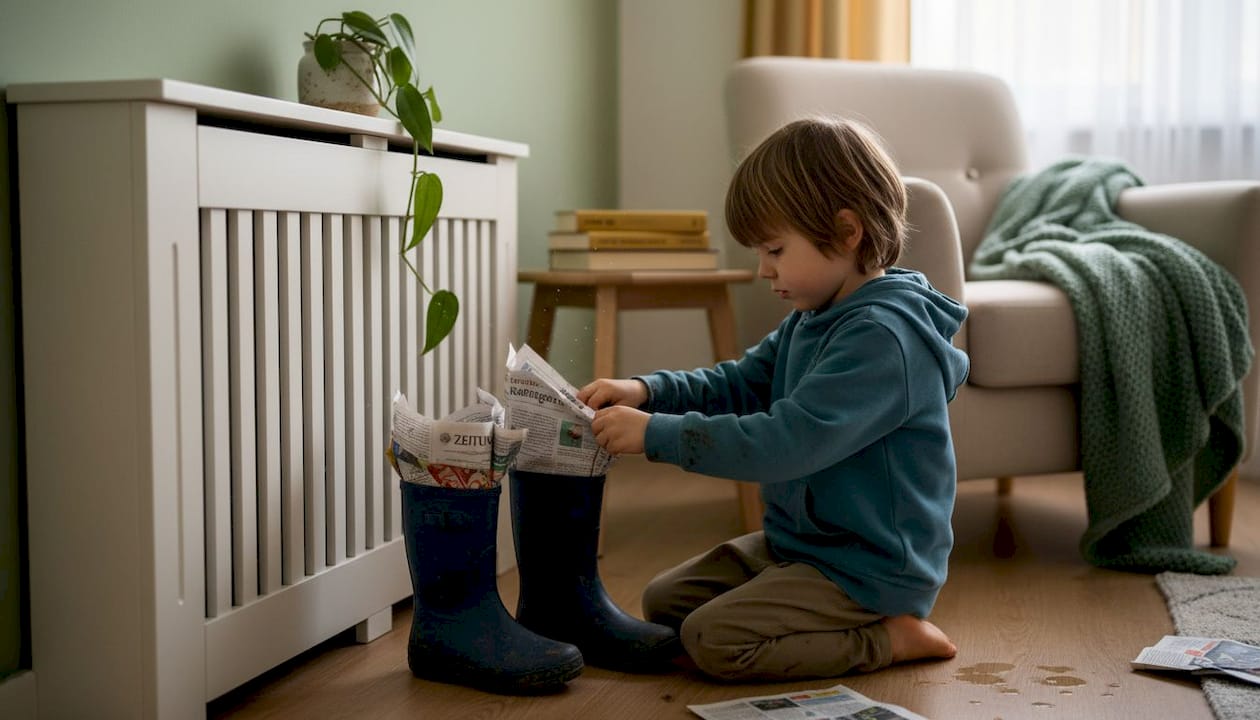
Proper Drying Without Damage
Perhaps the most common mistake of all: wet children's shoes ending up on the radiator. This feels practical, but it's fatal for the material. Direct heat dries out leather and synthetic materials too quickly, leading to cracks, deformation, and sole detachment. The membrane in waterproof shoes can be permanently damaged.
The correct method: Always air dry, at room temperature, never in direct sun or directly on the radiator. For faster drying, remove the insoles and stuff the shoe with newspaper. The paper absorbs moisture and prevents the shoe from losing its shape.
- Remove insoles separately and let them dry.
- Stuff shoes with newspaper or a shoe tree.
- Dry in a well-ventilated area at room temperature.
- Allow at least 12 to 24 hours before the shoe is worn again.
- Never use a hairdryer, microwave, or radiator.
Waterproofing as a Shield
Waterproofing is not a one-time thing after purchase but an ongoing protection. Always waterproof new shoes beforehand, before they are worn for the first time. This way, the spray seals the open pores of the material and forms a protective layer against moisture and dirt.
In winter, waterproofing should be refreshed every two to three weeks, especially if the shoes are used daily in rain or snow. As a rule of thumb: if water no longer beads off in small drops but soaks into the material, it's time for a new layer of waterproofing.
The choice of waterproofing agent depends on the material. Waxes or leather oils are suitable for leather (except for membranes), while fluorocarbon-free sprays, which are more environmentally friendly and still provide reliable protection, are recommended for textile and membrane shoes.
Statistic: Studies show that regularly waterproofed shoes remain water-repellent up to 40 percent longer than untreated shoes under the same conditions.
If you're already looking at barefoot shoes for spring, you should also plan for waterproofing from the start so that the transition between seasons goes smoothly.
Sustainability, Flexibility, and Expert Tips: The Icing on the Cake for Healthy Children's Shoes
After the protective treatment, we look at sustainable, healthy care habits and expert recommendations that will make the biggest difference in the long run.
Why Flexibility Is So Important
A child's foot is not a scaled-down version of an adult's foot. In toddlers, it still largely consists of cartilage, which only gradually turns into bone. Shoes that support this process must be one thing above all: flexible. Flexible shoes for children between 1 and 10 years promote the natural development of foot muscles and balance.
Well-cared-for shoes retain their flexibility longer. Leather that is regularly treated with cream remains supple and does not crack. Synthetic material that is properly waterproofed and air-dried does not lose its elasticity. This is not just a matter of comfort but is directly related to healthy growth.
Natural Care Products as a Sustainable Choice
Many conventional shoe care products contain silicones, fluorine compounds, or other synthetic substances that are not only environmentally harmful but can also trigger reactions on sensitive children's skin. Especially when small children touch their shoes and then put their hands in their mouths, the composition of the care products should be considered.
Natural alternatives like beeswax are excellent for leather and offer good protection against moisture. Environmentally friendly water-based waterproofing sprays are now available in good quality and offer comparable protection to classic fluorocarbon variants. Tests show that barefoot shoes are optimal for foot development and are recommended by orthopedists, especially when regularly cared for and retaining their structure.
- Beeswax: Protects smooth leather, cares naturally, keeps moisture away.
- Linseed oil: Suitable for very dry leather as deep conditioning, use sparingly.
- Environmentally friendly sprays: Water-based, without fluorine compounds, for textile and membrane.
- Mild soap: Basic cleaning for almost all materials, safe for children.
Care as a Family Ritual
Regular shoe care doesn't have to be a laborious project. If you establish it as a short weekly ritual, it takes barely five minutes per pair of shoes. Children can actively participate: removing insoles, brushing shoes, inserting newspaper. This is fun, promotes responsibility, and shows children that care is a normal part of everyday life.
Pro Tip: Make shoe care a regular Sunday evening activity, just before the shoes are set out for the new week. This way, your children always start the week in well-cared-for shoes, and the effort is distributed evenly.
Common Mistakes Parents Should Avoid
- Cleaning shoes too rarely and allowing dirt to dry.
- Using the wrong care product for the respective material.
- Drying shoes on the radiator.
- Forgetting to waterproof or only applying it once before purchase.
- Wearing shoes permanently without insoles, leading to loss of shape.
- Treating synthetic children's barefoot sneakers with oil-based leather care products that damage the material.
Why a care routine and material awareness are the real game-changers – our perspective
Honestly, at EBMINI® we consistently see the same pattern: Parents buy high-quality, carefully crafted children's shoes, invest a lot of money, and half a year later the shoes look as if they've spent three winters in a field. This is almost never due to the material or the workmanship. It's due to small, recurring oversights in care.
The uncomfortable truth is: Most care mistakes don't happen out of indifference, but out of ignorance. Nobody teaches you how to properly clean a membrane shoe or why beeswax is sometimes better than expensive brand-name cream. This knowledge often remains hidden because shoe care is considered boring and not what it truly is: a direct influence on health, sustainability, and the value of the shoe.
What particularly concerns us: The brand value of a shoe fades within a few weeks if it's not cared for. A simple, regularly maintained shoe made of solid material beats an expensive model that is neglected, in every comparison. Long-term value is not created by the purchase alone, but by what comes after.
We also believe that shoe care is more than just material preservation. It's about values that children can learn early on. Handling objects carefully, understanding that resources are limited, and realizing that quality requires care. These are lessons that go far beyond the shoe.
Specifically, for us this means: Don't keep buying new shoes if the old ones could still be brought back into good shape. Pay attention to the material before reaching for a care product. And use the resale value tips to pass on well-maintained shoes instead of throwing them away. This conserves resources, saves money, and shows children that sustainable handling of things can be self-evident.
Discover flexible and healthy children's shoes for all weather conditions in the EBMINI® shop
Now that you know how to properly care for children's shoes and what good materials entail, the next logical step is: choosing shoes that are designed for durability, flexibility, and healthy foot development from the start.

In the EBMINI® shop, you'll find winter barefoot shoes designed specifically for autumn and winter conditions. Whether muddy forest paths, wet schoolyards, or snowy playgrounds, the models combine waterproofing with the sole flexibility typical of barefoot shoes. All flexible barefoot shoes in the assortment are manufactured to support natural foot development while remaining easy to care for. For everyday school life, the everyday sneakers for children are particularly suitable, being robust enough for playground use and easily lasting several seasons with the care tips from this article.
Frequently Asked Questions
How often should children's shoes be cared for in autumn and winter?
Cleaning after every longer walk and basic care every 1 to 2 weeks are optimal to keep the material in shape and prevent damage early on.
What home remedies can be used to safely clean children's shoes?
Warm water with mild soap and a soft brush are sufficient in most cases. For more stubborn dirt, according to expert sources on shoe cleaning, a dry dirt brush for coarse dirt, followed by a damp sponge with mild leather soap, without aggressive chemicals, is recommended.
What is the best way to dry wet children's shoes?
Stuff the shoes with newspaper and let them dry at room temperature. Avoid radiators and hairdryers, as direct heat permanently damages the material and destroys the shoe's shape.
Which care products are sustainable for children's winter shoes?
Natural products such as beeswax or environmentally friendly water-based waterproofing sprays are particularly suitable for children because they offer effective protection and are low in harmful substances.


