

Children's Shoes in a Slow Fashion Concept: A Guide for Parents
The children's shoe slow fashion concept is defined as the conscious production and purchase of children's shoes made from sustainable materials, with a long lifespan and a clear focus on foot health. In professional circles, "slow fashion" is also referred to as a counter-movement to the throwaway culture. Children need an average of around twelve pairs of shoes before starting school. This not only means a financial burden for families but also significant resource consumption. Those who opt for slow fashion buy less often, better, and with more consideration.
Which materials and manufacturing processes are crucial for slow fashion children's shoes?
The material is the most important factor when buying sustainable children's shoes. Vegetable-tanned leather is pollutant-free and significantly more compatible with sensitive children's skin than chrome-tanned leather. Chrome tanning uses chemical compounds that can trigger allergies and pollute wastewater during production. Vegetable tanning uses tree bark and natural extracts. This takes longer, costs more, but protects skin and the environment.
Certifications provide parents with reliable guidance:
- IVN (International Association of Natural Textile Industry): Strictest standard for natural leather, consistently excludes harmful substances.
- GOTS (Global Organic Textile Standard): Applies to textile components in the shoe, controls the entire supply chain.
- Oeko-Tex Standard 100: Tests for harmful substances in the final product, including synthetic materials.
- Bluesign: Focus on resource-efficient production and safe chemicals in manufacturing.
Many brands are increasingly investing in transparent supply chains and certified materials to credibly implement slow fashion. This is no longer a marketing promise, but verifiable reality. Parents should actively demand certificates and not rely on terms like "natural" or "environmentally friendly" without proof.
Pro-Tip: When buying, don't look at the product description, but at the tanning process. If "vegetable-tanned" or an IVN certificate is mentioned, that's a real quality feature. If both are missing, caution is advised.
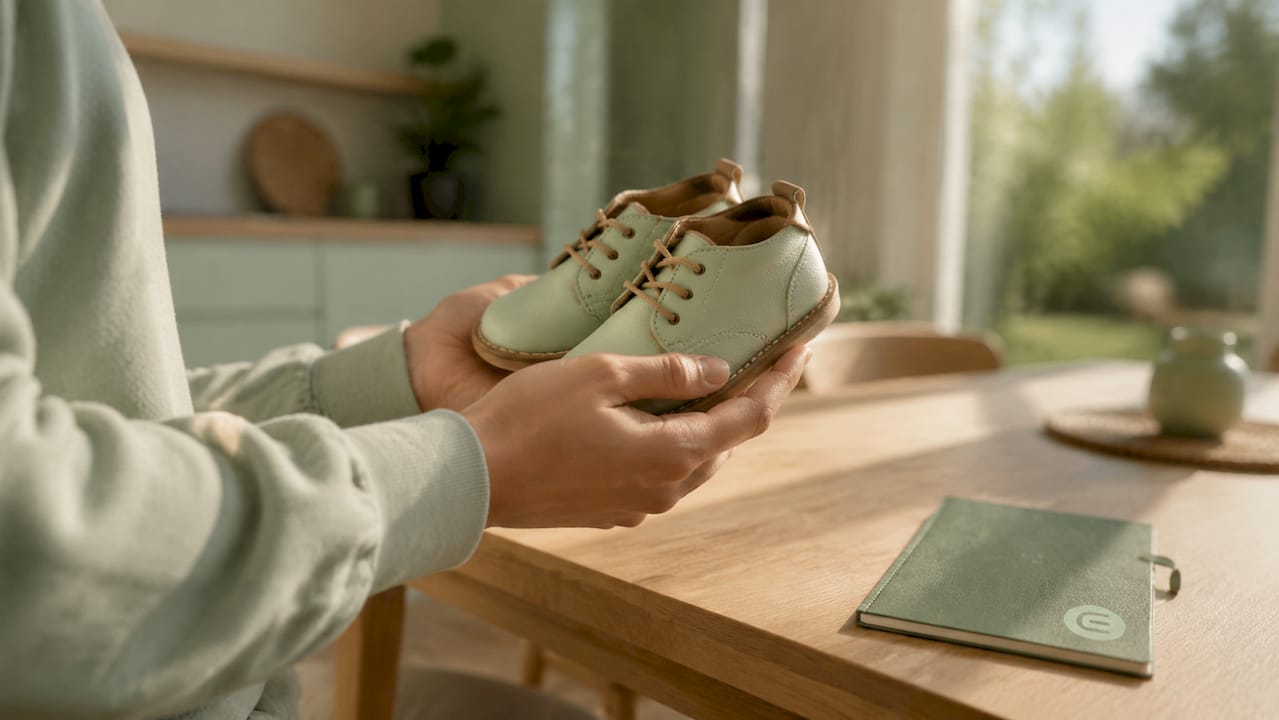
Besides leather, natural textiles like organic cotton, hemp, or merino wool also play a growing role. They are used for linings, laces, and padding. Especially for linings, direct skin contact is constant, which is why pollutant-free materials are particularly important here.
How does the slow fashion concept support natural foot development in children?
Flexible, pliable soles promote healthy foot development and prevent deformities. This is not a trend, but medical consensus. Children's feet are not fully developed until school age. Shoes that are too stiff hinder muscle development and can permanently promote deformities such as flat feet.
Slow fashion children's shoes often follow the barefoot shoe principle. This means specifically:
- Wide toe box: Toes can spread naturally without being squeezed.
- Zero Drop: No height difference between heel and forefoot, which promotes an upright posture.
- Thin, flexible sole: The child feels the ground, which trains proprioception and balance.
- No rigid footbed: The child develops their own foot muscles instead of relying on artificial supports.
- Lightweight: Heavy shoes tire leg muscles and alter natural gait.
Barefoot-like shoes support natural movement sequences and simultaneously promote foot musculature. They still protect against injuries from cold, wetness, or sharp objects. This is the crucial difference to actual barefoot walking: protection without restriction.
Parents who pay attention to natural movement promotion do their children a long-term favor. Deformities that develop in childhood are difficult to correct in adulthood. A good shoe is real prevention here.
What innovative approaches extend the lifespan of children's shoes?
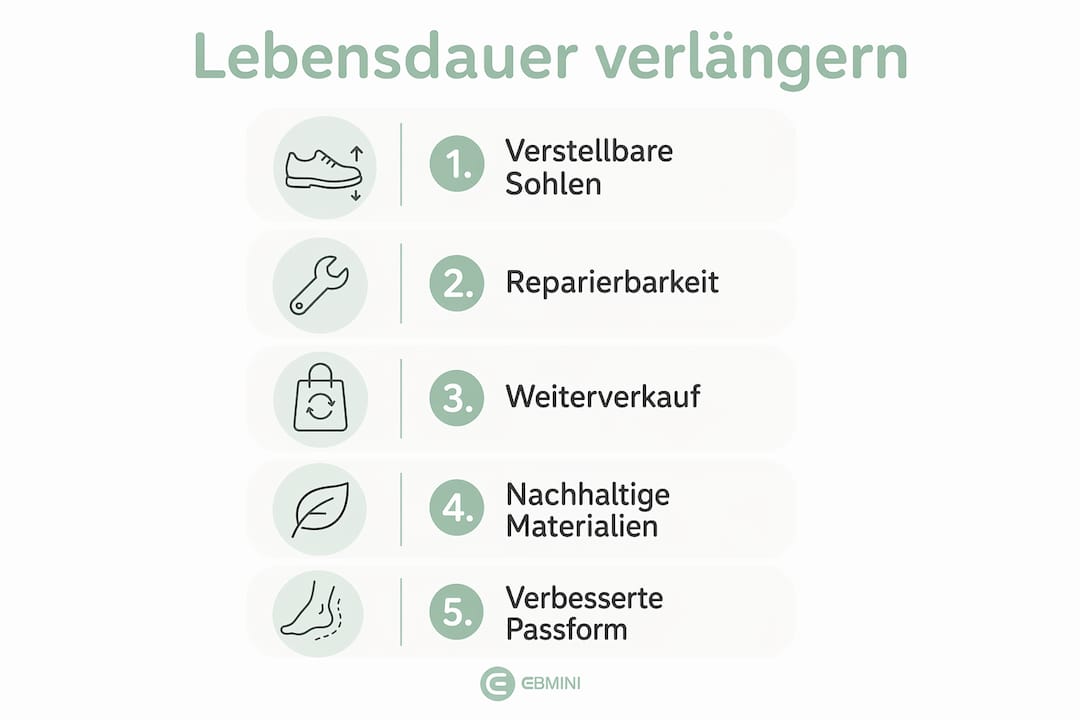
Frequent new purchases not only mean a financial burden but also cause additional environmental consumption and waste. This is precisely where one of the most exciting innovations in the slow fashion sector comes in: shoes that grow with the child. The concept is simple. The shoe grows with the child's foot instead of becoming too tight after a few months.
A well-known example is the "Sizeless" concept, where adjustable soles can cover two sizes. This significantly reduces the need for new purchases. Technically, this works via extendable sole elements or flexible material zones that adapt to the growing foot.
| Approach | Advantage | Challenge |
|---|---|---|
| Growing sole | Covers multiple sizes, saves money | Fit still needs to be checked regularly |
| Modular design | Individual parts interchangeable, longer use | Higher initial purchase price |
| High-quality materials | Shoe lasts longer, less wear | Requires conscious care |
| Resale and hand-me-downs | Resources remain in circulation | Quality must be suitable for second-hand |
Technological innovations in the slow fashion sector extend the lifespan without compromising comfort. This is the core of the concept: not doing without, but buying smarter. Anyone who invests €80 in a high-quality, growable shoe will spend less over two years than someone who buys a new €25 pair every three months.
Pro-Tip: When buying, check if the shoe is suitable for resale. High-quality slow fashion models retain their value and can be easily passed on. This is ecologically sensible and saves the family budget.
The resale of used children's shoes is also part of the slow fashion idea. A well-made shoe can easily last for two children. However, this requires that quality and care are right from the start.
How can parents consciously choose and care for sustainable children's shoes?
The purchase begins with the right fit. A shoe that doesn't fit harms the foot, no matter how sustainably it was produced. Parents should regularly measure the child's foot, at least every two to three months for toddlers. There should be about one centimeter of space between the toe and the end of the shoe.
When buying, it is worth paying attention to the following points:
- Tanning process: Vegetable-tanned is the minimum criterion for leather products. Purchasing decisions should be based on the tanning process, not marketing promises.
- Sole flexibility: The shoe must be easily bendable in the middle. If it isn't, it's too stiff.
- Weight: A children's shoe should be so light that the child barely feels it.
- Closure: Velcro fasteners are more practical than laces for children up to about 6 years old and sit more securely.
- Season: Waterproof shoes with natural materials are recommended for colder seasons, without restricting foot movement.
For care, the following applies: regularly treat leather with natural leather grease or beeswax. This keeps the material supple and significantly extends its lifespan. Synthetic care products can impair the shoe's pollutant-free properties. Allow shoes to air out after wearing, never dry directly on the heater. Heat destroys adhesives and deforms soles.
Anyone looking for a parent guide to quality assessment will find specific criteria for comparing different models there. Especially for the first shoe, professional advice is invaluable. Many parents underestimate how much a bad shoe can do in the first few years of life.
For families actively seeking sustainable brands, the guide to sustainable children's shoe brands provides a structured overview. Children's clothing in slow fashion style also follows similar principles and complements the holistic approach of sustainable children's fashion.
Key Insights
Sustainable children's shoes following the slow fashion concept protect foot health, conserve resources, and are ultimately the economically smarter choice for families.
| Topic | Details |
|---|---|
| Material Choice | Vegetable-tanned leather and certified textiles (IVN, GOTS) protect children's skin and the environment. |
| Foot Development | Flexible soles, wide toe box, and zero drop promote natural growth and prevent deformities. |
| Extending Lifespan | Growable designs and high-quality craftsmanship reduce new purchases and resource consumption. |
| Purchase Criteria | Tanning process, sole flexibility, and weight are more important than brand name or price. |
| Care | Natural leather care and proper drying significantly extend the lifespan. |
What I've truly learned after years with children's shoes
Many parents believe that expensive shoes are automatically good shoes. That's not true. I've seen premium models that were stiff as wood and bore certificates that said nothing about the tanning process. And I've seen cheaper shoes that were flexible, light, and low in pollutants. Price is not a quality feature. The tanning process is.
What truly surprised me: parents who have switched to slow fashion don't just buy more sustainably. They also buy more relaxed. Less stress with the next growth spurt because the shoe still has room to spare. Fewer guilt feelings because you know what's in the shoe.
The biggest misinvestment is the cheap shoe that breaks after six weeks and then ends up in the trash. That's neither sustainable nor cheap. A good slow fashion shoe costs more, but lasts significantly longer and can be passed on. That's real savings.
My honest advice: Start with one good pair. See how it performs. Then decide further. No one has to replace their entire shoe collection immediately.
— Ebmini
Ebmini: Barefoot shoes that embody Slow Fashion

Ebmini has developed children's shoes that consistently implement the slow fashion concept. The barefoot shoes for children are ultra-light, flexible, and waterproof, with a wide toe box, zero drop, and non-slip sole. For summer, there are barefoot sandals, and for everyday wear, barefoot sneakers. All models are designed for natural foot development and are intended for children from 1 to 10 years old. Ebmini also offers detailed size advice and customer reviews to ensure the purchase is right from the start.
FAQ
What does Slow Fashion mean for children's shoes?
Slow fashion for children's shoes refers to production using sustainable, pollutant-free materials with a long lifespan and a clear focus on foot health. The concept contrasts with quickly produced, short-lived mass models.
How do I recognize high-quality, sustainable children's shoes?
Pay attention to the tanning process for leather shoes, certifications like IVN or GOTS, as well as flexible soles and a light weight. Marketing terms like "natural" without a certificate are not a reliable indicator.
Are barefoot shoes suitable for all children?
Barefoot shoes are suitable for most healthy children's feet and promote natural muscle development. For existing deformities, a pediatrician or podiatrist should be consulted beforehand.
How often do children's shoes need to be changed?
Children's feet grow quickly, so the fit should be checked every two to three months. Growable models can extend this rhythm and reduce new purchases.
Is the higher price of sustainable children's shoes worth it?
Yes. Parents benefit from products that combine comfort, health promotion, and sustainability, despite sometimes higher initial costs. High-quality shoes last longer, can be passed on, and save money in the long run.


