

Children's Shoes Without Heel Elevation: What Parents Need to Know
Children's shoes without heel elevation, i.e., with so-called zero drop, support the natural foot development of most children better than conventional shoes with elevated heels. This is not a trend but a recommendation that orthopedists have advocated for years. For healthy children's feet without known deformities, the rule is: the flatter the sole, the more muscle work the foot itself performs. However, if your child experiences pain when walking, stumbles frequently, or shows a congenital foot deformity, a pediatric orthopedist or pediatrician should be consulted before changing shoes. For everyone else: The measurement and fitting tips below will help you find the right shoe.
Table of Contents
- What do heel elevation, drop, and zero drop actually mean?
- How does heel elevation affect foot development?
- What features do good children's shoes without heel elevation have?
- How do you measure and fit children's shoes correctly?
- When to start, and how to gradually transition to barefoot-like shoes?
- What do orthopedists say, and what evidence is there?
- Key takeaways
- Realistic expectations when transitioning to barefoot-like shoes
- Ebmini: barefoot-like children's shoes for everyday outdoor use
- Further sources and studies
What do heel elevation, drop, and zero drop actually mean?
Before you look for the right shoe in-store or online, it's worth distinguishing between the terms. They sound technical but are quickly explained.
Heel Elevation / Drop: Drop (also called heel elevation) describes the height difference between the heel and the forefoot inside the shoe. A shoe with an 8 mm drop keeps the heel 8 mm higher than the forefoot area. This sounds small but has a biomechanical effect.
Heel: A visible, outwardly elevated heel area. In children's shoes, often smaller than in adult shoes, but still present.
Zero Drop: Technical English term for no drop. Heel and forefoot are at the same height. The foot is flat, like when walking barefoot.
Footbed / Heel Counter: The footbed is the shaped insole, which often includes a medial arch. The heel counter is the rigid back part of the shoe that stabilizes the foot. Important: A firm heel counter is useful for a secure fit, but it is not a heel elevation. Both should be judged separately.
Where is a drop hidden? Many shoes look flat from the outside but have a hidden drop built into the outsole. Just checking the insole is not enough.
Here's how to identify a hidden heel elevation:
- Place the shoe on a flat surface and look from the side: Is the heel higher than the forefoot?
- Hold your thumb under the forefoot and your index finger on the heel of the outsole and compare the thickness.
- Roll the sole lengthwise: A zero-drop shoe rolls evenly, a shoe with a drop tilts towards the heel.
- Place a small marble in the shoe: If it rolls towards the heel, there is a slope.
How does heel elevation affect foot development?
In short: Even a few millimeters of slope can have biomechanically significant consequences for young children. This is not alarmism but an assessment shared by experts in orthopedics and sports science.
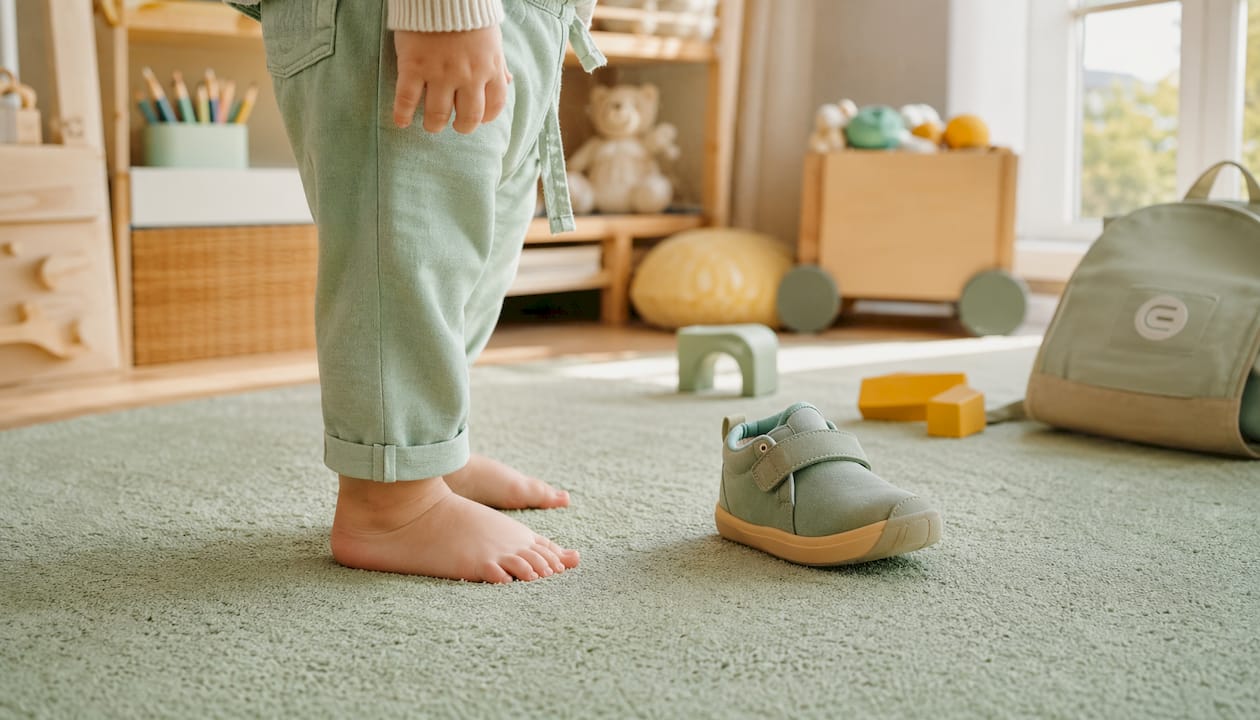
Up until school age, a child's foot is largely made of cartilage and is therefore moldable. If a shoe consistently holds the heel higher than the forefoot, the axis of load changes. The calf muscles and Achilles tendon are kept in a shortened position. Spending many hours every day in such a shoe trains this shortening, which can long-term affect the knees, pelvis, and posture.
Then there's the question of muscle activation. Foot muscles only strengthen through active use. A shoe that takes over some of the stabilization work through cushioning and drop deprives the foot of precisely these training stimuli. Proprioception, i.e., the foot's ability to perceive ground conditions and react to them, works better when the sole is thin and flexible.
When is medical clarification useful? For visible deformities such as a pronounced flat foot, for pain after walking, or if the child stumbles unusually often, a pediatric orthopedist should be involved in the decision. Irregular foot positions in the first three to four years of life can be developmentally normal. A visit to the orthopedist is generally recommended from the age of four if abnormalities persist.
What features do good children's shoes without heel elevation have?
Not every shoe marketed as "barefoot-like" delivers on its promises. Pay attention to these criteria when buying:
- Zero drop: Heel and forefoot are at the same height, no built-in slope in the outer or inner sole.
- Flat footbed: No medial arch, no arch support for healthy feet. A flat footbed allows the foot to do its own stabilization work.
- Flexible, thin sole: The sole should be easily rolled lengthwise and crosswise with little force. Flexible soles provide ground stimuli that train proprioception and balance.
- Wide toe box: The toes must be able to spread without pressing against the upper material.
- Firm heel fit without elevation: The heel counter keeps the foot in place without elevating the heel.
- Non-slip outsole: Especially important on wet or slippery surfaces.
- Breathable materials: Leather or textiles are clearly preferable to synthetic materials, as children's feet sweat a lot.
What should good barefoot children's shoes cost? High-quality models with all these features usually fall into the mid to high price segment in Germany. Cheaper shoes often meet individual criteria but not all simultaneously. Those who opt for a long-term investment often save themselves the purchase of intermediate shoes that don't fit.
Pro Tip: Hold the shoe in both hands and roll the sole lengthwise: A true barefoot shoe offers almost no resistance. Then press your thumb and forefinger against the side of the sole: It should also deform easily crosswise. If both are successful, the sole is flexible enough.
How do you measure and fit children's shoes correctly?
The rule of thumb is simple: measure the foot while standing, measure both feet, and allow sufficient room for growth. The loaded foot is longer than when sitting, and most children have one foot slightly longer than the other.
When trying them on, check in order:
- Heel fit: Push the foot all the way back into the shoe. There should be no play between the heel and the heel counter.
- Toe room: Press on the toe of the shoe from the outside. The longest toe should still have at least a finger's width of space.
- Flex test: Bend the sole upwards with your hand. It should yield in the ball of the foot, not in the middle.
- Drop check: Place the shoe on a flat surface and check if the heel is higher than the forefoot.
Also consider foot volume: A narrower foot needs a different last than a wide foot. Lined winter shoes can reduce the effective width due to the padding and optically conceal the zero drop. Therefore, also check the outsole directly on lined models.
Since children's feet grow quickly, regular remeasurement and adjustment of shoe size are recommended.
When to start, and how to gradually transition to barefoot-like shoes?
As soon as a child walks safely and independently, flat, flexible shoes are the right choice. For the crawling and early standing phase: Barefoot is best, and if shoes are needed, choose ones with soft, thin soles without any drop.
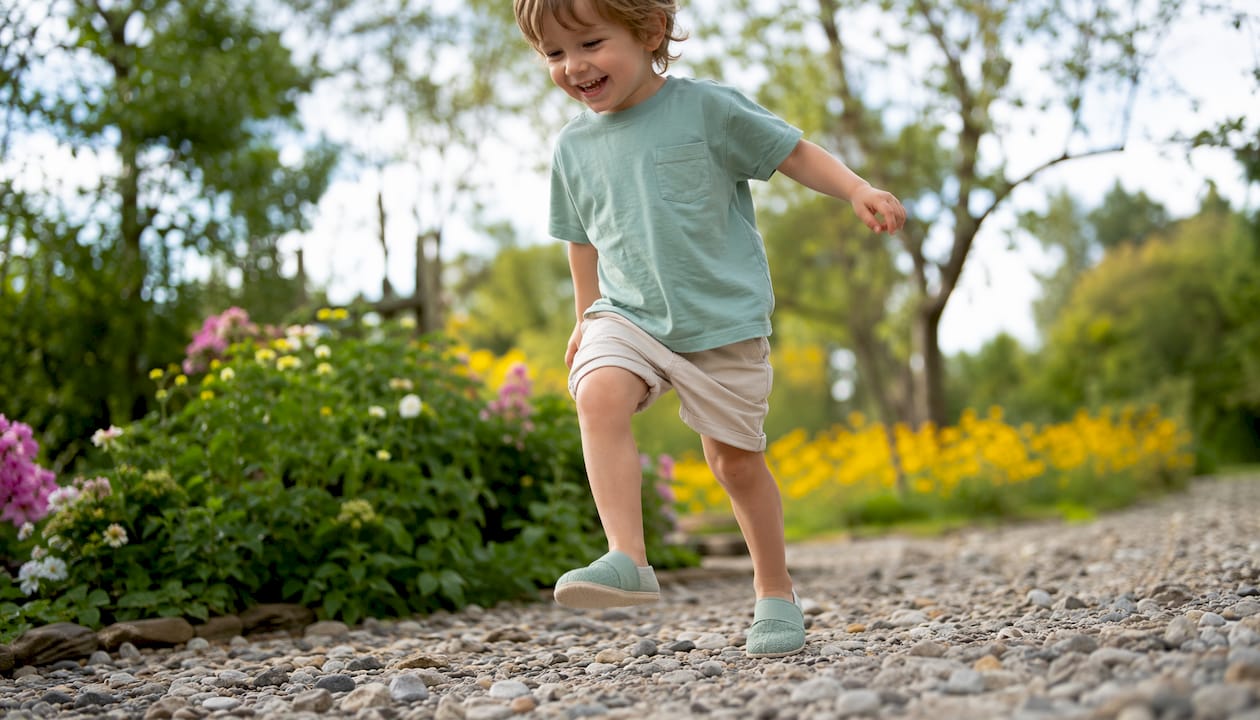
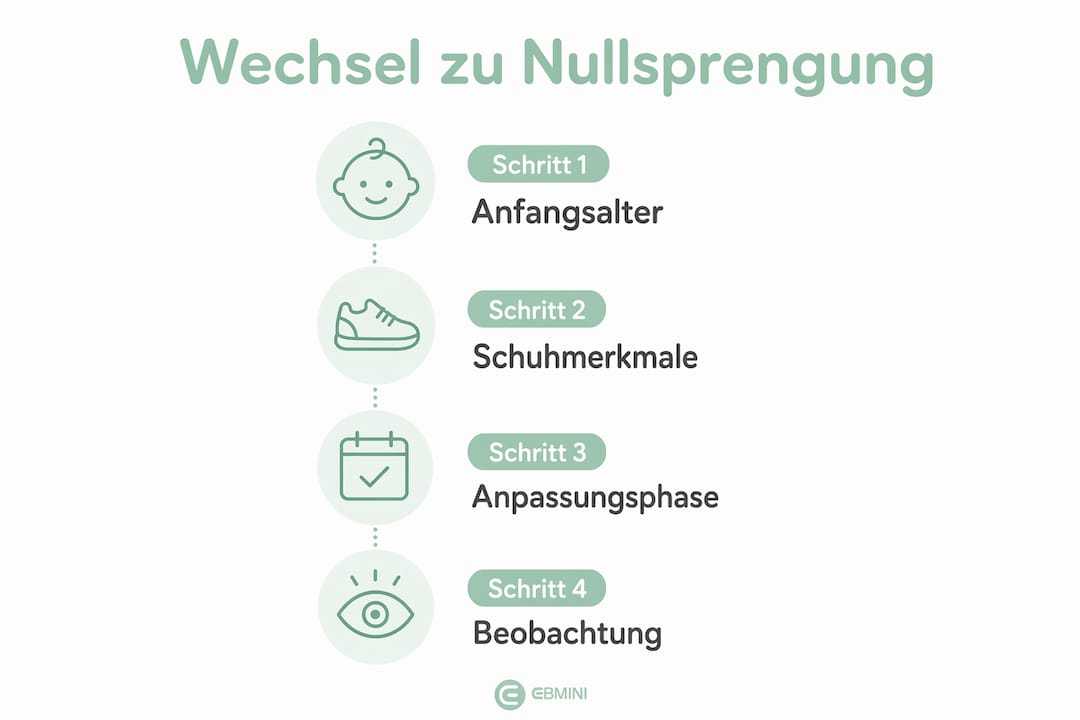
The transition to barefoot-like shoes is best achieved in phases: The transition should be gradual, starting in the early walking stages with flat, flexible shoes and slowly increasing to longer wearing times later. Even schoolchildren benefit from flexible, barefoot-like shoes with good support and grip.
Age-specific considerations: For weather protection, toddlers need waterproof models, but these can also have zero drop. A firm heel counter and zero drop are not mutually exclusive.
Signs that suggest a slower transition: The child stumbles more frequently than usual, complains of pain in the calves or soles of the feet, or appears unsteady when walking. In these cases, proceed more slowly and consult a specialist if discomfort persists.
What do orthopedists say, and what evidence is there?
The expert opinion is clear: Orthopedists like Prof. Dr. med. Thomas Wessinghage recommend flat shoes without heel elevation because they promote active stabilization and strengthening of the foot muscles. Barefoot shoes with thin, flexible soles, wide toe boxes, and zero drop strengthen muscles, proprioception, and coordination.
"Many recommendations from orthopedists and expert authors emphasize that even a few millimeters of incline (drop) in young children can have biomechanically significant consequences — for the knees, pelvis, and overall posture."
Ebmini develops its children's shoes in collaboration with orthopedists and consistently focuses on zero drop, wide toe boxes, flexible and ultra-light soles, and waterproof materials. Note: Ebmini is the publisher of this article and sells its own barefoot shoes for children.
How do you verify manufacturer claims? Look for specific information on the drop (ideally "0 mm"), sole thickness, and last cut. Missing or vague information is a warning sign. When to see a specialist? For persistent pain, visible deformities, or if the child walks significantly more unsteadily after changing shoes.
Key takeaways
Children's shoes without heel elevation promote active foot muscles, natural gait mechanics, and proprioception in healthy children's feet better than shoes with a built-in incline.
| Topic | Details |
|---|---|
| Zero drop as standard | For healthy children's feet, zero drop is the recommended choice, confirmed by orthopedists. |
| Measurement rule when buying | Measure foot while standing, check both feet, allow sufficient room for growth. |
| Quick check before buying | Thumb test on outsole, lengthwise and crosswise sole roll, marble test for incline. |
| Gradual transition | Break in new shoes slowly, increase daily, observe child for stumbling and pain. |
| Ebmini as a purchase option | Ebmini models meet all criteria: zero drop, wide toe box, flexible sole, waterproof. |
Realistic expectations when transitioning to barefoot-like shoes
Switching to shoes without heel elevation isn't an instant fix. Feet accustomed to a slight incline need time to adjust. This applies to children as well as adults. Observe your child closely in the first few weeks without immediate judgment. Occasional stumbling during the adjustment period is normal. Pain in the calves or soles of the feet that lasts longer than a few days is a sign to slow down. Small steps work better than an abrupt change, and walking barefoot indoors is the best complement to any new shoe.
Ebmini: barefoot-like children's shoes for everyday outdoor use
For those looking for children's shoes that meet all the mentioned criteria and can withstand rain, mud, and autumn paths, Ebmini offers a direct solution.
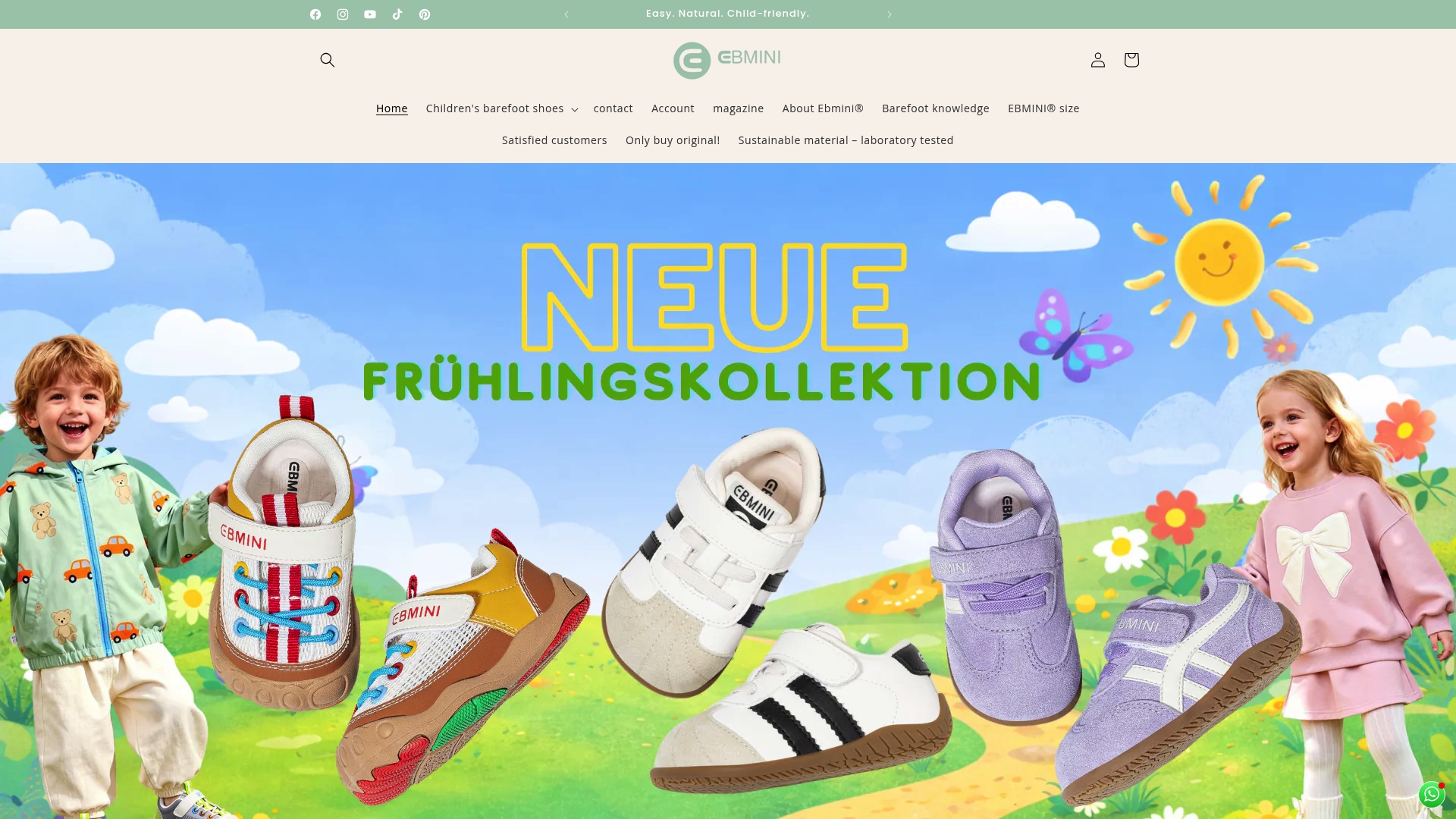
The EBMINI® OTD model is a waterproof trekking barefoot shoe for children aged 1 to 10: zero drop, wide toe box, ultra-light and flexible sole with grip, breathable, and waterproof. Developed in collaboration with orthopedists, designed specifically for everyday outdoor use. Ebmini offers size advice, transparent product information, and a return option. Note: Ebmini is the publisher of this article. Check out the model and use the size guide on the product page to find the right shoe for your child.
Further sources and studies
The following sources serve as a starting point for further research. They do not replace individual medical advice.
- Christophorus Kliniken: Healthy Child's Foot: Clinical handout on features of the ideal child's shoe, physiologically sound.
- WUNSCHKIND Community: Children's Shoes Recommended by Orthopedists: Practical guide with expert recommendations, measuring instructions, and material tips.
- Kidfoot: Heel, Heel Drop, and Heel Elevation: Detailed explanation of hidden drop and how to recognize it.
- Kidfoot: No Footbed for Healthy Children's Feet: Reasoning why medial arch support can be counterproductive for healthy feet.
- OSTechnik: Children's Shoes Out of the Incline: Specialist article on the systemic effects of drop on knees, pelvis, and posture.
- Think!: Barefoot Shoes Explained: Overview of features, sizing tips, and benefits of barefoot-like shoes.
- Bergzeit Magazine: Barefoot Shoes for Children: Orthopedic recommendations and practical testing tips for shoe shopping.
- Viking Footwear: The First Shoe: Tips on first shoes, material selection, and features for walking shoes.
This article provides general information and does not replace individual medical or orthopedic advice. For questions about your child's foot health, consult a pediatric orthopedist or pediatrician.


