

Increase the Resale Value of Kids' Shoes: A Step-by-Step Guide
Many parents know the frustrating feeling: you've spent good money on high-quality children's shoes, and when you resell them, you only get back a fraction of the original price. But it doesn't have to be that way. With the right care, consistent preparation, and a structured sales process, the resale value of children's shoes, especially high-quality barefoot models, can be significantly increased. This guide will show you step by step how to avoid common mistakes, what measures really make a difference, and why barefoot shoes, in particular, deserve special attention when reselling.
Table of Contents
- Fundamentals for Maximizing the Value of Children's Shoes
- Preparation: The Right Measures Before Selling
- Step-by-Step Guide to Reselling
- Common Mistakes When Dealing with Used Children's Shoes
- Why the Resale Value of Children's Shoes Deserves a New Parental Perspective
- Barefoot Shoes for Children – More Value Through Quality and Care
- Frequently Asked Questions About the Resale Value of Children's Shoes
Key Takeaways
| Point | Details |
|---|---|
| Condition is Key | Well-maintained and minimally worn children's shoes achieve the highest resale value. |
| Regular Care | Cleaning, drying, and waterproofing ensure functionality and saleability. |
| Check Fit | Before each sale, ensure the correct size for the child's anatomy. |
| Documentation is Important | Clear photos and condition descriptions make the sale more transparent and successful. |
| Barefoot Shoe Specifics | Flexible soles and toe freedom are particularly relevant for barefoot shoes for buyers. |
Fundamentals for Maximizing the Value of Children's Shoes
Before you take action, it's worth understanding what determines the resale value of children's shoes in the first place. Not every shoe is the same, and not every condition leads to the same proceeds.
What Buyers Really Value
The most important factor is the fit. Children's feet grow quickly, and buyers know this. They are looking for shoes that still fit well, meaning they are not stretched out, not deformed, and not too tightly worn. Fit and shoe condition are crucial, especially the condition of the insole and any deformations caused by uneven wear.
In addition to fit, the visible condition plays a central role. Fewer signs of wear mean a higher price. This sounds obvious but is underestimated by many sellers. Shoes that have been consistently cared for after purchase often still look almost new after six months of use. This directly pays off when selling.
Barefoot Shoes: Special Requirements, Special Value
Barefoot shoes, i.e., shoes with a flexible sole, a wide toe box, and zero drop (without a heel), have a special characteristic when reselling: their functionality heavily depends on the sole's integrity. A stiff or damaged sole makes a barefoot shoe practically unsellable because it no longer fulfills its actual purpose. Buyers who specifically look for barefoot shoes are often well-informed and check these points carefully.
At the same time, high-quality barefoot shoes for children are in high demand in the second-hand market. Parents who know the benefits of these shoes are willing to pay a fair price for used models, provided the condition is good. Those who want to learn about the second-hand sale of children's shoes will find many practical tips there.
Comparison: Which Shoe Types Achieve Higher Resale Prices?
| Shoe Type | Typical Resale Value | Main Criteria |
|---|---|---|
| High-quality barefoot shoes | 40 to 70 percent of the new price | Sole flexibility, toe box, insole |
| Conventional children's shoes | 20 to 40 percent of the new price | General condition, brand |
| Heavily used sports shoes | 10 to 25 percent of the new price | Sole abrasion, upper material |
| Well-maintained rubber boots | 30 to 50 percent of the new price | Waterproof, no cracks |
The table shows that high-quality barefoot shoes achieve significantly better prices if they have been well-maintained. The difference in resale value between a well-maintained and a neglected barefoot shoe can be 20 to 30 percent of the new price.
Important factors at a glance:
- Insole: no discoloration, no pressure marks, no odor
- Outsole: even wear, no cracks, flexibility maintained
- Upper material: clean, no rips, no seams undone
- Closure: Velcro, laces, or zipper function perfectly
- Size indication: clearly legible, matches the actual inner measurement
Preparation: The Right Measures Before Selling
With knowledge of the evaluation criteria, you can act strategically. Preparation doesn't just begin shortly before the sale, but ideally from the moment the child first wears the shoe.
Cleaning: The First and Most Important Step
Regular cleaning is the most effective way to maintain value. Coarse dirt should be removed promptly; thorough cleaning at intervals of four to six weeks is recommended. Waiting until the shoe is completely soiled risks dirt penetrating the material and leaving permanent marks.
For barefoot shoes made of mesh or textile, lukewarm water with a soft brush is often sufficient. Leather requires special leather care, not aggressive cleaning agents. Synthetic materials are generally the easiest to clean but are also more susceptible to UV damage if dried incorrectly.
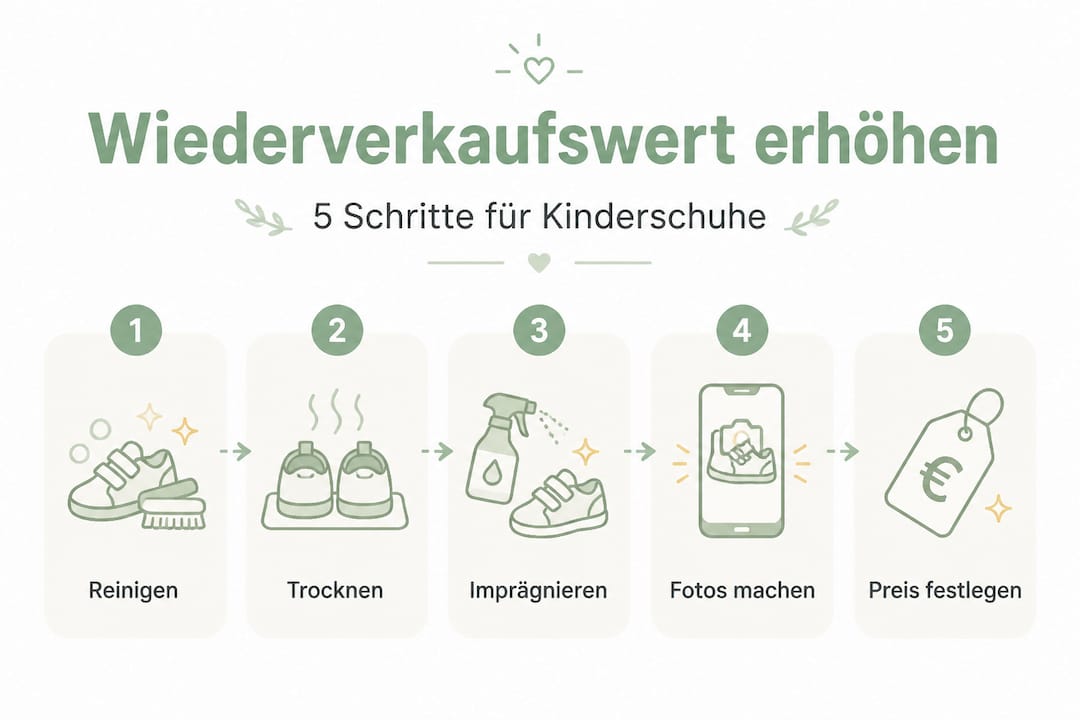
Step-by-step cleaning guide:
- Remove loose dirt and grime with a dry brush
- Remove the insole and clean separately
- Wash the shoe with lukewarm water and mild detergent
- Open closures so all areas can be cleaned
- Rinse with clear water, leave no soap residue
- Air dry, never in direct sunlight or on a heater
- After drying, waterproof, depending on the material
Pro Tip: When buying new shoes, immediately purchase the appropriate care product. Many manufacturers recommend specific products for their materials. Proper care from the beginning saves you from elaborate restoration attempts later on.
Drying and Waterproofing: Underestimated Value Preservers
Incorrect drying is one of the most common reasons for premature material wear. Heat, whether from the sun or a heater, causes adhesives to become brittle, deforms soles, and destroys membranes in waterproof models. Care measures such as cleaning, drying, and waterproofing demonstrably increase the chance that high-quality barefoot shoes remain functional and salable.
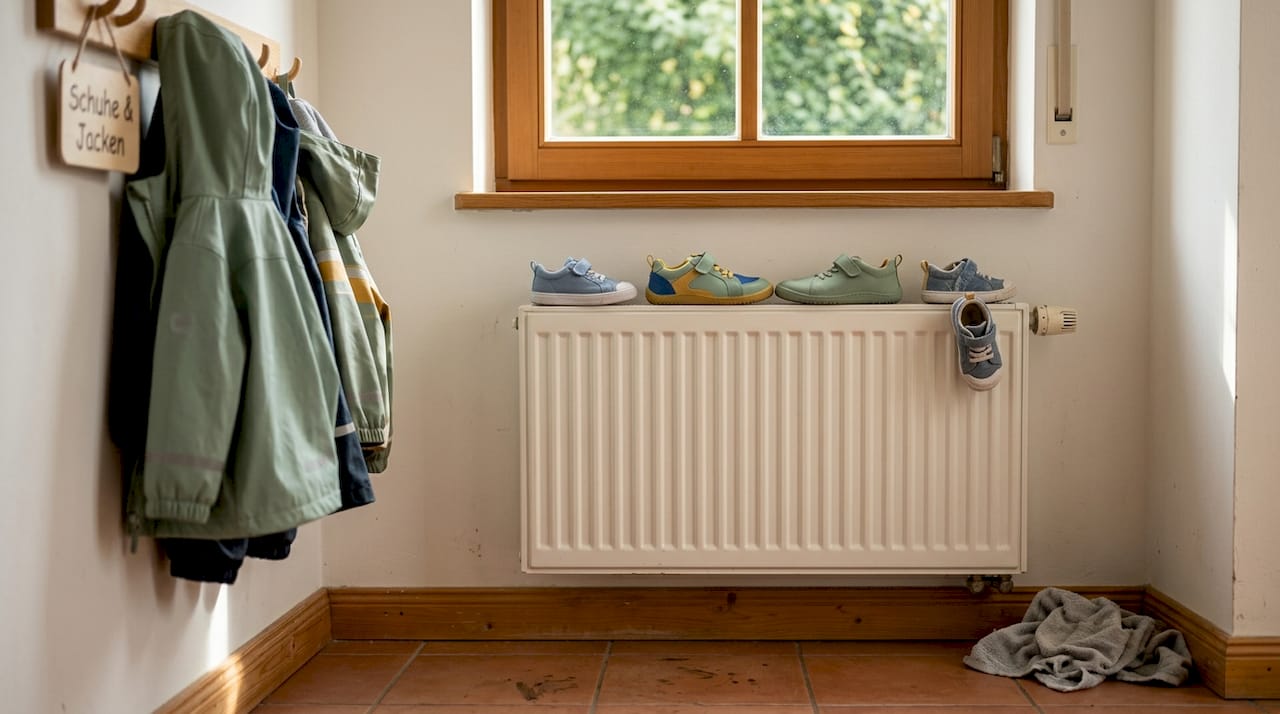
Waterproofing protects the upper material from moisture and dirt. For waterproof barefoot shoes with membranes, waterproofing should be refreshed regularly because it diminishes over time. A well-waterproofed shoe not only looks better but also remains functional longer.
| Care Measure | Frequency | Effect on Resale Value |
|---|---|---|
| Rough Cleaning | After each use | Prevents ingrained dirt |
| Thorough Cleaning | Every 4 to 6 weeks | Maintains appearance and material structure |
| Waterproofing | After each cleaning | Protects membrane and upper material |
| Clean Insole | Weekly | Prevents odor and discoloration |
| Sole Inspection | Monthly | Detects wear early |
The care of barefoot sandals for children follows similar principles, although open models require less waterproofing but should be cleaned more often.
Step-by-Step Guide to Reselling
Once the shoes are well-maintained and in good condition, the actual selling process begins. Here, structure and transparency determine the price achieved.
Choosing the Right Platform
Not every platform is suitable for every shoe. High-quality barefoot shoes find better buyers on specialized parent forums and platforms like Vinted, Facebook mom-forum groups, or specialized second-hand shops for children's items than on general flea markets. Structured quality criteria are more rewarded on these portals because buyers are specifically looking and are willing to pay more.
Local flea markets have the advantage that buyers can try on the shoe directly. This is a plus, especially for barefoot shoes, because fit is so important. Online platforms reach more potential buyers but require good photos and precise descriptions.
Documenting Condition and Setting a Price
How to proceed with the sale:
- Clean and dry shoes thoroughly
- Check insole for discoloration, pressure marks, and odor
- Test outsole for even wear and flexibility
- Inspect upper material for rips, seams, and discoloration
- Check closures for function
- Take photos in good daylight: outsole, insole, side, front, closure
- Honestly describe the condition: as new, very good, good, or acceptable
- Calculate the price based on condition and new price
Pro Tip: Always photograph the insole as well. Barefoot shoe buyers pay particular attention to this area because it shows how heavily the shoe has actually been used. A photo of the insole builds trust and significantly reduces inquiries.
Pricing: Realistic and Strategic
A common mistake is to set the price too high and then lower it multiple times. This appears unprofessional and signals uncertainty. It is better to set a fair price from the outset that reflects the condition.
As a rule of thumb: Like-new barefoot shoes fetch 60 to 70 percent of the new price, very good shoes 40 to 55 percent, good shoes 25 to 40 percent. Shoes with visible defects should be offered at under 25 percent of the new price, if at all.
What buyers look for when assessing the condition of winter boots and other models:
- Even sole wear without deep grooves
- No discoloration on the insole
- Waterproofing still present for membrane shoes
- No odors despite cleaning
- Original packaging or size indication clearly visible
The condition assessment of winter boots follows the same basic principles as for other barefoot shoes, with the addition that waterproofing and thermal insulation should be checked.
Common Mistakes When Dealing with Used Children's Shoes
Knowing the steps means you can do a lot right. Nevertheless, there are typical stumbling blocks that even well-informed parents often encounter.
Mistake 1: Incorrect Size or Missing Fit Check
Many parents sell shoes that their child has worn for too long. This is problematic because a shoe that is too tight places uneven stress on the insole and deforms it. Buyers recognize this immediately. Regularly measuring feet, at least every eight weeks for toddlers, helps to pass on shoes in time before they are too worn out.
Mistake 2: Neglected Care, Ignored Dirt
A dirty shoe signals poor care. Even if the shoe is structurally sound, it appears unattractive to buyers. Dried-in dirt can permanently damage materials and is often not completely removable. Regular care avoids this problem from the outset.
Mistake 3: Marketing Without Condition Information
"Used children's shoes, size 26" is not a sufficient description. Buyers want to know: How often were the shoes worn? Are there any defects? Is the insole still good? Lack of information leads to distrust and either no purchase or price negotiations downwards.
"For barefoot or minimal shoes, only little wear is acceptable. Defects in the sole and fit often prevent sale." This shows how important it is to care for barefoot shoes well from the beginning and pass them on in time.
Mistake 4: Offering Barefoot Shoes with Stiff or Damaged Soles
This is the most serious mistake with barefoot shoes. A stiff sole makes the shoe dysfunctional for its actual purpose. Buyers specifically looking for barefoot shoes will reject such models, no matter how good the upper material looks. Knowing typical wear points in children's shoes allows for early intervention.
Common mistakes at a glance:
- Letting shoes be worn for too long until deformities occur
- Drying on a heater or in the sun
- No regular waterproofing for waterproof models
- Never removing and cleaning the insole
- Setting the price too high and then lowering it multiple times
- Only taking photos from the outside, not showing the insole
- Concealing defects instead of transparently communicating them
Pro Tip: If the insole is heavily worn but the rest of the shoe still looks good, a sole replacement is worthwhile. Many manufacturers offer replacement insoles. This costs little but can significantly increase the selling price because the shoe looks fresh again.
Why the Resale Value of Children's Shoes Deserves a New Parental Perspective
At EBMINI®, we view resale not as a purely financial calculation. It's about more than saving money.
Parents who invest in high-quality barefoot shoes often do so out of conviction: They want their children to grow up healthy, for their feet to develop naturally, and for movement to be enjoyable and not restricted by uncomfortable shoes. Barefoot shoes support natural foot development through fit and sole dynamics, and defects have a more negative impact than with conventional shoes.
When these shoes are passed on, they carry this idea forward. The next child who wears them benefits from the same qualities, provided the shoes have been well cared for. This is no accident; it is the result of conscious decisions.
The throwaway mentality that many parents remember from their own childhood no longer fits this era. Children's shoes that are discarded after just a few months burden both the environment and the budget. High-quality shoes that can be worn by several children are the more sustainable choice, both financially and ecologically.
What strikes us is that parents who take good care of their shoes and pass them on are often the same ones who make more conscious purchasing decisions. They buy less, but better. They pay attention to materials, manufacturing conditions, and durability. This is an attitude, not a strategy.
The barefoot experience in everyday parenting consistently shows that children who grow up in well-fitting, flexible shoes move differently. They stumble less, grip better with their toes, and develop a more natural gait. When these shoes are then passed on to another child, this positive experience continues.
The resale value is therefore not an end in itself. It is an indicator of how good a shoe truly was: good enough to accompany several children, good enough to still be saleable after a year, good enough to justify the original purchase. This is the standard by which we measure our products.
Children's Barefoot Shoes – More Value Through Quality and Care
Once you understand how much care and quality influence resale value, you look at purchasing high-quality children's shoes with different eyes. EBMINI® develops barefoot shoes that meet these exact requirements: durable materials, flexible soles, wide toe boxes, and waterproof membranes that retain their value even after intensive use.
Our winter barefoot shoes for children are designed to remain functional for several seasons. The materials are easy to clean, the insoles are removable and replaceable, and the soles retain their flexibility even after many miles. Investing in an EBMINI® shoe means investing in a shoe that will still have value when resold. Our barefoot sandals for children follow the same principles: quality that pays off, not just for the first child, but for all who follow.
Frequently Asked Questions about the Resale Value of Children's Shoes
What factors determine the resale value of children's shoes?
Fit, insole condition, minimal signs of wear, and material quality are the decisive criteria buyers evaluate in used children's shoes.
How often should I clean the shoes to maintain their resale value?
Coarse dirt should be removed immediately, and thorough care every 4 to 6 weeks will keep materials and appearance in good condition long-term.
Can I replace the insole if it is worn out?
Yes, replacing the insole can be sensible and significantly improve the resale value if the rest of the shoe is still in good condition.
Are used barefoot shoes generally suitable for resale?
Only if there is little wear and tear and the fit and sole function are still intact are used barefoot shoes suitable for resale.


