

Minimalist Shoes for Children: Healthy Feet from the Start
Minimalist shoes for children are shoes with thin, flexible soles, zero drop, and a wide toe box, which promote natural movement and healthy foot development. In technical terms, they are also referred to as barefoot shoes or barefoot-like shoes. Orthopedists recommend that children should spend as much time as possible walking barefoot. If this is not possible due to cold, wetness, or dangerous surfaces, minimalist shoes are the best alternative. They protect the foot without restricting its natural movement. Brands like Affenzahn, Superfit, and Ebmini show that healthy footwear does not make children compromise on comfort or style.
What makes minimalist shoes for children truly healthy?
Good minimalist children's shoes meet five clearly measurable criteria. Those who know these criteria will make the right decision when buying, regardless of the brand's promise on the packaging.
The five core features at a glance
- Thin, flexible sole: The shoe can be easily bent with two fingers. A stiff sole blocks the foot muscles and prevents the child from feeling the ground. Barefoot shoes for children should have maximally flexible, thin soles to support natural foot development.
- Zero Drop: Heel and forefoot are at the same height. A raised heel shifts body weight forward and puts long-term strain on the knees and back.
- Wide toe box: The toes have enough space to spread out. This is crucial for balance and strength when walking.
- Breathable materials: Children's feet sweat just like adult feet. Leather and breathable textiles prevent blisters and fungal infections.
- Low weight: Lightweight shoes tire the leg muscles less. A test of 36 first-walker shoes showed that high-quality barefoot shoes are feather-light and at the same time offer functional protection.
Fit: The underestimated criterion
The fit determines whether a shoe benefits or harms. Shoes must not be too small or too large, as both can cause deformities and gait disorders. Specifically, this means: there should be about 10–12 millimeters of space between the longest toe and the end of the shoe. The side parts of the shoe should gently touch the foot without pressing. This contact provides stability without restricting movement.
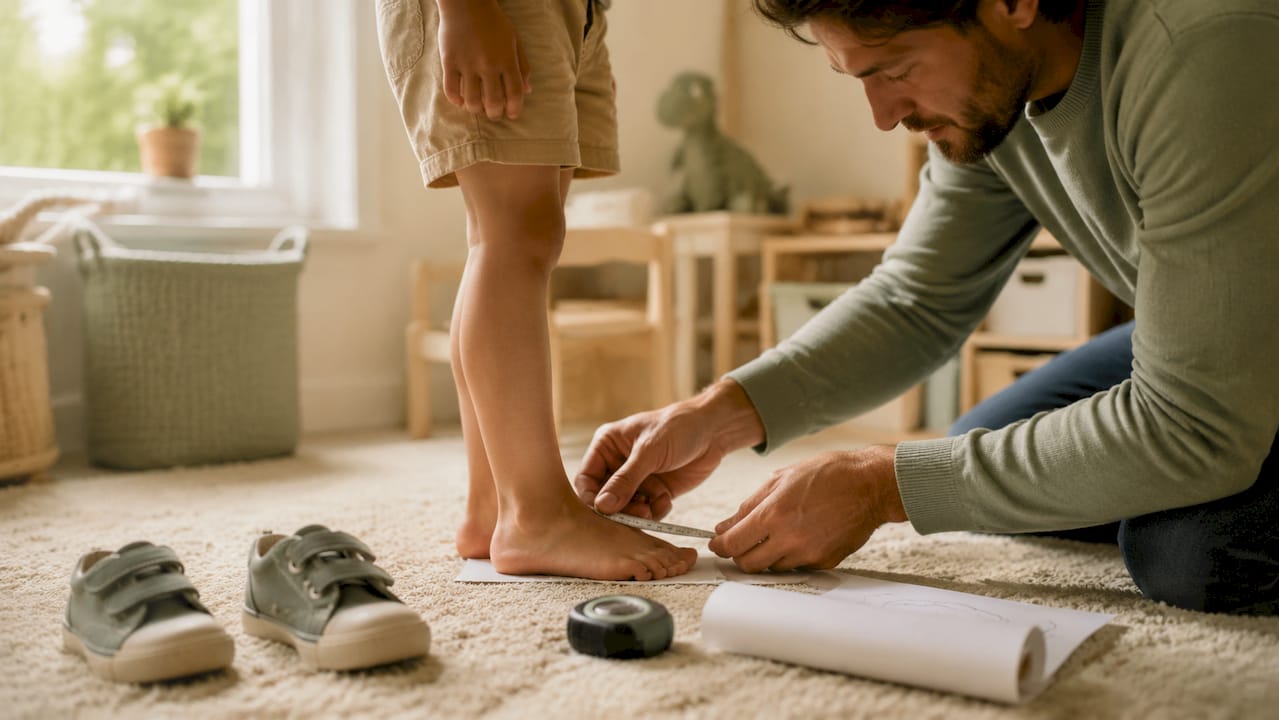
Pro-tip: Always measure your child's foot in the afternoon. Feet tend to swell slightly during the day. A morning measurement can lead to shoes that are too small.
Minimalist shoes vs. conventional children's shoes: What is the difference?
The difference between minimalist and conventional shoes is greater than many parents suspect. Conventional children's shoes often have stiff soles, raised heels, and narrow toe boxes. This sounds like protection but works against natural foot development in the long run.
| Feature | Minimalist shoes | Conventional shoes |
|---|---|---|
| Sole thickness | Thin and flexible | Thick and stiff |
| Heel height | Zero drop | 10–25 mm raised |
| Toe box | Wide, toes can spread | Narrow, toes are squeezed |
| Weight | Very light | Heavier |
| Foot feel | Ground feel perceptible | Heavily cushioned |
| Muscle development | Actively promoted | Passive, muscles are minimally challenged |
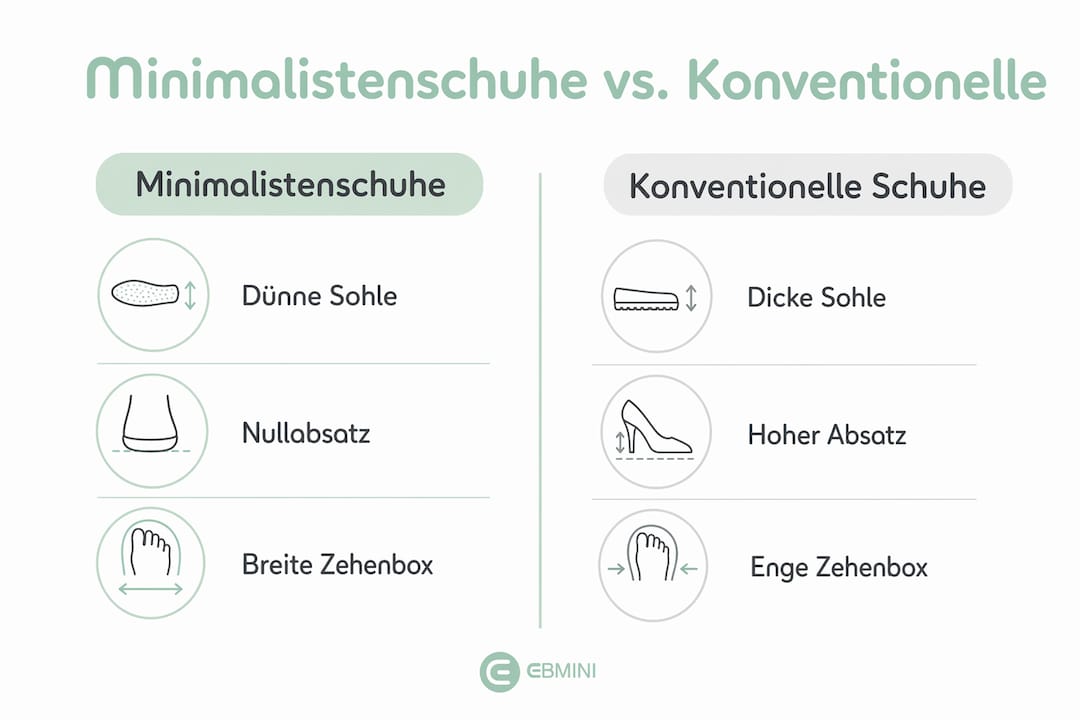
Conventional shoes take on tasks that the foot should perform itself. This weakens the foot muscles over time. Barefoot shoes promote natural movements and at the same time offer sufficient protection, reducing the risk of injury when walking barefoot is not possible.
Another advantage concerns toe deformities. A narrow toe box pushes the toes into an unnatural position over years. This promotes deformities such as hallux valgus, i.e., the painful misalignment of the big toe. Minimalist children's shoes with a wide toe box give the growing foot the space it needs. The Ebmini guide on the benefits of a wide toe box explains more.
Pro-tip: Place the shoe on a piece of paper and trace your child's foot outlines next to it. If the shoe is narrower than the foot, it is too narrow, regardless of the size indicated.
How to choose the best minimalist shoes for children?
Choosing the right shoe follows a clear sequence. Following these steps avoids the most common buying mistakes.
Step by step to the right size
- Measure foot length: The child stands on a piece of paper. Mark the heel and the longest toe. Measure the distance in millimeters.
- Measure foot width: Measure the widest part of the foot, usually at the level of the metatarsophalangeal joints. This number is particularly important for wide feet.
- Check instep: A high instep requires a shoe with a corresponding last volume. Many manufacturers offer special last shapes for high insteps or wide feet.
- Allow for safety margin: Add 10–12 mm to the measured foot length. This is the space the foot needs for rolling.
- Use the manufacturer's size chart: Each brand has its own measurements. The size chart of Ebmini or Affenzahn may differ from other brands. Never rely solely on shoe size.
Seasonal considerations and care
Waterproof models are useful in spring and autumn. Children run through puddles, it's unavoidable. A waterproof minimalist shoe with a breathable membrane keeps the foot dry without sacrificing flexibility. In summer, light sandals with Velcro fasteners are sufficient.
For care: textile barefoot shoes can usually be cleaned in the washing machine at 30 degrees. Leather models occasionally need leather care. Always let the shoes air dry, never on a radiator. Heat destroys adhesives and deforms the sole.
| Season | Recommended shoe type | Most important feature |
|---|---|---|
| Spring | Waterproof barefoot shoe | Waterproof membrane |
| Summer | Barefoot sandal | Lightweight, breathable |
| Autumn | Barefoot shoe with grip | Non-slip sole |
| Winter | Lined barefoot boot | Warmth and flexibility |
Pro-tip: Never buy several sizes in stock. Children's feet grow quickly and irregularly. Measure every 6–8 weeks and adjust the shoe size in good time.
If you are unsure whether the current shoe still fits, the Ebmini guide on determining children's foot width provides a practical step-by-step guide.
Which brands do experts recommend for minimalist children's shoes?
The market for barefoot-like children's shoes has grown significantly in recent years. Brands like Affenzahn, Superfit, Bisgaard, and Lico offer minimalist shoes in various widths and models, also with sustainable and vegan materials. Each brand has its own strengths.
- Affenzahn: Known for lightweight shoes with animal motifs on the heel. Designs with halved animal symbols help toddlers distinguish between right and left and encourage independent dressing. Ideal for children from their first steps.
- Superfit: Austrian brand with a wide range, various widths, and solid workmanship. Good for children with wide feet or high insteps.
- Bisgaard: Danish design, vegan materials, very lightweight. Popular with parents who value sustainability.
- Lico: More affordable option with solid quality. A good entry point for parents trying minimalist shoes for the first time.
- Ebmini: Specializes in barefoot-like all-weather shoes for children. Ultra-light, flexible, waterproof, and with a wide toe box. Ebmini combines the principles of barefoot walking with everyday suitability for children aged 1 to 10.
When buying online, read customer reviews specifically for clues about fit and width. A five-star shoe with the comment "runs very narrow" is not a good choice for wide children's feet. Many parents also report that children put on shoes with Velcro or pull systems faster than models with laces. This promotes independence and saves time in the morning.
Pro-tip: When buying online, always order two sizes and return the one that doesn't fit. Most specialized providers offer free returns.
Important insights
Minimalist children's shoes promote natural foot development most effectively when they combine flexible soles, zero drop, a wide toe box, and a precise fit.
| Point | Details |
|---|---|
| Check core features | Flexible sole, zero drop, and a wide toe box are non-negotiable for minimalist children's shoes. |
| Fit over brand | The individual foot shape determines the right shoe, not the brand name. |
| Measure regularly | Children's feet grow quickly; measuring every 6–8 weeks prevents shoes from becoming too tight. |
| Think seasonally | Waterproof models in spring and autumn, light sandals in summer, lined boots in winter. |
| Utilize brand diversity | Affenzahn, Superfit, Bisgaard, Lico, and Ebmini offer different strengths for various foot types. |
What I really learned after years with minimalist shoes
At Ebmini, we work daily with parents looking for the best shoe for their child. The most common question is: “Which brand is the best?” The honest answer is: That's the wrong question.
The right question is: Does this shoe fit this foot? Not every shoe fits every child, even if barefoot shoes generally offer advantages. We see children who are perfectly served with an affordable Lico model, and others who need the special last shape of a Bisgaard shoe. The brand name is an indicator, not a guarantee.
What we also observe: Parents underestimate the adjustment period. A child who has worn stiff conventional shoes for years needs a few weeks to get used to the new freedom of movement. The foot muscles first need to be built up. This is not a defect of the shoe, but a sign that the shoe is working.
The second blind spot is the compulsion to be fashionable. Parents sometimes buy shoes that look good but fit poorly. A plain-looking shoe with a perfect fit is always better than a fashionable shoe that pinches. Healthy footwear for children is an investment in the child's posture, musculature, and well-being, not in an Instagram photo.
Parents planning the transition from conventional to minimalist shoes can find a helpful guide on barefoot shoes during the transition on Ebmini.
— Ebmini
Ebmini: Barefoot shoes for every child's foot and every weather
Ebmini develops barefoot-like children's shoes that work in everyday life, not just in the lab. All models combine a wide toe box, flexible sole, and breathable materials. Whether it's a rainy day in the park or the walk to school in autumn: Ebmini's children's barefoot shoes are made for real children's days. For summer, Ebmini offers light barefoot sandals for children that let the foot breathe and still provide secure grip. Those looking for an everyday shoe in sneaker style will find what they need among the barefoot shoes in sneaker style. All models are designed for natural foot development and are available for children aged 1 to 10. In addition to buying shoes, it's also worth looking at rainwear for children from Minoti, so the child is protected in all weather conditions.
FAQ
What exactly are minimalist shoes for children?
Minimalist shoes for children are shoes with a thin, flexible sole, zero drop, and a wide toe box. They mimic barefoot walking and promote natural foot musculature and movement development.
From what age are barefoot shoes suitable for children?
Barefoot shoes are suitable from the first independent steps, i.e., from about 10–14 months of age. It is important that the shoe fits the child's foot size and foot type.
How do I know if a minimalist shoe fits well?
The shoe fits if there is 10–12 mm of space between the longest toe and the end of the shoe, and the sides gently touch the foot without pressing. Shoes that are too small or too large can cause deformities.
Are minimalist shoes also suitable for wide children's feet?
Yes, but a wide toe box alone is not enough. The shoe width must match the foot. Brands like Superfit and Affenzahn offer various widths. Always measure foot width and compare it with the manufacturer's specifications.
How often should I check my child's shoe size?
Parents should measure feet every 6–8 weeks and adjust shoe size as needed. Children's feet grow quickly and irregularly. A shoe that is too tight harms foot development, even if the child does not express pain.


