

Combine Sustainable Kids' Clothing: 6 Rules for Parents
Six simple rules help you combine sustainable children's clothing into everyday outfits right away: choose basic colors, apply the 80/20 rule, use the layering principle, check certifications, mix new and second-hand, and care for clothes instead of throwing them away. The result: fewer items in the closet, more ready-made outfits, significantly longer usability.
- Define basic colors: Two to three neutral tones (e.g., navy, gray, ecru) form the foundation. Everything matches without thinking.
- 80/20 Rule: 80% basics, 20% highlights. This keeps the wardrobe combinable, even if a favorite item is in the wash.
- Layering principle: Thin layers on top of each other instead of one thick jacket. Summer items become underlayers in autumn.
- Check certifications: GOTS and OEKO-TEX Standard 100 are reliable guides for textiles that are harmless to health and produced ecologically.
- Mix new and second-hand: Second-hand for highlights and basics, new specifically for functional clothing or missing sizes.
- Care and repair: Spot stain treatment instead of full washing, small sewing repairs instead of throwing away.
Key Takeaways
A capsule wardrobe with 12–18 core items per season, a clear color palette, and consistent care is the most practical way to combine sustainable children's clothing effectively.
| Topic | Details |
|---|---|
| Capsule Wardrobe Size | 12–18 core items per season are a good guideline for daycare and school. |
| Color Palette | 2–3 basic colors plus 1–2 accent colors maximize combinability and facilitate hand-me-downs. |
| Certifications and Materials | GOTS and OEKO-TEX Standard 100 are reliable guides for clothing that is harmless to health. |
| Care and Longevity | Spot stain treatment and gentle wash cycles significantly extend usability and improve cost-per-wear. |
| Ebmini Shoes | Durable barefoot shoes with a wide toe box and zero drop complement any sustainable capsule wardrobe perfectly. |
Table of Contents
- How to Combine Sustainable Children's Clothing: From Closet Check to Finished Outfit
- Capsule Wardrobe for Children: How Many Items Do You Really Need?
- What to Look For in Sustainable Children's Clothing
- Smartly Combining New and Second-Hand
- Care, Repair, and Longevity: What Really Helps
- Concrete Outfit Ideas for Every Season
- What Shoes Fit a Sustainable Children's Wardrobe?
- How to Involve Children in the New Wardrobe
- Why This Approach Really Works in Family Life
- Barefoot Shoes as a Sustainable Addition to the Children's Wardrobe
- Sources
- FAQ
How to Combine Sustainable Children's Clothing: From Closet Check to Finished Outfit
A clear process makes the difference between a closet full of individual items and a wardrobe that works every morning.
- Wardrobe Inventory: Take everything out. Keep an item if it fits well, has no stains, and matches at least three other pieces. Everything else goes into a hand-me-down or repair box.
- Define Color Palette: Choose two to three basic colors and a maximum of two accent colors. Write them on a note and tape it inside the closet. For your next purchase, ask: does it fit the palette or not?
- Assemble a Capsule Set: Select 12–18 core items per season. This includes tops, pants, one to two layering jackets, an outer jacket, underwear, and shoes. More on this in the next section.
- Apply Layering Rules: A thin long-sleeved shirt as a base, a sweatshirt over it, and a light jacket on top. Each layer can be worn individually. This extends the wear time of each item over several seasons.
- Add Accessories: A hat, a scarf, and a backpack in basic colors are sufficient. Accessories in accent colors add pops of color without hindering combinability.
- Care and Repair Plan: Set up a small repair kit (needle, thread, patches). Pre-treating stains immediately saves a hot full wash.
Pro Tip: Prepare outfits the evening before. Hang three ready combinations and let your child choose from them in the morning. This saves stress, encourages independence, and quickly shows you which items are actually worn.
Capsule Wardrobe for Children: How Many Items Do You Really Need?
The answer first: For daycare, 12–18 core items per season are a good guideline. That might sound like a small number, but it works surprisingly well because each item can be combined in multiple ways.
Capsule wardrobe concepts reduce decision stress and increase the frequency of wearing individual items. For families, this specifically means: less chaos getting dressed, lower cost per wear, and clothes that are easier to hand down because they aren't excessively worn out.
Food for thought: A t-shirt for €8 that is worn 60 times costs less than 14 cents per wear. A brand item for €35 that is worn only ten times costs €3.50 per wear. Quality and combinability almost always beat price.
Example Set for Daycare and Primary School (Spring/Summer)
-
3–4 short-sleeved shirts in basic colors
-
2 long-sleeved shirts or light long-sleeves
-
2 pairs of pants (one thin, one a bit sturdier)
-
1 light sweatshirt jacket or hoodie
-
1 rain jacket or light transitional jacket
-
1 pair of shorts or summer dress (depending on preference)
-
5–7 sets of underwear
-
1 pair of everyday shoes, 1 pair of sandals
Example Set for Autumn/Winter
- 3 long-sleeved shirts as a base layer
- 2 sweatshirts or sweaters
- 2 pairs of pants (one lined or warmer)
- 1 fleece jacket as a mid-layer
- 1 weatherproof outer jacket
- 1 hat, 1 pair of gloves, 1 scarf
- 5–7 sets of underwear, 1–2 sets of thermal underwear
- 1 pair of all-weather shoes, 1 pair of slippers
The 80/20 rule also applies here: 80% of the items are neutral basics, 20% can have patterns, prints, or accent colors. This keeps the wardrobe combinable, even if the favorite dinosaur shirt isn't available right now.
What to Look For in Sustainable Children's Clothing
The most important criterion in everyday life is skin compatibility. Children wear clothes directly on their skin, often for hours and while playing. Materials that scratch, chafe, or contain harmful substances are not worth compromising on.
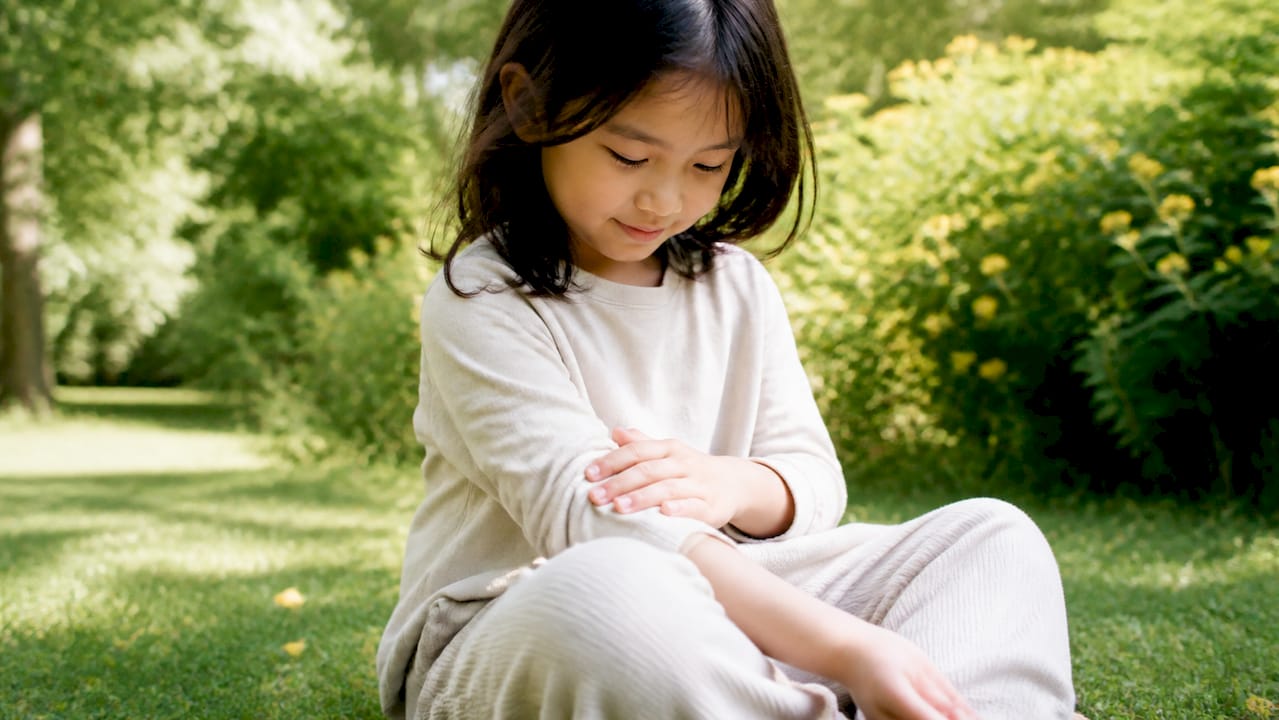
Organic cotton is the most reliable choice for everyday items. It is soft, washable, and well-tolerated. The disadvantage: it stretches with frequent washing and dries more slowly than synthetics.
Merino wool regulates temperature and moisture well, making it an ideal base layer in winter. It is odor-neutral and needs to be washed less often. Less suitable for children who are sensitive to wool.
Blended fabrics with a small amount of elastane (5–8%) increase shape retention, especially for pants and cuffs. Make sure the main component is natural fibers.
Grow-along designs with adjustable waistbands and a little extra length significantly extend the useful life. A pant waistband with an elastic band and button placket can often bridge an entire size.
Certifications You Can Trust
- GOTS (Global Organic Textile Standard): Certifies the entire production process, from raw fiber to finished garment. Includes limits on harmful substances and social standards.
- OEKO-TEX Standard 100: Tests the finished product for harmful substances. Every yarn, every thread, every button is tested. No manufacturing process proof, but a solid harmful substance check.
You can find both seals on the label or on the product page. More about sustainable aspects in the textile industry is explained by Ebmini in its own guide.
Color Palette for Maximum Combinability
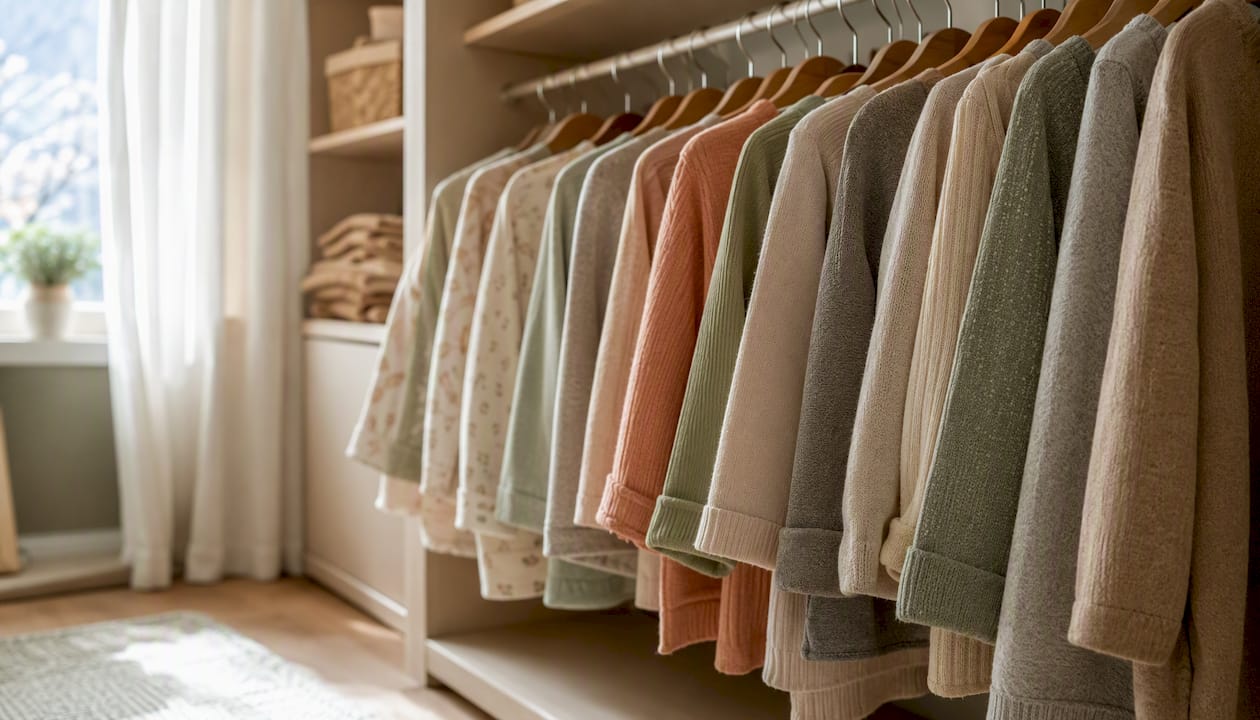
Neutral basic colors like white, grey, and navy form the foundation. Added to these are one to two accent colors, for example, terracotta, mustard yellow, or moss green. This palette allows for many outfits from a few pieces and makes them easier to pass on because the items look timeless.
Smartly Combining New and Second-Hand
The most sustainable wardrobe usually comes from both: second-hand for highlights and well-preserved basics, new for functional clothing, underwear, and missing sizes. Used items are often softer because harmful substances have already been reduced by frequent washing. This is a real advantage, not a compromise.
Checklist for Used Children's Clothing
- Check seams at shoulders, crotch, and cuffs for firmness
- Test cuffs and sleeve cuffs for elasticity (does it snap back or stay stretched?)
- Check for stains against the light, especially collar and sleeves
- Check zippers and buttons for function
- Read washing instructions: Machine washable at 40 °C is a must for children's clothing
Where to look: Local flea markets and children's clothing swaps are often more fruitful than online platforms, as you can directly check the quality. Online second-hand platforms are good for targeted searches for specific sizes or brands. For reselling children's shoes, there are specific criteria that differ from clothing.
Strategy: Go second-hand shopping with a list of missing basics, not without a plan. Those who specifically look for "navy blue jogging pants, size 104" buy wisely. Those who buy impulsively end up with a closet full of individual items that don't match anything.
Buying new is worthwhile for: underwear, swimwear, thermal underwear, rain jackets, and shoes, i.e., anywhere where function, hygiene, or fit are critical.
Care, Repair, and Longevity: What Really Helps
Proper care is often the strongest sustainability lever after purchase. Clothes that are well-cared for last longer, look better, and are easier to hand down.
- Pre-treat stains immediately: Use gall soap or a damp cloth right after the stain occurs. This prevents stains from drying in and requiring a hot full wash.
- Gentle cycle instead of boil wash: Most children's clothes come clean at 30–40 °C. Higher temperatures damage fibers and shorten lifespan.
- Dry stretchy items flat: Never hang pants with elastane or knitwear; instead, lay them flat on a towel to dry. This preserves their shape.
- Perform small repairs immediately: A loose button, a small hole in the knee. Sewing it right away prevents a small damage from becoming a reason to throw it away.
- Store properly: Store stretchy items and knitwear flat, not on hangers. Use children's hangers instead of adult hangers to prevent necklines from stretching.
Pro Tip: Keep a small repair kit right next to the laundry basket: needle, thread in the basic colors of your wardrobe, a few patches, and spare buttons. If you see the box, you'll repair. If you have to look for it, you'll put it off. Practical care tips for children's shoes in autumn and winter apply analogously to clothing: regular small maintenance beats infrequent deep cleaning.
The cost-per-wear idea also applies here: a well-maintained item that lasts three years and is handed down is almost always cheaper than a cheap item that is worn out after one season. Simple repair routines like darning or replacing a button extend the life of items in everyday use much more effectively than occasional deep cleans.
Concrete Outfit Ideas for Every Season
Four basics, three layering pieces, and two accessories computationally yield many combinations. In practice, it looks like this:
Spring and Transitional Weather
- Daycare: Long-sleeved shirt (navy) + light jogging pants (grey) + thin sweatshirt jacket + all-weather shoes
- Playground: Short-sleeved shirt (white) + robust pants + rain jacket + rubber boots or waterproof shoes
- Special occasion: Striped shirt (basic color + accent) + dark pants + light cardigan + clean everyday shoes
Summer
- Everyday: Short-sleeved shirt + shorts + sandals with closed toe box for the playground
- Excursion: Sleeveless shirt + light pants + sun hat + light sneakers
Autumn and Winter
- Daycare: Thermal underwear shirt + sweatshirt + lined pants + fleece jacket + outer jacket + all-weather shoes
- Weekend: Wool sweater + corduroy pants + hat + scarf + waterproof shoes
- Transition: Long-sleeved shirt + light sweater + transitional jacket. No layering overkill, just two layers are often enough for temperatures down to 10 °C.
Shoe note: Flexible, lightweight soles match almost all outfits and do not restrict freedom of movement while playing. For transitional weather, water-resistant models with a wide toe box are the most practical choice.
What Shoes Fit a Sustainable Children's Wardrobe?
Shoes are the part that is subject to the most wear and tear and most often bought incorrectly. Flexible, durable soles, a wide toe box, and water-repellent properties are the three features that support both everyday life and foot health.
- Wide toe box: Allows toes to splay naturally. Tight shoes hinder foot development, especially during growth phases.
- Zero Drop (flat sole): No raised heel means a natural posture. Children naturally walk flat, shoes should not change that.
- Flexible sole: A shoe that can be easily bent supports the foot muscles. Stiff soles take over work that the foot should do itself.
- Water-repellent: Essential for transitional weather and everyday outdoor use. Wet feet mean cold feet, and cold feet mean a child who no longer wants to play outside.
Pro Tip: When trying them on, there should be about a thumb's width of space between the longest toe and the tip of the shoe. Children often don't notice when shoes are too tight because their foot tissue is still pliable. It's better to measure once too often.
Ebmini develops its children's barefoot shoes in collaboration with orthopedists, with precisely these features: a wide toe box, zero drop, and an ultralight and flexible sole. This makes them a durable addition to a sustainable capsule wardrobe, as they match almost any outfit and can be worn throughout all seasons.
How to involve children in the new wardrobe
A versatile wardrobe only works if the child accepts it. The key is not persuasion, but smart selection limitation. A limited selection makes decisions easier for children and significantly eases the morning.
- Offer two to three options, don't open the whole closet. "Would you like the blue or the gray shirt?" is a question a three-year-old can answer. "What do you want to wear today?" is not.
- Introduce outfit boxes: Small baskets or boxes with ready-made combinations that the child can pick out themselves. This works well from about three years old.
- Involve children in color choices: Let them choose between two options when buying, both of which fit the palette. This gives them a say without jeopardizing versatility.
- Clothing labels or picture cards: For younger children, small picture cards in the closet show which pieces go together. This promotes independence without frustration.
- Establish an evening routine: Choose the next day's outfit together in the evening. This gives children control and saves time in the morning.
From about five to six years old, children can understand why some clothes are better for the environment. Short, concrete explanations work better than long lectures: "This shirt is made of organic cotton, which is better for the earth and for your skin."
Why this approach truly works in everyday family life
Sustainable children's fashion sounds like extra effort. In practice, the opposite is true. A well-thought-out capsule wardrobe with a clear color palette means fewer decisions, less chaos, and less money spent on items that are never worn.
The evening tip from the step-by-step section is not a trick, but a real game-changer for family mornings. Investing three minutes in the evening saves ten in the morning. And those who view shoes as a long-term investment, rather than replacing them after one season, quickly realize that good barefoot shoes with flexible soles and a wide toe box are not only healthier for the feet but also last significantly longer than cheap alternatives.
Sustainability begins not with purchase, but with daily use: spot stain treatment, gentle wash cycles, small repairs. This is more realistic and effective than any idealistic rule.
Barefoot shoes as a sustainable addition to a children's wardrobe
Clothing is only one part of the equation. Shoes, worn daily, must be durable, versatile, and foot-healthy. Ebmini barefoot shoes meet exactly these requirements: ultra-light, waterproof, with a wide toe box and zero drop, developed in collaboration with orthopedists.

They match neutral basics as well as colorful outfits, are easy to clean, and last for several seasons due to their robust sole. Ebmini's waterproof trekking barefoot shoes are equally suitable for transitional weather, playgrounds, and excursions. For spring and summer, Ebmini offers lightweight models in the spring collection, which seamlessly integrate into a capsule wardrobe.
Size advice, return options, and customer reviews help you make the right choice. Check out the current selection directly in the shop and find the model that suits your wardrobe.
Sources
Reliable sources for further information:
- Capsule Wardrobe for Kids: Fewer Pieces, More Outfits | Blu.Brudi
- Capsule Wardrobe for Kids: Minimalism in the Closet
- Combining Children's Fashion for Everyday Life: Practical Tips 2025 - Mountine Kids
- Combine New and Used – Create a Sustainable Children's Wardrobe
FAQ
What are GOTS and OEKO-TEX in children's clothing?
GOTS certifies the entire production process from raw fiber to finished garment and includes limits on harmful substances as well as social standards. OEKO-TEX Standard 100 checks the finished product for harmful substances and is a reliable harmful substance check for parents.

How many pieces does a children's capsule wardrobe need?
As a guideline, 12–18 core pieces per season are recommended for everyday kindergarten and school. With a clear color palette and the layering principle, many combinable outfits can be created.
Is second-hand children's clothing really safe?
Used clothing is often softer than new because harmful substances have already been reduced by frequent washing. Before buying, check seams, cuffs, stains, and washability, and wash new second-hand items once before the first wear.
How often should children's clothes be washed?
Not after every wear, but as needed. Spot stain treatment immediately after they occur saves full washes. Gentle programs at 30–40 °C protect the fibers and significantly extend their lifespan.
Which shoes fit a sustainable children's wardrobe?
Flexible shoes with a wide toe box, flat sole, and water-repellent properties match almost all outfits and last longer due to their robust construction. Ebmini barefoot shoes are developed according to orthopedic principles and are suitable as a durable addition to a capsule wardrobe.


