

Kids' Summer Shoes: Toe Protection Options at a Glance
Summer shoes with toe protection for children are the safest choice for active outdoor play because they prevent injuries on playgrounds, gravel paths, and water areas while supporting natural foot development. The most important types of shoes with toe protection are trekking sandals, barefoot sandals, and closed sneakers. Brands like Lurchi, New Balance, and providers like Ebmini rely on wide toe boxes, flexible soles, and breathable materials. Knowing the right option for your child ensures a decision that promotes both safety and foot health.
1. Summer Shoes for Children with Toe Protection: An Overview of Shoe Types
Toe protection in children's summer shoes refers to a reinforced or closed toe cap that protects the toes from bumps, stones, and abrasions. This protection is not a luxury but a direct response to the play behavior of children between 1 and 10 years old. Children run, stumble, climb, and kick against obstacles. Without protection at the toe, injuries can occur that quickly end summer fun.
The three main categories are trekking sandals with a closed toe cap, barefoot sandals with a wide toe box, and closed sneakers with a flexible sole. Each category has its own area of use and is suitable for different age groups and activities. The choice depends on where and how intensively the child plays outdoors.
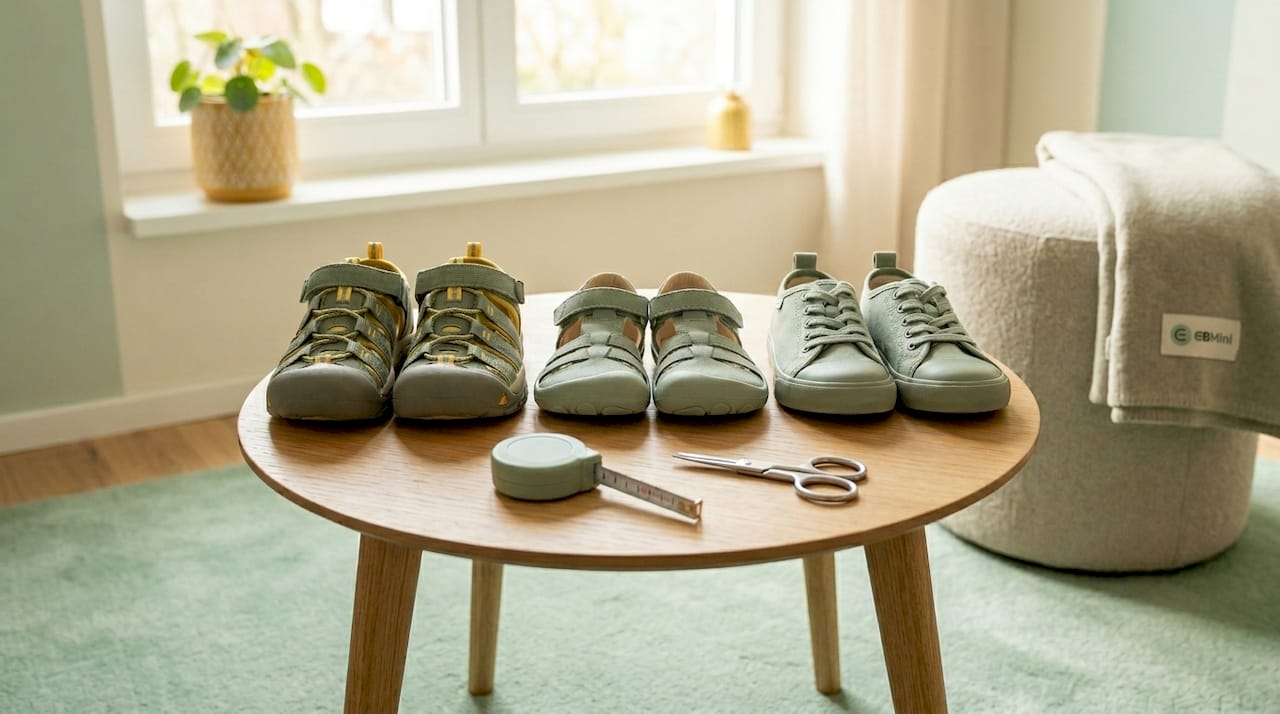
2. Trekking Sandals with Toe Protection for Active Children
Trekking sandals are machine washable, dry quickly, and feature a quick-release fastener, making them the most practical option for active children in summer. This means parents save time cleaning, and the child can open and close the shoe themselves. For water playgrounds, outdoor pools, and hikes, these shoes are the first choice.
Key features of good children's trekking sandals:
- Closed toe cap made of robust rubber or plastic protects toes from bumps against stones and roots
- Water-repellent nylon as upper material dries quickly and prevents mold formation
- Velcro or quick-release fastener allows children from about 3 years old to put them on and take them off independently
- Flexible, profiled sole provides grip on uneven terrain and allows the foot to roll naturally
- Machine washability at 30 degrees significantly reduces maintenance effort
Robust nylon trekking sandals are ideal for water playgrounds and outdoor pools because they are dirt-resistant and quick-drying. This type of shoe can withstand intensive use for several weeks without loss of quality. For parents looking for a shoe for almost all summer situations, trekking sandals are the most reliable choice.
Pro-Tip: Buy trekking sandals with at least 5 mm of extra space beyond the insole length. Children's feet swell slightly in heat, and the foot needs room to roll.
3. Barefoot Sandals and Flexible Leather Sandals with Toe Protection
Barefoot sandals with toe protection offer the best compromise between a natural walking sensation and physical protection, as they combine a wide toe box with a thin, flexible sole. Flexible soles without heel drop and wide toe boxes support true foot development by encouraging gripping and muscle building. For toddlers from about 12 months and older children up to 10 years, these shoes offer the greatest developmental advantage.
Soft materials such as vegetable-tanned leather or organic cotton prevent pressure points and allow the skin to breathe. Leather sandals adapt to the foot's shape over time, making them individually more comfortable. For children with wide feet or sensitive skin, leather models are often the gentlest choice.
The advantages of barefoot sandals and leather sandals with toe protection at a glance:
- Wide toe box allows toes to spread freely and prevents deformities
- Thin, flexible sole gives the child ground feel and trains foot muscles
- Velcro fastener promotes independence and is recommended by daycare educators
- Vegetable-tanned leather is breathable, durable, and skin-friendly
- Lightweight reduces strain during long walks and play
Barefoot shoes with Velcro fasteners make it easier for children to put them on and take them off independently and are expressly recommended by kindergarten teachers. This is a practical advantage that simplifies everyday life for both parents and children. If you want to learn more about the advantages of a wide toe box, Ebmini offers a detailed guide on toe boxes.
4. Closed Summer Shoes and Sneakers with Toe Protection
Closed summer shoes for children are indispensable even in warm weather because they protect against dust, dirt, and light cold when open sandals are not enough. Even in summer, closed shoes are important for children to protect against minor injuries and temperature fluctuations. Especially on sandy playgrounds or in nature, fine dust can penetrate open sandals and cause friction.
Lightweight sneakers with toe protection are particularly well suited for the following situations:
- Cooler summer days below 20 degrees, when open sandals offer too little warmth
- Sandy or dusty environments such as sandboxes, forest paths, or construction sites
- City excursions with a lot of walking on asphalt and cobblestones
- Daycare and school, where closed shoes are often mandatory
Brands like Lurchi or New Balance offer sneakers in various widths, which is crucial for children with wide feet. Breathable materials like mesh fabric keep the foot dry even in heat. Ebmini offers an alternative with its children's barefoot sneakers, combining a zero-drop sole and wide toe box with the protection of a closed shoe.
Pro-Tip: When choosing sneakers, look for a sole that can be easily bent. If you can fold the shoe in the middle without resistance, the sole is flexible enough for healthy walking.
5. Color as a Safety Factor in Children's Summer Shoes
The color of children's shoes is not just a fashion issue, but a direct safety factor when playing outdoors and near water. The DLRG warns against dark colors in children's clothing and recommends neon colors such as yellow, pink, or bright green because they significantly increase visibility. A child in neon-colored shoes is much quicker to locate on a playground, in an outdoor pool, or by a lake than a child in brown or gray shoes.
"Neon colors like yellow, pink, or bright green increase safety when playing near water and in nature, as they are more visible than muted colors." Source: DLRG via AZ-Online
Key points for choosing colors for children's summer shoes:
- Neon yellow, neon pink, and bright green are the safest colors for proximity to water and outdoor activities
- Brown, gray, and beige are barely visible in water and should be avoided for bathing shoes
- Reflective details on the heel or side further increase visibility in low light
- Bright colors also motivate many children to put on the shoes themselves because they like them
Bright neon colors measurably increase safety when playing near water. This aspect is often overlooked when buying shoes, although it is just as important as the quality of the sole. When buying shoes for the beach or outdoor pool, actively prefer neon colors.
6. Comparison of Summer Shoe Types with Toe Protection
The following table shows which shoe type is best suited for which need. The choice depends on the child's age, the area of use, and the desired level of protection.
| Shoe Type | Material | Protection Level | Flexibility | Recommended Age | Best Use Case |
|---|---|---|---|---|---|
| Trekking Sandal | Nylon, Rubber | High | Medium | 2 to 10 years | Outdoor, Water, Playground |
| Barefoot Sandal | Leather, Textile | Medium | Very High | 1 to 8 years | Everyday, Daycare, Garden |
| Leather Sandal | Vegetable-tanned Leather | Medium | High | 2 to 10 years | Everyday, Outings |
| Closed Sneaker | Mesh, Synthetic | Very High | High | 1 to 10 years | City, School, Cooler Days |
Trekking sandals offer the best protection for outdoor activities, while barefoot sandals promote foot development the most. Sneakers fill the gap on cooler days and in urban environments. For most families, a combination of two pairs of shoes is recommended: a robust pair of trekking sandals and a light, airy model for formal occasions or cooler days.
For care: trekking sandals and synthetic sneakers can be machine washed at 30 degrees. Leather sandals are cleaned with a damp cloth and then treated with leather care. Textile barefoot sandals can often also be machine washed, which significantly simplifies everyday life.
Key Takeaways
The best choice for children's summer shoes with toe protection combines robust materials, flexible soles, and striking colors, matched to the specific area of use and the child's age.
| Point | Details |
|---|---|
| Choose shoe type by use | Trekking sandals for outdoor, sneakers for city and cool days, barefoot sandals for everyday. |
| Prioritize flexible soles | Soles with no drop and wide toe boxes actively promote healthy foot development. |
| Choose neon colors for safety | Bright colors demonstrably increase visibility near water and in terrain. |
| Buy size with extra room | 5 to 10 mm extra space beyond the insole length prevents pressure points and aids foot rolling. |
| Two pairs as basic equipment | One robust and one airy pair reliably cover all summer situations. |
What I Really Recommend After Years with Children's Shoes
Many parents buy summer shoes based on appearance and price. This is understandable but regularly leads to shoes that cause pain after three weeks or gather dust in the closet. My experience at Ebmini shows: The most common mistake is a shoe that is too small because parents don't plan for extra room. Children's feet need 5 to 10 mm of space beyond the insole length for rolling. Ignoring this effectively means buying a shoe that constricts the foot.
The second mistake is waiting until mid-summer. Popular sizes are often sold out by then. Buying in spring gives you the best selection and allows for unhurried trying on. This is especially true for barefoot models with wide toe boxes, which are often quickly sold out in standard sizes.
What else I've learned: No single shoe fits all situations. A child who romps daily on the playground and goes to the water on weekends needs at least two different pairs. The combination of a sturdy trekking sandal and a lightweight barefoot model covers most summer situations. Those who skimp on shoes for active children will later pay with foot problems or frequent repurchases.
My honest advice: Invest in quality for the sole and the toe box. Everything else is secondary.
— Ebmini
Healthy Barefoot Shoes and Sandals with Toe Protection from Ebmini
Ebmini develops children's shoes that consistently combine toe protection and natural foot development. All models follow the barefoot principle: wide toe box, zero-drop sole, and lightweight. The result is shoes that protect the foot without constricting it.
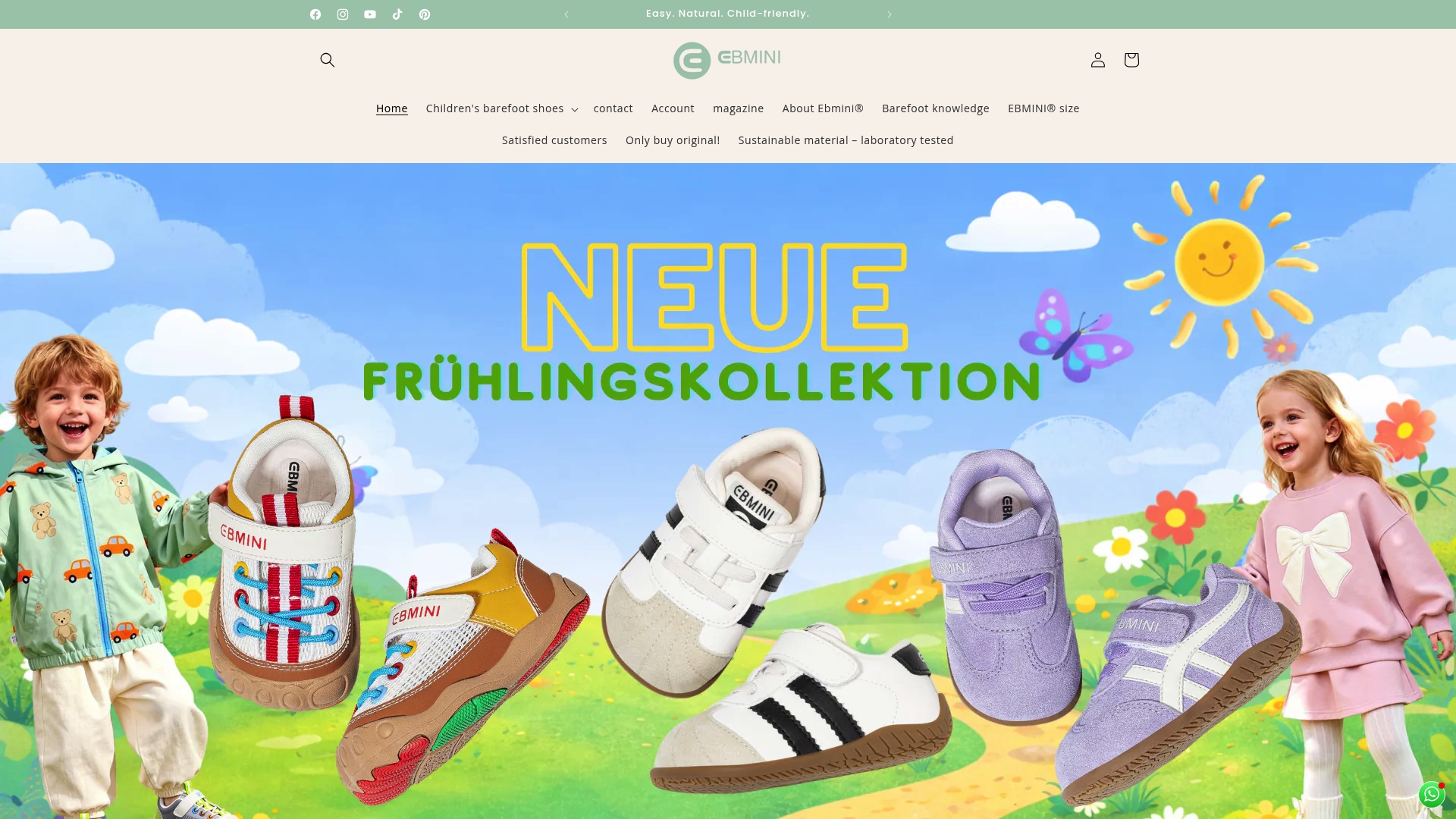
For summer, Ebmini offers both barefoot sandals for children and barefoot shoes in various models suitable for playgrounds, daycare, and excursions. All shoes are available in multiple widths and come with detailed size advice. Parents who value foot health will find models at Ebmini that meet the demands of both toddlers and active elementary school children.
FAQ
What is toe protection in children's summer shoes?
Toe protection refers to a reinforced or closed toe cap on the shoe that protects the toes from bumps, stones, and abrasions. It is particularly important for active children who play on playgrounds, in nature, or near water areas.
Which summer shoes with toe protection are suitable for toddlers?
Barefoot sandals with a wide toe box and Velcro closure are best suited for toddlers from about 12 months, as they promote independence and train foot muscles. For very active toddlers, trekking sandals with a closed toe cap offer more protection.
How do I measure the correct shoe size for summer shoes?
The insole length of the shoe should be 5 to 10 mm longer than the child's foot, measured with a template on a flat surface. This extra room is necessary so that the foot has enough space to roll and is not constricted.
Why are neon colors useful for children's shoes?
The DLRG recommends neon colors for children's clothing and shoes because they significantly increase visibility near water and in terrain. Muted colors like brown or gray are barely visible in water and increase the risk of losing sight of a child.
Can children also wear closed shoes in summer?
Closed sneakers with breathable mesh are also suitable in summer, especially on cooler days, on sandy paths, or in urban environments. They protect against dust and minor injuries and complement open sandals as a second pair in the basic equipment.


