

Ultralight Kids' Shoes: How to Make the Most of Their Benefits
Why lightweight shoes make such a difference for children's feet
Ultra-lightweight children's shoes with flexible soles and wide toe boxes are the healthiest shoe choice for children during their growth phase. This is not a trend, but the result of what orthopedists and sports therapists have observed for years: rigid, heavy shoes inhibit foot muscles before they can even properly develop.
Key benefits at a glance:
- Low weight enables natural movements without effort
- Flexible sole allows foot muscles to work actively instead of being passively supported
- Wide toe box gives toes space to splay during push-off
- Zero drop keeps the heel and forefoot at the same height, stabilizing posture
- Sensory feedback through thin soles improves balance and coordination
- Protection with barefoot feel protects against injuries without dampening foot perception
Professional minimalist shoes for children are significantly lighter than conventional children's shoes of the same size. For a foot that is just learning to walk, this makes a considerable difference.
1. How ultra-lightweight shoes strengthen foot muscles
Children's feet are not fully developed until about six years of age. Bones, ligaments, and muscles only form through stress and movement. Shoes with rigid soles take on tasks that the foot muscles themselves should actually perform.
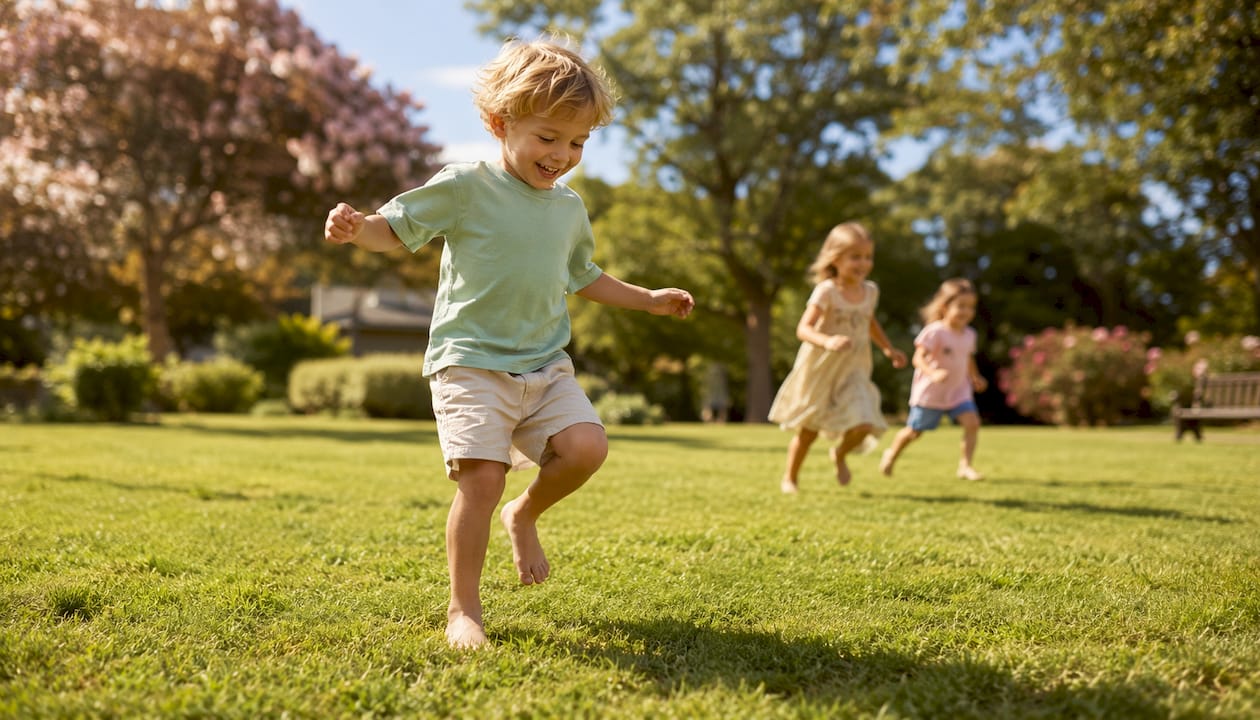
Studies show that children who grow up in flexible shoes or barefoot have better-developed arches than peers in conventional footwear. The intrinsic foot muscles, i.e., the small muscles directly in the foot, are challenged more by thin, flexible soles. The result: stronger feet, more stable balance, safer walking.
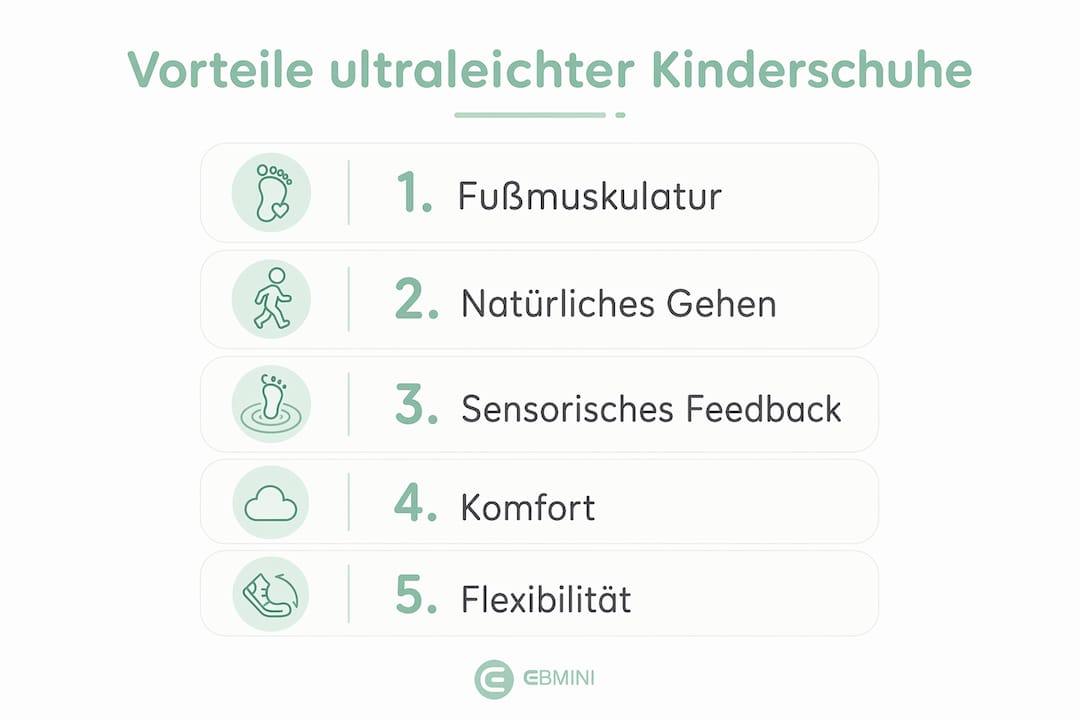
In addition, there's sensory feedback. Through the sole of the foot, the child constantly receives information about the ground, which trains proprioception. Thick padding dampens precisely this stimulus. Toddlers who can feel the ground hold their heads straighter and stumble less often.
2. What quality features really matter
Not every lightweight shoe is automatically a good barefoot shoe. When buying, parents should pay attention to these characteristics:
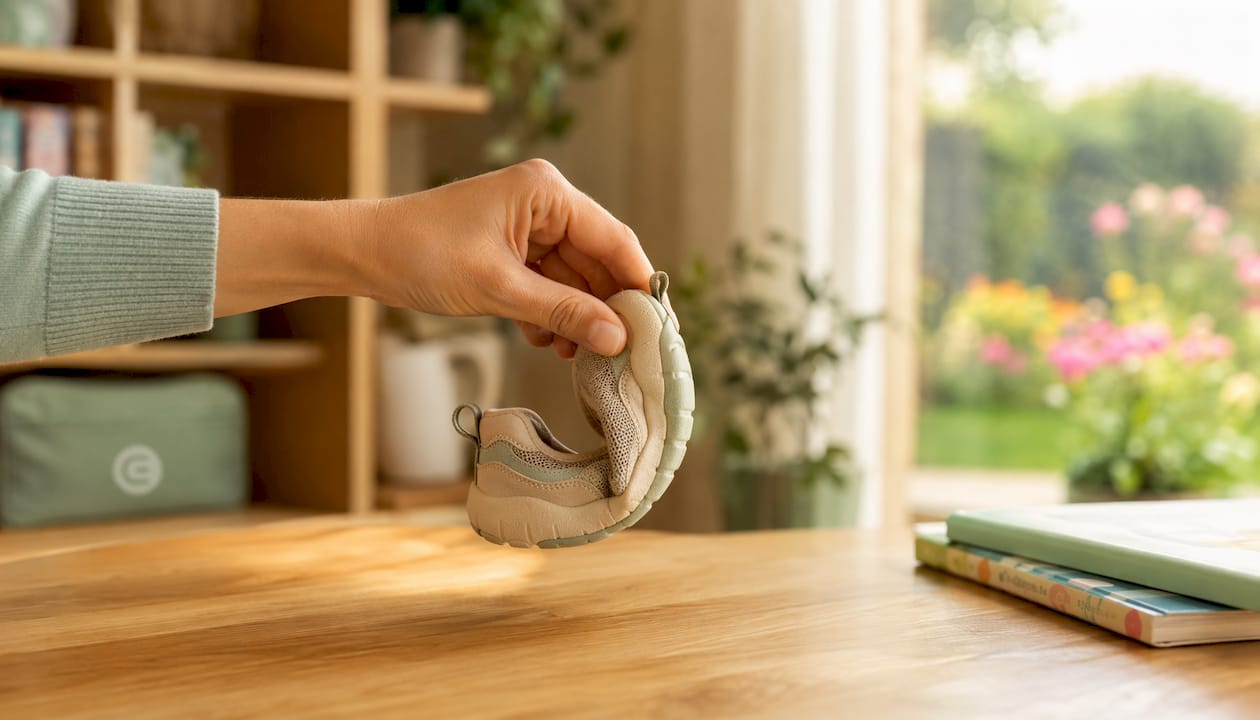
- Weight and sole flexibility: The sole must be foldable with one hand, without much effort.
- Zero drop: Heel and forefoot are at the same height. No heel lift, no artificial incline.
- Wide toe box: Significantly wider at the front than standard shoes, so the toes can splay during push-off.
- Non-toxic materials: Breathable fabrics such as leather, mesh, or certified synthetics maintain a healthy foot climate.
- No pronounced footbed: Molded footbeds tend to immobilize developing children's feet.
- Fit with allowance: There should be 12–17 mm of space between the tip of the toes and the end of the shoe.
Pro Tip: Take the shoe in both hands and bend the sole together. If you need force to do so, the sole is too stiff. A good barefoot shoe can be folded effortlessly.
Paying attention to natural materials does the foot climate an additional favor. Synthetic materials can be problematic for feet that sweat heavily. Merino wool socks help here as a simple addition.
3. What orthopedists and sports therapists recommend
The orthopedic expert opinion on barefoot shoes is clearer than many expect. For healthy children's feet, the rule is: as much freedom of movement as possible, as little restriction as necessary.
Functional shoes strengthen foot muscles but do not replace physical activity. A balanced movement experience is crucial for healthy development. Barefoot shoes are ideal for children whose feet are developing appropriately for their age. They are not suitable for children with orthopedic deformities or medically diagnosed needs for correction.
Sports therapists emphasize an often-overlooked point: the shoe alone doesn't do it. Diverse movement experiences on different surfaces, barefoot in the garden, on grass, on sand, are just as important as the right footwear.
Ultra-lightweight shoes are also not a substitute for medical orthoses for diagnosed deformities. If you are unsure whether your child has an orthopedic need for correction, you should clarify this with a pediatrician or orthopedist before switching to minimalist shoes.
For winter, there is an important limitation: at very low temperatures or prolonged standing in the snow, sturdier, insulating soles may be more sensible than ultra-light barefoot models. The choice depends on the intended use, not on a rigid rule.
4. Correct size, breaking in, and care
Determining the size
Shoe size indications are not standardized. Manufacturer A and Manufacturer B can differ by up to one centimeter for the same size indication. Therefore, the actual foot length of the child is crucial, not the size number on the box.
The growth and roll-off allowance should be 12 to 17 mm. If you can remove the insole, place the child on it and check if the heel and sole end are flush and there is enough space at the front. Without a removable insole, a cardboard template helps: place the foot on cardboard, trace the outline, add 12 to 17 mm, cut it out, and place it in the shoe.
Parents should generally avoid used shoes. An already worn sole has adapted to the previous owner's foot and can promote deformities in the next child.
Breaking in
If you are transitioning your child from conventional shoes to barefoot models, you should do so gradually. Start with 15–30 minutes daily, increasing wear time over several weeks. The foot muscles need time to adapt to the new stress. If the child shows discomfort, simply wear them for shorter periods and increase gradually.
Care
Breathable materials generally tolerate lukewarm water and mild soap. Leather should be treated with a suitable care product after drying. Never dry shoes directly on a heater, as this shrinks the material and makes the sole stiffer.
Pro Tip: Choose the fastening system according to age: Velcro for toddlers who want to put shoes on and take them off themselves. Laces for older children, as they allow for individual width adjustment and better fixation for insoles.
5. Ebmini® barefoot shoes: Features and practical experience
Ebmini® specializes in ultra-light barefoot shoes for children that combine all the mentioned quality criteria in an everyday model. The shoes come with a flat sole with no heel drop, a wide toe box, and non-toxic materials.
The Ebmini® OTD model also features a waterproof membrane, making it suitable for autumn, mud, and light snow, without sacrificing sole flexibility. Parents looking for a shoe for changing weather conditions will find a well-thought-out solution here.
Ebmini® barefoot shoes combine the principle of barefoot walking with the protection children need in everyday life. Wide toe box, zero drop, and flexible sole are not compromises, but the foundation of the design.
The product page offers detailed size advice and explains how parents can ensure the correct fit. If you are unsure which model suits your child, you will find concrete assistance there, without having to rely on advice in a shoe store.
Ebmini® is the direct answer to this question
For those seeking ultra-light barefoot shoes that combine foot health and everyday usability, Ebmini® offers a range specifically designed for this purpose. No padded footbed, no rigid sole, no heel drop. Instead: genuine freedom of movement for growing feet.
Ebmini® delivers directly to your home, with size advice, return options, and a range that includes lightweight summer sandals and waterproof trekking shoes. If you are looking for the right shoes for your child now, you can find the entire range at Ebmini® Barefoot Shoes for Children. For summer, it's also worth taking a look at the barefoot sandals, which impress with their particularly low weight and open design.
Key findings
Ultra-light barefoot shoes with flexible soles, zero drop, and a wide toe box demonstrably strengthen children's foot muscles and prevent deformities, provided the fit and size are correct.
| Topic | Details |
|---|---|
| Weight and Sole | Minimalist shoes in size 26 weigh 110 to 150 g; the sole must be foldable with one hand. |
| Size Allowance | A growth and roll-off allowance of 12 to 17 mm is crucial; manufacturer sizes are not standardized. |
| Orthopedic Limits | For diagnosed deformities, ultra-lightweight shoes do not replace medical orthoses. |
| Breaking In | Start with 15 to 30 minutes daily and gradually increase wear time over several weeks. |
| Ebmini® | Offers ultra-light barefoot shoes with zero drop, a wide toe box, and optional waterproof membrane for everyday use. |


