

Zero Drop Shoes: Meaning, Benefits, and Safe Transition
Zero drop means that the heel and forefoot are at exactly the same height, so the drop is 0 mm. This means the foot is not tilted forward as in classic running shoes, but completely straight on the sole. However, those switching from normal shoes to zero-drop shoes should take their time. The calf muscles, Achilles tendon, and arch of the foot need to get used to the new strain, and switching too quickly often leads to overuse injuries instead of the hoped-for benefits.
Key Takeaways
Zero drop means 0 mm heel-to-toe drop, which challenges foot muscles more but requires a gradual transition over several weeks.
| Topic | Details |
|---|---|
| Definition | Zero drop means heel and forefoot are at exactly the same height, 0 mm drop. |
| Drop Categories | 0–4 mm is considered low, 4–9 mm is standard, over 9 mm is high drop. |
| Main Advantage | Stronger activation of foot muscles and better ground feel when walking and running. |
| Main Risk | Switching too quickly can overload the Achilles tendon and plantar fascia. |
| Transition Period | A careful transition typically takes two to three months for full use. |
Table of Contents
- What exactly do zero-drop shoes mean technically?
- Construction: How do zero-drop shoes differ from conventional models?
- What advantages can zero-drop shoes offer?
- Risks and contraindications: When zero drop can be problematic
- Practical transition plan: How to safely switch to zero drop step-by-step
- Who are zero-drop shoes suitable for, and who are they not?
- Myths and research: What is verifiable, what remains controversial?
- Editor's short comment: Our assessment
- Find the right zero-drop shoe now
- Sources
- FAQ
What exactly do zero-drop shoes mean technically?
The so-called "drop," also known as "heel-to-toe drop," describes the height difference between the heel area and the forefoot area of the sole. In a classic running shoe, the heel is often noticeably higher than the toe. With zero drop, this difference is absent.
The industry broadly divides shoes into three categories: values from 0 to 4 mm are considered low or in the zero-drop range, 4 to 9 mm are within the common standard range, and anything above 9 mm is classified as a high drop, as many older running shoe models still feature. This classification is also found in manufacturer specifications, such as those from ASICS, which usually state the drop directly in the product description.
The drop is simply calculated: subtract the forefoot height from the heel height. A shoe with a 22 mm heel height and a 14 mm forefoot height has an 8 mm drop. With zero drop, both values are the same, for example, 12 mm heel and 12 mm forefoot.
| Drop Category | Range | Typical Effect |
|---|---|---|
| Zero to low | 0–4 mm | Promotes midfoot or forefoot strike, stronger foot muscle activity |
| Standard range | 4–9 mm | Balanced distribution between foot and calf |
| High | over 9 mm | Relieves calf and Achilles tendon, more pressure on the knee |
Three points help when reading product information:
- The drop is usually listed separately from the total sole height; pay attention to both numbers.
- Some manufacturers state the drop in millimeters, others only as "Zero Drop" or "Low Drop" without a precise number.
- The overall sole thickness says nothing about the drop; a thick shoe can still have a 0 mm drop.
Construction: How do zero-drop shoes differ from conventional models?
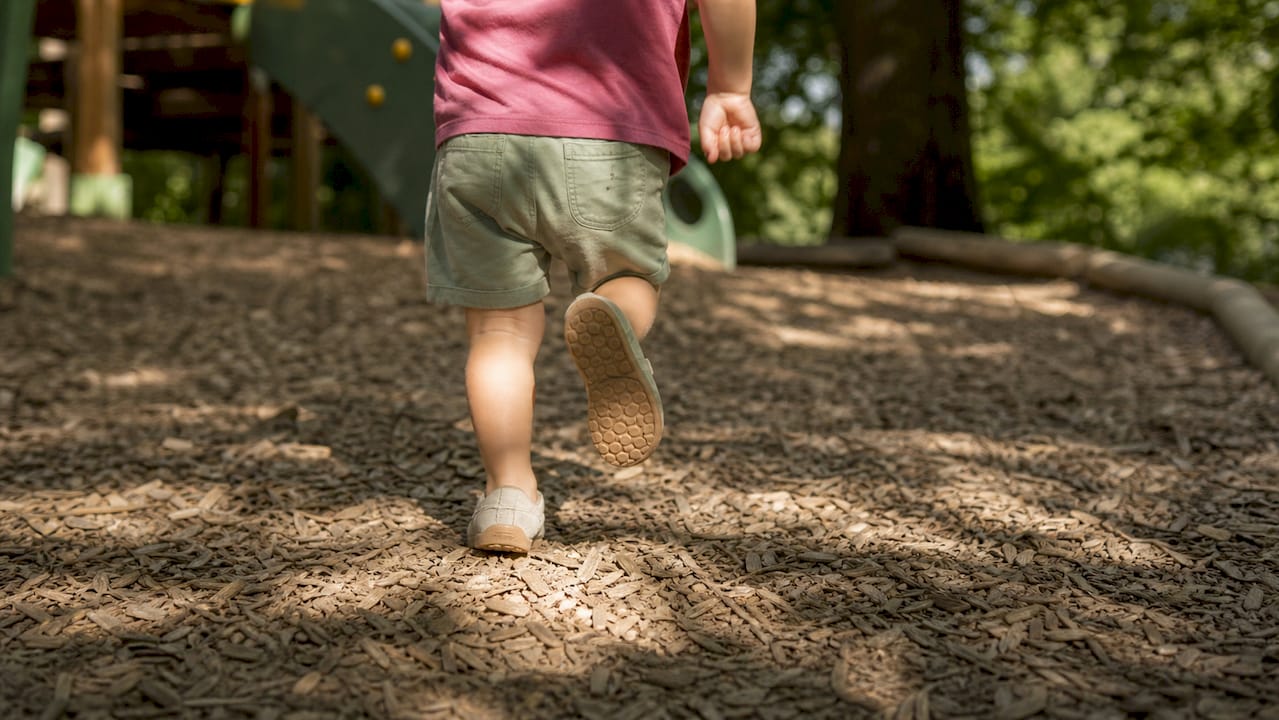
The difference is not just in the drop. A classic running shoe usually combines an elevated heel with thick cushioning, a narrow, pointed toe box, and a relatively stiff sole that supports the foot during rollover. Zero-drop models, however, often feature a wider toe box that gives the toes more room, and a more flexible sole that moves more with the foot.
| Feature | Conventional Shoe | Zero-Drop Shoe |
|---|---|---|
| Drop | Often noticeably elevated | 0 mm |
| Toe Box | Often narrow, pointed | Wide, anatomically shaped |
| Sole Flexibility | Rather stiff, supportive | High, pliable |
| Cushioning | Varies, often pronounced | Varies widely, from thin to padded |
Important to know: Zero drop does not indicate the amount of cushioning. A shoe can have zero drop and still have a well-padded sole; barefoot shoes and a lack of cushioning are not the same thing. This is one of the most commonly misunderstood points in the entire topic.
The lack of drop significantly changes the foot's roll-off behavior. Without an elevated heel, the foot tends to land more on the midfoot than on the heel when walking and running, which shifts the load chain away from the heel and more towards the calf, Achilles tendon, and arch of the foot. When trying on shoes, it's worth testing them while standing and walking, not just sitting. Pay attention to whether your toes have a little room at the front and whether the sole bends naturally when rolling off, instead of remaining stiff.
What advantages can zero-drop shoes offer?
The most commonly cited effect concerns the foot muscles themselves. Orthopedic assessments suggest that constantly supportive, classic shoes can weaken the intrinsic foot muscles because the foot no longer has to perform stabilizing work itself. Zero-drop models with flat, flexible soles challenge these muscles more again.
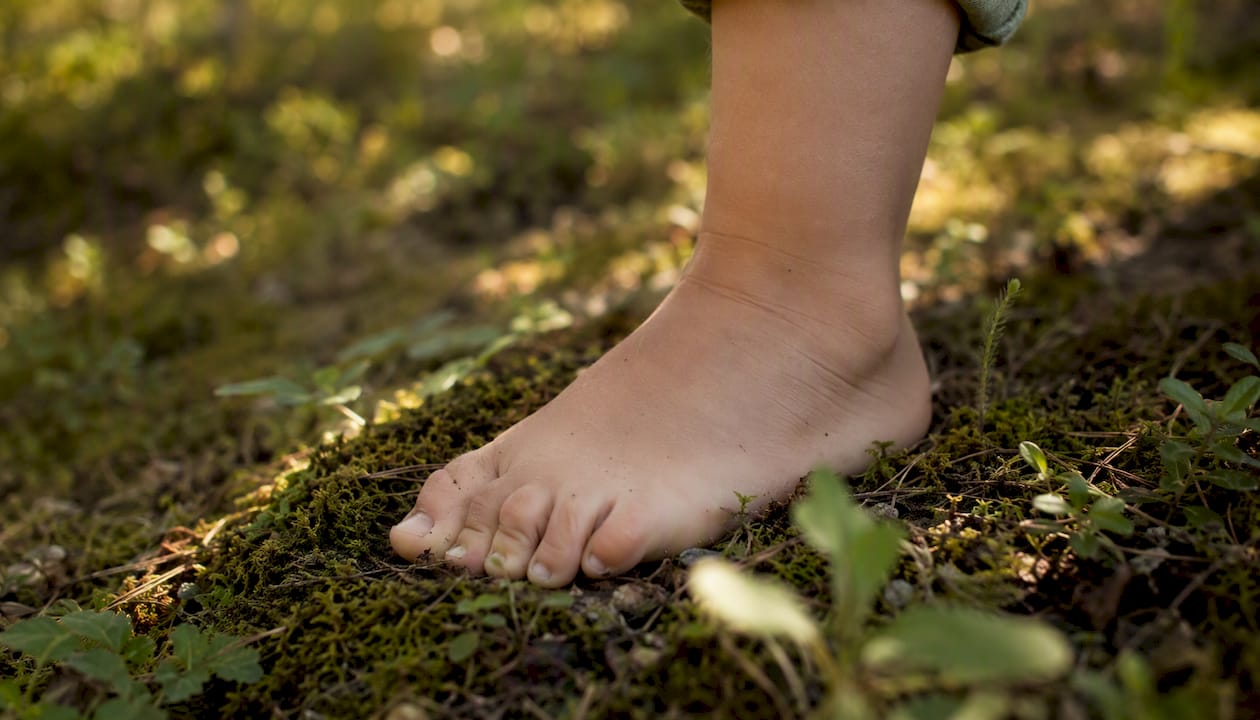
Pro-Tip: When trying on zero-drop shoes, test if you can consciously splay your toes. If the toe box allows this, it's a good sign of sufficient freedom of movement.
Other commonly reported effects:
- Improved ground feel due to the lower sole height and thinner materials.
- More active balance work, as the foot receives more sensory input directly from the ground.
- Tendency towards a more natural gait without the artificial forward lean caused by elevated heels.
- For some runners, a shift towards midfoot striking, which tends to relieve pressure on the knees.
A low drop activates the foot muscles more strongly and promotes midfoot striking, but at the same time, it strains tendons and muscles more intensely than a shoe with a high drop. This is not a contradiction, but rather the flip side of the same mechanics: more self-work by the foot also means a greater training stimulus, and training stimuli take time to work.
Risks and contraindications: When zero drop can be problematic
The biggest risk factor is not the shoe model itself, but the pace of adaptation. Someone who has worn shoes with a 10 mm drop for years and suddenly starts running daily in zero-drop shoes will almost inevitably overstress their calf muscles and Achilles tendon.
Switching to zero-drop shoes too quickly can cause overuse injuries to the Achilles tendon and plantar fascia, which is why a gradual approach is professionally recommended. Tissues need weeks, sometimes months, to adapt to the changed load.
Certain risk groups should be particularly cautious or seek medical advice beforehand: people with existing Achilles tendon complaints, pronounced plantar fasciitis, severe foot deformities, or diabetes with reduced sensation in the feet. Also, with additional strain, such as rucking with a weighted vest, the stretching of the Achilles tendon and the pressure on the arch of the foot increase significantly. Experts advise to first fully adapt to normal walking before adding any extra weight, and then to increase it only in very small steps.
Anyone already experiencing acute pain in the heel, calf, or sole of the foot should seek physiotherapeutic or orthopedic clarification before switching, instead of trying to cover up the problem with new shoes.
Practical transition plan: How to safely switch to zero drop step-by-step
A realistic roadmap looks like this:
- Week 1–2: Wear zero-drop shoes only for short everyday distances, maximum one to two hours daily, paying attention to muscle soreness in the calves and soles of the feet.
- Week 3–4: Gradually increase wear time, incorporate first short walks or easy runs of 10 to 15 minutes.
- Week 5–8: Slowly increase running volume, initially continue to use old shoes for long distances in parallel.
- From Month 3: If pain-free, switch completely to zero drop, even for longer runs.
Alongside this, targeted strengthening exercises help: toe raises and heel raises for the calf muscles, picking up small objects with the toes for the arch of the foot, and single-leg balancing for the stabilizing muscles. Ten minutes, three to four times a week, is perfectly sufficient to start with.
Pro-Tip: Keep a short wear log, especially for children. Note wear duration and any complaints. This way, you can detect early if a break is needed, before a slight pull turns into real overuse.
Warning signs for an immediate reduction include sharp pain in the heel, pulling discomfort along the Achilles tendon, or persistent swelling. In such cases, reduce activity, wear old shoes more often, and seek medical advice for persistent complaints.
Who are zero-drop shoes suitable for, and who are they not?
Zero-drop shoes are typically well-suited for technique-oriented runners who consciously want to work on their running technique, for people interested in natural foot movement in everyday life, and for anyone who wants to specifically train their foot muscles. Even in everyday life, away from sports, many benefit from the wider toe box and straighter stance.
Caution is advised for people with acute tendon or fasciitis complaints, ambitious runners who want to run high mileages in zero drop without a transition phase, and for those with severely pronounced foot deformities without prior professional clarification.
For children, the situation is somewhat different than for adults. Children's feet are still developing, and their musculature is naturally more flexible and less "unlearned" by years of wearing supportive shoes. A wide toe box and zero drop often correspond more to the natural foot shape here than in adults who first have to relearn. Nevertheless, for children too: appropriate size, age-appropriate sole flexibility, and a gradual acclimatization to new surfaces and activities are sensible. More on what parents should pay attention to during the transition is particularly evident when playing outdoors and learning to walk.
Myths and research: What is verifiable, what remains controversial?
A few misunderstandings persist:
- Myth: Zero drop automatically means no cushioning. Fact: The drop only describes the height difference between the heel and forefoot, not the sole thickness or padding. There are well-cushioned zero-drop models.
- Myth: The transition is immediately pain-free. Fact: Muscles and tendons need weeks to months to adapt; switching too quickly is more likely to lead to discomfort.
- Myth: Zero drop is equally good for every foot. Fact: People with existing tendon problems or severe deformities often benefit less or require medical supervision.
Clinical and biomechanical studies on barefoot running and low drop provide a nuanced picture. Some effects, such as the stronger activation of foot muscles, are well documented, while other correlations, such as overall injury prevention, are more inconsistent in scientific literature.
Specifically, this means: Muscle activation through low drop is relatively well supported by evidence, but the blanket statement "zero drop prevents running injuries" is not. Those who approach the matter with clear expectations will be less often disappointed than someone hoping for miracles.
Editor's short comment: Our assessment
Zero drop is a tool, not a panacea. Those who expect a shoe change alone to solve foot problems will be disappointed. But those who are willing to take the time for the transition and actively train their foot muscles often genuinely benefit from better ground feel and more natural foot loading.
From our perspective at Ebmini, especially for children, the earlier the foot gets used to a wide toe box and zero drop, the less readjustment work will be needed later. For adults who have worn conventional shoes for years, the situation is different; here, the transition simply requires more patience.
Find the right zero-drop shoe now
Once the theory is understood, most people want to know how to apply it in everyday life, especially for children whose feet are still developing. Ebmini develops its children's barefoot shoes in collaboration with orthopedists, featuring a wide toe box, consistent 0 mm drop, and a non-slip, flexible sole, suitable for everyday use, playgrounds, and changing weather.
The Ebmini sneaker collection is suitable for daily use from daycare to the playground, while models like the OTD with a waterproof, robust sole are designed specifically for trekking and changeable weather. Size advice and information on shipping and warranty can be found directly in the shop.
Sources
- Pubmed
- Heel-to-toe drop in running shoes - what does it actually mean?
- Barefoot shoes: healthy? Advantages and risks (ZDFheute)
- Barefoot shoes: a blessing for the muscles or a risk for the joints?
- Drop in running shoes
FAQ
What exactly does Zero Drop mean in shoes?
Zero Drop means that the heel and forefoot are at the same height, so the drop is 0 mm, in contrast to classic shoes with often 8 to 12 mm height difference.
What are the advantages of Zero-Drop shoes?
They promote stronger activation of the foot muscles, improve ground feel, and tend to support a midfoot strike, which places greater demands on foot muscles and balance.
What do orthopedic surgeons say about barefoot shoes?
Orthopedic assessments assume that permanently supportive shoes can weaken the foot muscles, while zero-drop models challenge these muscles again, provided the transition is gradual.
What does a 0 mm drop specifically mean for purchasing?
It means that the heel height and forefoot height of the sole are identical. On manufacturer websites, this value is usually stated separately from the general sole thickness.
Are Zero-Drop shoes suitable for everyone?
No, people with acute Achilles tendon or plantar fasciitis complaints should seek medical advice before switching and approach the change particularly slowly.


