

Are replaceable insoles in children's winter shoes really useful?
Many parents specifically opt for winter boot models with interchangeable insoles, hoping for better support and healthier feet for their children. However, this idea is based on a widespread misconception. Stiff children's shoes have been proven to significantly reduce joint mobility, while a flexible sole is more crucial for foot health than any insole. In this article, you will learn when interchangeable insoles actually make sense, what children's feet truly need in winter, and how to make the right decision for your next shoe purchase.
Table of Contents
- When Interchangeable Insoles in Children's Winter Boots Make Sense
- What Healthy Children's Feet Really Need in Winter
- Interchangeable Insole, Footbed, or Barefoot: What Promotes Healthy Foot Development?
- Practical Tips for Buying Children's Shoes in Winter
- Our Stance: Less Is More for Children's Feet in Winter
- Discover Healthy Winter Boots for Your Child
- Frequently Asked Questions About Interchangeable Insoles in Children's Winter Boots
Key Insights
| Point | Details |
|---|---|
| Interchangeable insoles mostly unnecessary | For healthy children's feet, interchangeable insoles are not required in winter boots. |
| Flexible soles promote development | Soft, flexible soles optimally support movement and muscle training. |
| Barefoot walking as best prevention | Frequent barefoot walking and flexible shoes are the best prevention against incorrect loading. |
| Material choice affects well-being | Wool in shoes wicks away moisture better than cotton, ensuring dry children's feet. |
When Interchangeable Insoles in Children's Winter Boots Make Sense
To understand whether interchangeable insoles are truly essential, let's analyze when their use seems reasonable. The answer surprises many parents: In most cases, interchangeable insoles play a much smaller role than the market might suggest.
What interchangeable insoles can do:
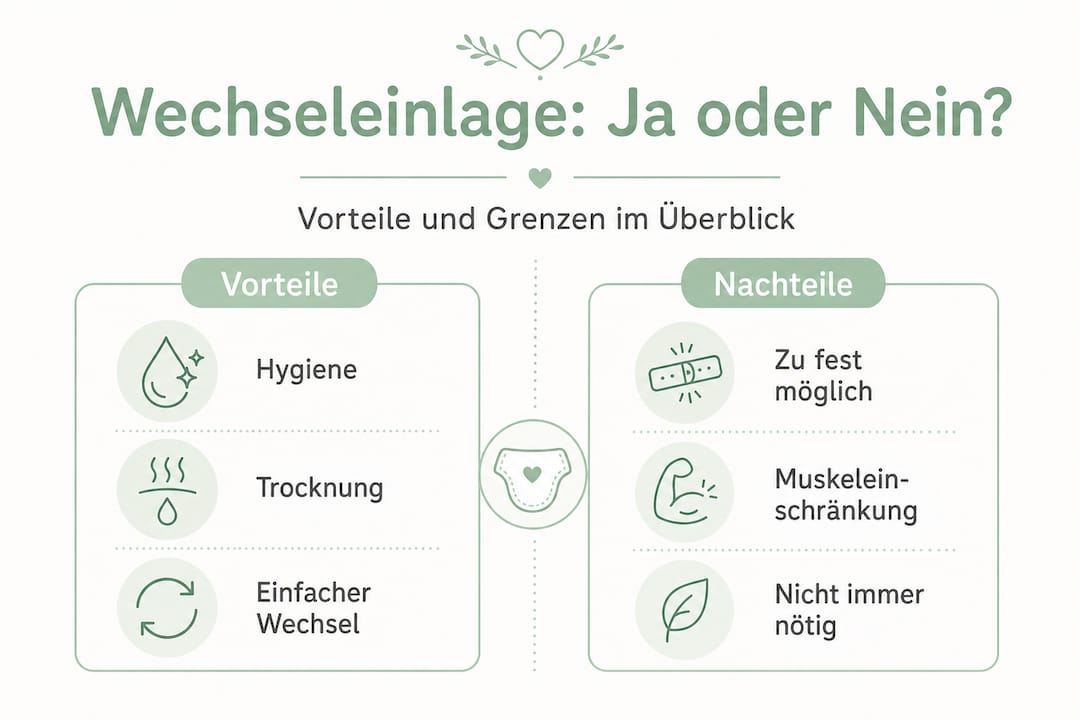
- Hygiene: If a child sweats heavily or if shoes are shared by multiple siblings, removable insoles can be washed and dried separately.
- Drying aid: Especially in winter, when snow and moisture stress shoes from the inside, insoles dry faster than the entire insole.
- Adjusting foot width: For feet with an unusually high instep or particular width, a different insole thickness can slightly improve the fit.
- Transitional periods: If a shoe is slightly too loose and the child is still growing, a thicker insole can provide temporary support.
These points are legitimate and quite practical. But they do not justify a medical overestimation of the topic. For healthy feet, insoles are not necessary, nor are they a prerequisite for good foot development. Many manufacturers and retailers emphasize interchangeable insoles as a selling point, even though their benefit for healthy children's feet is limited.
Another problem: Insoles that are too thick or too firm restrict natural foot musculature. The small muscles in the arch are trained with every movement when the foot feels a flexible sole and can move freely. However, if the foot rests on a thick, shaped insole, it takes over the support function, and the muscles are used less. In the long term, this can reduce the foot's proprioception and stability.
More information on this can be found in our guide to healthy children's feet, which explains the basics of natural foot development well.
Insoles are useful when a doctor or podiatrist (foot care specialist with medical training) specifically prescribes or recommends them. This applies to children with actual deformities such as flat feet, high arches, or other diagnosed problems. In these cases, a custom-fitted insole can help redistribute pressure and alleviate discomfort. The crucial difference: it is then a medical measure, not a standard feature.
Pro tip: Ask specifically during the next daycare check-up or pediatrician appointment if your child needs an insole at all. Most of the answers will surprise you.
What Healthy Children's Feet Really Need in Winter
Now that the role of insoles has been clarified, the question arises as to what properties winter boots should ideally have. Here, the scientific findings are clearer than often communicated.
Flexibility is the most important criterion. Flexible winter boots promote mobility, while stiff models can reduce it by up to 30 percent. This sounds abstract, but it has very concrete effects: A child walking in a stiff winter boot puts their foot down differently, rolls less, and the muscles in the calf and arch are not trained as well. For a 4- or 6-year-old child who is active for hours every day, this adds up to a significant restriction over weeks and months.
Recommended Clearance and Fit
The right fit is just as important as sole flexibility. Experts recommend that the inner length of the shoe should be 12 to 17 mm longer than the child's foot. This clearance accounts for toe movement when rolling off and normal foot growth. A shoe that is too tight restricts the toes and prevents natural walking; a shoe that is too loose provides no support and can lead to stumbling.
| Foot Length (cm) | Recommended Inner Length (cm) | Clearance (mm) |
|---|---|---|
| 12 cm | 13.2 to 13.7 cm | 12 to 17 mm |
| 15 cm | 16.2 to 16.7 cm | 12 to 17 mm |
| 18 cm | 19.2 to 19.7 cm | 12 to 17 mm |
| 21 cm | 22.2 to 22.7 cm | 12 to 17 mm |
| 24 cm | 25.2 to 25.7 cm | 12 to 17 mm |
This table shows that the recommended clearance remains constant regardless of age. Many parents tend to buy larger shoes so that the child can wear them longer. This is risky: With more than 17 mm of clearance, the shoe loses its supportive fit, and the child has to actively curl their toes to hold the shoe. This is strenuous and unhealthy in the long run.
Material Selection for Winter
When it comes to the material of the insole and lining, wool plays a special role. Wool can absorb up to 30 percent of its own weight in moisture without feeling damp. It actively regulates temperature by releasing moisture when warm and retaining heat when cold. Cotton, on the other hand, quickly saturates, stays damp, and thus cools the foot. A material comparison for winter boots confirms that wool or merino linings provide significantly better results in temperature regulation and moisture management than cotton linings.
Summary of the most important features for children's winter boots:
- Flexible sole that moves with the foot
- Ample toe room (wide toe box)
- No elevated heel (zero drop) for natural body posture
- Warm lining made of wool or merino
- Waterproof or water-repellent outer material
- Non-slip sole for wet and slippery surfaces
Pro tip: Test sole flexibility in the store like this: Hold the shoe at the heel and toe and bend it. A good children's winter boot should bend easily and without resistance. If it barely bends, it is unsuitable for active children's feet. Our warm and flexible winter boots meet exactly this standard.
Interchangeable Insole, Footbed, or Barefoot: What Promotes Healthy Foot Development?
With a look at the different options, we decipher what truly benefits children's feet in the long run. Comparing the three approaches will help you make an informed decision based on your child's needs.
Barefoot Walking: The Natural Standard
Barefoot walking is the most effective method for training children's foot muscles, balance, and body awareness. On soft, uneven surfaces like grass, sand, or forest, hundreds of small muscles and tendons in the foot are activated that are barely used on smooth ground in shoes.
In winter, constant outdoor barefoot walking is, of course, not a practical option. This is where barefoot shoes come in. These shoes mimic the barefoot feeling by offering a thin, flexible sole without a heel and a wide toe box. The child can walk as naturally in the shoe as without it.
"Experts recommend flexible shoes and prioritize barefoot walking. Insoles are counterproductive for healthy children because they take over the muscle work that the foot should do itself." (Die Presse)
Many sports scientists and pediatric orthopedic surgeons share this assessment today. The idea that feet need support to stay healthy is simply not proven for healthy children.
Comparison: Three Approaches at a Glance
| Approach | Advantages | Disadvantages | Recommendation |
|---|---|---|---|
| Barefoot shoes | Muscle training, natural development, body awareness | Provide less thermal insulation | Ideal for healthy feet |
| Fixed footbed | Pressure distribution for problematic feet | Restricts muscle function | Only with medical diagnosis |
| Interchangeable insole | Hygiene, drying aid | No medical benefit for healthy feet | Optional, not necessary |
The Decision Step-by-Step
- Check the child's foot: Does your child have a noticeable flatfoot, pain when walking, or a diagnosis from a doctor? If not, they do not need special insoles.
- Determine shoe type: Choose a flexible shoe with a wide toe box and a flat sole. This is more important than any insole question.
- Plan barefoot time: Give your child daily time without shoes, at least indoors or on a safe outdoor surface.
- Check insoles if needed: If the shoe is slightly too big or your child sweats a lot, a removable insole can be practical. Do not buy models that are too thick.
- Involve a doctor or podiatrist: For genuine foot problems, professional advice is irreplaceable. Do not buy insoles on suspicion.
Check out our barefoot shoes for children to get a first impression of what healthy shoe design for children looks like. For a concrete start, we also recommend the sneaker models with flexible soles, which also impress in everyday life.
Practical Tips for Buying Children's Shoes in Winter
Based on these framework conditions, here are practical tips for everyday life with children and winter boots. These tips will help you make informed decisions without costly mistakes.
Step 1: Measure the Foot Correctly
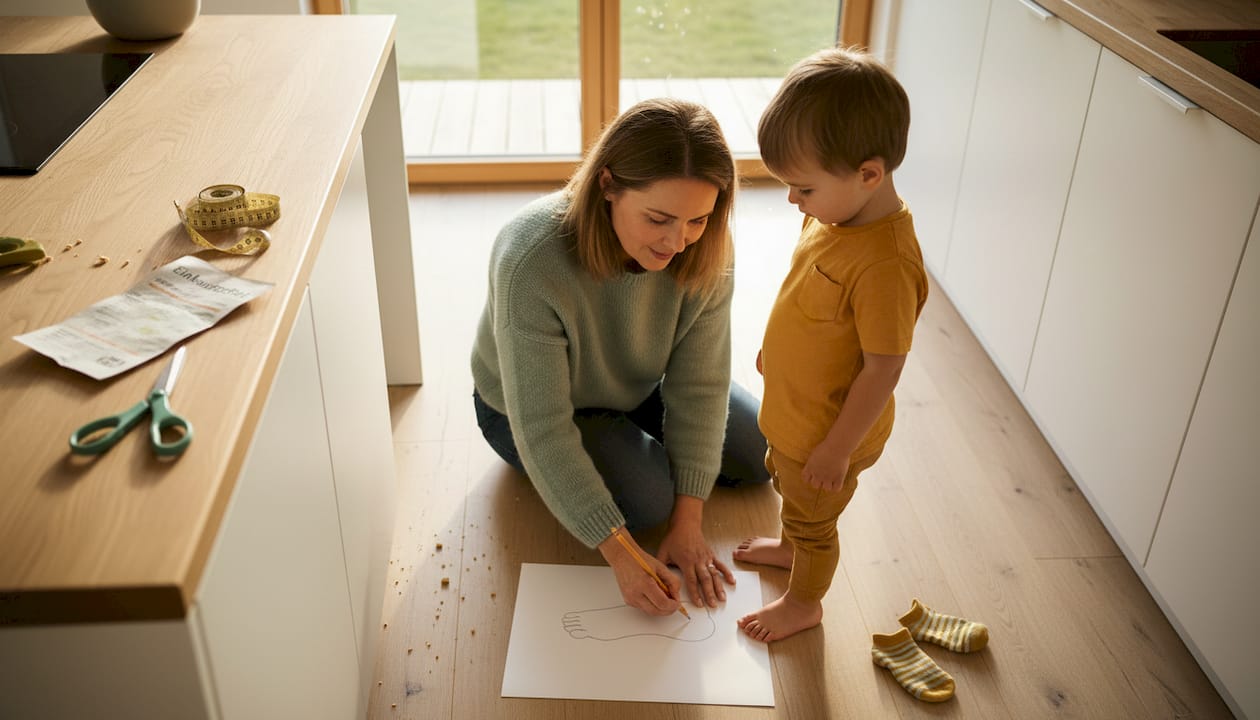
The foundation of any good shoe purchase is accurate foot measurement. Have your child stand in the afternoon, when their feet are slightly swollen, and measure the length from the longest toe to the heel. Experts recommend 10 to 17 mm of clearance as the inner length, exceeding the foot length. Measure in a standing position, as the foot expands slightly when weight is applied.
A simple at-home test: Have the child stand on a piece of paper and trace their foot with a pen. Measure the traced length and add 12 to 17 mm. This gives you the inner length of the suitable shoe.
Step 2: Use Interchangeable Insoles Sensibly
If the chosen shoe has a removable insole, use this advantage for hygiene:
- Remove the insole after a wet winter day and dry it separately in the air.
- Wash insoles regularly, especially if the child sweats.
- Do not buy replacement insoles with a strong arch or high instep that provide more support than necessary.
Important: An interchangeable insole does not compensate for poor shoe quality. If the sole is stiff and the toe box is too narrow, no insole will help.
Step 3: Recognize the Right Time to Change Shoes
Children's feet grow quickly. Up to 2 cm per half-year in the first year of life, then slightly slower. Nevertheless, you should check every two to three months whether the shoes still fit. Do not rely on the child's feeling: Children often do not notice when shoes are too tight because their feet adapt.
Signs of shoes that are too small:
- The child walks slightly inward or stumbles more often.
- The big toe leaves an imprint on the inside.
- The child takes off shoes for no reason or complains of tired feet.
Step 4: Switch Between Shoe Types
Use different types of shoes in everyday life to expose the foot muscles to varied stimuli. In the warmer months, children's spring shoes are suitable as light transitional models that combine grip and flexibility. In winter, a warm, flexible barefoot boot remains the first choice for outdoors, while barefoot walking should be preferred indoors.
Pro tip: Never buy in advance. A shoe that is two sizes too big today harms the child just as much as one that is too small. The right fit always takes precedence over price or a bargain.
Checklist for buying winter shoes:
- Foot measured and inner length calculated
- Sole is flexible and can be easily bent
- Toe box is wide enough, toes can spread
- No elevated heel
- Material is warm and moisture-regulating (e.g., wool)
- Outsole is non-slip, even on wet surfaces
- Interchangeable insole is removable and washable
Our Stance: Less Is More for Children's Feet in Winter
After these practical recommendations, it is worth taking a critical look at common misconceptions and the actual meaning of modern children's shoes. Because what has established itself as a standard on the market is not always what children truly need.
For years, we've observed a trend towards equipping children's shoes with more and more technology: footbeds, support elements, pronation control, orthopedic insoles as standard features. This sounds caring. In reality, it's often counterproductive. If a healthy child's foot is constantly in an overcorrective shoe, it loses the ability to stabilize itself. The muscles become weaker, not stronger.
Surprisingly many complaints that parents describe to us arise not from too little support, but from too much. Shoes that are too stiff cause children to unconsciously change their gait, which can put long-term strain on their knees, hips, and back. A wide, flexible sole without a heel allows the foot to perform its natural function.
This doesn't mean that every shoe must be a barefoot shoe or that insoles are fundamentally wrong. It means that the choice of a shoe should be based on the child's needs, not on the manufacturer's marketing promise. Anyone who tries barefoot sneakers for everyday wear quickly realizes how much more naturally children move in them than in classic children's shoes with a lot of padding.
Our clear recommendation: Focus on flexibility, fit, and natural materials. Only buy insoles if a doctor or podiatrist explicitly recommends them. Anything else is a marketing argument, not medical advice.
Discover Healthy Winter Shoes for Your Child
If your child deserves more freedom of movement, natural foot development, and genuine winter protection, then flexible barefoot shoes are the logical choice. Science, practice, and pediatric orthopedists all point in the same direction: less support, more freedom.
At ebmini.de, you'll find a carefully selected collection of children's shoes specially designed for the needs of children between 1 and 10 years old. Our winter models combine warm linings made from natural materials with ultra-flexible soles, wide toe boxes, and non-slip outsoles. Whether for snow, rain, or cool autumn days: we offer suitable models for every season. Removable insoles are possible with many models, but never intended as a requirement. Discover our collection now and choose the model that fits your child's feet.
Frequently Asked Questions about Removable Insoles in Winter Children's Shoes
Are removable insoles necessary in children's shoes in winter?
Removable insoles are not necessary for healthy children's feet. More crucial are a flexible sole and the correct fit that supports natural walking.
When is a special insole in a child's shoe useful?
Special insoles are useful if a doctor or podiatrist has diagnosed a foot deformity. For healthy children's feet, insoles are counterproductive because they take over the natural muscle work and can weaken them.
Do removable insoles contribute to hygiene in winter shoes?
Yes, removable insoles make drying easier and can be washed separately. This is a practical advantage, but it should not be the main argument when buying shoes.
What materials are suitable for children's shoe insoles in winter?
Wool regulates moisture better than cotton and keeps the foot comfortably warm even when damp. Merino wool is the highest quality choice for winter use.
How much space should there be in a winter shoe for a child's foot?
The recommended inner length is 10 to 17 mm more than the measured foot length. This allowance permits natural rolling and accommodates slight foot growth without compromising support.


