

Kids' Winter Boots: Why Ankle Protection is Important
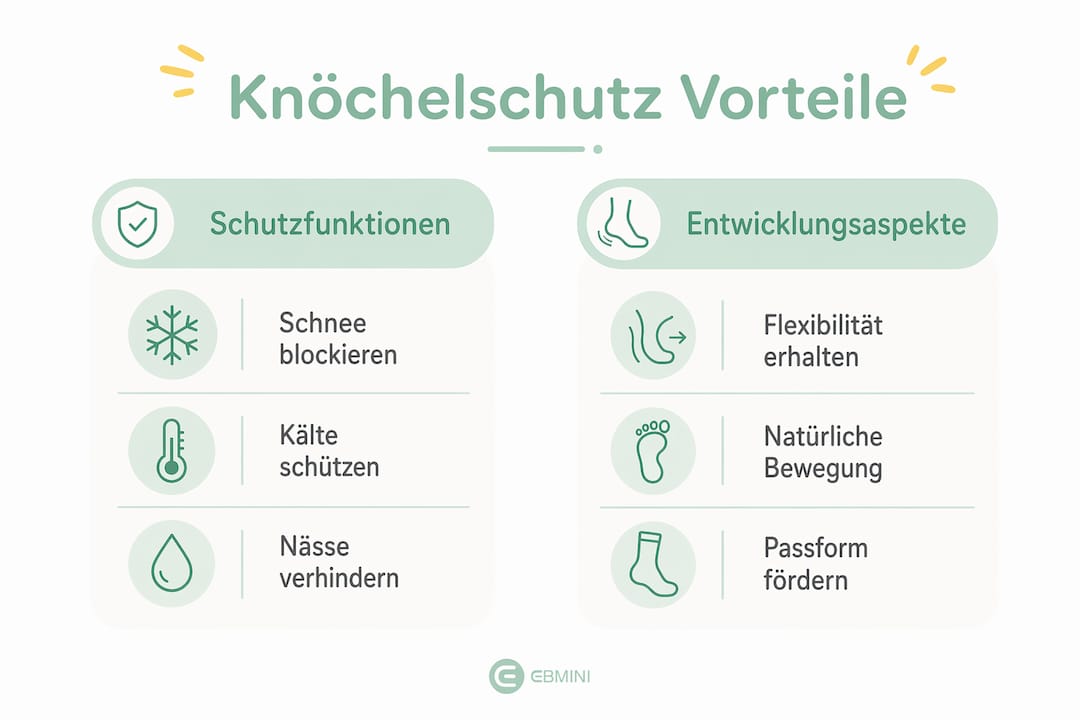
Ankle protection in children's winter boots is primarily a barrier against snow, cold, and wetness, not a substitute for a brace. The ankle-high shaft keeps moisture out and warmth in. Rigid fixation is not the goal. For children between 1 and 10 years old, the most important thing is that the boot does not block natural foot movement. If you ask why children's winter boots have ankle protection, here's a clear answer: protection from the elements comes first, healthy foot development second.
Why the ankle-high shaft protects against wetness and cold
The shaft is the first line of defense against winter conditions. Ankle-high models are considered a minimum protection in typical everyday situations and prevent the penetration of moisture almost completely. This sounds technical, but it has a very direct effect: wet feet cool down quickly, dry feet stay warm.
Children run through snowdrifts, step in puddles, and kneel in mud. A boot that only reaches to the heel offers little protection in such moments. The shaft must completely enclose the ankle to prevent snow from entering from above. Waterproof upper material with a breathable membrane keeps feet dry and simultaneously regulates the foot climate, which reduces both sweating and cold.
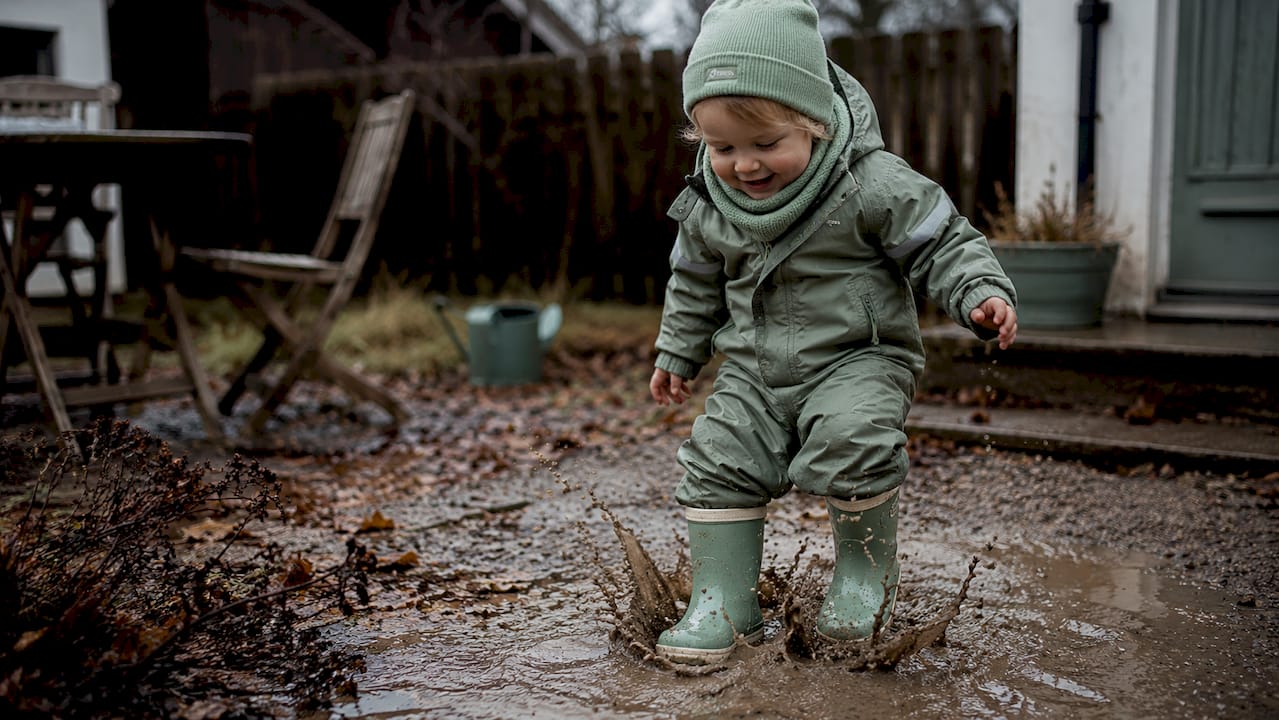
Heat retention through dry feet is the central protective function. A well-insulated boot with a high shaft immediately loses its advantage as soon as moisture penetrates. Because wet insulation hardly warms anymore. Parents should therefore pay special attention to the combination of shaft height, membrane, and seam sealing when buying winter boots.
Pro Tip: Test the waterproofing at home before the child wears the boot outside. Simply hold the boot under running water for a short time and check the inside after 30 seconds. If it's dry, the membrane is working.
What else you should pay attention to with the shaft:
- Shaft height: At least ankle-high, better up to mid-calf for deeper snow
- Top closure: Drawstring or hook-and-loop fastener prevents snow from falling into the boot from above
- Seam sealing: Glued or welded seams are more waterproof than sewn seams without sealing
- Breathability: Membranes like Gore-Tex or comparable materials let moisture out but not in
What do experts recommend for ankle stability in 2026?
Many parents believe that a stiff ankle area makes the boot safer. That's not true. The high shaft does not stabilize mechanically, but protects against external influences. Real stability comes from the sole profile, rubber compound, and precise lacing, not from a stiff shaft.
Non-slip soles with a coarse profile are obligatory for safe children's winter boots in 2026, according to expert reports. The sole must remain soft at sub-zero temperatures so that it still grips on ice and snow. A hard sole in the cold loses its grip and becomes a slippery surface.
Safety in winter primarily comes from ground grip, not from stiff ankle areas. This is an important difference that many overlook when buying. A boot with a soft shaft and a profiled rubber sole is safer for a child than a stiff boot with a smooth sole.
Flexibility is crucial for motor development. A too stiff ankle area can negatively affect the natural foot movement in toddlers. Especially in the age group of 1–5 years, where gait is still developing, the shaft should guide but not fixate.
What experts specifically recommend in 2026:
- Check sole profile: Coarse lugs made of a soft rubber compound offer the best grip on snow and ice.
- Test shaft stiffness: The shaft should be easily bendable by hand. If it hardly gives, it is too stiff.
- Lacing or hook-and-loop fastener: A well-fitting closure stabilizes the foot better than a stiff shaft.
- Check footbed: A lightly shaped but not rigid footbed supports the foot muscles without replacing them.
Pro Tip: Let your child wear the boot for a short time indoors and observe their gait. If they waddle or lift their knees unusually high, the shaft is too stiff.
How fit and flexibility promote foot development
Fit is not a minor matter. For healthy foot development, sufficient space and a flexible sole are more important than the stiffness of the ankle protection. Specifically, this means: 1–1.5 cm of growth room in the toe area so that the toes can spread when rolling off.
A flexible sole strengthens the foot muscles because it allows the foot to work slightly with every step. A rigid sole takes over this work and weakens the muscles in the long term. This is the core difference between a shoe that carries the foot and one that develops it.
Thick winter socks are a common trap. Thick socks greatly change the volume in the ankle area, which can lead to wrong shoe choices and reduced support. If you try on the boot without winter socks, you often buy it too tight. If you try it on with the thickest socks, you sometimes buy it too wide. The solution: buy boots with good insulation and wear thinner socks.
| Feature | Good for foot development | Less suitable |
|---|---|---|
| Sole flexibility | Soft, bendable in all directions | Rigid, hardly bendable |
| Toe room | 1–1.5 cm space in front of the big toe | Snug, toes squeezed |
| Shaft stiffness | Guiding but flexible | Rigid, blocks ankle movement |
| Weight | Light, under 400 g per boot | Heavy, affects gait |
| Footbed | Flat or slightly shaped | Strongly arched, overcompensates |
The ankle protection must not hinder the rolling motion. When walking, the foot rolls from the heel over the outer edge to the big toe. A boot that blocks this process forces the child into an unnatural gait. This is often only noticed after weeks when the child complains of pain or walks unusually. Podologically recommended children's shoes consider this natural rolling motion as a basic principle.
Practical tips for buying winter boots with ankle protection
When buying, concrete details matter, not marketing promises. Parents should check the following points directly on the boot before buying:
- Upper material: Leather or high-quality synthetic fiber with a membrane protects better than simple textile without coating.
- Closure type: Zippers or hook-and-loop fasteners make it easier to put on and take off and simultaneously secure the fit at the ankle. For children under 5, hook-and-loop is often more practical.
- Lining: Synthetic linings like Thinsulate warm even when wet. Natural fibers like wool warm well but take longer to dry.
- Sole profile: Coarse lugs, at least 4–5 mm deep, made of a soft rubber compound. Flat soles slip on ice.
- Weight: The lighter the boot, the less effort the child needs for each step. This spares the muscles and makes it more fun.
- Impregnation: Impregnate new boots before first use, even if they are advertised as waterproof. Seams and surfaces benefit from it.
Regular fitting is just as important as the right initial choice. Children's feet grow quickly, sometimes half a size in three months. A boot that fits in October may be too tight in February. Too tight shoes restrict blood circulation and promote deformities. Parents should check the fit every 6–8 weeks.
Care extends the lifespan and maintains the protective function. After each use in the snow, let the boot dry, but never directly on a heater. High heat destroys membranes and adhesives. Re-impregnating once per season is sufficient for normal use. If the child plays in the snow daily, impregnate more often.
Replacement insoles can improve the fit if needed, but they don't replace the correct shoe size. Insoles that take up too much volume don't make a boot that's too wide better; they narrow it unevenly.
Key Takeaways
Ankle protection in children's winter boots protects against wetness and cold, but only promotes foot development if flexibility, fit, and sole profile are correct.
| Topic | Details |
|---|---|
| Main function of the shaft | The ankle-high shaft blocks snow and moisture, not rigid stabilization. |
| Stability comes from the sole | Non-slip rubber soles with a coarse profile offer more safety than stiff ankle areas. |
| Fit is crucial | 1–1.5 cm of growth room and a flexible sole are more important than shaft stiffness. |
| Socks affect size | Boots with good insulation allow for thinner socks and a better fit. |
| Check size regularly | Children's feet grow quickly, check the fit every 6–8 weeks. |
What I've learned after years with children's feet
Parents often ask me if a stiffer boot is safer. My answer is always the same: No. Flexible ankle protection protects against cold and wetness without restricting natural movement. That's the core. A boot that prevents a child from running is not a good boot, no matter how waterproof it is.
What really surprised me: Most falls on ice don't happen because of a lack of ankle protection, but because of smooth soles. Parents invest in expensive, stiff boots and overlook the sole. That's a costly mistake.
I recommend checking the sole first when buying, then the fit, then the shaft. Anyone who reverses this order often buys the wrong thing. And one more thing: Children who grow up in flexible shoes develop stronger foot muscles. This is later evident in sports, climbing, balancing. A good winter boot is therefore not a restriction, but an investment in your child's natural movement.
— Ebmini
Ebmini Winter Shoes for Children: Protection with Freedom of Movement
Ebmini develops children's shoes that follow the principles of barefoot walking, even in winter. The models combine waterproof upper material, flexible soles with tread, and a wide toe box that allows the toes to spread.

The zero-drop principle means that the heel and forefoot are at the same height. This promotes a natural gait and strengthens the foot muscles instead of replacing them. Non-slip soles provide grip on snow and ice without rigidly enclosing the foot. Those looking for healthy winter shoes for their child that combine protection and freedom of movement will find models at Ebmini that achieve exactly this balance.
FAQ
What is the main purpose of ankle protection in winter boots?
Ankle protection in winter boots primarily protects against the penetration of snow, cold, and moisture. Ankle stabilization is a secondary function and should not restrict natural movement.
Why is a stiff shaft bad for small children?
A too stiff ankle area can negatively affect the natural foot movement and gait pattern in children between 1 and 5 years old. Flexibility is crucial in this developmental phase for building foot muscles.
How much space should a winter boot have in the toe area?
Experts recommend 1–1.5 cm of growth room in front of the big toe. This leeway allows for natural spreading of the toes when walking and accommodates the rapid growth of children's feet.
Which sole is safest for children's winter boots?
Non-slip soles with a coarse profile made of a soft rubber compound offer the best grip on snow and ice. The rubber compound must remain soft at sub-zero temperatures to maintain grip.
How often should I check my child's shoe size in winter?
Every 6–8 weeks is sensible, as children's feet grow quickly. A too-tight boot restricts blood circulation and can promote deformities.


