

Freedom of Movement in Children's Shoes: Features 2026
Children's shoes that promote movement are defined by three core characteristics: a flexible sole, a wide toe box, and sufficient room for growth. These features determine whether a shoe supports or hinders natural foot development. Knowing the characteristics of movement-friendly children's shoes means no more random purchases. This guide explains all the important criteria for children between 1 and 10 years old, with concrete testing methods and recommendations for each age group.
1. How much space does a children's shoe need for optimal freedom of movement?
The shoe must leave enough room at the front. 12 to 17 mm of extra space in front of the toes is considered a guideline, allowing children to move their toes freely and the foot to grow. This is roughly equivalent to a thumb's width. Leaving less space risks pressure points and restricted movement.
When you measure makes a difference. Measuring children's feet in the afternoon is sensible because they swell slightly due to the day's strain. A shoe that fits in the morning may already be too tight in the afternoon.
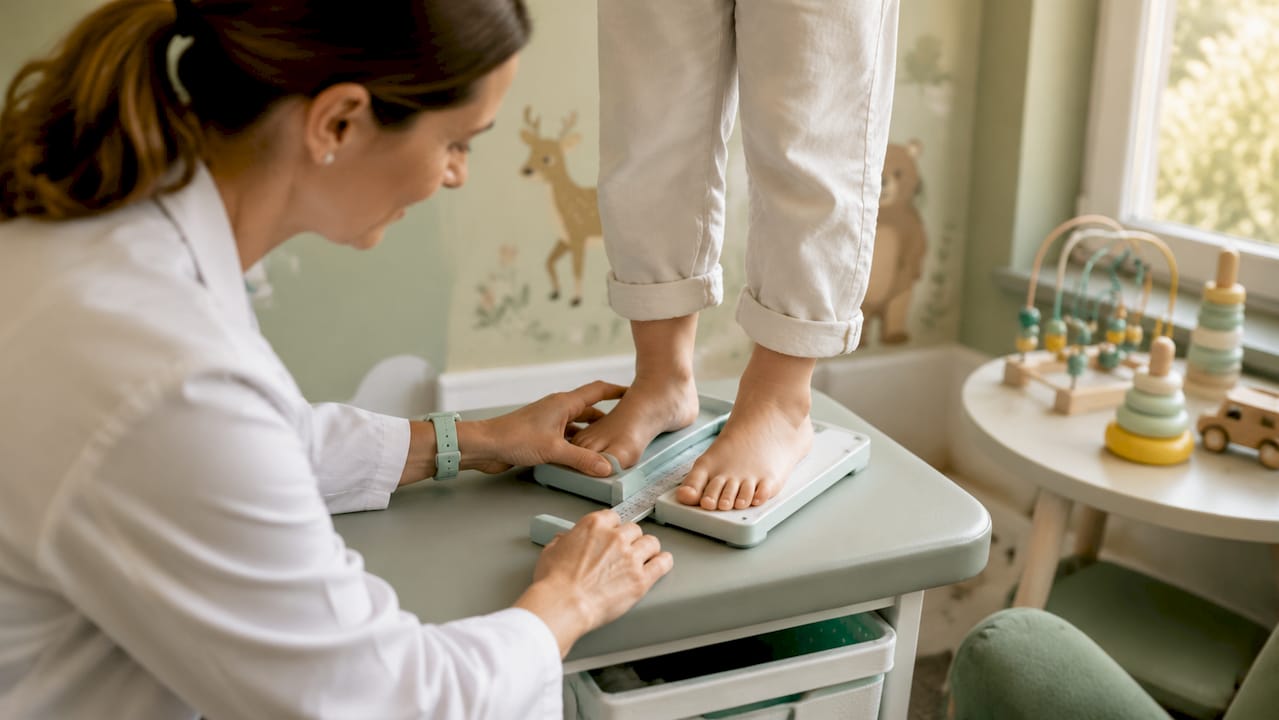
The removable insole is a practical aid. Simply take it out, have the child stand on it, and measure the distance between the toe and the end of the sole. This provides an accurate value without relying on estimates.
Pro Tip: Have the child stand, not sit, when measuring. When standing, weight is distributed to the foot, making it slightly wider and longer than when sitting.
Important points regarding space requirements:
- At least 12 mm, preferably 15 mm, distance between the tip of the toes and the end of the shoe
- Always measure in the afternoon, when the foot is largest
- Remove the insole and use it as a measuring template
- Growth allowance prevents pressure points and noticeably increases wearing comfort
2. What role does sole flexibility play?
A stiff sole blocks the natural rolling motion. The sole must be able to bend by at least 90 degrees in the toe area with one hand, so that the foot can work freely when walking and running. Those who don't check this in the store often buy a shoe that looks good but restricts the foot.
Equally important is the so-called drop. This refers to the height difference between the heel and the forefoot. No height difference, i.e., zero drop, means that the foot rests flat and naturally. Shoes with a high drop tilt the foot forward and alter posture in the long term.
For flexible soles, the younger the child, the more important the flexibility. Toddlers need soles that can move in all directions. Older school children can tolerate a bit more structure, but basic flexibility remains a must.
Pro Tip: Bend the shoe in the store with both hands. If you need force to do so, the sole is too stiff for a child.
Checklist for sole flexibility:
- Sole can bend at least 90 degrees in the forefoot area
- No or minimal height difference between heel and forefoot
- Sole also flexes sideways, not just forwards
- Non-slip outsole for secure grip on various surfaces
3. Why is the weight of the shoe crucial?
Lightweight shoes promote freedom of movement and put less strain on foot muscles than heavy, heavily padded models. This sounds simple but is often underestimated when buying. A child who wears heavy shoes all day gets tired faster and moves less.
Weight specifically influences how a child climbs, jumps, and runs. Lightweight shoes allow these movements without hindering the foot. Heavy soles with thick cushioning can have the opposite effect.
Good materials make all the difference:
- Leather is breathable and adapts to the foot's shape
- Breathable textiles keep the foot dry and prevent sweating
- Thin but durable soles keep the weight low
- Pollutant-free processing protects sensitive children's skin
4. How important are fit, width, and heel support?
A shoe that doesn't fit does more harm than good. The toe box must be wide enough for the toes to lie flat and spread out. Tight, pointed toe caps compress the toes and interfere with the rolling motion.
Heel support is the other side of the equation. A shoe that is too wide at the heel offers no support and makes walking unstable. The child then has to "grip" with their toes to hold the shoe, which puts incorrect strain on the foot muscles.
A wider toe box supports the rolling motion, while a precise heel fit ensures stability. Both combined result in a shoe that combines freedom of movement and safety.
What to look for in fit and width:
- Toe box wide enough for all five toes without pressure
- Heel sits firmly without pressing or slipping
- Shoe adapts to different foot shapes (wide, narrow, high instep)
- No rubbing on the heel or sides after a short wearing time
5. Breathability and material quality as comfort features
Freedom of movement doesn't stop at the sole. Breathable materials, a non-slip sole, and pollutant-free manufacturing are basic requirements for a good children's shoe. Feet that sweat become sore. Sore feet move less.
Leather and breathable textiles regulate moisture in the shoe. This is particularly important for active children who are outdoors all day. Synthetic materials without breathability trap heat and moisture, leading to blisters.
The non-slip sole is a safety feature directly related to freedom of movement. A child who slips on a smooth surface moves more cautiously and less freely. Good tread provides confidence when walking, climbing, and jumping.
6. Children's shoes by age and season: What changes
Not every shoe fits every age. The needs of toddlers and school children differ significantly. And the season also determines which features take precedence.
| Age Group / Season | Most Important Feature | Typical Model |
|---|---|---|
| Toddlers (1–2 years) | Maximum flexibility, very lightweight | Barefoot shoes for first steps |
| Preschoolers (3–5 years) | Wide toe box, lightweight | Barefoot shoes or sneakers |
| School children (6–10 years) | Support, protection, flexible sole | Barefoot sneakers, all-weather shoe |
| Summer | Breathability, lightweight | Barefoot sandals |
| Winter | Waterproof, warmth, flexibility | Waterproof winter barefoot shoes |
Toddlers need the softest and lightest shoes of all. The foot is still developing, and any restriction directly impacts their learning patterns. Barefoot shoes are the first choice here because they mimic the barefoot feeling while providing protection.
School children need more support, but not a stiff sole. A barefoot sneaker with good tread and a wide toe box meets both requirements. In winter, waterproofing and thermal insulation are added, without sacrificing sole flexibility. Ebmini offers waterproof winter models that combine all three requirements.
Barefoot shoes as a category are suitable for all age groups, as long as they fit the foot shape. They promote foot muscles and give the child a direct sense of the ground. Those who want to learn more about natural movement in children will find a detailed guide there.
7. Barefoot shoes as a movement-friendly alternative
Barefoot shoes are the most consistent implementation of all the mentioned features. They have thin, flexible soles, no drop, a wide toe box, and low weight. This makes them the direct answer to the question of maximum freedom of movement.
Barefoot shoes promote foot muscles in children, but are not suitable for all foot deformities. In cases of pronounced deformities, an orthopedist should be consulted first. This is not an argument against barefoot shoes, but a note on responsible use.
Those transitioning from conventional shoes should start slowly. 30 to 60 minutes of daily wear initially protects foot muscles and tendons, which need to adapt to the new strain. This is especially true for children who have previously worn heavily cushioned shoes.
More about foot health through barefoot shoes explains how this process specifically works and what parents should pay attention to.
Key Takeaways
Movement-friendly children's shoes need a flexible sole, a wide toe box, and at least 12 mm of room for growth so that the foot can develop freely.
| Topic | Details |
|---|---|
| Growth allowance | 12–17 mm space in front of the toes, measure in the afternoon due to foot swelling. |
| Sole flexibility | Sole must bend at least 90 degrees in the toe area, without drop. |
| Shoe weight | Lightweight materials promote climbing, jumping, and running without fatigue. |
| Fit and heel support | Wide toe box plus firm heel fit ensure freedom of movement and a secure gait. |
| Age adaptation | Toddlers need maximum flexibility; school children additionally need support and protection. |
What I really think after years with children's shoes
Parents often ask me what the most important feature is. My answer sometimes surprises them: It's sole flexibility, not size. A shoe that is too stiff is harmful even if it fits perfectly. The foot cannot roll naturally, the muscles work incorrectly, and the child often doesn't even notice.
What else I observe: Many parents buy shoes that are too heavy because they appear robust. However, robustness and weight are two different things. A lightweight barefoot shoe with a good sole is just as durable as a heavy shoe, but puts significantly less strain on the foot.
Transitioning to barefoot shoes is worthwhile, but it takes time. If a child who has worn cushioned shoes for years is put into barefoot shoes overnight, their foot muscles will be overloaded. Start slowly, gradually increase wearing time, and pay attention to the child's signals.
And one more thing: If a child frequently stumbles, complains of pain, or noticeably walks on the inner or outer edge of their foot, an orthopedist is the right person to consult. No shoe can replace a medical assessment for genuine foot problems.
— Ebmini
Ebmini® Barefoot Shoes for Children: Healthy Movement in Everyday Life
Ebmini® specializes in children's shoes that combine all the mentioned features in one model: flexible soles, a wide toe box, zero drop, and low weight. The barefoot shoes for children are designed for everyday wear, outdoor play, and all seasons.

For summer, there are light barefoot sandals with breathable materials. For winter, waterproof models are available that combine warmth and flexibility. All models are tested for harmful substances and designed for natural foot development, from the first steps to school age.
FAQ
How much space should a child's shoe have at the front?
A child's shoe needs 12–17 mm of extra space in front of the toes so that the foot can grow and move freely. This allowance prevents pressure points and provides room for natural rolling motion.
How do I check if a child's shoe sole is flexible enough?
The sole must be able to bend by at least 90 degrees in the forefoot area with one hand. If force is required, the sole is too stiff for a child.
When should I measure children's feet?
Measure children's feet in the afternoon, because they swell slightly due to the day's strain. A shoe that fits in the morning may be too tight in the afternoon.
Are barefoot shoes suitable for all children?
Barefoot shoes are suitable for most children and promote foot muscles. In cases of pronounced foot deformities, an orthopedist should be consulted before switching to barefoot shoes.
What is the difference between barefoot shoes and regular children's shoes?
Barefoot shoes have no drop, a very thin and flexible sole, and a wide toe box. Regular children's shoes often have more cushioning and a higher heel, which restricts natural rolling motion.


