

Winter-Ready Kids' Shoes: What That Really Means
Winter-ready children's shoes are footwear that reliably protects children's feet from cold, wetness, and slipping hazards. The term "winter-ready" doesn't describe a single feature, but rather a combination of three core functions: complete waterproofing, thermal insulation, and non-slip soles. If one of these three functions is missing, the shoe is simply not winter-ready. For parents of children aged 1 to 10, this is not a minor detail, but the basis for safe, healthy winter months. Because cold, wet feet are not only uncomfortable. They hinder natural foot development and significantly increase the risk of falls on slippery surfaces.
What does "winter-ready" mean for children's shoes?
Winter-ready shoe functionality is based on three technical components: upper material, lining, and sole construction. Each of these components fulfills its own task. Together, they form what parents know as "winter-ready".
Complete Waterproofing
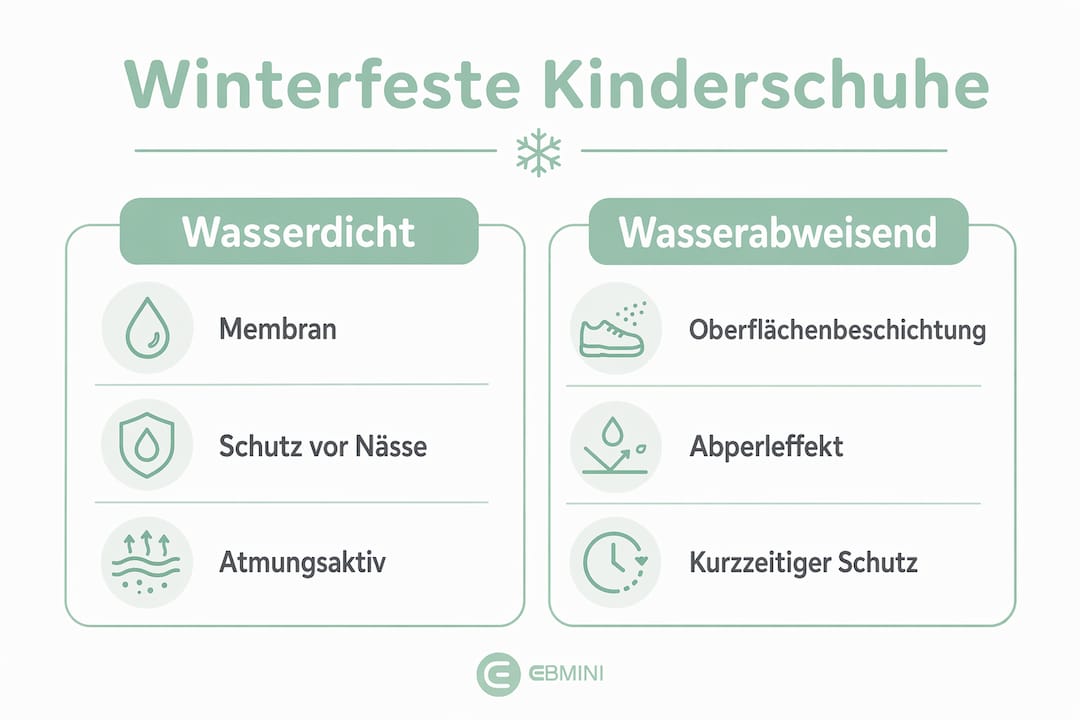
Waterproof shoes use membranes that keep water out but allow water vapor to escape from the inside. The upper material is sealed, and the seams are taped. A shoe that is only water-repellent will withstand a light drizzle. However, in slush or puddles, it will fail after a few minutes.
Thermal Insulation
The lining of a winter-ready shoe consists of wool, fleece, or synthetic materials like Thinsulate. These materials store body heat and do not release it to the environment. Wool has a particular advantage: it insulates even when slightly damp. Synthetic linings dry faster but insulate less reliably when wet.
Non-slip Soles
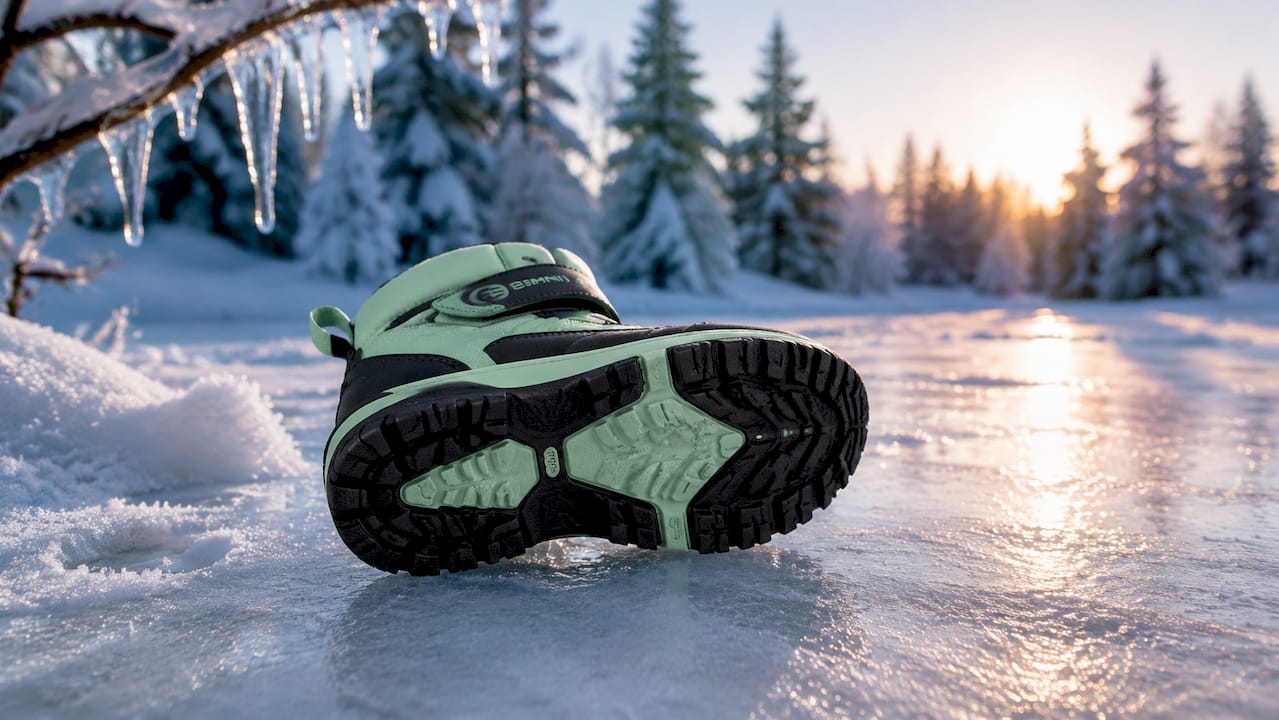
Non-slip soles are essential for safety on snow, ice, and muddy surfaces. Soles with deep treads and rubber-like material grip the ground and prevent falls. Flat, smooth soles are dangerous on winter surfaces, no matter how warm the lining is.
| Component | Function | Typical Materials |
|---|---|---|
| Upper material | Water protection, wind protection | Leather, nylon with membrane |
| Lining | Thermal insulation | Wool, fleece, Thinsulate |
| Sole | Grip, fall protection | Rubber with deep tread |
| Seams | Sealing against moisture | Sealed, glued |
Pro-Tip: When buying, check if the seams of the shoe are actually sealed. Many shoes look waterproof but are only waterproof on the upper material. Water then penetrates through the seams.
Why is the right fit particularly important in winter?
The fit determines whether a shoe keeps warm or not. This may sound surprising at first. But the insulating air cushion between the foot and the shoe is often more important for thermal comfort than the thickness of the lining. Shoes that are too tight prevent exactly this air layer.
When buying winter children's shoes, there should be about 10–15 mm of space. This roughly corresponds to the width of a thumb. This space not only allows for growth but also allows the foot to move slightly and store warmth.
Shoes that are too tight have several disadvantages:
- They compress the toes and hinder circulation.
- They prevent the air cushion that stores warmth.
- They can lead to long-term foot deformities.
- They leave no room for thicker winter socks.
Children grow in winter just as they do in summer. If you buy in October, you should plan for the shoe to still fit in February. And because wool winter socks are thicker than summer socks, the shoe needs a little more room from the start.
Pro-Tip: Always measure your child's foot in the afternoon. Feet swell slightly throughout the day. This way, you won't buy shoes that are too tight.
If you want to learn more about the correct sole thickness in winter, you will find a detailed explanation of insulation aspects and fit there.
Waterproof or water-repellent: what parents really need
Waterproof shoes with membranes protect against soaking for hours. Water-repellent shoes only repel moisture for a short time. The difference is significant in everyday life.
Water-repellent shoes have a surface coating that allows water to bead off briefly. After a few minutes in slush or a deep puddle, this effect is exhausted. Waterproof shoes, however, have a membrane that permanently repels water, even after hours in the wet.
| Feature | Waterproof | Water-repellent |
|---|---|---|
| Protection in slush | Reliable, for hours | Only briefly, a few minutes |
| Protection in puddles | Complete | Limited |
| Breathability | Good (with membrane) | Very good |
| Weight | Slightly heavier | Lighter |
| Suitable for | Outdoor, snow, mud | Light drizzle, dry cold |
When is waterproof absolutely necessary? Whenever the child plays outdoors, walks to school, or encounters puddles and snow on the way to school. For short distances in dry frost, a water-repellent shoe is sufficient.
Parents who want to know more about waterproof children's shoes and the materials behind them will find an ecological classification of the different membrane types there.
A common mistake: Parents buy water-repellent shoes because they are lighter and cheaper, and then wonder why their child has wet socks after playing in the snow. The difference is not in the price, but in the construction.
Practical tips for choosing and caring for winter-ready children's shoes
Choosing the right shoe starts with its intended use. Urban use requires different shoes than outdoor adventures in the forest. If you confuse the two, you'll either buy too much or too little shoe.
Check the fit in the store
- Have the child try on the shoe with the winter sock they will be wearing later.
- Press your thumb on the tip of the shoe. There should be about a thumb's width of space between the toe and the end of the shoe.
- Ask the child to walk a short distance. A good shoe fits snugly at the heel without pinching.
- Check if the shoe is flexible. A stiff shoe hinders the natural rolling motion of the foot.
- Pay attention to the weight. Heavy shoes tire children's feet more quickly.
Don't forget breathability
A waterproof shoe that doesn't breathe creates moisture from the inside. Dry feet are more important for thermal comfort than thick padding. If sweat remains in the shoe, the feet will get cold despite good insulation. Therefore, look for shoes with a breathable membrane, not just waterproof upper material.
The right sock makes all the difference
Wool socks wick moisture away from the skin and keep feet warm, even when slightly damp. Cotton socks store moisture and then quickly cool down. This is no small difference. A child with wool socks in a good shoe will have warmer feet than a child with thick cotton socks in the most expensive boot.
Care extends lifespan
Regular cleaning and waterproofing maintain the shoe's waterproofness and breathability. After every wet day, shoes should dry at room temperature, never on the heater. Heat destroys membranes and adhesives. Waterproofing sprays should be applied every two to four weeks, especially after cleaning.
Pro-Tip: Stuff wet shoes with newspaper. The paper absorbs moisture and the shoe retains its shape while drying.
Incidentally, shoes that are too thick are not automatically better. Flexible and well-insulated shoes promote healthy foot development and comfort at the same time. A shoe that is so stiff that the child can barely roll their foot will do more harm than good.
If you want to understand the sole in more detail, you will find a detailed explanation of tread depth and material selection for different winter surfaces there.
Key findings
Winter-ready children's shoes protect through three core functions: waterproofing, thermal insulation, and non-slip soles. Only when all three work together is a shoe truly winter-ready.
| Topic | Details |
|---|---|
| Definition of winter-ready | Three functions combined: water protection, thermal insulation, and non-slip sole. |
| Fit in winter | 10–15 mm of space create an air cushion that stores warmth. |
| Waterproof vs. water-repellent | Waterproof shoes protect for hours, water-repellent only for a short time. |
| Sock choice | Wool socks keep feet warm, cotton stores moisture and cools down. |
| Care and waterproofing | Regular care maintains waterproofness and extends lifespan. |
What I've learned after years with winter shoes
Parents often ask us which shoe is "the warmest." The question is understandable, but it falls short. Warmth doesn't come solely from thick lining. It comes from the interplay of fit, breathability, and the right socks.
We regularly see children in clunky, heavy winter boots with colder feet than children in light, well-fitting shoes with wool socks. The reason is simple: the heavy boot is too tight, prevents the air cushion, and causes sweat. The light shoe allows the foot to breathe and retains warmth.
Another misunderstanding concerns the difference between urban and outdoor use. Someone living in the city and taking their child to daycare in the morning needs a different shoe than a family spending hours in the snowy forest on the weekend. For the city commute, a flexible, waterproof shoe with good grip is often sufficient. For the forest, you need more shaft height and a deeper sole profile.
What is important to us at Ebmini: winter protection should not come at the expense of freedom of movement. A child who cannot roll their foot properly will not develop healthy walking patterns. That's why we focus on shoes that protect and simultaneously allow the foot to work.
— Ebmini
Winter-ready barefoot shoes from Ebmini for healthy children's feet
Ebmini develops winter-ready children's shoes that combine protection and freedom of movement. The models are waterproof, warmly lined, and equipped with non-slip soles, but at the same time follow the principles of barefoot walking: wide toe box, zero drop, and flexible sole.

This means: Your child is protected in winter, but can still walk naturally and develop their foot healthily. The shoes are ultra-light, which tires children's feet less, and breathable, which prevents moisture build-up. Those looking for healthy winter shoes for children will find models for children from 1 to 10 years at Ebmini. For all who want to get to know the entire range: Ebmini's barefoot shoes also offer healthy options for everyday life outside of winter.
FAQ
What exactly does "winter-ready" mean for children's shoes?
A winter-ready children's shoe combines three features: complete waterproofing through a membrane, thermal insulation through a heat-retaining lining, and non-slip soles with a deep tread. If one of these three features is missing, the shoe is not considered winter-ready.
How much space do children's shoes need in winter?
When buying winter children's shoes, there should be about 10–15 mm of space between the toe and the end of the shoe. This space creates an insulating air cushion and allows room for thicker winter socks.
What is the difference between waterproof and water-repellent?
Waterproof shoes have a membrane and protect against wetness for hours. Water-repellent shoes only have a surface coating and repel moisture only for a short time; in slush or puddles, they quickly fail.
Which socks are best for winter-ready children's shoes?
Wool socks are the best choice because they wick moisture away from the skin and still insulate even when slightly damp. Cotton socks store sweat and then cool down, which undermines the effectiveness of even the best winter shoe.
How do I properly care for winter-ready children's shoes?
Let shoes dry at room temperature after each wet day, never on a heater. Treat with a waterproofing spray every two to four weeks, especially after cleaning, to maintain waterproofing and breathability.


