

Winter barefoot shoes: warm, non-slip, toeless
Yes, barefoot shoes work for everyday winter wear. For trips to daycare, the playground, and walks, they are well-suited down to about 0 °C, as long as the model has a warm lining and a water-repellent membrane. If you need an immediate reference point: Ebmini's all-weather and OTD models are a sensible first checkpoint for parents in Germany.
- Temperature guideline: All-weather barefoot shoes can be worn daily without issues down to freezing temperatures.
- Immediate recommendation: Ebmini all-weather and OTD models combine zero drop, a wide toe box, and water protection.
- Note the limit: Switch to insulated winter boots for hours of snow play, sledding, or alpine conditions.
Table of Contents
- Why do barefoot shoes keep you warm in winter?
- When are all-weather shoes sufficient, and when does a child need insulated winter boots?
- What should parents look for when buying winter-suitable barefoot shoes?
- How do you correctly measure your child's foot length?
- Socks, layers, and care: How to keep barefoot shoes warm and durable
- How safe are barefoot shoes on snow and ice?
- What do the Ebmini all-weather and OTD models specifically offer?
- Key takeaways
- Why Ebmini recommends barefoot shoes even in winter
- Ebmini Kids' All-Weather Shoes: What you need to know now
- Further sources and information
Why do barefoot shoes keep you warm in winter?
This may sound paradoxical at first, but it is physiologically understandable. A thin, flexible sole forces the foot muscles to work harder. More muscle activity means better blood circulation, and better blood circulation generates warmth from within. Independent tests confirm: Barefoot shoes work in winter primarily when they have a warm lining and a water-repellent membrane.
The sole design plays its own role. A zero-drop sole with a tread gives the child ground feel and grip at the same time. Children who actively run, jump, and climb warm their feet through the movement itself. Those who stand still for a long time, for example, while waiting at a bus stop, will notice the difference more quickly.
Typical application scenarios where this works well:
- Daycare routine: Short outdoor times, lots of movement, dry indoor areas.
- Playground: Active running and climbing keeps circulation up.
- Walks: Paved paths, moderate cold, normal walking pace.
When are all-weather shoes sufficient, and when does a child need insulated winter boots?
The decision depends on three factors: temperature, duration of stay, and activity profile. All-weather barefoot shoes cover the normal German winter routine well. As soon as conditions become more extreme, more is needed.
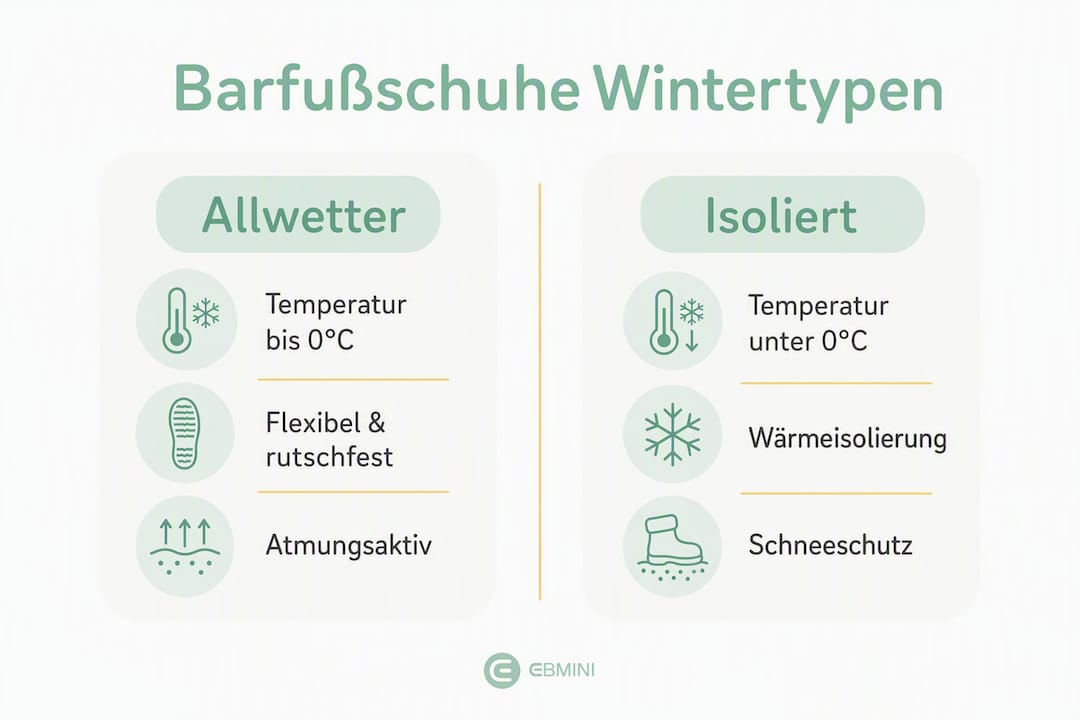
- Temperatures up to 0 °C, short outdoor times: All-weather barefoot shoes with a membrane and lining are sufficient.
- In severe sub-zero temperatures or for longer outdoor use: Insulated winter boots with thicker lining are the better choice.
- Active play in the snow (sledding, snowball fights): Pay attention to waterproofing and a higher shaft; ankle protection becomes relevant.
- Alpine conditions or ski tours: Not an area of application for barefoot shoes, even insulated models of this category.
Quick Checklist:
| Factor | All-weather Barefoot Shoe | Insulated Winter Boot |
|---|---|---|
| Temperature | up to 0 °C | below 0 °C |
| Duration of stay | up to approx. 1–2 hours | longer than 2 hours |
| Moisture | Puddles, light snow | deep snow, continuous rain |
| Terrain | paved paths, playground | off-road, sledding hill |
What should parents look for when buying winter-suitable barefoot shoes?
The most important criteria first, as not every detail carries the same weight.
- Wide toe box: Toes must be able to spread, no compression when rolling off.
- Zero Drop: Heel and forefoot at the same height, no heel that alters posture.
- Flexible sole: Guideline 0–6 mm thickness; the shoe should be easy to roll around its own axis.
- Non-slip tread: Multi-directional pattern with sufficient tread depth for winter surfaces.
- Water protection: Membrane or water-repellent upper material. Important: water-resistant is not the same as waterproof. Regular impregnation extends protection.
- Warm lining: Fleece or faux fur for temperatures below 5 °C.
- Shaft height: A higher shaft protects the ankle and keeps snow out.
Pro Tip: When buying online, always read customer reviews about the fit, not just the appearance. Parents often write there whether a model runs narrow or wide, which can vary with wide toe box barefoot shoes.
How do you correctly measure your child's foot length?
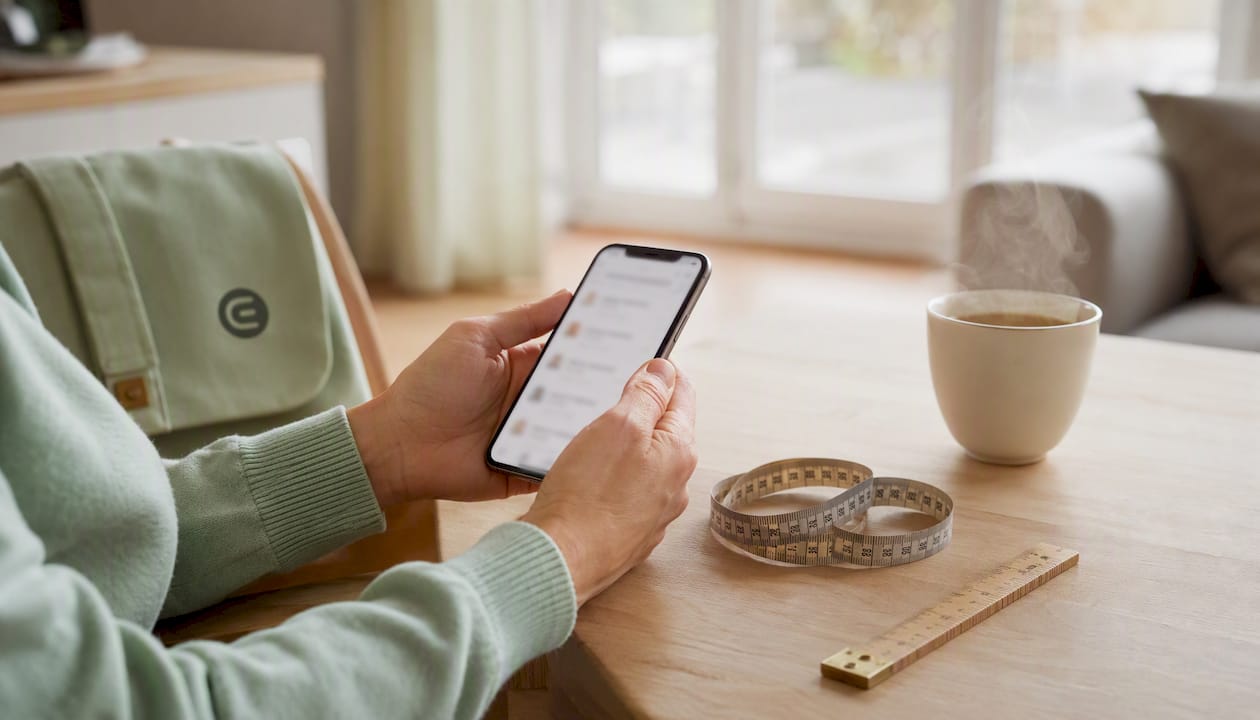
Children's feet grow quickly, and in winter, there's the added factor of thicker socks. An accurate measurement takes two minutes and saves returns.
- Place foot on paper: Have the child stand upright, distribute weight evenly, place foot on a sheet of paper.
- Mark: Press heel firmly against a wall or ruler, mark the longest toe vertically with a pen.
- Measure: Measure the distance in millimeters. Compare this value with the manufacturer's size guide.
Add allowances to the measured value: For children under 3 years, a growth buffer of 12–15 mm is recommended; for children aged 4 and above, 8–10 mm is sufficient. For winter models with thick socks, add an extra 2–3 mm. Ebmini's guide for active children includes detailed measuring instructions and a size chart.
Pro Tip: Measure feet in the afternoon, not in the morning. They are slightly larger then due to strain, which is closer to real wearing comfort.
Socks, layers, and care: How to keep barefoot shoes warm and durable
Cotton socks are the worst choice in winter. They absorb moisture and do not release it. Merino wool or functional socks made of polypropylene wick moisture away and keep the foot warm even in light dampness.
Care tips that make a difference:
- Impregnation: Re-impregnate after every second wash or at the latest when water no longer beads off. Spray impregnation for membranes is gentler than wax products.
- Drying: Never on the heater. Stuff the shoe, let it air dry at room temperature. Direct heat damages membranes and adhesives.
- Clean lining: Wipe with lukewarm water, do not soak. If the insole is removable, dry it separately.
- Insoles: Only when specifically needed, such as for very wide feet or on the recommendation of an orthopedist. An additional insole changes the barefoot feel.
For families who spend a lot of time outdoors, it's also worth looking at how to safely design outdoor areas for children, so the path from home to outside runs smoothly.
How safe are barefoot shoes on snow and ice?
No shoe provides absolute safety on black ice. This applies to barefoot shoes as well as conventional winter boots. What matters is the combination of sole material and tread pattern.
- Rubber compound: Soft, grippy rubber soles adhere better than hard plastic soles, especially at sub-zero temperatures.
- Tread depth: At least 3–4 mm for winter conditions; a 4 mm deep tread made of flexible rubber offers good traction without sacrificing barefoot parameters.
- Multi-directional pattern: Grips in all directions, not just when walking straight.
Behavioral tips for children on winter surfaces: walk slower, take shorter steps, be especially careful at transitions like stair steps or dark asphalt surfaces. On very slippery surfaces, non-slip overshoes or small spikes for children's shoes can help, but only on pure ice, not on pavement or parquet.
What do the Ebmini all-weather and OTD models specifically offer?
The Ebmini models have been specially developed for children between 1 and 10 years old, in collaboration with orthopedists. The OTD model is the most waterproof in the range and is suitable for wet paths and light terrain.
| Feature | Ebmini All-Weather/OTD |
|---|---|
| Sole type | Flexible, Zero Drop, non-slip tread |
| Water protection | Water-resistant membrane (OTD: waterproof) |
| Toe box | Wide, anatomical, without constriction |
| Lining | Warm inner lining depending on model |
| Target group | Children 1–10 years |
| Use | Daycare, playground, walks, wet paths |
Know the limits: These models are not designed for deep snow above the shaft or multi-hour activities in severe frost. However, for normal German winter use, they are a well-thought-out choice.
Purchase information: Ebmini ships to Germany, offers a size chart with measuring instructions, and an uncomplicated return option. Customer reviews on fit can be found directly on the product page of the OTD model. Delivery time and current availability are also visible there. After receipt, a short acclimatization period of a few days is recommended so that the child gets used to the thin sole.
Key takeaways
Barefoot shoes are suitable for normal winter use down to 0 °C if the membrane, tread, and lining are correct.
| Topic | Details |
|---|---|
| Temperature limit | All-weather barefoot shoes can be worn down to approx. 0 °C; below that, choose insulated models. |
| Fit and measurement | Measure foot length in the afternoon, 8–15 mm buffer depending on age, allow for socks. |
| Care for water protection | Regularly impregnate, never dry on the heater, protect membrane. |
| Safety on ice | Soft rubber tread with at least 3–4 mm depth; use overshoes or spikes on black ice. |
| Ebmini as a starting point | Ebmini's all-weather and OTD models combine zero drop, toe freedom, and water protection for everyday German winter use. |
Why Ebmini recommends barefoot shoes even in winter
The most common concern parents express is: Won't my child's feet get cold? The answer depends less on the shoe than on the child itself. Children who move around warm their feet through muscle work. A barefoot shoe supports exactly that because it keeps the foot muscles active instead of immobilizing them in a stiff shell.
Ebmini recommends these shoes in winter because natural foot development should not pause with the first frost. A wide toe box, zero drop, and flexible sole promote balance and coordination, which children develop at this age. This applies in summer as well as in winter. If you are unsure whether the model fits: Ebmini's size charts, return option, and customer service are there for exactly that reason.
Ebmini Kids' All-Weather Shoes: What you need to know now
Parents looking for winter-suitable barefoot shoes that don't force a choice between foot health and cold protection will find both in one model at Ebmini. The winter collection for children includes water-resistant all-weather models and the fully waterproof OTD model, both with a wide toe box, zero drop, and non-slip tread.
Shipping to Germany, clear size charts, and uncomplicated returns make online shopping easy. If you are still unsure about the right size, you can find the measuring guide directly in the shop. Take a look at Ebmini's children's barefoot shoes and use the size guide for your first order.
Further sources and information
- Ebmini winter collection for children: Product overview with size charts, service information, and customer reviews.
- Ebmini OTD model: Product page for the waterproof trekking barefoot shoe with technical details.
- Guide: Shoes for active children: Measuring instructions, fit information, and explanation of zero drop and toe box.
- What "winter-ready" really means: Difference between water-resistant and waterproof, care recommendations.
- Double sole in winter explained: Explanation of sole construction and warming effect.
- GEO comparison: Winter barefoot shoes: Independent test with notes on tread, membrane, and everyday suitability.
Note: For foot deformities, flat feet, or other orthopedic abnormalities, parents should consult a pediatrician or orthopedist before purchasing. This article is general buying advice, not medical advice.


