

The Best ebmini.fr Alternatives for Barefoot Shoes 2026
Which brands are the strongest alternatives to ebmini.fr?
For those in Germany looking for barefoot-like children's shoes, in addition to Ebmini, there are a handful of brands that are truly convincing. The F.A.Z. Kaufkompass tested various barefoot shoes for children. The Affenzahn Cotton Lucky was the test winner. For winter, the testers recommend the Affenzahn Vegan Comfy winter boot and the Saguaro Will II, among others. Wildling, Finkid, Vivobarefoot, Groundies, Magical Shoes, Froddo, Beda Playful, and Leguano complete the field, each with their own strengths.
In short: Affenzahn and Wildling are the best-known German brands with wide availability. Finkid excels in outdoor use, Groundies in vegan certification, and Vivobarefoot in sole quality. Ebmini® children's barefoot shoes offer a multi-year warranty, orthopedically inspired design, and vegan materials, making them particularly attractive to parents who prioritize durability and foot health simultaneously.
| Brand / Model | Best Use Case | Material Quality | Sole | Special Features | Availability in DE |
|---|---|---|---|---|---|
| Affenzahn Cotton Lucky | Everyday, kindergarten, toddlers | Sustainable cotton | Flexible, non-slip | Reflectors, zipper with lock | Widely available |
| Finkid Sankari | Outdoor, older children | Sustainable materials | Non-slip, breathable | Waterproof | Online and specialized retailers |
| Vivobarefoot | Versatile, foot health | High quality | Thin, very flexible | Wide toe box | Online |
| Groundies | Fashion-conscious families | Vegan certified | Flexible | Certified sustainability | Online |
| Wildling Tejo | Sensitive feet, fit | Natural fibers | Extremely thin, flexible | Minimalist construction | Online |
| Magical Shoes Coco | Summer, indoors | Breathable, soft | Lightweight | Very airy | Online |
| Froddo Barefoot Elastic | Everyday, all-rounder | Leather, sustainable | Flexible | Elastic entry | Specialized retailers, online |
| Beda Playful | Active children | High quality | Flexible | Child-friendly design | Online |
| Saguaro Will II Winter | Winter, outdoor | Waterproof, insulated | Non-slip | Warm and waterproof | Online |
| Leguano Nicebare Boots | Year-round | Textile, flexible | Extremely flexible | Barefoot feel with protection | Online, specialized retailers |
| Ebmini® Children's Barefoot Shoes | Everyday, various seasons | Vegan, certified | Flexible, non-slip | 24-month warranty, orthopedically inspired | ebmini.de |
If you are specifically looking for alternatives to ebmini.fr, you should pay attention to three things: a true zero-drop, a sufficiently wide toe box, and a sole that can really be bent. This is because the term "barefoot shoe" is not legally protected, meaning that any manufacturer can use it, regardless of whether the product actually has barefoot-like properties.
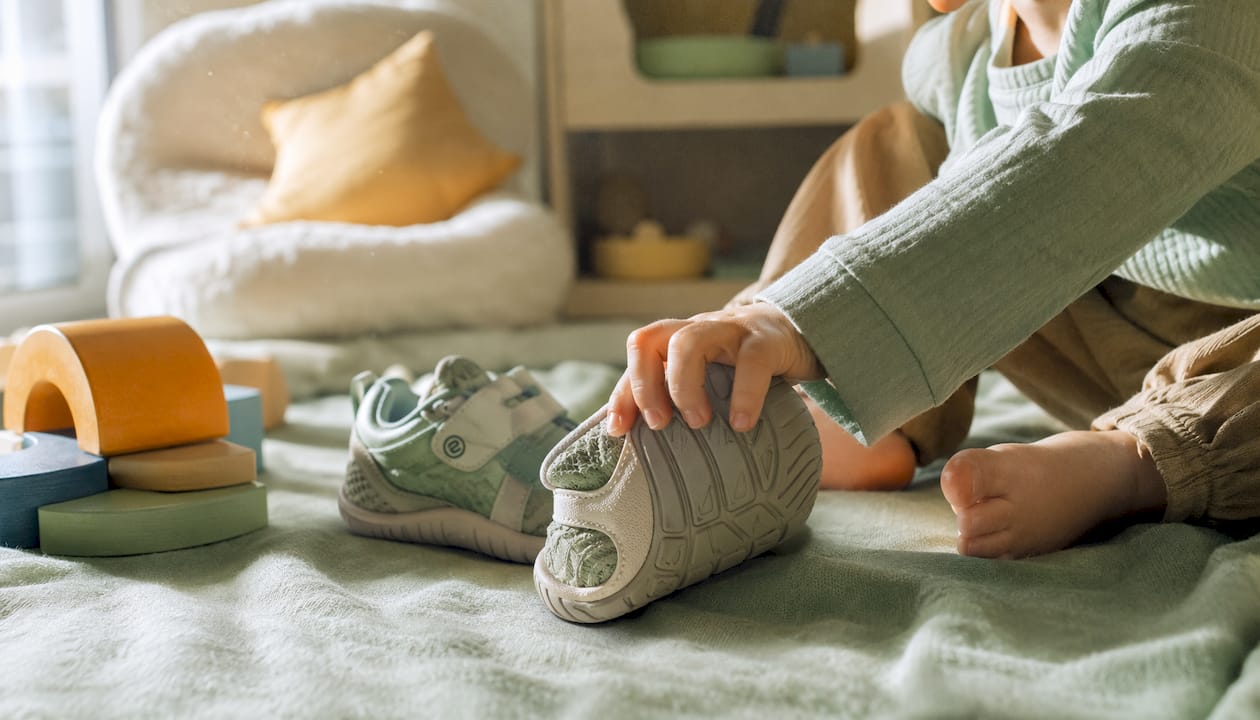
How do the alternatives compare directly?
Material Quality and Certifications
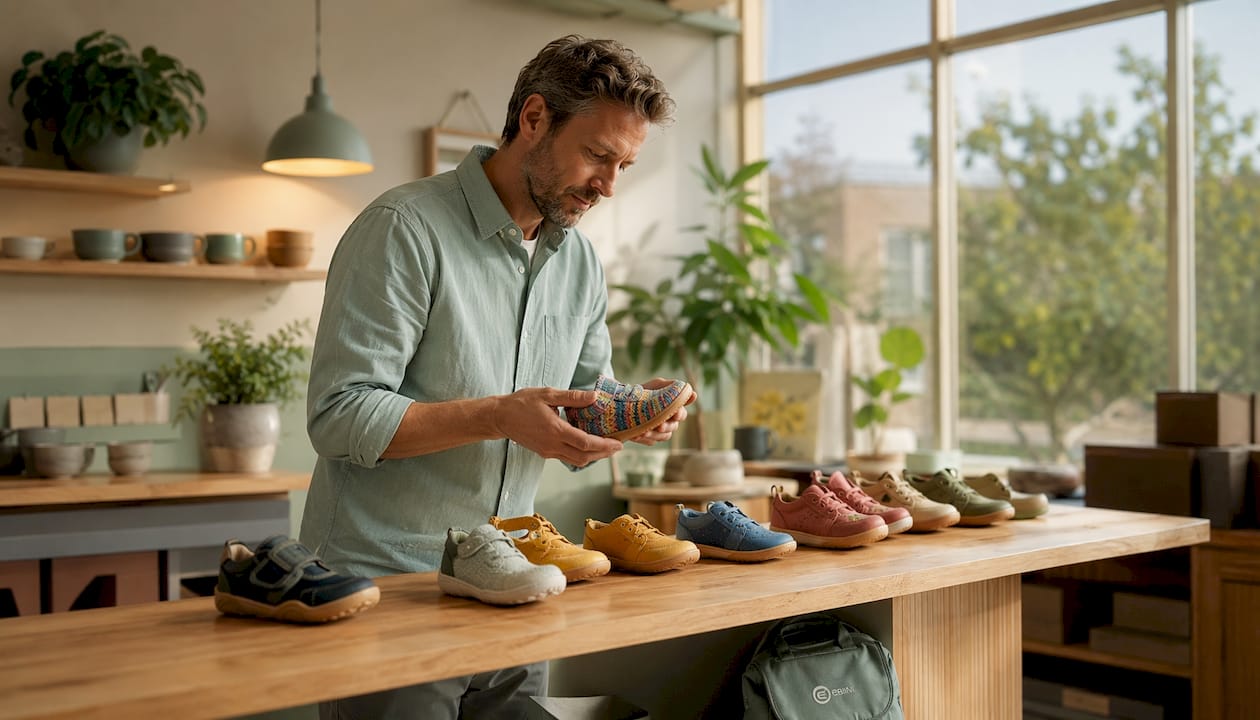
Groundies specializes in vegan, certified sustainable materials and has its production standards checked by independent bodies. This is a clear difference from brands that only communicate sustainability without providing evidence. Wildling uses natural fibers such as merino wool and linen, which is particularly popular with children with sensitive skin. For the Cotton Lucky, Affenzahn uses sustainably produced cotton and combines it with reflective details that are actually useful in everyday life.
Finkid, known for outdoor clothing, also incorporates this experience into its shoe collection. The Sankari is breathable and waterproof, and the Ilves is designed for colder days. Both models are available in German specialized stores and online.
Sole Features: Flexibility and Non-Slip Properties
The sole determines whether a shoe is truly barefoot-like or just looks that way. Wildling Tejo and Wildling Pegasus Resouled have the thinnest soles in comparison, allowing for maximum ground perception, but requiring more getting used to on rough surfaces. Vivobarefoot uses a slightly thicker but still very flexible sole with good non-slip properties. The F.A.Z. Kaufkompass emphasizes that sole grip, especially on smooth floors like in kindergartens, is crucial for safety.
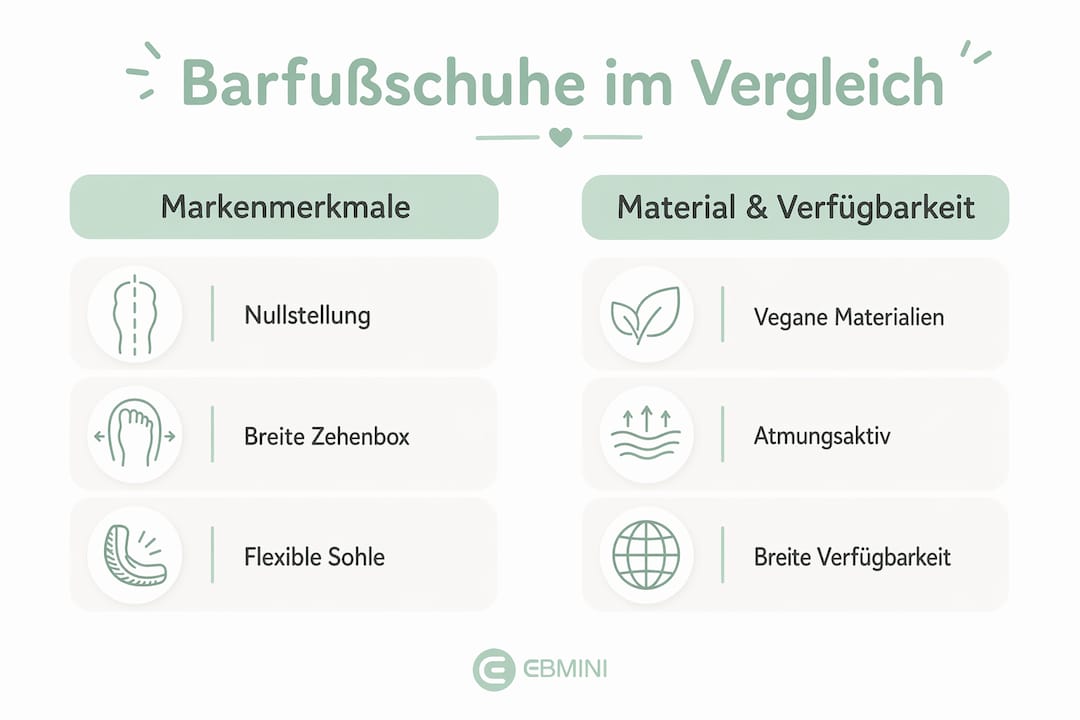
Leguano Nicebare boots are known for their extremely flexible sole material that can be bent in all directions. Saguaro Will II Winter and Saguaro Fast 1 offer solid non-slip properties with good flexibility, making them suitable for active children.
Price Ranges and Availability
- Affenzahn: approx. 35–65 Euros, widely available in German retail and online
- Wildling: approx. 60–100 Euros, exclusively via their own webshop
- Finkid: approx. 50–80 Euros, specialized retailers and online
- Vivobarefoot: approx. 70–120 Euros, mainly online
- Groundies: approx. 60–100 Euros, online
- Magical Shoes Coco / Rico: approx. 40–70 Euros, online
- Froddo Barefoot Elastic: approx. 40–65 Euros, specialized retailers and online
- Beda Playful: approx. 50–75 Euros, online
- Saguaro Will II / Fast 1: approx. 35–60 Euros, online
- Leguano Nicebare: approx. 60–90 Euros, specialized retailers and online
- Ebmini® Children's Barefoot Shoes: in the mid-price segment, directly via ebmini.de with free shipping, multi-year warranty, and uncomplicated returns within Germany
Pro Tip: Those looking to buy Wildling shoes should keep an eye on waiting lists. Popular models like the Pegasus Resouled are often quickly sold out.
Affenzahn Knit Happy and Magical Shoes Rico are lighter summer models particularly suitable for warm months. Froddo Barefoot Elastic convinces as an everyday shoe with its elastic entry, which makes it easier for children to put on and take off, a real advantage in kindergarten life.
How do parents choose the right barefoot shoes for healthy children's feet?
Four features are truly decisive when buying. Everything else is secondary.
Zero Drop means that the heel and forefoot are at the same height. Traditional children's shoes often have a raised heel, which affects natural posture. A true barefoot shoe has no heel.
Wide Toe Box: Toes must be able to spread freely in the shoe. A simple test: Place the child's foot on paper, trace the outline, and compare it with the shoe's insole. If the shoe is narrower than the foot, it doesn't fit. Ebmini explains in detail why the toe box is so important for children's shoes in its own guide.
Flexible Sole: The sole should be easily compressible with two fingers. If it's too stiff, it restricts the foot muscles instead of promoting them.
Material Quality: Breathable, tested for harmful substances materials are particularly important for children, as their skin reacts more sensitively. Certifications like OEKO-TEX Standard 100 or comparable seals provide guidance.
Regarding fasteners, experts recommend Velcro fasteners for walking beginners aged about two to three, as children can operate them themselves. Reflectors on the heel or side increase visibility in traffic, especially during the darker months.
Pro Tip: When buying, always remove the insole and place it under the child's foot. There should be about a centimeter of space between the toes and the tip of the shoe to allow the foot enough room when rolling off.
Getting Used to and Care
The transition from conventional shoes to barefoot shoes should be gradual to avoid overstraining the foot muscles. Two to three hours daily in the first week is a good start. Letting the child wear barefoot shoes all day immediately risks fatigue pain.
For care: Most textile barefoot shoes can be machine washed at 30 degrees. Leather models like Froddo Barefoot Elastic occasionally need leather care. Wildling shoes made from natural fibers should not be put in the dryer as they can shrink.
What makes barefoot shoes for children so special?
Barefoot shoes promote natural foot development because they do not force the foot into a predetermined shape. Children who walk a lot barefoot or in barefoot-like shoes develop stronger foot muscles and a better sense of balance. This is not marketing, but consensus among orthopedists and podiatrists.
The wide toe box is the most important single factor. Tight shoes squeeze the toes together and can lead to deformities like bunions in the long run. Barefoot shoes with enough space in the toe area allow for natural spreading.
Non-slip soles are not just comfort, but safety. Especially in kindergartens with smooth floors, sole grip is a critical factor that many parents underestimate when buying. The F.A.Z. Kaufkompass explicitly listed this as a selection criterion in its test.
Sustainability plays a growing role. Vegan-certified materials, recycled soles like in the Wildling Pegasus Resouled, and OEKO-TEX tested fabrics are features that parents increasingly demand. Groundies and Ebmini have firmly integrated sustainability into their brand promise.
“Barefoot shoes for children should not only look good but also have genuine quality features such as zero drop, a wide toe box, and flexible soles. The term is not protected, so it's worth taking a closer look at the product details.” Source: ZDF Ratgeber Barfußschuhe
What speaks for Ebmini as a brand for barefoot shoes?
Ebmini positions itself as a specialized provider with a focus on natural foot development and has some features that stand out in comparison. The 24-month warranty on all children's shoes is unusually long in this segment. In addition, there is free shipping within Germany and an uncomplicated return policy, which makes the purchase risk-free.
The materials are vegan and are tested in the laboratory according to their own statements. The design is orthopedically inspired, with a wide toe box, zero drop, and flexible sole as basic principles. For parents who value this combination, Ebmini is a serious option alongside established brands.
An important note: Ebmini expressly warns against counterfeits that appear on third-party platforms such as Amazon or eBay. These copies look similar to the originals but are made of inferior materials, offer no orthopedic benefits, and have no CE marking. Missing return options and chemical odors are clear warning signs for fakes, according to Ebmini. To buy safely, order exclusively via ebmini.de or authorized dealers.
Independent buying guides like ELTERN.de and the F.A.Z. Kaufkompass generally recommend paying attention to tested quality features when buying barefoot shoes and not just the price. This applies to all brands in this comparison, including Ebmini.
If you would like to find out more about barefoot-like children's shoes, you can find practical tips on selection, fit, and care in the Ebmini guide.
Ebmini as a direct alternative for healthy children's feet
For those looking for a provider who delivers barefoot shoes for children directly and without detours, Ebmini offers a clear answer. No long delivery routes through intermediaries, no compromises on material selection.
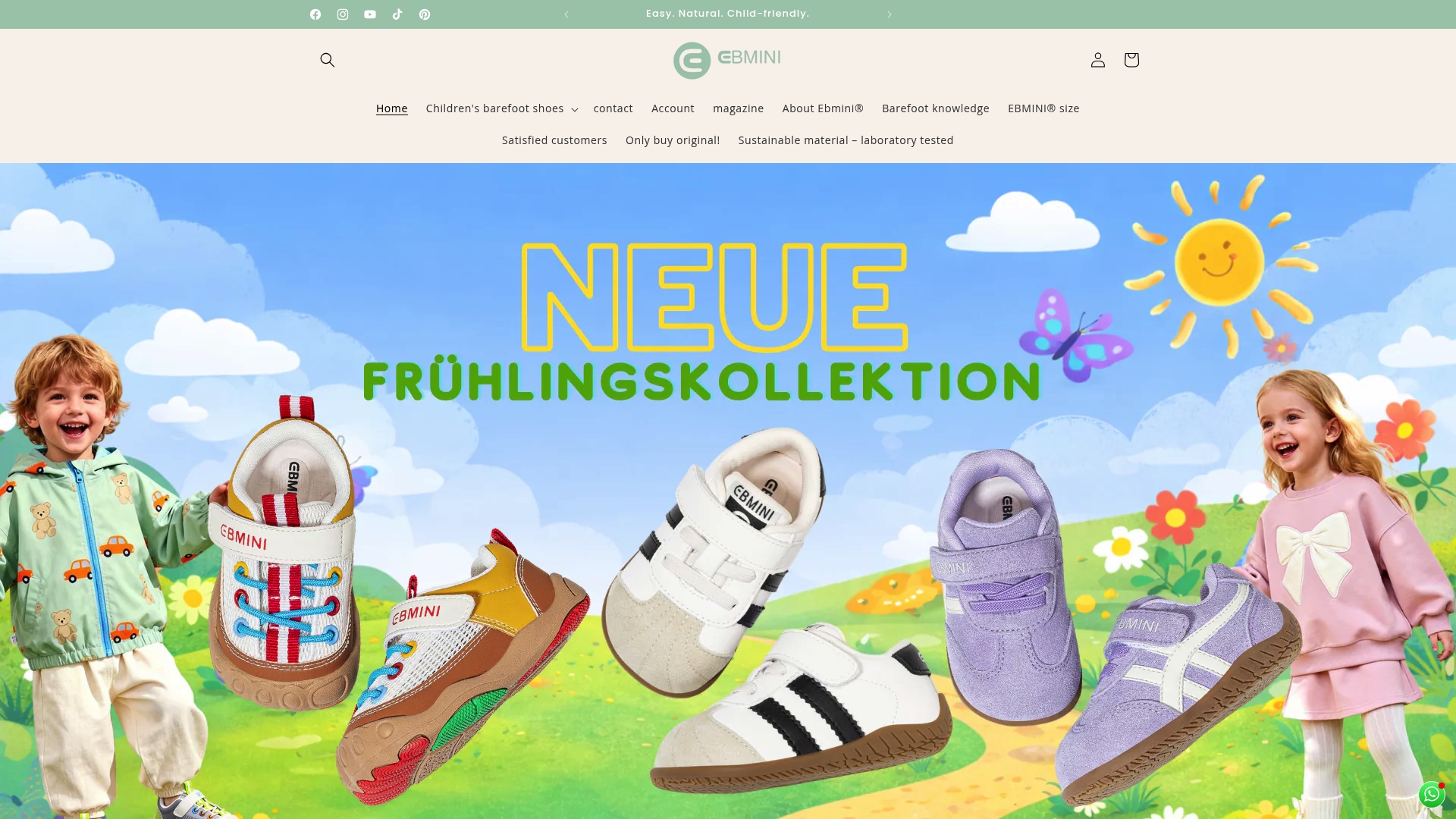
The Ebmini collection for children includes models for different seasons, from light summer shoes to waterproof winter boots. All shoes follow the same basic principles: wide toe box, zero drop, flexible sole, vegan materials. In addition, there is a multi-year warranty, free shipping, and uncomplicated returns within Germany. For parents who do not want to choose between foot health and sustainability, this is a convincing package. Order directly, let them try them on, and if you don't like them, return them easily.
Key Takeaways
Barefoot shoes for children only promote natural foot development if they have genuine quality features such as zero drop, a wide toe box, and flexible soles, regardless of the brand name.
| Topic | Details |
|---|---|
| Test Winner | The Affenzahn Cotton Lucky was awarded test winner in the F.A.Z. Kaufkompass test. |
| Most Important Purchase Criterion | Wide toe box, zero drop, and flexible sole are crucial, not design or price alone. |
| Acclimatization | Gradual transition recommended: wear only a few hours daily in the first week. |
| Safety Feature | Non-slip soles are a critical safety factor on smooth kindergarten floors. |
| Ebmini | Offers a multi-year warranty, vegan materials, free shipping, and uncomplicated returns within Germany. |


