

Flexible Sole Kids' Shoes: A Parent's Guide
Choosing the right children's shoe is confusing for many parents. No other feature causes as much uncertainty as the sole. Too stiff harms natural foot development, while too soft might lack stability. The good news is: If you know how to properly utilize the flexible sole in children's shoes, you will make significantly better decisions for your child's foot health. This article provides clear criteria, a model comparison, and concrete everyday tips.
Table of Contents
- Key Takeaways
- 1. Why the Flexible Sole in Children's Shoes is Crucial
- 2. Key Selection Criteria for Flexible Children's Shoes
- 3. Model Types at a Glance: Which Flexible Shoe is Right for Which Situation?
- 4. Comparison: Features and Recommendations by Age and Use
- 5. Proper Introduction: How to Use Flexible Soles in Everyday Life
- 6. My Personal Assessment of Flexible Children's Shoes
- The Ebmini Range for Healthy Children's Feet
- FAQ
Key Takeaways
| Point | Details |
|---|---|
| Check Flexibility | Bend the shoe: It should fold effortlessly in the toe area, not in the middle. |
| Maintain Growth Allowance | The recommended growth allowance is 8 to 12 mm for safe toe movement. |
| Gradual Acclimatization | Start with 1 to 3 hours of wear daily and slowly increase over weeks. |
| Lightweight and Breathable | Heavy shoes hinder natural movement and lead to faster fatigue. |
| Model Based on Developmental Stage | Early walkers need different shoes than active elementary school children. |
1. Why the Flexible Sole in Children's Shoes is Crucial
Children's feet are not miniature adult feet. They largely consist of cartilage tissue and actively develop with every movement. A stiff sole takes away precisely the work the foot needs for its development. Flexible soles support muscle work and promote the natural rolling motion that should occur when walking and running.
The difference is particularly evident in the early walking phase. Barefoot experiences sustainably strengthen balance and coordination. Shoes with flexible soles mimic this feeling without leaving the foot unprotected. This is the core idea behind the principle of barefoot walking with shoes.
2. Key Selection Criteria for Flexible Children's Shoes
Before you buy, you should know what specifically to look for. These criteria will help you distinguish good flexible children's shoes from bad ones:
- Bend Test: Hold the shoe at the toe cap and heel. It should bend easily and without resistance in the front third. Shoes that fold in the middle lack structure in the wrong area.
- Growth Allowance: The recommended growth allowance is 8 to 12 mm. Less is too tight; more allows too much slippage and reduces stability.
- Weight: Heavy shoes hinder natural movements and lead to faster fatigue. The shoe should feel almost weightless in your hand.
- Slip Resistance: The sole needs sufficient tread to provide your child with secure grip on asphalt, grass, and smooth surfaces.
- Materials: Breathable and skin-friendly materials inside and out are not a luxury but a prerequisite for prolonged wear.
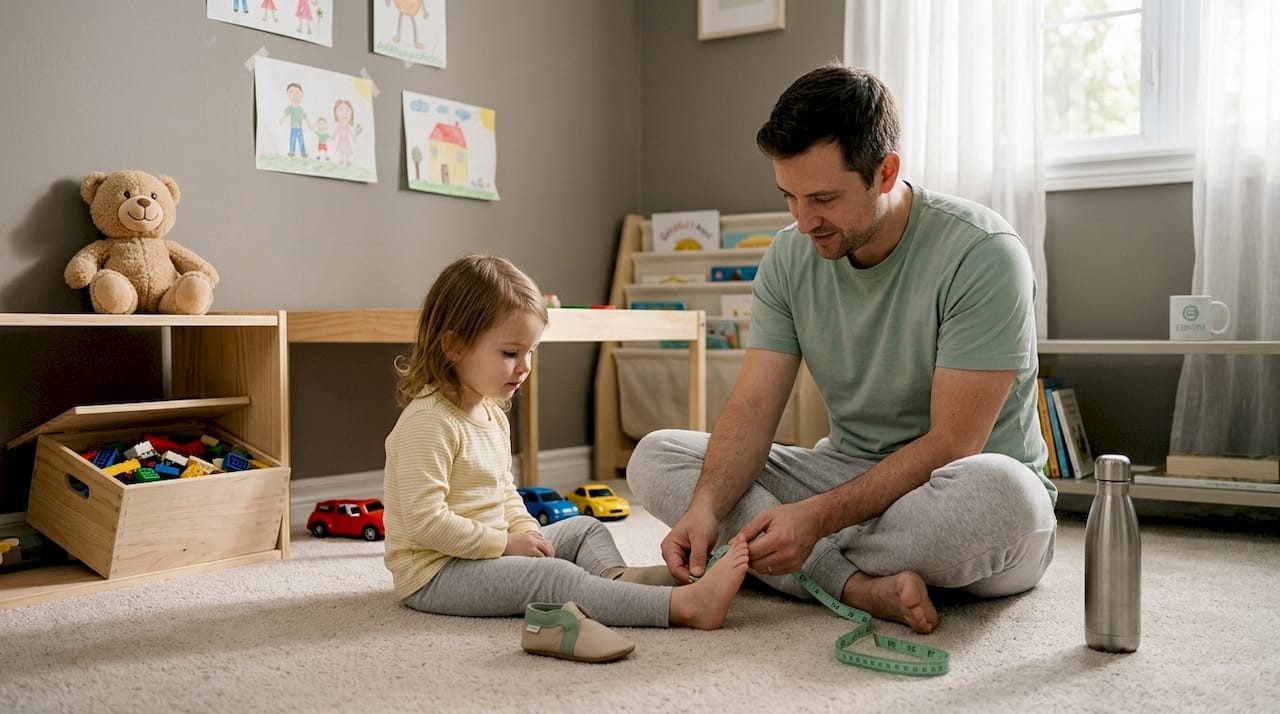
- Removable Insole: Removable insoles allow for precise size checks. Take out the insole, place your child's foot on it, and visually check if the length and width are appropriate.
Pro Tip: Never buy children's shoes without first measuring their feet. Children often don't feel pressure from ill-fitting shoes and won't give any indication. Use removable insoles or a foot measuring gauge to avoid mispurchases.
3. Model Types at a Glance: Which Flexible Shoe is Right for Which Situation?
Not every flexible shoe is equally suitable for every child and every situation. This overview shows you which model variations exist and what they offer:
- Minimalist Barefoot Shoes: They have super thin soles, no heel drop (Zero Drop), and lots of ground contact. Flat soles without a drop support natural foot movements. Ideal for children who are already walking well and are active outdoors daily.
- Models with Wide Toe Box: The toe box gives toes room to spread naturally. Important to know: A wide toe box alone is not enough for wide feet. The shoe must provide lateral contact without squeezing.
- Shoes with Heel Counter: For early walkers who are still a bit wobbly, a light heel counter provides stability without sacrificing sole flexibility. A good compromise for the transition from crawling to independent walking.
- Barefoot Sandals for Summer: Open models with flexible soles allow the foot to breathe and are ideal for warm months. The best types of barefoot sandals combine support and freedom of movement without heavy materials.
- Winter Models with Flexible Soles: Cold protection and flexibility are not mutually exclusive. Well-insulated models with soft, grippy soles are suitable for snow and wet conditions.
- Lightweight Everyday Sneakers: For active elementary school children, sneakers with flexible soles offer the best compromise between protection and freedom of movement. It's crucial that the upper material remains light and pliable.
4. Comparison: Features and Recommendations by Age and Use
The following table shows which shoe type suits which developmental stage and what you should pay particular attention to:
| Shoe Type | Age and Use | Sole Flexibility | Stability | Special Feature |
|---|---|---|---|---|
| Crawling Shoe / Baby Sole | 0 to 18 months | Very High | Low | Soft leather sole, crawling and first steps |
| First Walker Shoe with Heel Counter | 12 to 24 months | High | Medium | Lateral support for wobbly steps, light cushioning |
| Minimal Barefoot Shoe | From 2 years | Very High | Low | Zero Drop, wide toe box, daily use |
| All-Weather Barefoot Shoe | From 3 years | High | Medium | Waterproof, tread for wet surfaces |
| Barefoot Sneaker Everyday | From 4 years | High | Medium | Long-term comfort, school commute, playground |
| Barefoot Sandal Summer | From 2 years | Very High | Low to Medium | Light, open, ideal for warm seasons |
Pro Tip: If you're unsure whether a shoe is truly flexible enough: Push the toe cap upwards towards the sole. A good barefoot shoe will allow this without resistance. If you need force, the sole is too stiff for small feet.
For detailed advice on first walker shoes, it's worth checking out Ebmini's Parent Guide to First Walker Shoes, which explains selection criteria step by step.
5. Proper Introduction: How to Use Flexible Soles in Everyday Life
The most common mistake with flexible children's shoes is an abrupt change. A child who has previously worn stiff shoes needs time. The muscles and ligaments in the foot must first adapt to the new type of strain. Here's how to ensure a smooth adjustment:
- Start Slowly: Begin with daily wear times of 1 to 3 hours. Only increase the time after one to two weeks if no discomfort occurs.
- Continue Barefoot Walking: Flexible shoes do not completely replace barefoot walking. Let your child also walk barefoot daily on grass, sand, or at home. Barefoot walking during learning to walk promotes sensorimotor skills in a way that no shoe can fully replace.
- Observe Reactions: Does your child look at their feet or take off the shoe? These can be signs that something is bothering them or the shoe doesn't fit. Children rarely actively complain about pain.
- Consider the Surface: Soft surfaces like grass are particularly good for starting. Asphalt and hard grounds place higher demands on foot structure. Gradually change the environment.
- Evaluate Sports Activities Separately: For intensive sports activities, a conventional sports shoe with more cushioning might be more sensible. Flexible soles are optimal for everyday life, walks, and free play.
- Regularly Check Size: Children's feet grow quickly. Check every four to six weeks with the removable insole to ensure there is still enough growth allowance.
6. My Personal Assessment of Flexible Children's Shoes
Over the past few years, I've guided many families in their search for the right shoes. What always surprises me is that the biggest mistake isn't made during the purchase, but afterward. Parents buy high-quality flexible children's shoes and immediately use them all day long, convinced they're doing the right thing. The result is tired, cranky children and the premature conclusion that the shoe is no good.
What I've learned is that flexible soles are not a panacea or a miracle cure. They are a tool. And like any good tool, they only work effectively when used correctly. Acclimatization to flexible soles must be done thoughtfully and gradually. This sounds like effort, but it's only a few weeks of patience.
What truly convinces me about the best models is the combination of a wide toe box and genuine lightness. Many shoes call themselves flexible, but as soon as you bend the sole, you feel resistance. I always recommend the bend test in the store or at home shortly after purchase. If the shoe doesn't easily fold in the toe area, the product doesn't align with the principles it stands for.
Another often underestimated point: Children don't have to wear a single type of shoe all year round. Barefoot sandals in summer, a well-fitting all-weather shoe in autumn, and an insulated flexible winter shoe. This combination gives the foot what it needs all year round, without compromising on warmth or protection.
— Ebmini
The Ebmini Range for Healthy Children's Feet
If you're looking for flexible children's shoes that truly meet all these criteria, Ebmini offers a thoughtful selection for every season and age.
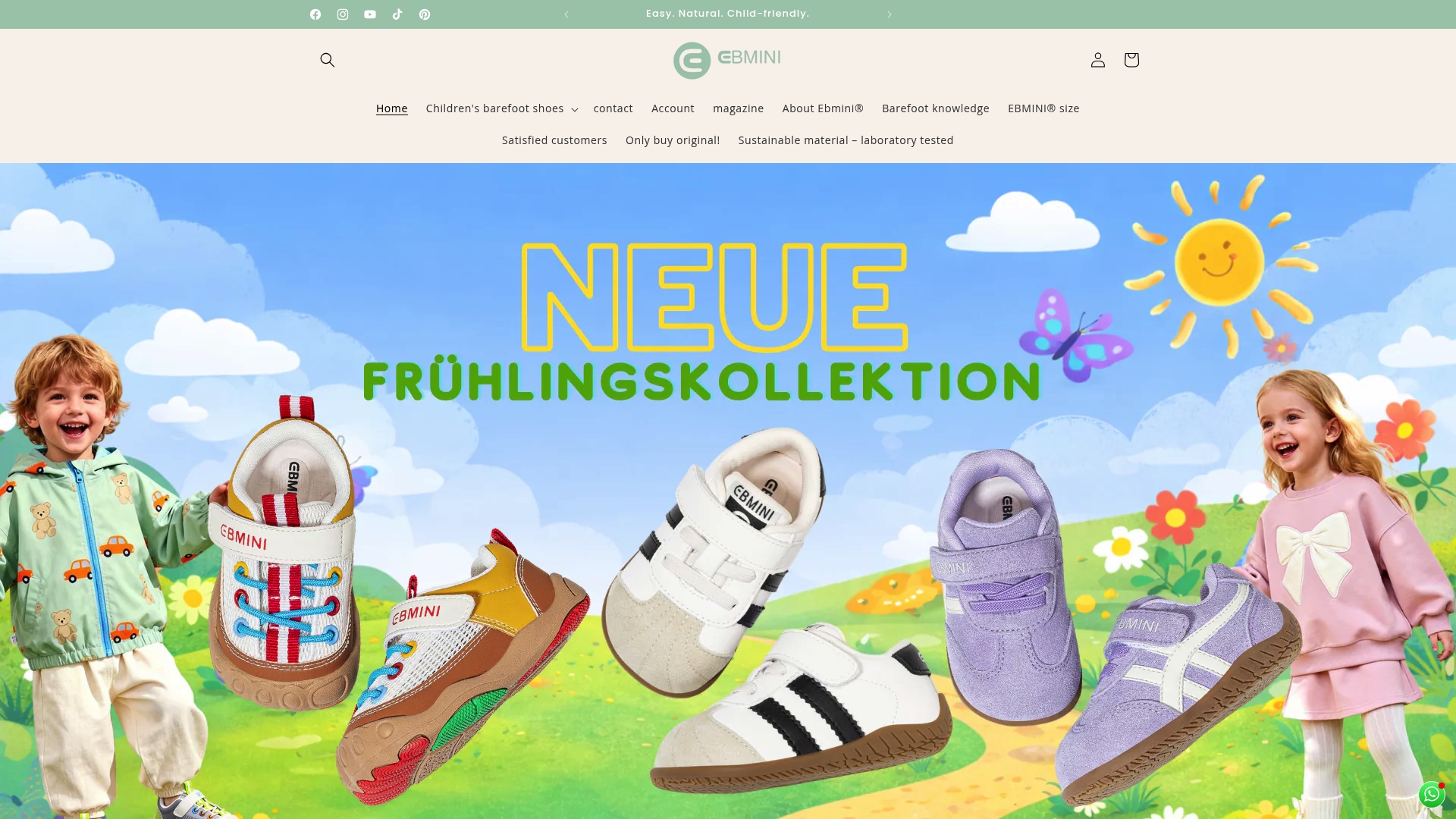
Ebmini's barefoot shoes for children combine zero drop, a wide toe box, and ultra-light soles in one model. For the warmer months, there are flexible barefoot sandals with secure support and an open design. For first steps, the soft baby shoes are recommended, specially designed for crawling and early walking attempts. All models feature removable insoles for size control and breathable materials for long-lasting comfort.
FAQ
What does "flexible sole" mean for children's shoes?
A flexible sole can be easily bent in the toe area without resistance. It allows the foot its natural rolling motion and thus supports the development of foot muscles in children.
From what age are flexible children's shoes suitable?
Flexible shoes are suitable for the first walking attempts from about 10 to 12 months. It's important that the model matches the developmental stage, meaning it offers a slight heel counter for early walkers.
How do I know if a children's shoe is really flexible enough?
Push the toe cap towards the sole. A sufficiently flexible shoe allows this movement without significant resistance. Shoes that require force to bend are too stiff for small feet.
Can flexible children's shoes also be used in winter?
Yes. There are well-insulated models with flexible soles that keep out cold and wet without restricting sole movement. In addition to flexibility, pay attention to tread and waterproofing.
How long does it take to get used to flexible children's shoes?
Acclimatization usually takes two to four weeks. Start with daily wear times of 1 to 3 hours and only increase if no discomfort or behavioral changes occur.


