

Material Mix in All-Season Shoes: How It Really Works
A material mix in an all-season shoe means: Different components of the shoe are intentionally made of different materials, because no single material can fulfill all tasks at once. The upper, lining, membrane, sole, and insole each perform their own function. Three properties are central here: moisture protection, breathability, and flexibility including weight. If you hold a shoe in your hand, you can check with three short questions whether the material mix is right:
- Can the sole be easily bent by hand, or is it stiff?
- Does the upper material feel dense (water-repellent) or rather open (airy)?
- Does the shoe noticeably weigh more than comparable models of the same size?
Key Takeaways
A good all-season shoe works because different materials are deliberately combined in the upper, lining, membrane, and sole, instead of relying on a single fabric.
| Topic | Details |
|---|---|
| Material mix as a basic principle | Each component performs its own function; no single material can optimally solve moisture protection, breathability, and weight simultaneously. |
| Weighing membranes | Membranes improve moisture protection but restrict air circulation, especially in warm conditions and during exertion. |
| Care according to material | Leather needs care products, textile needs a brush; all shoes dry best at room temperature without direct heat. |
| Barefoot criteria for children | Wide toe box, thin flexible sole, and water-repellent rather than completely sealed materials promote foot development. |
| Ebmini as a practical example | Ebmini combines waterproof outer layers with flexible soles and a wide toe box, as seen in the EBMINI® OTD model. |
Table of Contents
- All-season shoe material mix explained: Why manufacturers mix at all
- Which shoe parts are made of which material
- Popular material combinations for all-season shoes compared
- Checklist: What to look for when buying an all-season shoe
- Care of material-mix shoes: Cleaning and drying done right
- Material mix in children's barefoot shoes: What parents should look for
- Sources
- FAQ
All-season shoe material mix explained: Why manufacturers mix at all
A shoe that keeps you dry in the rain but makes your feet sweaty in the heat is not a good all-season shoe. This is exactly where the material mix comes in: it combines properties that are mutually exclusive in a single fabric. Waterproof membranes block moisture from the outside, but at the same time restrict air exchange, as analyses of multi-functional shoes show. An upper made of dense leather protects against moisture, while a textile mesh component next to it ensures ventilation. Both together in one shoe result in a compromise that works in practice.
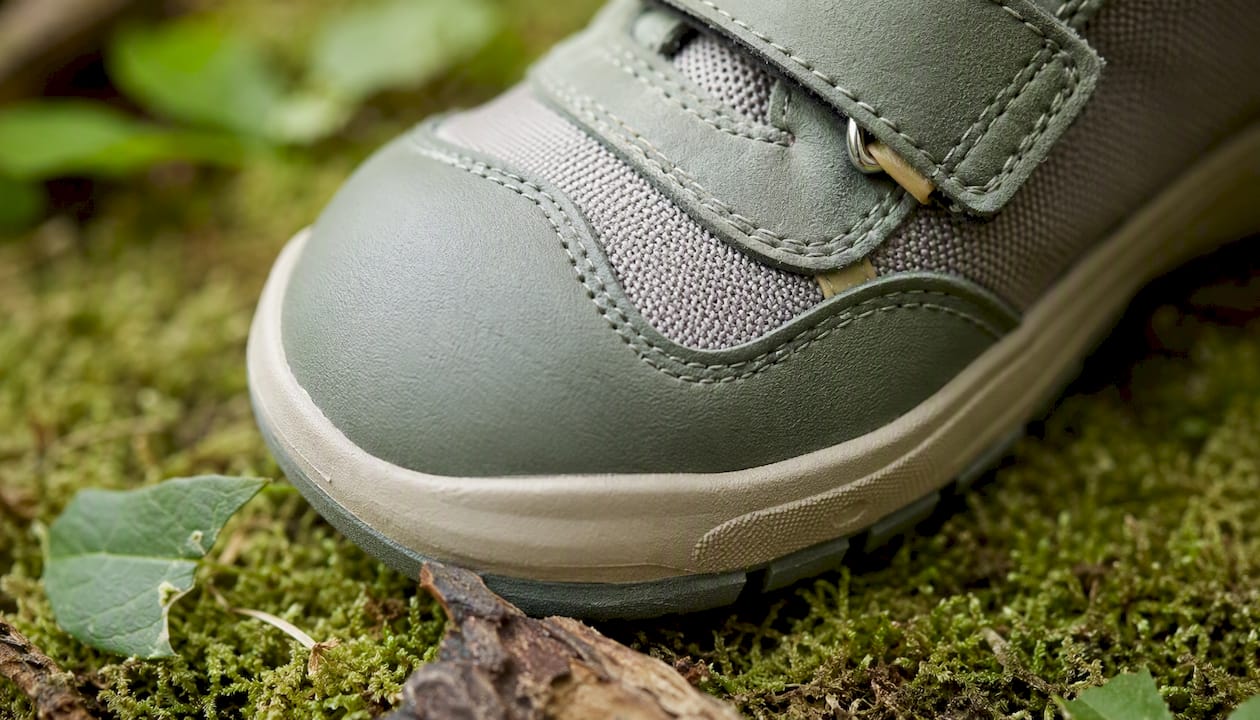
Abrasion resistance and weight also compete. Robust rubber outsoles withstand curbs and asphalt but are heavier than soft EVA midsoles. That's why many all-season models combine a grippy outsole with a lighter intermediate layer above it.

For regions with wet springs, more weight on moisture protection is worthwhile; for dry autumn days, breathability can take precedence. If you know where the shoe will be worn most of the time, you can set priorities more clearly.
Pro Tip: Before buying, consider whether the shoe will more often be on wet lawns or dry sidewalks. This determines whether moisture protection or air circulation is the more important property.
Which shoe parts are made of which material
Every component of a shoe has its own task, and the choice of material directly follows this task.
- Upper material: Smooth leather is robust and durable, suede (velour) feels softer but gets dirty faster. Textile or knit fabric is lightweight and breathable but offers little protection against moisture.
- Lining: Wool regulates temperature and absorbs moisture without feeling clammy. Synthetic lining dries faster but insulates less effectively.
- Membrane: An integrated membrane keeps water out but reduces air circulation compared to open constructions.
- Midsole: PU foam provides more cushioning and is more durable, while EVA is lighter but loses its resilience faster.
- Outsole: Natural rubber offers good grip in wet conditions, TPU is lighter and more abrasion-resistant on dry surfaces.
- Insole: Cork adapts to the foot shape and regulates moisture; synthetic insoles are easier to wash.
Comparisons of upper materials show a clear correlation: Smooth leather excels in durability, microfiber in ease of care, and textile mesh components in breathability, but they lose out on moisture protection. Every material decision is therefore a trade-off, not a pure improvement. Membranes deserve a separate look: They significantly improve moisture protection, but with sustained exertion or warmth, a more open, non-membraned construction may be more comfortable. Leather requires regular care with suitable products, while textile lining usually only needs a brush and mild cleaning.
Popular material combinations for all-season shoes compared
Certain combinations appear repeatedly in all-season models because they have proven effective in practice.
- Smooth leather plus membrane: Very good moisture protection and high durability. Disadvantage: heavier and less airy, more suitable for wet and cold weather than for hot summer days.
- Textile or knit plus rubberized sole: Lightweight, flexible, and breathable, ideal for active children and everyday wear in mild weather. Disadvantage: limited protection in continuous rain or puddles.
- Leather accents with textile inserts: Combines dimensional stability in high-stress areas with air circulation in less stressed areas. A good middle ground for transitional seasons, but a compromise rather than a specialization in one direction.
- Wool lining with natural rubber sole: Regulates temperature well, offers decent grip on wet surfaces. Increasingly combined with recycled textiles, for example in vegan models based on recycled PET, as examples from sustainability reports show.
For urban everyday life and kindergarten, a light textile combination is usually sufficient; for hikes in autumn forests or puddle games, the heavier, membraned construction is worthwhile. Sustainability-oriented buyers are increasingly looking for recycled materials and so-called mono-material approaches, where the sole and shaft consist of similar basic materials to facilitate later recycling, as research from the Fraunhofer Institute shows.
Checklist: What to look for when buying an all-season shoe
Before buying, a short, practical check helps more than any label.
- Bend the sole by hand: A flexible sole should easily fold at the ball of the foot.
- Check seams and glue joints for clean workmanship, especially at transitions between materials.
- Mentally weigh the shoe: If it is noticeably heavier than comparable models, this is often due to additional membranes or thicker soles.
- Ask about waterproofness if you plan to use the shoe frequently in wet conditions.
For daily urban use, flexibility and low weight are most important; for outdoor use or playground visits, moisture protection moves more into the foreground. For children's shoes, two additional points come into play:
- A wide toe box to allow the toes to spread naturally.
- A thin, flexible sole that allows ground contact instead of dampening it.
If you are unsure which model suits your needs, you can benefit from personal advice in a specialized store, especially for growing children's feet.
Care of material-mix shoes: Cleaning and drying done right
Material-mix shoes age unevenly if not cared for properly. Each material needs its own treatment.
- First, brush off coarse dirt dry, only then clean with water and mild soap.
- Treat leather surfaces with suitable leather care, textile surfaces usually only need a soft brush.
- Re-impregnate membranes and water-repellent upper materials after several cleanings, as washing wears away the coating.
- Let shoes dry at room temperature, never on the heater, as heat can loosen glue joints and deform materials, as care instructions for material-mix shoes prove.
Pro Tip: Stuff wet shoes with newspaper. This absorbs moisture without stressing the adhesive bonds between the sole and the upper.
Material mix in children's barefoot shoes: What parents should look for
For children's barefoot shoes, the priority is different from classic shoes: the sole should remain thin and flexible so that the sole of the foot feels the ground and the foot muscles can develop naturally. At the same time, an all-season model needs water-repellent properties without becoming completely sealed, because overly dense constructions trap heat and moisture in the shoe. Features such as a wide toe box, zero drop, and a non-slip but flexible sole address precisely these points. Expert assessments of barefoot shoes confirm: Breathable materials and flexible soles promote the sensitivity of the sole of the foot, provided the fit and material are right.
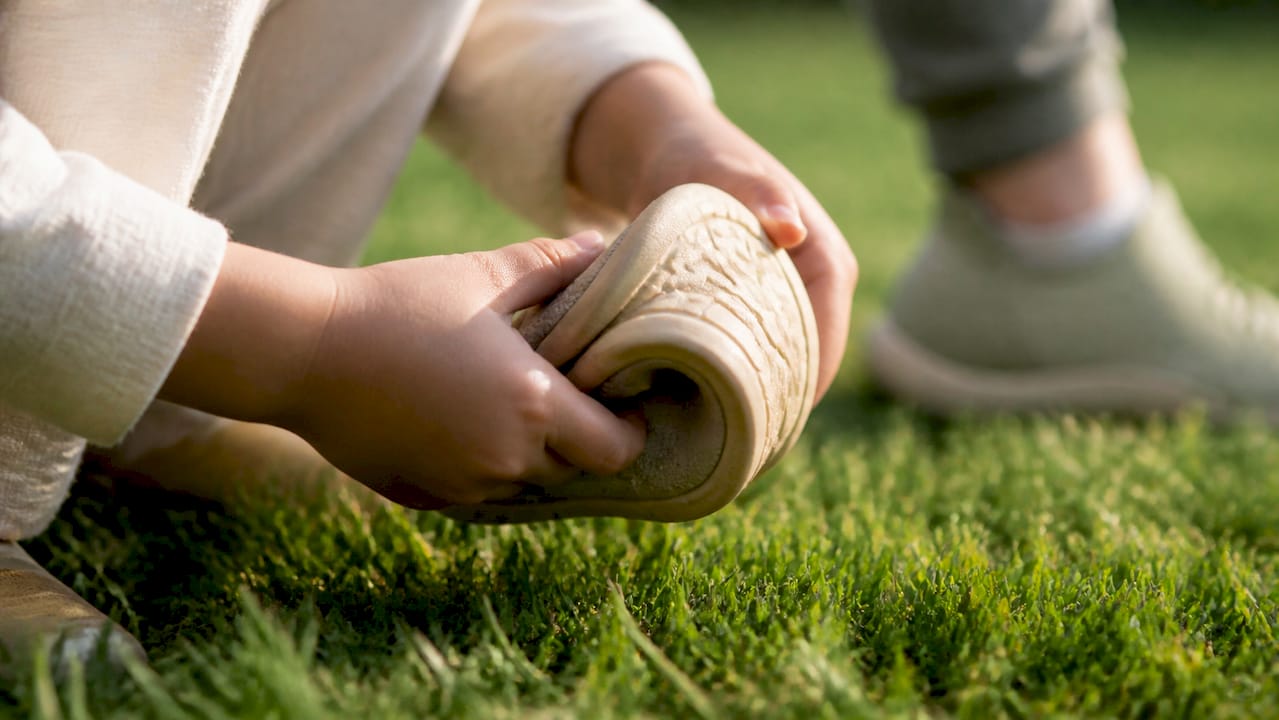
In practice, this means for parents: try on shoes in the store, perform the bend test of the sole yourself, and read more about flexible soles and their role in foot development. Wearing two pairs alternately also extends the lifespan of each shoe.
Why a well-thought-out material mix counts more than the trend
I keep seeing parents ask about the prettiest design instead of the material combination. Yet it's precisely this combination that determines whether a shoe works just as well in February as in June. A shoe that prioritizes function over appearance lasts longer and is often easier to repair or recycle in the end. Those who understand this buy more consciously instead of following the next trend.
All-season shoes with a well-thought-out material mix from Ebmini
Ebmini builds children's shoes precisely according to this principle: different materials, each in the right place, instead of a compromise that doesn't quite work anywhere.

The EBMINI® OTD combines a waterproof outer layer with a still flexible, thin sole and a wide toe box, so children can walk close to barefoot even in mud and puddles, without risking wet socks. Those looking for a lighter model for milder months will find suitable alternatives with a more breathable construction in the collection for transitional and spring shoes. Check out the models with size advice directly in the shop and find the shoe that fits your child's season.
Sources
If you want to delve deeper into individual aspects, you will find targeted additions to this article:
- Barefoot shoes: What advantages do they offer for foot health?
- Sustainable barefoot shoes: How healthy are they really?
- Multi-functional shoes for uneven terrain - Schuhjäger
- Programmable mono-material for high-tech sports shoes - Fraunhofer
FAQ
Which material is healthiest for shoes?
For foot health, breathable, flexible materials like leather or textile in combination with a thin, pliable sole are considered beneficial because they allow natural foot movement.
Which material is best for shoes?
There is no single best material, as smooth leather offers durability, textile breathability, and membranes moisture protection. The material mix determines which properties a shoe ultimately combines.
What material should all-season shoes have?
All-season shoes benefit from a combination of water-repellent upper material, a breathable lining, and a flexible, grippy sole, so they function in both wet and warm conditions.
What do the care symbols on shoes mean?
Care symbols on shoes indicate whether material can be washed, ironed, or dry-cleaned, and provide hints for the correct cleaning method depending on the material used.
What should parents particularly look for in children's barefoot shoes?
Important features include a wide toe box, a thin flexible sole, and a material mix that repels water without completely blocking air circulation, as implemented by Ebmini models.


