

Children's Shoes Podiatrist Recommended: Guide 2026
Podiatrist-recommended children's shoes actively support natural foot development through wide toe boxes, zero drop, and flexible soles. In technical terms, these are called functional children's shoes or barefoot shoes, which follow the principles of podiatry. "Children's shoes recommended by podiatrists" specifically means that the shoe does not restrict the foot but allows it to work as if the child were walking barefoot. This choice of footwear is particularly important for children between one and ten years old, as the arch, muscles, and toe alignment develop significantly during this period. Choosing the wrong shoes at this stage risks deformities that are difficult to correct later.
What criteria make children's shoes podiatrist-recommended?
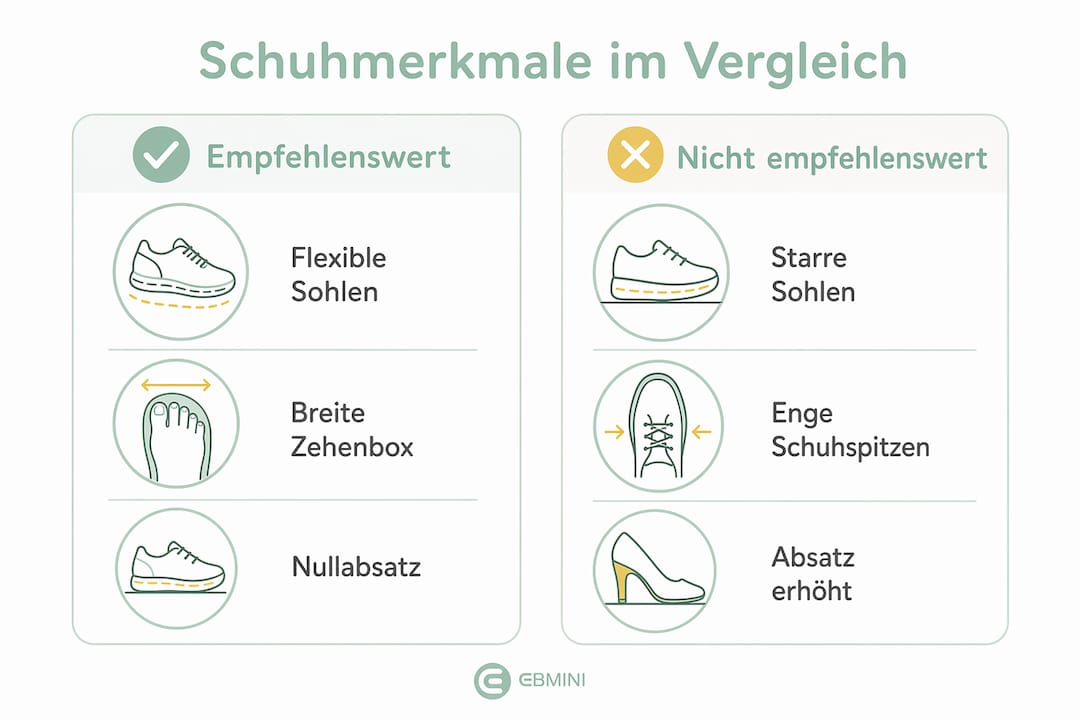
Podiatrist-recommended children's shoes meet three basic conditions: wide toe box, zero drop, and flexible soles are considered the gold standard according to current expert literature in 2026. This combination allows the foot to move naturally when rolling off, without being forced into an unnatural position by the shoe's construction. This is not a luxury feature, but a basic prerequisite for healthy foot development.
Wide Toe Box
A wide toe box gives the toes enough room to actively splay when standing and walking. Narrow toe caps compress the toes and weaken foot muscles in the long run. The advantages of a wide toe box are particularly evident in children with naturally wide feet, who often develop pressure points in conventional shoes.
Zero Drop and Flexible Sole
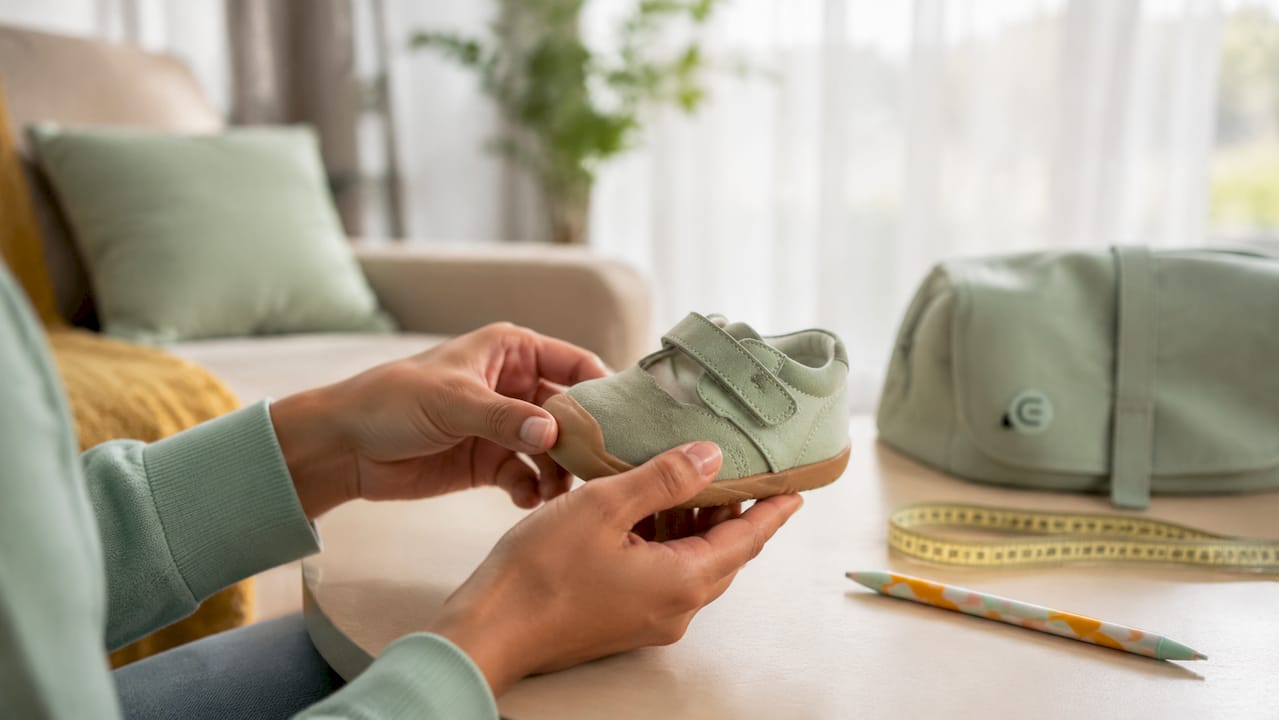
Zero drop means that the heel and forefoot are at the same height. An elevated heel shifts body weight forward and stresses knee joints and the spine. A flexible sole can be easily bent in all directions, allowing for a natural heel-to-toe roll-off.
Materials and Absence of Harmful Substances
Breathable materials such as leather or certified textiles prevent sweat build-up and fungal infections. Shoes should be certified according to OEKO-TEX Standard 100 or comparable norms to exclude harmful substances. Synthetic materials without certification can cause allergies and are unsuitable for children's feet.
Common mistakes in selection:
- Buying shoes that "they'll grow into" with more than 15mm of room
- Choosing stiff soles because they seem "more stable"
- Focusing on aesthetic features like glitter or brand logos instead of function
- Passing on used shoes that have already adapted to another foot
Pro Tip: Before buying, bend the shoe in the middle. A good children's shoe should fold easily without force. If it barely moves, the sole is too stiff.
How do parents recognize the correct shoe size and fit?
The correct fit is more important for children's shoes than for adult shoes because children often don't report pressure points. Children often do not signal tight shoes because their pain perception is not yet fully developed. Parents therefore bear sole responsibility for regular checks.
Here's how to determine the size:
- Measure foot length: Have the child stand on a piece of paper and trace the outline of both feet. Measure the length of the longer foot in millimeters.
- Allow for extra space: Add 10 to 15 mm to the measured foot length to allow for natural foot roll and growth. Manufacturer sizes often vary, so the insole measurement is more crucial than the printed size.
- Perform the thumb test: Have the child stand in the shoe and press your thumb on the toe cap. There should be exactly a thumb's width of space between the toe and the end of the shoe.
- Check foot width: Push the shoe together sideways. If the material is taut on the sides, the shoe is too narrow. A guide to determining foot width helps to correctly assess even unusual foot shapes.
- Test fit when standing and walking: Never try on shoes only while sitting. The foot widens by up to 8 percent when standing.
Checking shoe fit every 6 weeks is recommended for children under three years old, as their feet grow particularly quickly at this age. For older children, a check every eight to twelve weeks is sufficient. Shoes that are too small can cause deformities such as hallux valgus and negatively affect leg alignment. Early shoe changes are the most effective prevention.
Pro Tip: Buy shoes in the afternoon, when your child's feet are slightly swollen from activity. This prevents the shoe from fitting in the morning but being tight in the evening.
What role do barefoot shoes play in foot development?
Barefoot shoes are the most direct implementation of podiatric recommendations for children's shoes. Orthopedists recommend letting toddlers walk barefoot as often as possible because walking without shoes best promotes foot muscles, balance, and proprioception. Barefoot shoes are the best alternative when protection from cold, wet, or injuries is needed.
Features of high-quality barefoot shoes for children:
- Sole thickness under 6 mm for maximum ground feel
- Weight under 200 grams per shoe, so leg muscles are not overloaded
- Zero drop without any heel elevation
- Toe box wider than the widest part of the foot
- Breathable upper material without rigid reinforcements
Barefoot shoes promote muscle strength and natural movement in healthy feet, but they are not a panacea. For diagnosed foot deformities such as severe flat feet or fallen arches, an orthopedic assessment should always be obtained before using barefoot shoes. Barefoot shoes are a tool, not a substitute for medical diagnoses. Individual care by an orthotics technician may be necessary in such cases.
For everyday use: Barefoot shoes are excellent for playgrounds, school, and walks. In winter, waterproof models with fleece lining offer sufficient warmth without restricting foot mobility. If you are unsure whether barefoot shoes are suitable for your child, a pediatrician or podiatrist can provide a reliable assessment.
Podiatrist-recommended shoes compared: What matters?
Parents face a wide selection of brands that claim to meet podiatric recommendations. Not every brand delivers on its promises. The following table shows which characteristics are crucial for evaluation:
| Feature | Recommended | Not recommended |
|---|---|---|
| Sole Flexibility | Easily bends in all directions | Stiff, barely bendable |
| Toe Box | Wider than the foot at its widest point | Pointed, compresses toes |
| Heel Height | Zero Drop, heel and forefoot at the same height | Elevated heel, even small elevations should be avoided |
| Weight | Under 200 grams per shoe | Heavy, strains leg muscles |
| Material | OEKO-TEX certified, breathable | Synthetic without certification |
| Insole | Removable, anatomically neutral | Glued in, heavily molded |
Ebmini produces barefoot shoes that meet all the mentioned criteria: ultra-light construction, wide toe box, zero drop, and waterproof materials for all-weather use. For baby's first steps, there are specially adapted models with particularly thin soles. For schoolchildren, sneakers and sandals are available that remain stable even during intense activity.
Regarding price, high-quality barefoot shoes typically cost between 40 and 90 Euros. Cheaper models under 25 Euros rarely fully meet podiatric requirements. Sustainability also plays a role: shoes made from durable materials need to be replaced less often, saving both the environment and your wallet.
Tips for Buying and Caring for Podiatrist-Recommended Children's Shoes
Buying from a specialized store with professional foot measurement is preferable to online shopping if you are buying barefoot shoes for your child for the first time. Professional advice considers foot shape and width and protects against mispurchases of shoes that are too tight or pinch. Once you know your child's measurements, online purchasing with insole comparison is quite feasible.
Practical tips for buying and caring:
- Always try on shoes with socks that the child will also wear
- Treat leather shoes regularly with appropriate care products to keep the material supple
- Wash textile shoes according to manufacturer's instructions, usually gently at 30 degrees
- Let shoes air dry after washing, never in a tumble dryer
- Replace shoes as soon as the sole is unevenly worn or the toe box appears deformed
- For wide feet, specifically look for models with an extra-wide fit, as standard models are often too narrow
- Do not pass on used shoes: A shoe adapts to the wearer's foot impression and can promote deformities in another child
Checking children's shoes for fit every 8 to 12 weeks is essential, especially for younger children, as feet grow quickly and unevenly. Note the purchase date on the insole so you can keep track.
Key Takeaways
Podiatrist-recommended children's shoes with a wide toe box, zero drop, and flexible sole are the most effective measure to prevent foot deformities in children between one and ten years old.
| Point | Details |
|---|---|
| Observe three core features | Wide toe box, zero drop, and flexible sole are non-negotiable for podiatrist-recommended shoes. |
| Check fit regularly | Every 6 to 12 weeks, check if there is still 10 to 15 mm of space. |
| Children do not report pain | Parents must actively check, as children often do not perceive or mention pressure points. |
| Use barefoot shoes purposefully | For healthy feet, barefoot shoes promote muscle strength and balance; for deformities, consult a doctor first. |
| Avoid used shoes | Previously worn shoes adapt to the previous owner and can cause new deformities. |
What I've Learned After Years with Children's Feet
I keep seeing the same pattern: parents buy shoes that look good, hoping the quality is right. The opposite is often the case. The most striking shoes on the shelf are often the worst for the foot.
What truly concerns me is the common assumption that a stiff shoe provides "more support." No podiatrist recommends supportive shoes for healthy children's feet. A foot supported from the outside doesn't develop its own muscle strength. That's like letting a child permanently use training wheels so they don't fall.
Many childhood foot deviations are physiologically normal and resolve without treatment. Parents don't need to panic about every slight flat foot. But they do need to remain observant: regarding pain, gait, and sole wear patterns. An unevenly worn shoe tells more about a child's foot than any visual inspection.
My honest recommendation: Invest once in a good pair of barefoot shoes that meet all podiatric criteria, and consistently check the fit. This is more affordable and effective than expensive insoles or corrections later on.
— Ebmini
Discover Healthy Children's Shoes from Ebmini
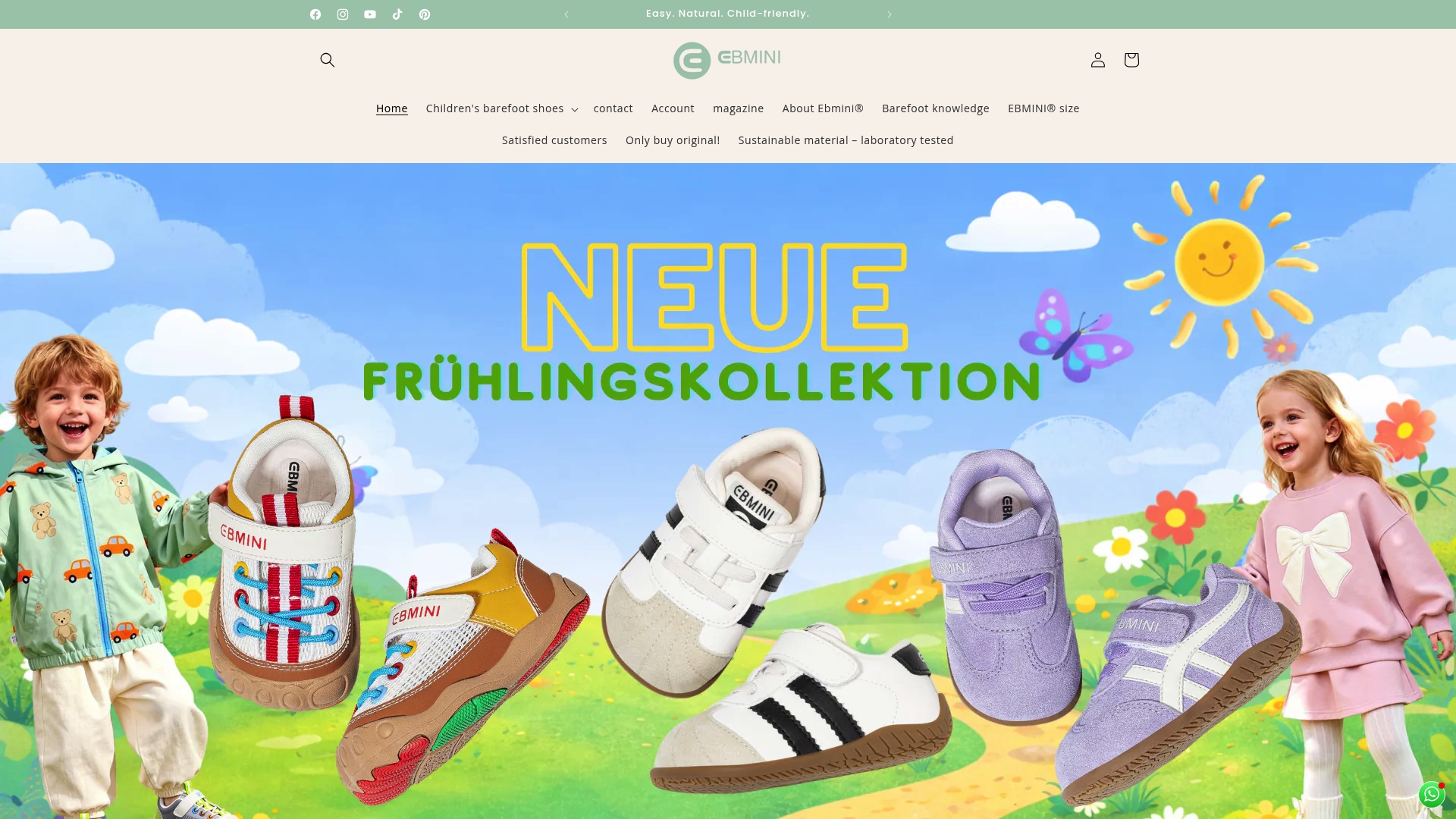
Ebmini develops barefoot shoes for children that meet all podiatric requirements: wide toe box, zero drop, ultra-light construction, and waterproof materials for every use. Whether it's a baby's first steps, active school days, or outdoor play, Ebmini's barefoot shoes for children support every phase of foot development. For summer, lightweight barefoot sandals are available, and for everyday wear, comfortable barefoot sneakers. All models are OEKO-TEX certified and come with detailed sizing information to help you make the right choice.
FAQ
What does "podiatrist-recommended" mean for children's shoes?
A podiatrist-recommended children's shoe meets the criteria of a wide toe box, zero drop, and flexible sole, which do not restrict natural foot movement. These features are considered the gold standard for healthy children's feet according to current expert literature.
How often do I need to check my child's shoe size?
For children under three years old, the fit should be checked every six weeks; for older children, every eight to twelve weeks. Children's feet grow quickly and unevenly, so regular checks are essential.
Are barefoot shoes suitable for all children?
Barefoot shoes are the best choice for children with healthy feet because they promote muscle strength and balance. For diagnosed foot deformities, an orthopedic assessment should be obtained before using barefoot shoes.
Why should I not buy used children's shoes?
A worn shoe adapts to the foot impression of the previous owner and can promote deformities in another child. Even well-preserved shoes have a deformed insole that is unsuitable for another foot.
How do I know if my child's shoe is too small?
Children often do not signal tight shoes because their pain perception is not yet fully developed. Regularly check with the thumb test if there is still enough space between the toe and the end of the shoe, and look for red pressure points on the toes after taking them off.


