

Kids' Winter Boots: Understanding the Inner Climate
The internal climate in children's winter shoes describes the interplay of thermal insulation, moisture management, and air circulation inside the shoe. This interaction of all factors determines whether children's feet stay dry and warm or become cold and damp. Children are highly active outdoors, sweat, and are simultaneously exposed to snow and cold. This is precisely why the shoe climate is not a luxury topic but a fundamental aspect of healthy feet in winter. The technical term is shoe internal microclimate, and it describes the same concept that parents should truly understand when buying winter shoes for children.
How breathability and waterproofing influence the internal climate
Waterproofing and breathability have opposing effects in a shoe. A shoe must keep moisture out while also preventing sweat from accumulating inside. This balance is technically challenging and crucial for the comfort of children's feet.
Membranes like Gore-Tex solve this problem with a microporous structure. Water droplets are too large to penetrate the pores, while water vapor from sweat is small enough to escape outwards. Water columns of 5,000–10,000 mm are considered a common benchmark for waterproofing in children's winter shoes. A higher water column means more protection against puddles and slush.
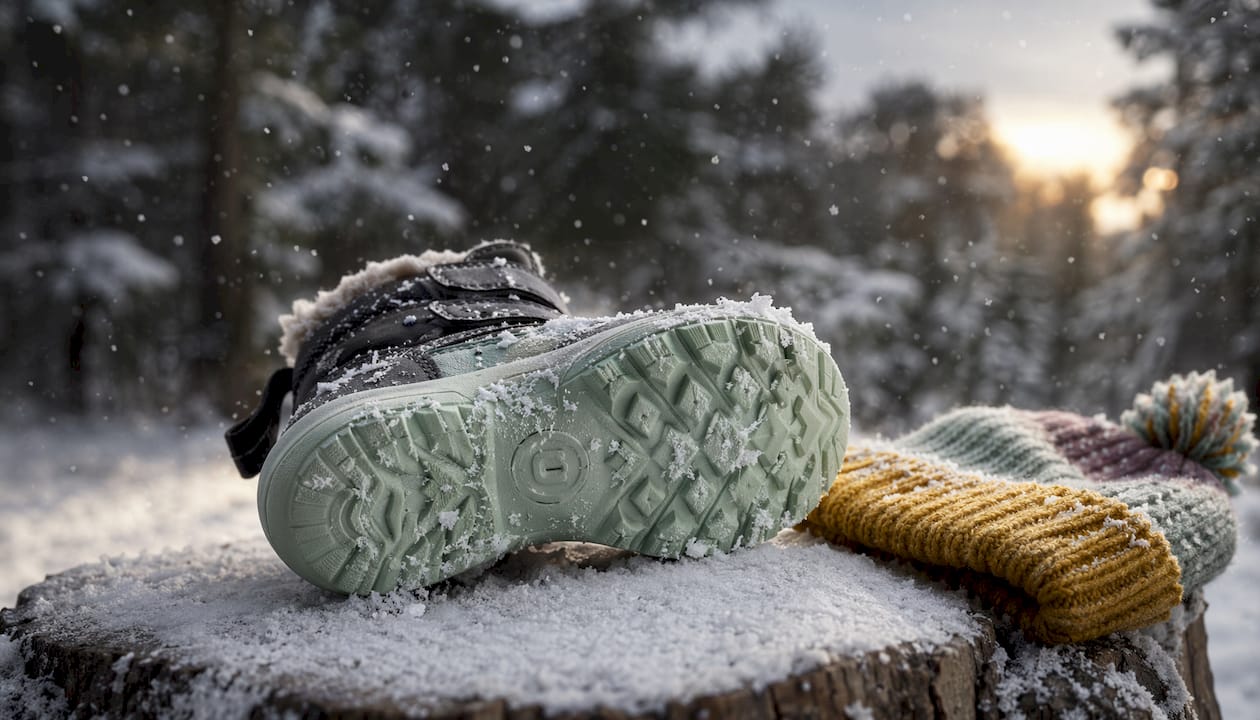
But breathability alone is not enough. If a child sits still, for example, while sledding, they produce little sweat. In this case, insulation is more important than ventilation. If the same child runs in the snow for an hour, sweat production increases significantly. A shoe without sufficient breathability will then lead to damp socks from the inside, even though no water has penetrated from the outside. Condensation in shoes without air exchange is the most common reason for children's feet getting wet, even if the shoe is externally waterproof.
When buying, parents should pay attention to the interaction of both properties. More on how membranes specifically control the shoe climate is explained in the guide to vapor permeability.
- Membrane shoes (e.g., with Gore-Tex): High waterproofing, good moisture wicking, ideal for active children in wet weather.
- Full rubber shoes: Absolutely waterproof, but no breathability. Condensation is inevitable.
- Leather with impregnation: Natural breathability, moderate waterproofing, good for dry cold.
- Synthetic materials without membrane: Inexpensive, but often neither waterproof nor breathable enough for winter use.
Pro-tip: When buying, check if the shoe has a named membrane or is only described as "water-repellent." Water-repellent merely means a surface treatment, not true waterproofing.
How fit and socks maintain the air cushion in the shoe
Fit is the most underestimated factor in shoe climate. A shoe that is too tight prevents the formation of an air cushion between the sock and the shoe wall. This air cushion, however, is the actual insulating layer, not the material alone.
Shoes that are too tight hinder blood circulation and significantly weaken the insulating effect. Poor circulation means less heat reaches the toes, no matter how thick the lining is. This is a mechanism that many parents are unaware of.
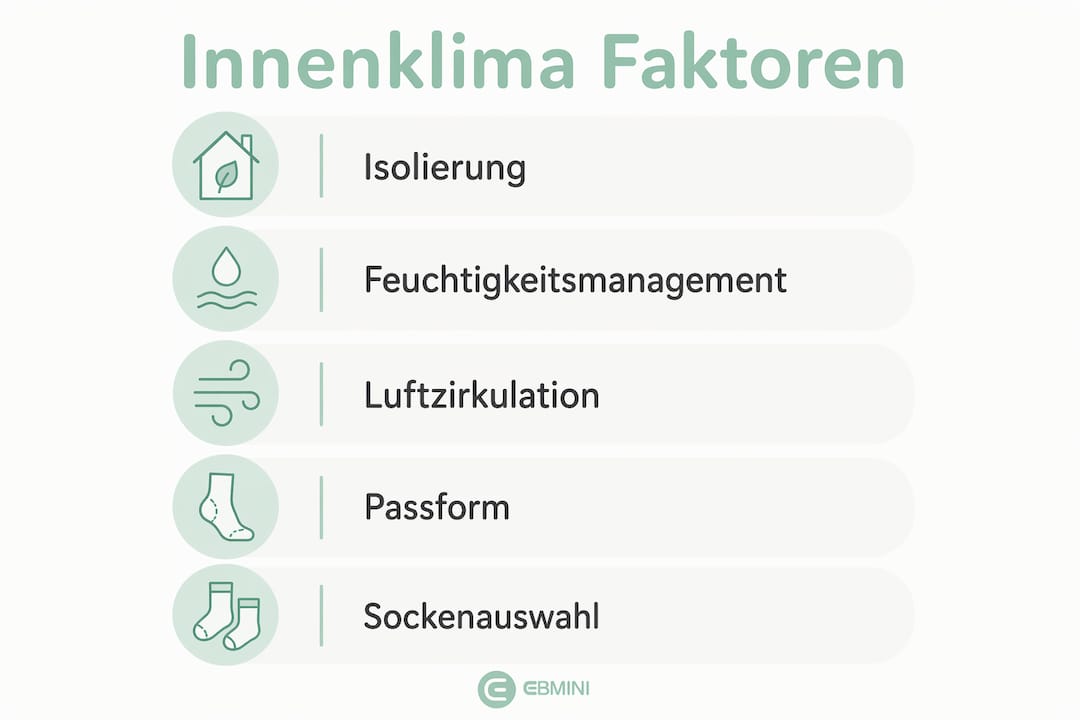
The one-thumb rule states: there should be at least a thumb's width of space between the longest toe and the tip of the shoe. This is especially true for winter shoes, as children wear thicker socks and feet can swell slightly in the cold.
Here's how to choose the right combination of shoe and sock:
- Check shoe size with winter socks: Put on the socks your child will wear in winter, then measure their foot length. Buy the shoe based on this measurement.
- Test toe space: Press on the tip of the shoe from the outside. You should feel the toes but still detect a small gap.
- Choose sock thickness carefully: Merino wool socks or functional fiber socks are ideal. They wick away moisture and stay warm even when damp.
- Avoid cotton socks: Wool absorbs up to 30% of its own weight in moisture and remains warm. Cotton stores moisture and cools the foot.
- Never wear two pairs of socks: This narrows the shoe and destroys the air cushion.
Pro-tip: When buying shoes, have your child walk in place briefly and wiggle their toes. If they can't spread their toes, the shoe is too tight, no matter how good the lining sounds.
How the child's activity influences the right shoe choice is explained in detail in the guide for active children.
Lining and insoles: Natural and technical solutions
The lining of a winter shoe performs two tasks simultaneously: storing warmth and buffering moisture. Which material is better suited depends on the child's activity level.
The optimal internal climate heavily depends on the activity level. Less active children need more insulation; active children need better ventilation.
| Lining Material | Warmth Performance | Moisture Regulation | Suitable For |
|---|---|---|---|
| Lambskin (real) | Very high | Good, natural regulation | Less active children, walks |
| Thinsulate (synthetic) | High, even when wet | Moderate | Active children, damp conditions |
| Fleece | Medium | Good | Dry cold, short outings |
| Felt | Medium | Weak | Dry indoors, short distances |
Lambskin naturally regulates moisture, releasing it when warm and absorbing it when cold. This makes it a classic winter lining for children who stand or sit a lot. Thinsulate, on the other hand, still insulates even when it gets damp. This is a clear advantage for children who play in the snow.
Insoles are often the underestimated solution. Thermal insoles reflect body heat and insulate against ground cold rising through the sole. Especially for shoes with thin outsoles, a thermal insole made of wool or aluminum coating makes a noticeable difference. Insoles can also be removed, dried, and replaced as needed, extending the shoe's lifespan.
Pro-tip: Buy insoles separately and replace them every six months. The original insole of many winter shoes significantly loses its insulating effect after one season.
Which mistakes destroy the internal climate of children's winter shoes
Most problems with cold or wet children's feet do not arise from bad shoes, but from avoidable mistakes in selection and use. These mistakes repeat every winter season.
- Cotton socks in winter: Cotton stores sweat directly on the foot. The foot cools down as soon as activity ceases. Merino or functional fibers are the only sensible alternative.
- Too thick socks in too tight shoes: Too thick socks in too tight shoes are the most common mistake of all. The result is poor circulation and, paradoxically, colder feet.
- No spare socks: Children playing in the snow often have damp socks after an hour. Without spare socks, the foot remains damp and cold for the rest of the day.
- Not letting shoes dry: Winter shoes need at least 12 hours of drying time after each use. Wearing the same shoe daily without drying it destroys the lining and promotes mold growth.
- Too much insulation for active children: A child who runs and climbs for an hour sweats heavily. A shoe with very thick lining traps this heat and moisture. The result is a damp, overheated shoe interior that quickly gets cold when cooling down.
- Neglecting impregnation: Without regular impregnation, the upper material loses its water-repellent effect. Moisture then penetrates the material, even if a membrane is present.
A practical example: A child in forest kindergarten wears rubber boots at 2 °C. After 45 minutes, their socks are damp, even though no water has entered. The reason is condensation due to a lack of breathability. Spare socks and a breathable shoe would have prevented this.
Technical materials in rainwear and shoes work on similar principles. How moisture protection works for children's clothing in general is clearly explained in this article on rainwear.
Practical tips for parents: How to ensure a good shoe climate
A good internal shoe microclimate is not created by a single correct purchase. It requires the right combination of shoe, sock, care, and usage habits.
- Regularly measure foot length: Children's feet grow quickly. Remeasure every eight weeks to check if the shoe still fits. A shoe that is too small is worse than no winter shoe at all.
- Dry shoes after every use: Place winter shoes in an airy spot after wearing, not directly on the heater. Too much direct heat damages glue and membrane.
- Remove insoles and dry separately: The insole dries faster when it's outside the shoe. This prevents mold and maintains insulating effectiveness.
- Refresh impregnation every four weeks: Spray impregnation for membranes and leather maintains waterproofing. Apply it to clean, slightly damp shoes.
- Pack spare socks in the school bag: A dry merino sock weighs almost nothing and saves the rest of the day if the first sock gets damp.
- Rotate shoes: Alternating two pairs of winter shoes extends the lifespan of both pairs and gives each shoe enough time to dry.
How parents can specifically assess and compare the thermal performance of winter shoes is shown in Ebmini's corresponding guide.
Key findings
The internal climate in children's winter shoes results from the interplay of membrane, lining, fit, and sock, where a single incorrect factor can throw the entire system out of balance.
| Topic | Details |
|---|---|
| Breathability and Waterproofing | Membranes with 5,000–10,000 mm water column protect against moisture and allow sweat to escape. |
| Fit as a Thermal Factor | At least a thumb's width of space in the toe area ensures the air cushion and blood circulation. |
| Sock Choice | Merino or functional fiber socks stay warm even when damp; cotton cools the foot. |
| Lining Selection Based on Activity | Lambskin for calm children, Thinsulate for active children in damp conditions. |
| Care and Drying | Daily drying of shoes and impregnating every four weeks maintains membrane function and insulation. |
What I've truly learned after years with children's shoes
Most parents buy winter shoes based on appearance and price. This is understandable, but it almost always leads to disappointment. At Ebmini, I've seen how often parents report that their child has cold feet despite expensive shoes. And almost always, the reason is not the shoe itself, but the combination of a too-tight fit, the wrong socks, and a lack of care.
What truly surprised me: Children with barefoot-like shoes, meaning shoes with a wide toe box and thin sole, move their feet more actively. This movement promotes blood circulation from within. This is the best thermal protection that no lining can replace.
My honest advice: Invest in the right fit and good socks rather than the thickest lining. A shoe that allows natural foot movement keeps children's feet warmer than a stiff shoe with ten millimeters of Thinsulate. This sounds counterintuitive but is physiologically well-founded.
— Ebmini
Healthy children's feet in winter: What Ebmini contributes
Ebmini develops children's shoes based on the principle of natural barefoot walking. This means: a wide toe box, so that the toes can spread and actively promote blood circulation. Zero drop, meaning a flat sole without a heel, for a natural foot posture. In addition, waterproof and breathable materials are used to keep the shoe's internal microclimate stable even in winter conditions.
Parents looking for winter shoes that combine foot health and shoe climate will find a clear selection at Ebmini. The children's barefoot shoe collection shows how natural foot development and winter protection can be combined. All models are designed for healthy feet in winter, without compromising on freedom of movement or comfort.
FAQ
What does internal climate mean in children's winter shoes?
The internal climate describes the interplay of temperature, moisture, and air circulation inside the shoe. It determines whether children's feet stay warm and dry or become damp and cold.
Which socks are best suited for children's winter shoes?
Merino wool socks or functional fiber socks are the best choice. Wool absorbs up to 30% of its own weight in moisture and remains warm, while cotton stores moisture and cools the foot.
Why does my child have cold feet despite warm winter shoes?
The most common reason is a shoe that is too tight, often caused by overly thick socks. Shoes that are too tight inhibit blood circulation and prevent the air cushion that actually provides warmth.
How often should I waterproof children's winter shoes?
Every four weeks is a good guideline, more often with intensive use. Impregnation maintains the water-repellent effect of the upper material and protects the membrane function.
What is the difference between lambskin and Thinsulate as lining?
Lambskin naturally regulates moisture and is suitable for calmer children. Thinsulate insulates even when wet and is better suited for active children who sweat a lot.


