

Children's Shoes Breathability Winter: The Guide
Waterproof doesn't automatically mean warm and healthy. That's the common misconception many parents fall for when buying winter shoes. The so-called moisture vapor permeability, also known as MVTR (Moisture Vapor Transmission Rate) in technical terms, determines whether children's feet stay dry, warm, and healthy in winter or become damp and chilled. If you only look for the word "waterproof" when deciding on children's winter shoes and their moisture vapor permeability, you often make the wrong choice. This guide shows you what really matters.
Key Insights
| Point | Details |
|---|---|
| MVTR as a key value | Look for at least 10,000 g/m²/24h for reliable sweat vapor transport to the outside. |
| Waterproof does not equal breathable | A shoe can repel water and still trap moisture inside, which chills the feet. |
| Membrane and impregnation as a system | Both protective layers must work together, otherwise breathability will suffer noticeably. |
| Regular care is not a bonus | Without impregnation, the shoe loses its moisture vapor permeability, regardless of material quality. |
| Socks and insoles make the difference | The right overall system of shoe, socks, and insoles protects children's feet long-term. |
What Moisture Vapor Permeability in Children's Shoes Really Means
The term moisture vapor permeability sounds technical at first, but it describes something very concrete. It indicates how much water vapor a material transports to the outside within 24 hours per square meter. The technical term for this is MVTR, or Moisture Vapor Transmission Rate. The higher this value, the better the shoe breathes.
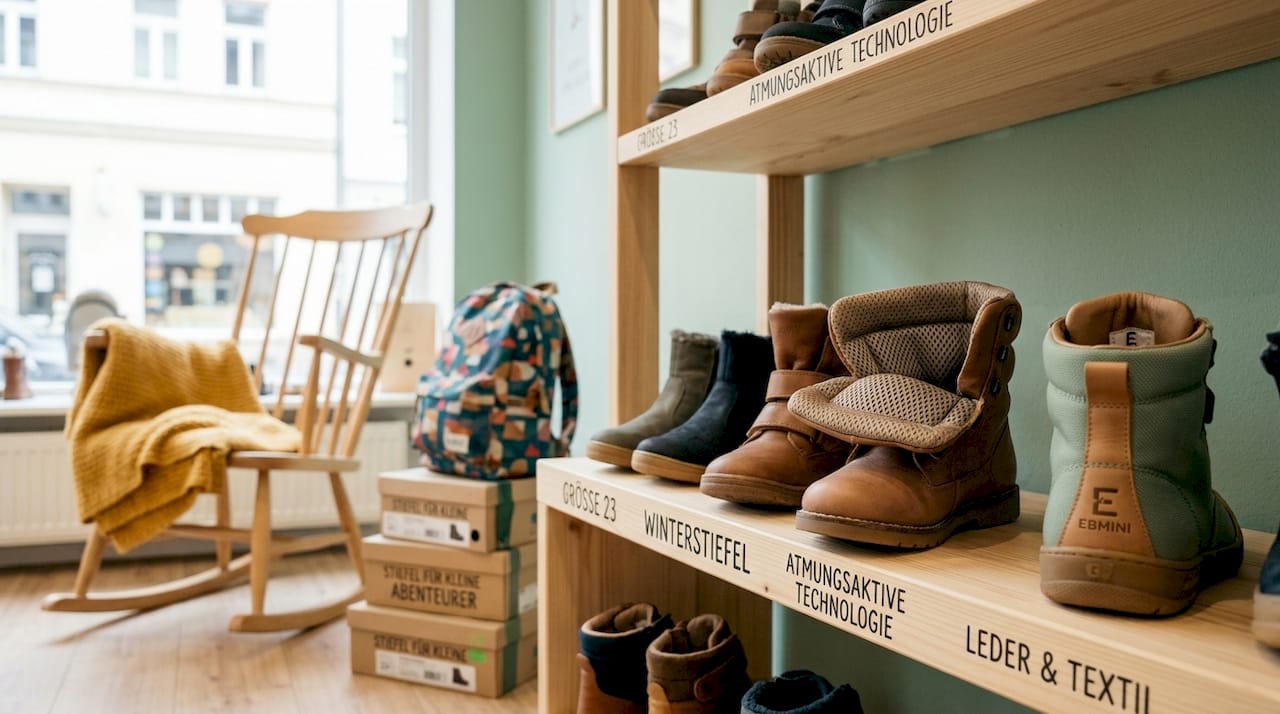
In practice, this means the following: Children's feet sweat, even in winter. If they are actively playing, running, or shoveling snow, they produce moisture inside the shoe. Without sufficient moisture vapor permeability in the shoe, this sweat accumulates and cools the feet from the inside, which paradoxically leads to colder feet than a thinner, breathable model.
Here is the important distinction that surprises many parents:
- Waterproofness describes whether water enters the shoe from the outside. It is measured in water column (mm). The higher, the more waterproof.
- Moisture vapor permeability describes the opposite path: sweat from the inside to the outside. Measured in g/m²/24h, the MVTR value.
- Both values are equally important. A shoe that is only waterproof but not moisture vapor permeable creates a damp climate inside.
Concrete guidance for MVTR values:
- 3,000 to 6,000 g/m²/24h: basic function, sufficient for short outings
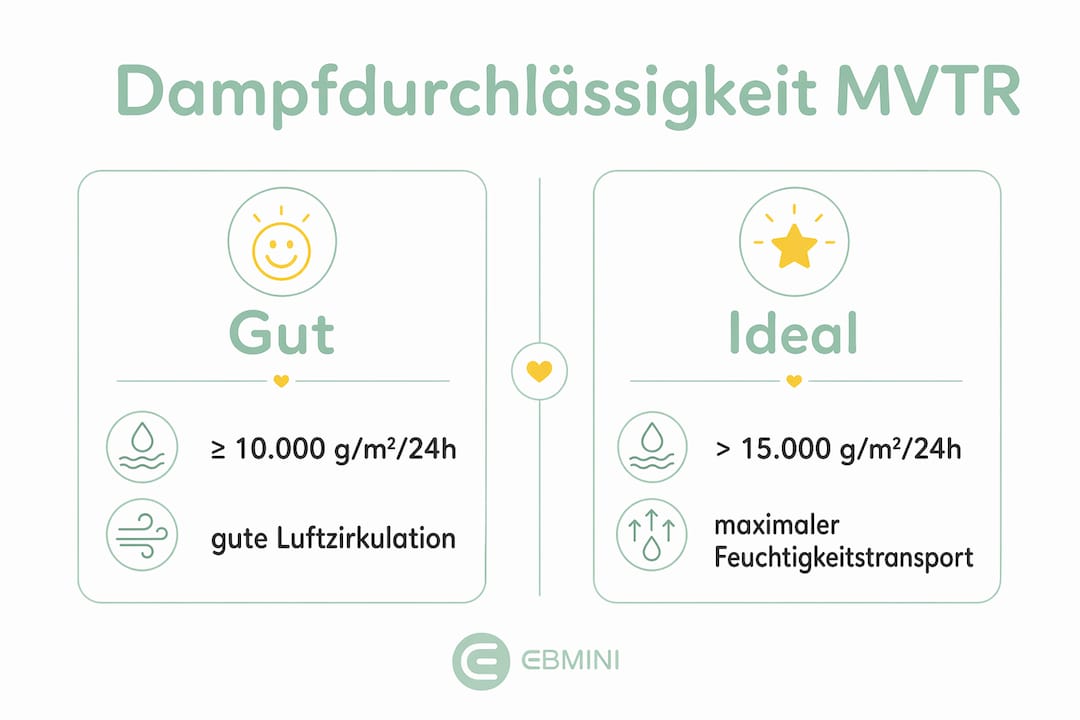
- 10,000 to 15,000 g/m²/24h: good, suitable for active children in winter
- Over 15,000 g/m²/24h: excellent, even on long, strenuous winter days
Breathable winter boots should reach at least 10,000 g/m²/24h. Values over 15,000 g/m²/24h provide reliable sweat transport even with intensive use. The health consequences of a poor foot climate are not trivial. Damp, moist feet quickly lose warmth, increasing the risk of blisters, skin irritation, and colds.
Breathable leather, by the way, is a good example of a natural material that elegantly solves this task. Leather transports water vapor through its fibrous, three-dimensional structure to the outside while simultaneously blocking liquid water from the outside. This is not technology, but the natural property of the material.
Materials and Technologies for Breathable Winter Shoes
Understanding how materials interact helps make much better purchasing decisions. In modern children's winter shoes, three components play the main role: the membrane, the impregnation, and the upper material.
-
The membrane inside the shoe. A waterproof membrane sits between the outer material and the inner lining. It allows water vapor to escape but blocks liquid water from entering. Many parents think a membrane alone is sufficient. Unfortunately, that's not true. Membrane and impregnation must work together as a system to maintain moisture vapor permeability.
-
The impregnation of the upper material. This prevents the outer material from becoming completely saturated with water. This sounds like a minor detail, but it's crucial. Without impregnation, the upper material becomes soaked, the shoe gets heavy and clammy, and the membrane can barely transport sweat vapor to the outside. Impregnation is often forgotten because many parents assume a waterproof membrane shoe doesn't need it.
-
The upper material itself. There are two main options here: leather and textile. Leather naturally offers good breathability, is durable, and dimensionally stable. It regulates the foot climate through its fiber structure without artificial aids. Textile upper materials are lighter and often cheaper, but they can soak through faster when wet and require particularly good impregnation.
Pro Tip: Buy a suitable waterproofing spray directly with the shoes. Impregnate new shoes before the first wear, even if the description states they are already waterproof. This protects the upper material from the start.
A common misunderstanding: Many parents never impregnate membrane shoes because the membrane already provides waterproofing. But the function of the membrane suffers massively if the outer material becomes wet and heavy. The overall system of membrane, impregnation, and upper material is stronger than any single component on its own.
The Right Purchase Decision for Children's Winter Shoes
The shoe market is flooded with terms like "breathable," "winter-suitable," and "waterproof." Which of these actually mean something? Which are just marketing without substance?
The biggest problem: The word "waterproof" alone reveals nothing about moisture vapor permeability. Marketing terms like "waterproof" provide no information about real moisture transport. Only the MVTR value in g/m²/24h and the water column in mm offer true comparability.
When buying, specifically look for these criteria:
- MVTR value over 10,000 g/m²/24h: acceptable for active children in winter
- Water column at least 10,000 mm: sufficient for puddles and snow
- Membrane with brand name: indicates tested quality
- Upper material made of leather or high-quality functional fabric: determines durability and natural breathability
- Information on impregnation: the manufacturer should provide care recommendations
Here's a direct comparison of common materials:
| Material | Breathability | Water Protection | Care Effort |
|---|---|---|---|
| Natural Leather | Very good due to fiber structure | Good with impregnation | Medium |
| Synthetic Leather | Low, not very breathable | Good by nature | Low |
| Textile with Membrane | Good, depending on MVTR value | Good with impregnation | High |
| Rubber Boots | No moisture vapor permeability | Very good | Low |
Rubber boots deserve special mention. They are perfect for short, wet outings, but unsuitable for a full school day or hours of playing in winter because sweat cannot escape.
Pro Tip: Ask directly for the MVTR value in the store or when buying online. Retailers who cannot provide this information often sell shoes without tested breathability.
Ebmini explains more about the construction of winter-suitable shoe soles for winter in a separate guide for parents, which vividly describes the construction of modern children's shoe soles.
Shoe Care in Winter: How to Maintain Breathability
The best breathability is useless if the shoe is improperly cared for. This is no exaggeration. Regular impregnation and cleaning significantly increase comfort, lifespan, and function of the shoe.
The following care habits make a difference:
- Impregnate before first wear: even with already waterproof shoes, this protects the upper material.
- Re-impregnate every four to six weeks: especially with frequent use in winter.
- Dry shoes at room temperature after wet days: never on a heater, as this damages the membrane and leather.
- Wear two pairs of shoes alternately: this gives each pair time to dry thoroughly and significantly extends their lifespan.
- Use breathable socks: cotton socks retain moisture, while functional socks made of merino wool or synthetic fibers wick it away.
Pro Tip: Never place wet shoes directly on the heater. Instead, stuff them with newspaper and let them air dry at room temperature. This absorbs moisture without damaging the material.
Removable insoles are another underestimated helper. Changing insoles can significantly reduce residual moisture in the shoe and simultaneously improve cushioning for children's feet. The Ebmini guide on removable insoles in winter shoes explains in detail whether they are worthwhile for your situation.
Drying and caring for shoes are just as much a part of the winter routine as warming up the car. Anyone who properly cares for and impregnates children's shoes in autumn and winter not only extends their lifespan but also actively protects the health of their child's feet.
My Experience with Breathable Winter Shoes for Children
What I repeatedly observe after years of working with children's shoes: parents choose shoes based on looks and price, and the topic of breathability only comes up when the child comes home with wet, cold feet.
My assessment is clear. A cheap shoe with a poor foot climate ultimately costs more, because damp, frozen feet make children sick, and because the child will reject the shoe sooner. What I consistently see underestimated is shoe care. Parents buy good shoes and never impregnate them. That's like buying a good bicycle and never pumping up the tires.
The uncomfortable truth: no shoe in the world is permanently breathable if it's not cared for properly. Membrane, impregnation, and socks form a system. If one component is missing, the overall result suffers. This also applies to the most expensive models.
What surprises me most about parents is the assumption that children sweat little in winter. Children are naturally very active. Anyone who runs, romps, and climbs sweats, regardless of the outside temperature. A shoe with a good MVTR value is therefore not a luxury. It is the basic prerequisite for healthy, warm children's feet.
My secret tip: Buy two pairs of good shoes instead of one very good and one poor pair. Alternating them makes puddles, snow, and sweat manageable in the long run.
— Ebmini
Winter Shoes That Really Breathe: Ebmini Collection
For those who now know what matters, the search won't be long. Ebmini develops winter barefoot shoes for children that meet exactly these criteria: breathable, waterproof, and designed for natural foot development.
Emini's winter barefoot shoes combine waterproof membranes with breathable upper materials and come with clear care recommendations. Wide toe boxes, zero drop, and non-slip soles ensure that children can move safely without sacrificing their foot climate. Matching breathable children's socks complement the system and help wick moisture away from the foot. For parents looking to invest in healthy winter shoes for their child, the Ebmini barefoot shoe collection offers a selection that requires no compromise between protection and foot health.
FAQ
What does moisture vapor permeability mean for children's shoes?
Moisture vapor permeability, also known as MVTR, describes how much sweat a shoe transports to the outside in 24 hours. The higher the value in g/m²/24h, the better the shoe breathes.
What MVTR values are good for winter shoes?
For active children in winter, at least 10,000 g/m²/24h is recommended. Values over 15,000 g/m²/24h offer excellent sweat transport even on long, strenuous winter days.
Are waterproof winter shoes for children always breathable?
No. Waterproofness and breathability are different properties. A shoe can repel water from the outside and still trap sweat inside if the MVTR value is too low.
How often should children's shoes be impregnated in winter?
With frequent use, every four to six weeks. Without regular impregnation, the upper material loses its protection, which directly affects breathability.
Which socks are suitable for breathable winter shoes for children?
Breathable socks made of merino wool or synthetic fibers are the best choice. Cotton retains moisture and can undermine the shoe's function, especially for active children in winter.


