

Children's Shoes for Summer Heat: Healthy and Comfortable
Children's shoes suitable for summer heat are characterized by breathable materials, flexible soles, and a wide toe box. These features, which experts categorize as "barefoot shoes" or "minimalist children's shoes," protect children's feet from overheating while promoting natural foot development. Brands like Affenzahn, Froddo, and Vivobarefoot specialize in precisely this combination. Whether for the playground, the beach, or everyday wear: parents who choose breathable children's shoes for summer give their children more freedom of movement and less heat buildup.
Which materials and soles are optimal for summer heat?
Breathable materials are the foundation of any good summer shoe for children. Leather, organic cotton, and open-pored mesh allow air to circulate and wick moisture away. This prevents heat buildup and reduces the risk of skin irritations that often occur with synthetic materials.
Flexible, thin soles with good grip are just as important for foot health in summer as the upper material. Barefoot shoes with a wide toe box, like those from Affenzahn or Froddo, focus on minimal sole thickness and maximum freedom of movement. This means: the foot can roll naturally when walking, and muscles and tendons are strengthened instead of weakened.
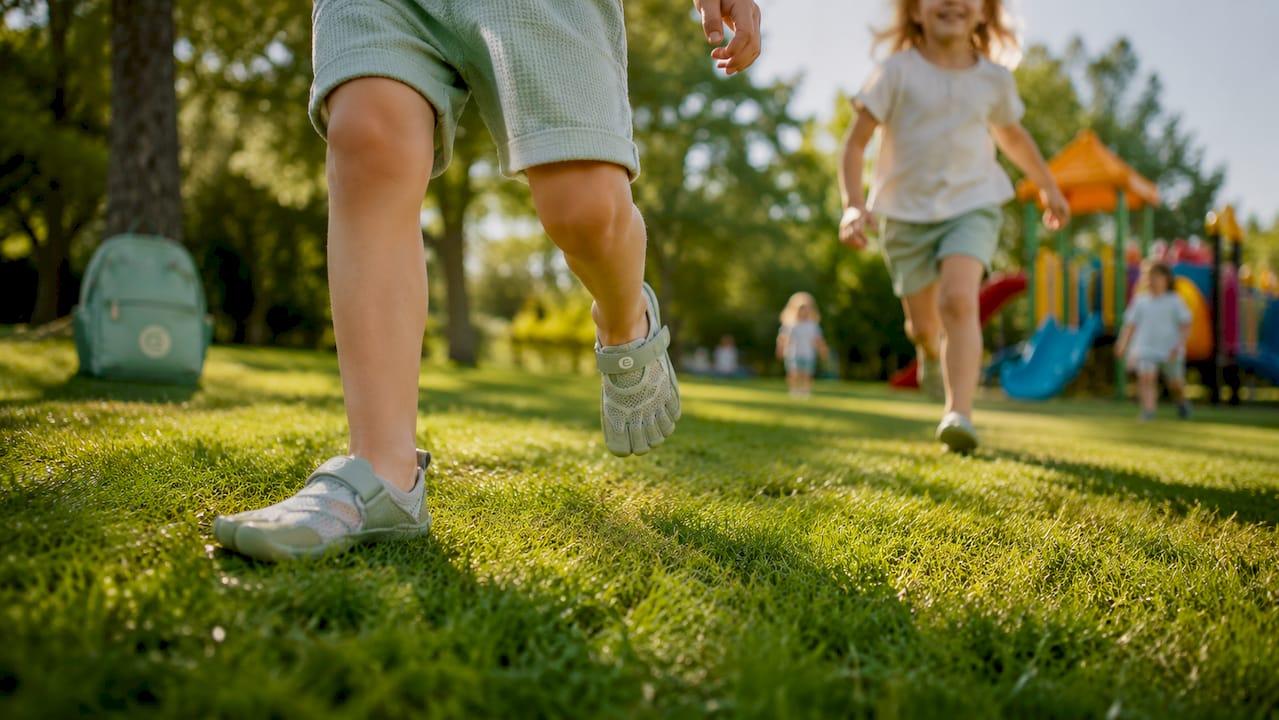
An often overlooked detail is the removable insole. Removable insoles significantly improve air circulation in hot weather without compromising the fit. The Vivobarefoot Tracker AT Kids uses this principle and shows how much difference a single feature can make.
High-quality leather sandals made from chrome-free tanned leather promote a better foot climate and reduce the potential for allergies. Brands like Bisgaard rely on this standard. This is particularly relevant for children with sensitive skin or a tendency to contact allergies.
Pro Tip: Regularly wash mesh or organic cotton children's shoes at 30 degrees. Let them air dry, never in the dryer. This maintains breathability and prevents bacteria.
The most important material features at a glance:
- Leather (natural or chrome-free tanned): breathable, dimensionally stable, durable
- Mesh fabric: maximum air circulation, lightweight, quick-drying
- Organic cotton: skin-friendly, soft, good for sensitive children's skin
- Rubber sole with tread: non-slip, flexible, protects against hot surfaces
- Zero-drop sole: no heel, promotes natural posture
What types of summer shoes are there and when are they useful?
Not every summer shoe suits every situation. The choice depends on the child's age, the surface, and the planned activity.
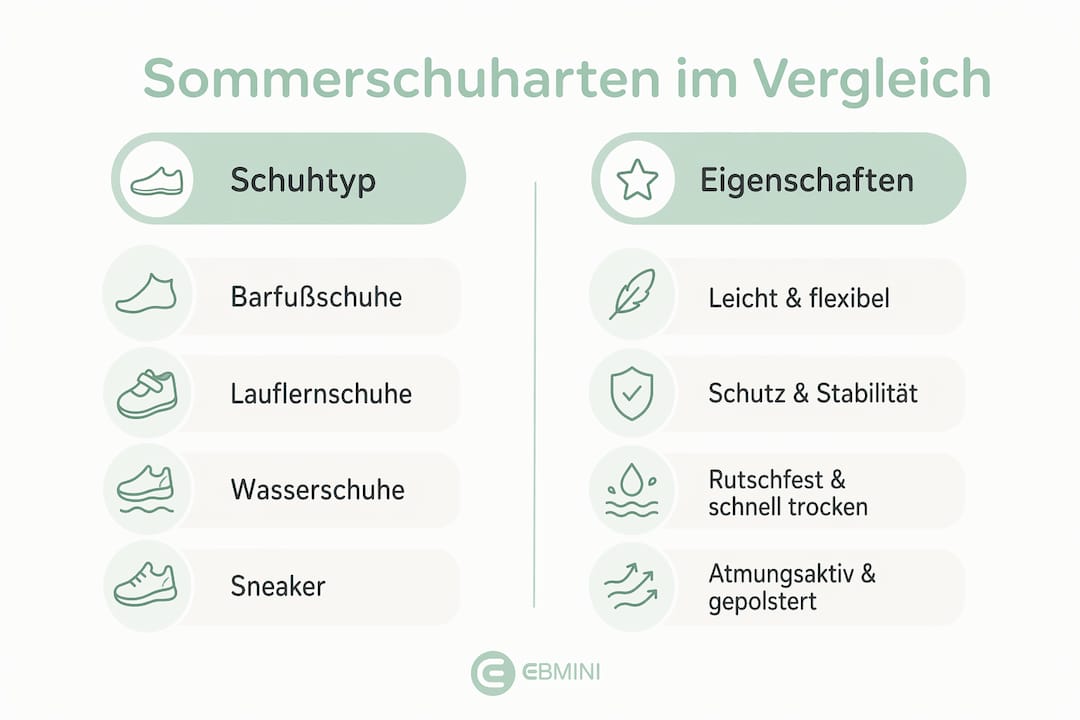
Barefoot shoes and minimalist shoes are the first choice for children who can already walk confidently. Barefoot shoes combine protection with a natural walking feel, which is a crucial advantage, especially in summer. They are suitable for everyday use, the playground, and short trips into nature.
Walking shoes and leather slippers are the right choice for toddlers who are just learning to walk. Leather slippers are considered the thinnest sole option for toddlers and still protect against hot surfaces. For children aged about 12 months and older, walking shoes with flexible leather and a non-slip sole offer the best protection for their first steps outdoors.
Water shoes are indispensable for the beach, outdoor pools, and all water activities. Water shoes are breathable, non-slip, and quick-drying, making them the ideal choice for the beach and water. Children's shoes on the beach and in the water must also be suitable for sand: they should not soak up sand and should grip securely on wet surfaces.
Lightweight sneakers are suitable for cooler summer days or excursions where more protection is needed. Breathable barefoot sneakers from Ebmini combine everyday usability with the barefoot principle.
| Shoe Type | Advantages | Disadvantages | Best Use |
|---|---|---|---|
| Barefoot shoes | Natural walking feel, lightweight, flexible | Less protection on rough terrain | Everyday, playground, excursions |
| Leather slippers | Very lightweight, skin-friendly, breathable | No protection from wetness | Toddlers, home, garden |
| Sandals | Airy, easy to put on | Less support for sports | Playground, city, everyday |
| Water shoes | Non-slip, quick-drying, safe | Less suitable for dry terrain | Beach, outdoor pool, water |
| Lightweight sneakers | Suitable for everyday, good protection | Warmer than sandals | Cooler days, longer walks |
Pro Tip: For children between 1 and 3 years old, it's worth having two types of pairs: lightweight leather slippers for indoors and the garden, and robust sandals with heel straps for the playground. This way, the foot is always appropriately protected.
How do parents choose the right summer shoes for hot weather?
Choosing the right shoe begins with the fit. When it comes to summer shoes, parents prioritize a combination of freedom of movement, protection, and breathability. In practice, this means: the shoe must be wide enough at the front for the toes to spread, and snug enough at the back so it doesn't slip.
Here's how to proceed with your selection:
- Measure foot length: Measure your child's foot in the afternoon when it is slightly swollen from heat. Add 10 to 12 millimeters for freedom of movement.
- Check the toe box: Press down on the tip of the shoe from above. There should be at least a thumb's width of space between the longest toe and the end of the shoe.
- Test flexibility: Bend the sole with both hands. A good summer shoe should fold easily in the middle. If it resists strongly, the sole is too stiff.
- Assess breathability: Hold the shoe up to the light. If you can see through the material or feel air movement when blowing into it, the ventilation is good.
- Determine usage situation: Should the shoe be suitable for the playground, the beach, or both? Children's shoes for the playground in summer need more grip and stability than pure beach shoes.
- Choose closure: Velcro fasteners are the most practical solution for children up to 6 years old. Older children can handle laces, provided they can already tie them.
Pro Tip: If your child's age allows, let them try on the shoe themselves. If they struggle or get frustrated, the closure is unsuitable for everyday use. Good summer shoes should be on and off in under 30 seconds.
For care: Rinse sandals and water shoes with clear water after every beach visit. Sand and saltwater can damage seams and materials. After drying, clean leather shoes with a damp cloth and occasionally treat them with leather care products.
What mistakes should parents avoid when buying summer shoes?
The most common mistake is buying shoes that are too tight. Children's feet grow faster in summer than in winter because warmth promotes blood circulation. A shoe that fits in May might be too tight by July. Check the fit every six to eight weeks.
Other common mistakes:
- Soles that are too thick or too hard: A sole that can barely bend blocks the natural rolling motion. This tires children's feet faster and inhibits muscle development.
- Cheap synthetics without pollutant testing: Inexpensive shoes made from untested materials can contain plasticizers or dyes that cause skin irritation. Look for certifications like OEKO-TEX Standard 100.
- Buying shoes that are too big "for future use": A shoe that is two sizes too large does not provide enough support for the foot. The child will trip more often and develop an unnatural gait.
- Confusing genuine barefoot shoes with "lightweight shoes": A thin sneaker is not a barefoot shoe. Flexible soles with zero-drop and a wide toe box are the defining characteristics of a true barefoot shoe. If any of these features are missing, it is a conventional shoe with a lightweight construction.
- Prioritizing fashion over function: Narrow, pointed children's shoes are fashionable but harmful. They force the toes into an unnatural position and can lead to long-term foot deformities.
"No shoe is better than a bad shoe." This principle applies especially in summer: walking barefoot on a safe surface is healthier for children's feet than a poorly fitting or too stiff shoe.
There's also a common misconception about water shoes: many parents buy bathing shoes that are water-resistant but don't dry quickly. Shoes that remain wet for hours after swimming promote fungal infections and skin maceration. Genuine children's shoes for the beach and water dry completely within 20 to 30 minutes.
Key Takeaways
Breathable children's shoes with flexible soles, a wide toe box, and quick-drying material are the only sensible choice for summer heat, as they ensure both foot health and comfort.
| Point | Details | |
|---|---|---|
| Breathability as a foundation | Leather, mesh, or organic cotton prevent heat buildup and keep children's feet dry. | |
| Choose a flexible sole | The sole must bend easily to allow for natural rolling movements. | |
| Shoe type according to situation | Water shoes for beach and water, sandals for playground and everyday, sneakers for cooler days. | |
| Check fit regularly | Children's feet grow quickly in summer. Check the size every six to eight weeks. | |
| Avoid common mistakes | Too tight, too large, or too stiff shoes, as well as untested synthetics, harm foot development. |
What I've truly learned after years with children's shoes
At Ebmini, we often hear parents equate the most expensive shoe with the best shoe. That's not true. What really matters is the combination of three qualities: width in the forefoot, sole flexibility, and material breathability. A shoe that fulfills all three doesn't necessarily cost more than one that only covers one aspect.
What has surprised me most after years in this field: children who regularly wear genuine barefoot shoes or go barefoot have significantly fewer problems with blisters, sweaty feet, and fatigue than children in conventional summer shoes. This isn't due to magic, but because the foot does the work it was built for.
Another point that is often missing from many guides: sandals with a barefoot feel are the most comfortable summer solution for many children, as they combine the barefoot sensation with minimal protection. Children readily accept these shoes because they don't feel constrained. This is no small detail. A shoe a child won't wear is useless to anyone.
My honest advice: invest in one good pair of shoes per season rather than three cheap pairs. Quality in children's shoes isn't shown in the logo, but in the sole flexibility, seam workmanship, and material certification.
— Ebmini
Discover Healthy Summer Shoes for Children at Ebmini
Ebmini develops barefoot shoes for children, specially made for warm days and active children's feet. Each model follows the barefoot principle: wide toe box, zero-drop sole, flexible construction, and breathable materials.
For hot summer days, Ebmini offers lightweight barefoot sandals that allow air to circulate while still providing secure support. For children who need more protection, the breathable barefoot sneakers are the right choice. And for those looking for the perfect all-round shoe for the playground, excursions, and everyday life, Ebmini's children's shoe collection offers models for every age from 1 to 10 years.
FAQ
What makes children's shoes suitable for summer heat?
Children's shoes for summer heat must be breathable, flexible, and wide in the forefoot. Materials like leather, mesh, or organic cotton prevent heat buildup and keep children's feet dry.
Are barefoot shoes really better than regular sandals in summer?
Barefoot shoes with zero-drop and a wide toe box promote natural foot development more strongly than conventional sandals. They allow the foot to fully roll during walking and activate all muscles.
Which children's shoes are suitable for the beach and water?
Water shoes that are non-slip and quick-drying are the best choice for the beach and water. They protect against sharp stones, hot sand, and slippery surfaces and dry quickly after swimming.
How often should I check my child's shoe size in summer?
Children's feet grow faster in summer than in other seasons. A size check every six to eight weeks is recommended to detect shoes that are too tight in time.
What is the difference between genuine barefoot shoes and lightweight summer shoes?
Genuine barefoot shoes have a zero-drop sole, can be easily folded in the middle, and offer ample space in the front for all five toes. Lightweight summer shoes without these features are conventional shoes with a thinner construction and promote natural walking significantly less.


