

Repairability of Children's Shoes: What Parents Need to Consider
Repairability in children's shoes refers to a shoe's ability to be fully restored to functionality after typical wear and tear, without compromising fit or foot protection. When purchasing, paying attention to material quality, shoe construction, and sole design not only saves money but also promotes the healthy foot development of your child. Children's feet grow quickly, and a shoe that cannot be repaired after three months costs double. This guide shows what truly matters for children's shoe repairability, when a repair is worthwhile, and when a new shoe is the better choice.
What features make children's shoes easily repairable?
Repairability begins with the material. Leather is considered the most repair-friendly material for children's shoes because it can be glued, sewn, and patched without losing its structure. Synthetic materials are often lighter and cheaper, but many synthetic fibers are difficult to glue and tend to tear further under stress.
The shoe's construction determines how many parts can even be replaced. Welted shoes, where the sole is sewn to the upper, are much easier to resole than fully glued models. Glued constructions are lighter, but a sole that has come off often only lasts a few weeks after a home repair.
When buying for quality, it is worth checking the following features:
- Sole construction: A multi-layered sole with clearly separable layers is easier to repair than a one-piece unit.
- Heel counter: A stable but not too stiff heel counter protects the foot shape and remains stable after repairs.
- Velcro fasteners: Wide, high-quality Velcro fasteners last longer and can be replaced or repaired if necessary.
- Seams: Visible, external seams are a good sign. They can be re-worked before a tear gets bigger.
- Toe box: A wide toe box, as offered by Ebmini barefoot shoes, distributes pressure evenly and prevents uneven wear.
Pro Tip: When buying, firmly bend the shoe in the middle. A good children's shoe will give way at the ball of the foot but remain stable at the heel and toe. If it gives way evenly everywhere, it lacks the necessary structure for a later repair.
Safety and health aspects also play a role. Orthopedic support cannot be restored once a shoe's cushioning or stability is lost. This means that not every shoe that still looks good is still safe to wear.
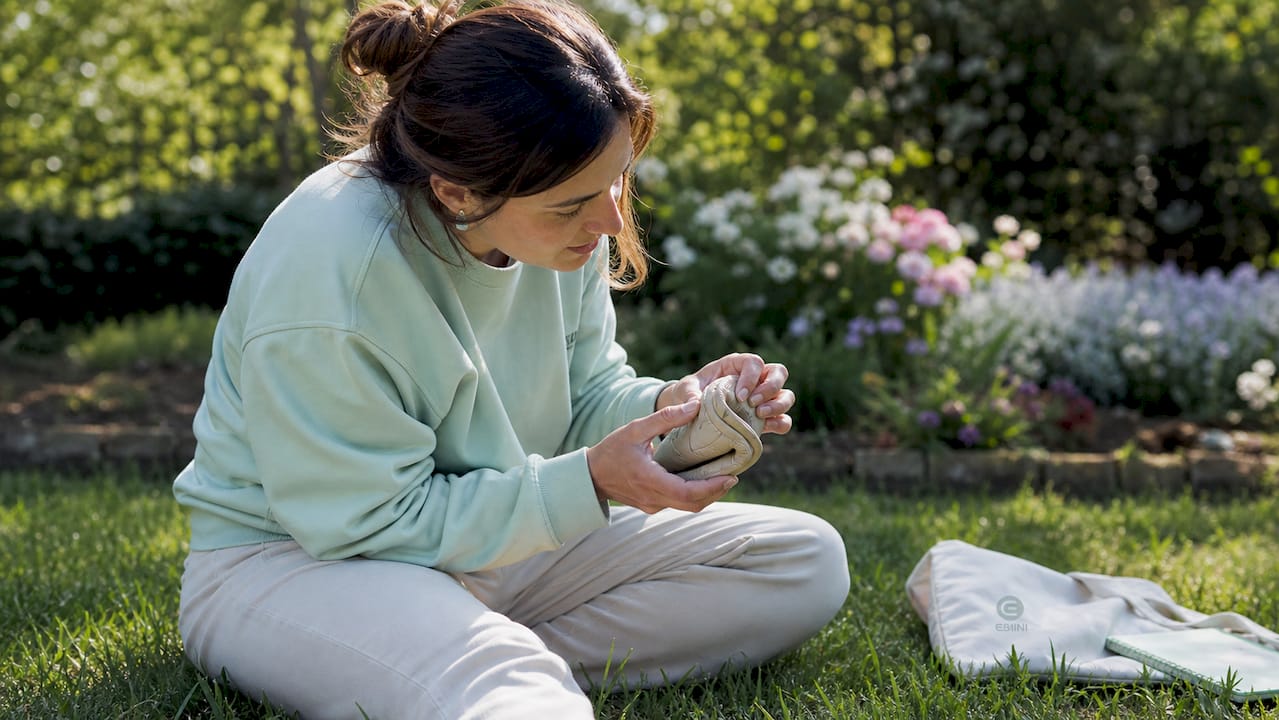
When can shoes be repaired, and when does the child need new shoes?
The decision between repair and buying new is often more difficult than it sounds. Repair is only recommended for minor damage, such as small, clean sole detachments, worn Velcro fasteners, or small tears in the upper material. Deep wear and tear and loss of stability, however, require replacement.
The following steps help with damage assessment:
- Check the sole: Press the sole from below. If it feels soft and yielding, the cushioning has deteriorated. This is not repairable.
- Perform a bend test: Gently bend the shoe and observe whether it gives way evenly or kinks at unexpected places. This "load test" helps detect structural damage early.
- Check the lining: Holes in the lining irritate the skin and can often still be patched. However, if the lining is completely worn through, the shoe no longer adequately protects the foot.
- Feel the heel counter: Squeeze the heel counter. If it immediately gives way and does not return to its shape, the shoe has lost its support function.
- Re-measure the fit: Children between 1 and 10 years old grow several shoe sizes per year on average. Before you repair, check if the shoe still fits at all.
Shoes should be checked every 3–4 months. Consistent checking ensures that damage is detected early enough to be repaired affordably.
Cost also plays a role. Professional shoe repairs cost €30–€50. This is only worthwhile if the shoe can still be worn for several months afterward. For children who need a new size every 4–6 months, the calculation is often clear.
Pro Tip: Take photos of damage as soon as you discover it and add a short note. This documentation of damage helps you track its progression and pay more targeted attention to weaknesses during your next purchase.
What simple repairs can parents do themselves?
Many damages can be fixed at home with simple means. The prerequisite is always thorough preparation, because clean, degreased, and roughened adhesive surfaces significantly improve adhesion. Isopropyl alcohol is good for degreasing before applying adhesive.
- Clean Velcro fasteners: Hair and lint clog the hooks and make the fastener soft. An old toothbrush or a fine comb removes dirt in a few minutes.
- Replace Velcro fasteners: If the fastener is permanently soft, it can be replaced with self-adhesive Velcro tape. For a permanent solution, sewing for Velcro fasteners with strong thread is recommended.
- Glue the sole: Small detachments at the sole tip or heel can be repaired with shoe glue. Important: clean both surfaces, roughen them, apply glue to both sides, let it dry briefly, and then press them firmly together. Allow to dry for at least 24 hours before the child wears the shoe again.
- Patch the lining: Small holes in the lining can be closed with fabric patches from a sewing kit. For leather lining, there are self-adhesive imitation leather patches that hold without sewing.
- Re-sew seams: If a seam on the upper material comes loose, often a strong thread and a sewing needle are enough. If unsure, you can also take the shoe to a shoemaker before the damage gets worse.
Pro Tip: Always allow repaired shoes to dry completely before the child puts them on. Wet adhesive loses up to 80% of its adhesion if subjected to stress before it has cured.
When is professional help useful? If the sole is largely detached, if the upper material tears in several places, or if the heel counter has lost its shape, a shoemaker should decide whether a repair still makes sense. Some shoemakers also offer resoling, which can make the shoe usable for several more months.
How does the right shoe choice facilitate later repairs?
The best time to reduce repair costs is at the time of purchase. When buying, fit, flexibility, toe freedom, a firm heel counter, and non-slip soles are crucial. These features not only ensure healthy foot growth but also mean that the shoe lasts longer and is easier to repair.
Specifically, this means when buying:
- Allow at least 1 cm of toe freedom so the shoe doesn't become too tight too soon.
- Pay attention to flexibility at the ball of the foot, not at the heel.
- Choose materials that can be glued and sewn, i.e., leather or high-quality textiles instead of thin plastic foils.
- Prefer soles that are multi-layered and can be replaced if necessary.
Healthy foot growth requires flexibility and fit. A repair that makes the shoe stiffer or tighter harms foot development, even if it looks good aesthetically. This is a point that many parents underestimate.
Sustainability and repairability go hand in hand when buying shoes. Those who rely on sustainable brands for children's shoes generally get shoes with better material quality and longer durability. Ebmini's barefoot-like children's shoes feature wide toe boxes, zero-drop soles, and high-quality materials that meet these exact requirements. Those who also pay attention to functional children's clothing consider durability from the outset.
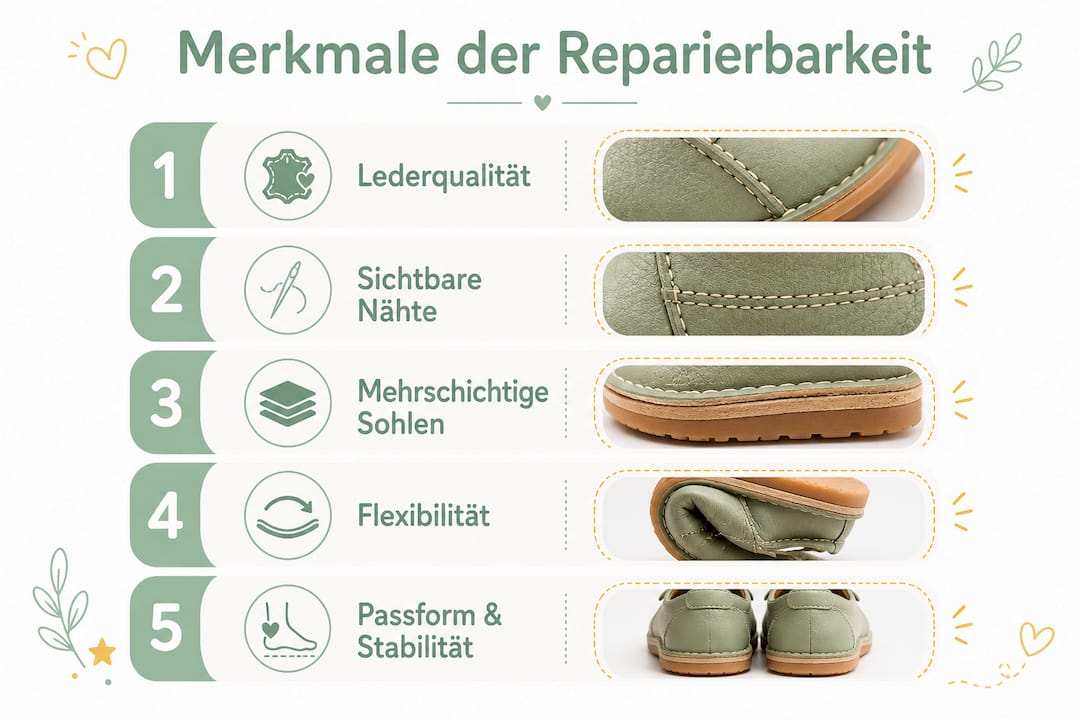
| Purchase Criterion | Why it affects repairability |
|---|---|
| Leather or high-quality textile | Can be glued, sewn, and patched |
| Multi-layered sole | Individual layers can be replaced |
| Wide toe box | Prevents uneven wear |
| Visible outer seams | Can be re-worked before tears get bigger |
| Stable heel counter | Retains shape even after repairs |
Another point: shoes that fit well from the start wear more evenly. Misalignment due to poor fit leads to uneven sole wear that is difficult to repair. Those who invest in children's shoes long-term ultimately save more than they spend.
Key Takeaways
Repairable children's shoes conserve resources and budgets, but only if fit and stability are still intact.
| Topic | Details |
|---|---|
| Repairability starts with the purchase | Leather, visible seams, and multi-layered soles make shoes more durable and easier to repair. |
| Regular checks pay off | Checking every 3–4 months prevents small damages from becoming irreparable problems. |
| Fit takes precedence over repair | A shoe that no longer fits or has lost its stability harms foot development, no matter how well it was repaired. |
| DIY repairs require preparation | Clean, degreased, and roughened surfaces are a prerequisite for a durable adhesive bond. |
| Cost-benefit analysis is crucial | Professional repairs cost €30–€50, which is only worthwhile if the shoe still fits and can be worn for several months afterward. |
What I've truly learned after years with children's shoes
Many parents believe that repairing is always the more sustainable choice. This is only partly true. At Ebmini, we see daily how well-intentioned repairs are made to shoes that are actually past their prime. A shoe with crumbling cushioning no longer protects the foot, no matter how well the sole is glued back on.
What I truly consider important: repairability is not a coincidence. It results from conscious purchasing decisions. Those who pay attention to material quality and construction when buying will have to repair less often later, and can do so with a clear conscience.
The point I most often see underestimated is the fit after a repair. Parents glue soles, sew seams, and are satisfied, but the shoe has long since become too small. Foot health and fit must always take precedence. A repaired shoe that pinches is worse than no shoe at all.
My honest advice: Buy fewer shoes, but better ones. Check them regularly. Repair early, not late. And recognize when it's time to let go.
— Ebmini
Ebmini Children's Shoes: Quality that pays off
Those looking for children's shoes designed for durability from the outset will find a clear answer at Ebmini. The waterproof children's boots EBMINI® WAS are made from high-quality materials suitable for repairs and follow the principles of barefoot walking with a wide toe box, zero-drop sole, and non-slip outsole.
These shoes are designed for everyday use, outdoor play, and winter conditions. They offer precisely the construction features that facilitate repairs: sturdy seams, a multi-layered sole, and materials that can be glued and maintained. Those who prioritize quality and healthy foot development can find all details about the waterproof children's boots directly on the product page.
FAQ
What does repairability mean for children's shoes?
Repairability describes how well a shoe can be restored after typical damage like sole detachment or seam tears, without compromising fit or foot protection.
When should I replace children's shoes rather than repair them?
If the cushioning has deteriorated, the heel counter has lost its shape, or the shoe no longer fits, buying a new pair is more sensible. Repairs only help with minor, superficial damage.
How often should I check children's shoes for damage?
A thorough check every 3–4 months is advisable. Early detected damage can be fixed more affordably and easily.
What repairs can I, as a parent, do myself?
Cleaning and replacing Velcro fasteners, gluing small sole detachments, and patching linings are typical DIY repairs. A clean, degreased adhesive surface is always important for a durable bond.
Is a professional shoe repair for children's shoes worthwhile?
With costs of €30–€50, a professional repair is only worthwhile if the shoe still fits and can be worn for several months afterward.


