

Natural Materials in Children's Shoes: Benefits for Healthy Feet
Natural materials in children's shoes are the decisive factor for healthy foot development because they inherently provide breathability, flexibility, and skin-friendliness. Leather, cotton, and merino wool offer significantly better air circulation than synthetic alternatives due to their open-pore structure. This reduces sweating and skin irritations, which can quickly occur in active children between 1 and 10 years old. In addition, there is the natural flexibility of these materials: they adapt to the foot shape instead of forcing the foot into a rigid form. Parents who truly want to invest in their child's foot health cannot ignore the material question.
How do natural materials support foot development in children?
Natural materials adapt flexibly to the foot shape, thereby promoting healthy rolling motion and improved proprioception. Proprioception refers to the body's ability to perceive its own position and movement in space. In children, this ability is still developing, which is why the shoe should cushion and shield as little as possible.
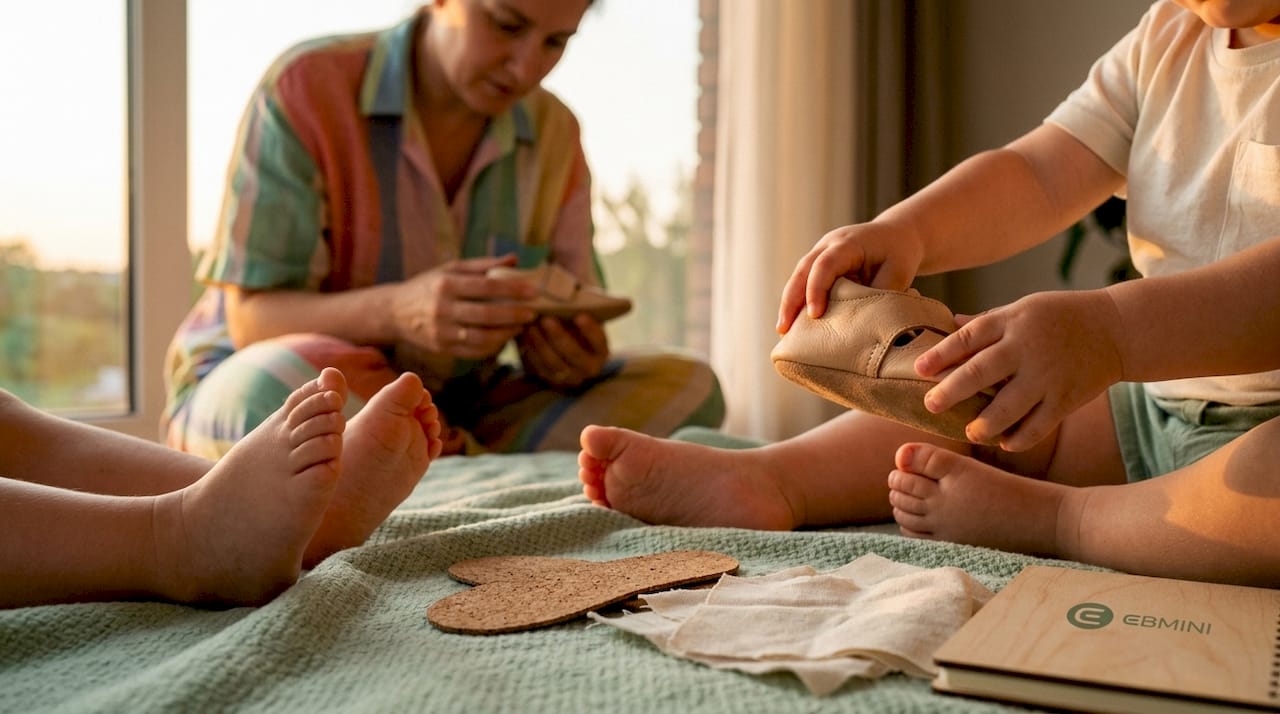
Synthetic materials are often stiffer. They restrict natural rolling motion and weaken the foot muscles in the long run. Natural materials like leather or merino wool, on the other hand, yield without losing their shape, allowing the foot to fully unfold when walking and running.
For parents who are specifically looking for flexible soles for children, it is worth looking at the combination of upper material and sole. Not only the upper material matters, but the sole must also bend.
Overview of the benefits of natural materials for growing feet:
- Leather molds to the individual foot shape due to body heat and becomes softer over time.
- Merino wool actively regulates temperature, keeping feet cool in summer and warm in winter.
- Natural fibers wick moisture away to the outside instead of trapping it.
- Soft materials leave the toe box free, allowing toes to splay.
- Flexible natural rubber soles allow for full rolling motion without counter-pressure.
Pro Tip: Before buying, try to fold the shoe in half. A good children's shoe made of natural materials can be easily folded without creasing or breaking.
Which natural materials are best suited for children's shoes?
The ideal shoe material for children is a combination of natural upper material and natural rubber soles, as they combine breathability with slip resistance. Each material brings its own strengths, which vary depending on the season and area of use.
Leather is the classic material for children's shoes and rightly so. It is durable, adapts to the foot shape, and can be used for years with good care. Cotton is particularly suitable for slippers and light summer shoes because it is soft and skin-friendly. Merino wool regulates temperature through insulating fibers that store or dissipate heat and wicks away moisture, preventing skin irritations and blisters. Natural rubber provides the sole: grippy, flexible, and free of plasticizers.
| Material | Main Advantage | Best Time of Use |
|---|---|---|
| Leather | Adapts to foot shape, durable | All year round |
| Merino Wool | Temperature regulation, moisture-wicking | Autumn to Spring |
| Organic Cotton | Soft, skin-friendly, low in pollutants | Summer, indoors |
| Natural Rubber | Non-slip, flexible, pollutant-free | All year round as a sole |
| Cork | Pressure distribution, shaping | As an insole |
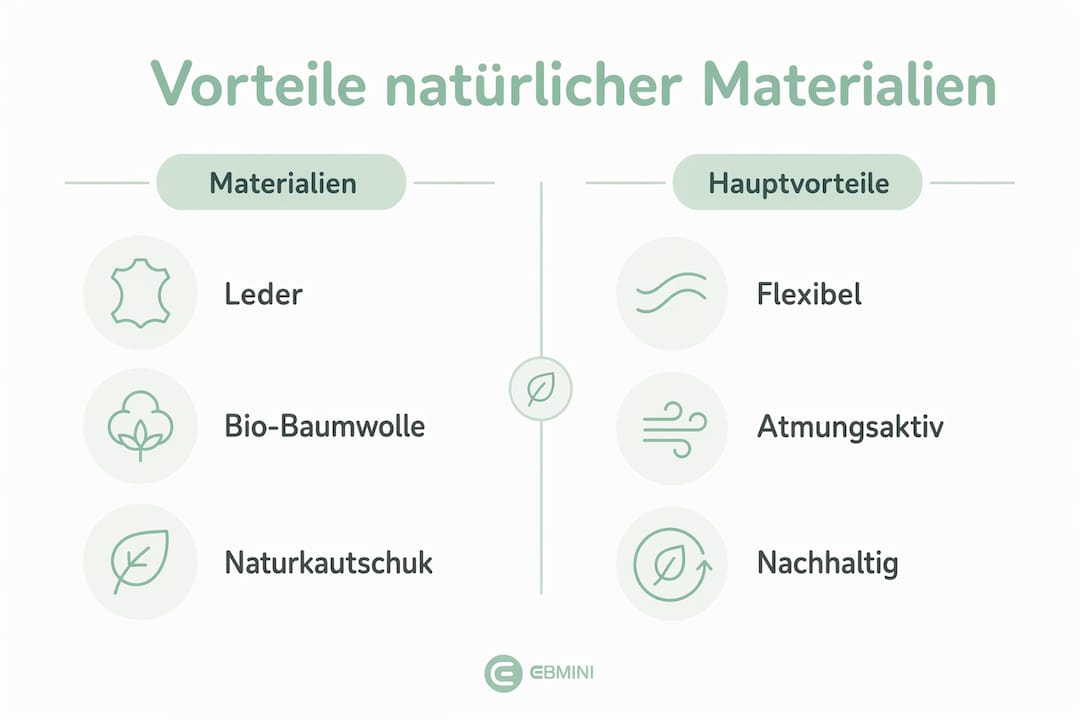
Organic cotton and natural rubber are particularly common in the production of pollutant-free children's shoes. Thanks to their breathability and flexibility, they offer a level of comfort that is clearly superior to synthetic materials.
Cork is often underestimated. As an insole, it distributes pressure evenly across the entire foot surface and molds to the foot over time. This is a real advantage for children with sensitive soles.
How to properly care for children's shoes made of natural materials?
The longevity of natural materials directly depends on proper care. If leather shoes are dried incorrectly or wool shoes are washed too hot, the functional properties for which they were purchased are destroyed.
Gentle cleaning with mild agents and air drying without heat protect leather and wool from damage. Heat dissolves glue and makes leather brittle. This is not a myth, but a common mistake that prematurely ruins shoes.
How to care for children's shoes made of natural materials step by step:
- Remove coarse dirt: Brush off dry dirt with a soft brush before it dries and penetrates the material.
- Clean with leather or saddle soap: For leather shoes, first remove old waterproofing with leather soap so that new care products can be better absorbed.
- Gently remove moisture: Stuff wet shoes with newspaper and let them dry at room temperature. Never place them on a heater or in direct sunlight.
- Re-waterproof: After drying, apply a suitable waterproofing agent to protect the material from moisture.
- Check regularly: Check soles for wear, examine seams for cracks, and replace insoles if necessary.
Pro Tip: Stuff wet leather shoes with newspaper. The paper draws moisture from the inside out and prevents the leather from losing its shape when drying.
Wool shoes and shoes with merino wool lining should only be washed at low temperatures and with a special wool detergent. Spin cycles damage the fibers. If you follow these tips, your shoes will last a long time.
What advantages do natural materials offer compared to synthetic fabrics?
Natural materials are inherently moisture-regulating and odorless, while synthetic fabrics often require chemical additives that do not always achieve the same effect. This is not a marketing promise, but a matter of material structure.
Synthetic materials certainly have strengths: they are often cheaper, waterproof, and easy to care for. But for children, whose skin is more sensitive than that of adults, the disadvantages outweigh the benefits. Plastic fibers allow little air to pass through, trap heat, and promote fungal infections and odor formation.
| Property | Natural Materials | Synthetic Materials |
|---|---|---|
| Breathability | High, due to open-pore structure | Low, heat build-up possible |
| Moisture Regulation | Active, wicks away sweat | Passive, often only with additives |
| Skin Compatibility | Very good, few irritants | Variable, additives possible |
| Flexibility | High, adapts | Often stiffer, shape-retaining |
| Environmental Friendliness | Biodegradable | Mostly non-degradable |
| Price | Tends to be higher | Often cheaper |
What natural materials do better specifically:
- They regulate temperature without chemical aids.
- They absorb moisture and release it outwards instead of trapping it.
- They cause fewer contact allergies or skin irritations.
- They become softer over time and adapt to the foot instead of shaping it.
The smell test and the bending test are simple inspection methods for parents to assess the plastic content in children's shoes. Natural shoes smell neutral and are easy to bend. Synthetic shoes often have a slight chemical smell and stiff soles.
How does the choice of natural materials support sustainable shoe production?
Sustainable children's shoes made from natural materials are an investment, not an expense. Leather, wool, and natural rubber are biodegradable. Synthetic materials usually end up in landfills or are incinerated after their useful life.
When purchasing, parents should not only pay attention to the material but also to certifications and transparent manufacturing. Certifications such as GOTS (Global Organic Textile Standard) or OEKO-TEX Standard 100 prove that a product has been tested for harmful substances. This is particularly relevant for children's shoes, as children often put their shoes in their mouths or sit on the floor.
What parents should look for when buying sustainable children's shoes:
- Certifications like OEKO-TEX, GOTS, or Blue Angel as a minimum standard.
- Transparent information about the country of origin and the materials used.
- Durable craftsmanship that lasts several children or seasons.
- Repairability: Can soles be replaced or seams repaired?
- Fair working conditions in production, recognizable by corresponding seals.
Durable shoes made from natural materials conserve resources in two ways: once through the biological origin of the material and once through the longer service life. A well-cared-for leather shoe lasts several children, which significantly reduces the ecological footprint per use. Parents looking for sustainable children's shoes can now find a growing selection of brands that combine transparency and quality.
In addition to shoes made from natural materials, it is also worthwhile to use natural fibers for other children's products. Children's winter accessories made from skin-friendly materials sensibly complement the concept.
My assessment after years with barefoot shoes for children
Many parents wonder if the extra cost for shoes made of natural materials is really justified. The honest answer: Yes, but not for the reason most expect.
The biggest advantage is not in the look or the good conscience of buying. It lies in the fact that a well-made leather shoe or a shoe with merino wool lining looks as if it were made for precisely that foot after a few weeks. Synthetic shoes retain their shape, no matter how long the child wears them. That sounds like an advantage, but it isn't. The foot should shape the shoe, not the other way around.
Care is the point where many parents give up. Leather shoes require more attention than plastic shoes. But this effort pays off: a well-cared-for shoe lasts two to three seasons, sometimes longer. In the end, this is cheaper than buying a new synthetic shoe every six months.
What I can say after many conversations with parents and my own experience with barefoot shoes: The combination of natural upper material and a flexible natural rubber sole is the best you can give to a growing child's foot. Not because it's trendy, but because it works.
— Ebmini
Healthy barefoot shoes for children at Ebmini
Ebmini has developed barefoot shoes for children that implement exactly what natural materials promise: breathability, flexibility, and a wide toe box that leaves the foot free.

Ebmini's children's shoes follow the zero-drop principle and are equipped with ultralight, flexible soles that do not hinder natural rolling motion. For summer, Ebmini offers breathable barefoot sandals that remain comfortable even with a lot of outdoor activity. All models are designed for healthy foot development and are available for children aged 1 to 10. Parents looking for a shoe that combines foot health and everyday suitability will find a clear selection at Ebmini without compromise.
FAQ
What are the advantages of natural materials in children's shoes?
Natural materials such as leather, merino wool, and organic cotton offer higher breathability, regulate moisture without additives, and adapt to the foot shape. This reduces skin irritations and supports natural foot development.
Which natural material is best suited for children's shoes?
The best combination is an upper made of leather or merino wool with a natural rubber sole, because it combines breathability with slip resistance and flexibility.
How do I recognize children's shoes made of genuine natural materials?
The smell test and the bending test help: natural shoes smell neutral and are easy to bend, while synthetic shoes often have a chemical smell and stiffer soles.
How do I properly care for leather children's shoes?
Clean leather shoes with leather soap, stuff them with newspaper, and let them air dry at room temperature. Never dry them on a heater, as heat dissolves glue and makes the leather brittle.
Are sustainable children's shoes made of natural materials more expensive?
The initial purchase price is often higher, but durable shoes made of natural materials last several seasons and sometimes several children, which reduces overall costs.
Key Takeaways
Natural materials in children's shoes actively promote foot health because they regulate moisture, adapt to the foot shape, and do not restrict natural rolling motion.
| Topic | Details |
|---|---|
| Breathability | Leather and merino wool wick away moisture and prevent heat build-up without chemical additives. |
| Foot Development | Flexible natural materials allow for rolling motion and strengthen children's foot muscles. |
| Material Choice | The combination of natural upper material and natural rubber sole offers the best overall comfort. |
| Care | Air drying at room temperature and mild cleaning agents maintain the function of natural materials long-term. |
| Sustainability | Certifications such as OEKO-TEX and GOTS prove the absence of harmful substances and fair production in children's shoes. |


