

Sensory Feedback in Children's Shoes: How to Properly Encourage Ground Feel
Sensory children's shoes are shoes specifically designed to transmit as much information as possible from the ground to the foot. The technical term for this is proprioceptive feedback, meaning the body's ability to perceive its own position and movement. Only about 25% of children wear shoes with a healthy, straight toe position. This shows how much room for improvement there still is when it comes to sensory children's shoes and feeling the ground. Parents who choose the right shoes support their child's balance, posture, and coordination from the very beginning.
1. What parents should look for in sensory children's shoes
Sensory children's shoes can be identified by a few, but crucial, characteristics. Knowing these will help you make the right choice when buying.
- Wide toe box: Toes must be able to spread freely. Constricting tips squeeze the toes together and inhibit natural rolling motion.
- Flexible, thin sole: Flexible soles with flex grooves under the ball of the foot promote tactile feedback and allow natural rolling. The thinner the sole, the more the child feels the ground.
- Sufficient space: 12–17 mm of space in front of the longest toe is a guideline. This space allows the foot to work during rolling and provides room for growth.
- No raised heel: A so-called zero drop, meaning the same height for the heel and forefoot, maintains natural body posture. Raised heels shift weight forward and strain knees and back.
- Soft, breathable materials: Stiff insoles and hard shells block foot movement. Soft materials allow the foot to work and sweat less.
- Lightweight: Heavy shoes tire leg muscles faster. Lightweight models allow children to stay active longer.
Pro-tip: Before buying, bend the shoe in the middle. If it gives easily, the sole is flexible enough. If it's hard to bend, it will barely promote ground sensation.
Rigid insoles and thick midsoles are the most common mistakes in children's shoes. They take away the work the foot needs for healthy development. When buying, parents should opt for less cushioning and more freedom of movement.
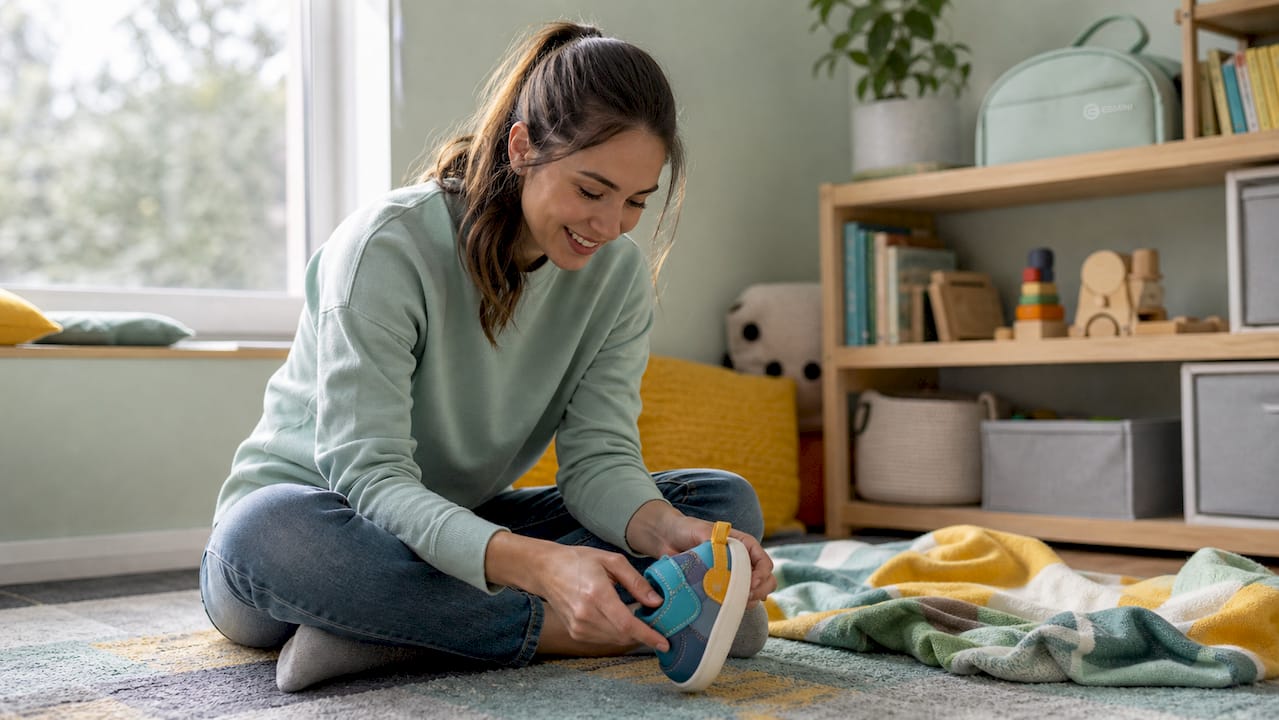
2. Five types of sensory children's shoes at a glance
The market for barefoot-like children's shoes is growing. More than 30 specialized brands now offer models designed for natural foot development. The main types of shoes differ in their application and sole thickness.
Barefoot shoes with ultra-thin soles
These shoes have soles 3–6 mm thick. Ground feel is maximized. Suitable for dry paths, playgrounds, and everyday use in warm weather. Children who regularly wear these shoes develop stronger foot muscles. Introduction should be gradual, especially if the child has previously worn conventional shoes.
Flexible sneakers with ground sensitivity
Flexible sneakers combine a little more protection with good ground feel. The sole is thinner than standard shoes, but thicker than pure barefoot models. They are well suited for school and longer walks. Ebmini offers barefoot sneakers for children in this category, which are lightweight, flexible, and designed for daily use.
Sandals with open toe box
In summer, sandals are the closest option to the ground. The toes are free, and the foot directly feels temperature differences and surface textures. A firm heel strap is important so that the shoe does not slip. For children who spend a lot of time on meadows or forest paths, a light profiled sole is useful.
Soft moccasins for indoors and short distances
Moccasins made of soft leather or textile are ideal for first steps and short distances. The sole is thin and flexible. They are less suitable for wet or uneven surfaces. They serve well as slippers or for short outings.
Adaptive shoes for special sensory needs
Adaptive shoes with soft, seamless materials and simple hook-and-loop fasteners significantly facilitate everyday life for those with increased sensory needs. Children with tactile hypersensitivity often react strongly to seams, tight fits, or unfamiliar materials. Soft, seamless models with a wide toe box reduce these stimuli. Hook-and-loop fasteners also allow for independent donning and doffing.
| Shoe Type | Ground Feel | Application Area | Special Feature |
|---|---|---|---|
| Barefoot shoe | Very high | Everyday, playground | Ultra-thin sole |
| Flexible sneaker | High | School, walks | Good all-rounder |
| Sandal | Very high | Summer, nature | Open toe box |
| Moccasin | Medium | Indoors, short distances | Soft and light |
| Adaptive shoe | Medium | Special needs | Seamless, hook-and-loop fastener |
If you're looking for a suitable model for winter, Ebmini also offers barefoot-like all-weather shoes that are waterproof yet flexible. A warm outfit like a children's snowsuit can be combined well with these, so the child stays active even in the cold.
3. Why feeling the ground is so important for child development
The foot is a highly sensitive sensory organ. It constantly transmits information about the ground, balance, and body posture to the brain. These signals are not trivial. They are the foundation for coordination, posture, and safe walking.
When a child walks barefoot across grass, their brain processes dozens of different stimuli simultaneously: temperature, moisture, unevenness, pressure. Each of these stimuli trains the nervous system. Rigid footwear filters out precisely these stimuli. The brain receives less information and has to do less work. In the long term, this can hinder the development of foot muscles and body coordination.
“The sole of the foot is equipped with a variety of receptors that constantly send signals about the ground. These signals are indispensable for a child's balance and coordination. Taking away these stimuli from the foot deprives the child of an important developmental tool."
Proprioception, or deep sensibility, develops particularly strongly in the first years of life. Children who walk barefoot a lot or wear ground-sensitive shoes during this phase develop a better body awareness. This later shows up in sports at school, cycling, and climbing. Parents who want to learn more about the connection between shoes and coordination can find in-depth information there.
Rigid footwear inhibits these processes in two ways. Firstly, it blocks the movement of the small foot bones and muscles. Secondly, it reduces the sensory signal at the sole of the foot. Both together slow down natural development. This does not mean that every shoe is harmful. But it does mean that the choice of shoe makes a real difference.
4. Practical tips for caring for and checking sensory children's shoes
Sensory shoes only work if they fit and are in good condition. Regular checks are not a burden, but a prerequisite.
- Measure feet regularly: Children's feet grow quickly. The length should be re-measured every two to three months. It's best to do this while standing, as the foot lengthens slightly under weight.
- Remove insole and compare: Taking out the insole and placing it next to the foot is the easiest way to check if there is still enough space. 12–17 mm of space in front of the longest toe is the guideline.
- Check sole profile: Flattened profile or altered elasticity reduces safety and sensory feedback. If you discover smooth spots or hardened areas, the shoe should be replaced.
- Clean tread grooves: Dirt in the grooves reduces grip. An old toothpick or brush is sufficient for this.
- Observe walking behavior: If a child suddenly walks on tiptoes, stumbles, or complains of pain, this is a warning sign. Often, the shoe is too small or the sole has become too stiff.
Pro-tip: Always buy shoes in the afternoon. Feet swell slightly throughout the day. A shoe that fits in the morning might be too tight in the afternoon.
When should a shoe be replaced? As soon as less than 10 mm of space remains in front of the longest toe, it's time for the next size. Even if the sole is significantly thinner in one spot than in others, the shoe loses its protective function. Sensory shoes are not a disposable product, but they have a limited lifespan. Those who want to learn more about the criteria for choosing shoes will find a detailed guide there.
Key Insights
Sensory children's shoes promote ground feel through flexible soles, wide toe boxes, and lightweight materials that allow the foot to function as a sensory organ.
| Topic | Details |
|---|---|
| Check fit | Ensure 12–17 mm of space in front of the longest toe, use the insole as a measuring aid. |
| Sole flexibility | Soles with flex grooves and a thin profile provide the best ground feel for children. |
| Regular checks | Check sole wear and shoe size every two to three months, observe walking behavior. |
| Choose shoe type | Select barefoot shoes, flexible sneakers, or sandals depending on the season and ground. |
| Movement remains central | Sensory shoes support development but do not replace active outdoor movement. |
What I've truly learned after years with sensory children's shoes
Many parents ask me which shoe is the best. My honest answer: The best shoe is the one the child forgets because it fits so well. That sounds simple. But it's the toughest standard there is.
What truly surprised me after long engagement with the topic: Most parents underestimate not the importance of ground feeling, but the importance of fit. A sensorily perfect shoe that is too tight causes more damage than a conventional shoe that fits well. Fit comes before philosophy.
Functional shoes strengthen the foot muscles but do not replace movement. This is the point I emphasize repeatedly. Parents who buy expensive sensory shoes for their child and then primarily transport them in the car or stroller miss out on most of the benefits. The shoe is the tool. Movement is the actual promotion.
And one more thing: Walking barefoot in the garden, on meadows, or on the beach is still the best sensory experience a child can have. No shoe in the world fully replicates that. Sensory shoes are the best possible compromise for situations where barefoot walking is not possible. Understanding this leads to more relaxed choices and better decisions.
— Ebmini
Sensory children's shoes from Ebmini for healthy feet
Ebmini specializes in barefoot-like children's shoes that combine precisely the features crucial for ground feel: flexible soles, wide toe boxes, zero drop, and lightweight materials.
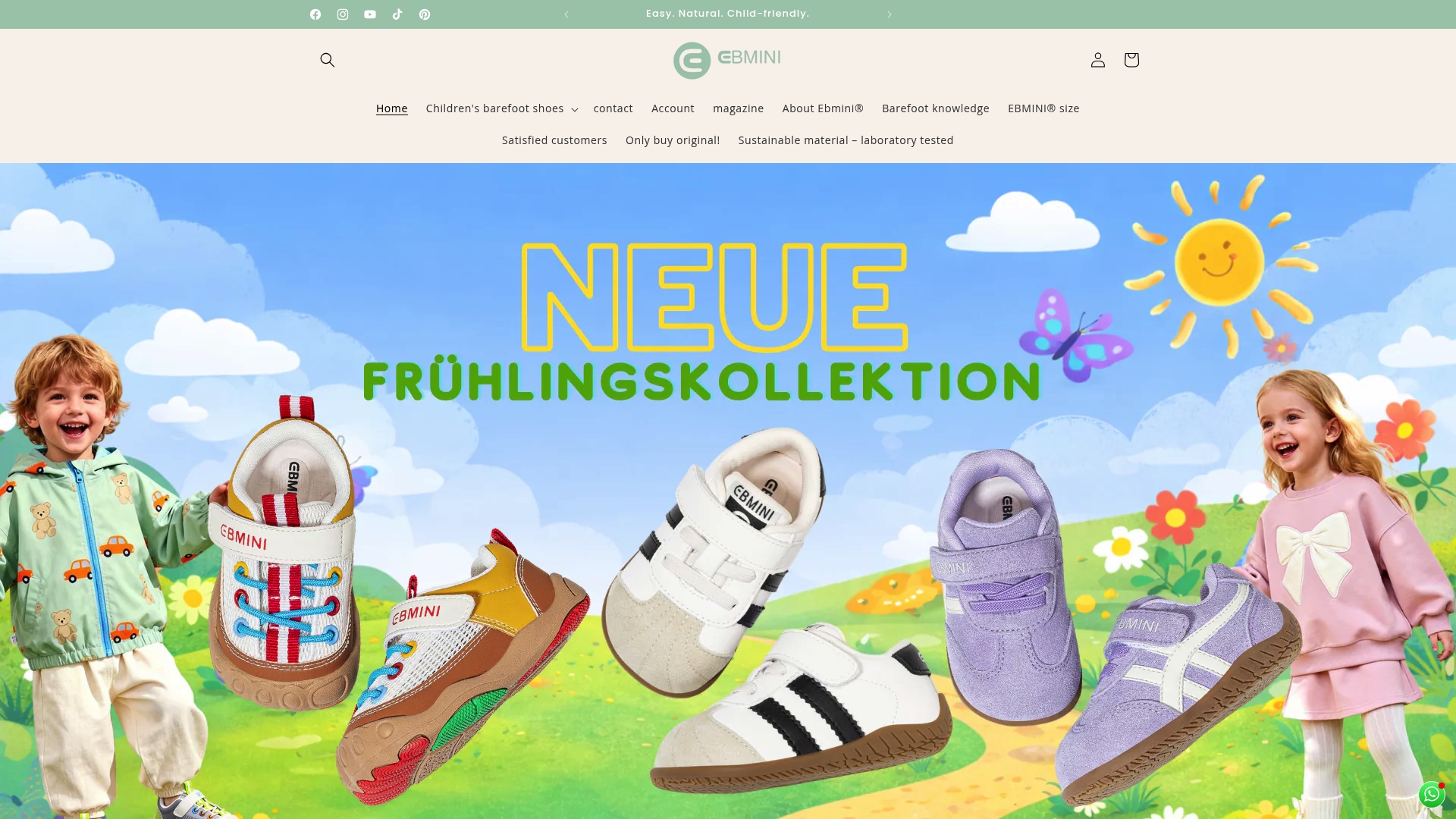
The range includes models for children aged 1 to 10, including all-weather shoes, sneakers, and sandals. All shoes are waterproof, non-slip, and designed for daily use. Those looking for barefoot-like children's shoes for their child will find a wide selection at Ebmini with detailed size advice and customer reviews. For summer, light barefoot sandals are also available, offering maximum freedom of movement with secure support.
FAQ
What are sensory children's shoes?
Sensory children's shoes are shoes with thin, flexible soles and a wide toe box that allow the foot to feel the ground and send proprioceptive signals to the brain.
How much space does a children's shoe need at the front?
The guideline is 12–17 mm of space in front of the longest toe. This space allows the foot to work during rolling and provides room for growth for the next few months.
From what age are sensory shoes useful?
Sensory shoes are useful from the first steps, i.e., from about 10–14 months. The earlier the foot learns to read the ground, the better balance and coordination develop.
How do I know when a children's shoe is too small?
If less than 10 mm of space remains in front of the longest toe, the child walks on tiptoes, or complains of pressure points, the shoe is too small. Removing the insole and placing it next to the foot is the easiest way to check.
Do sensory shoes replace barefoot walking?
No. Sensory shoes support natural foot development but are not a complete substitute for walking barefoot on natural surfaces like grass, sand, or earth.


