

Summer Shoes for Children: UV Protection and Material Choice
Summer shoes for children with UV protection are defined as shoes made from materials with a high Ultraviolet Protection Factor (UPF) that protect children's sensitive skin from sun damage while promoting healthy foot development. The market standard is UPF 50+, achieved through a material blend of 82–90% recycled polyester and 10–18% elastane. When parents look for the right summer shoes for children, they need to understand the material. Because UV protection, breathability, and sole flexibility are not extras, but basic requirements for healthy children's feet in summer.
Which materials are suitable for children's summer shoes with UV protection?
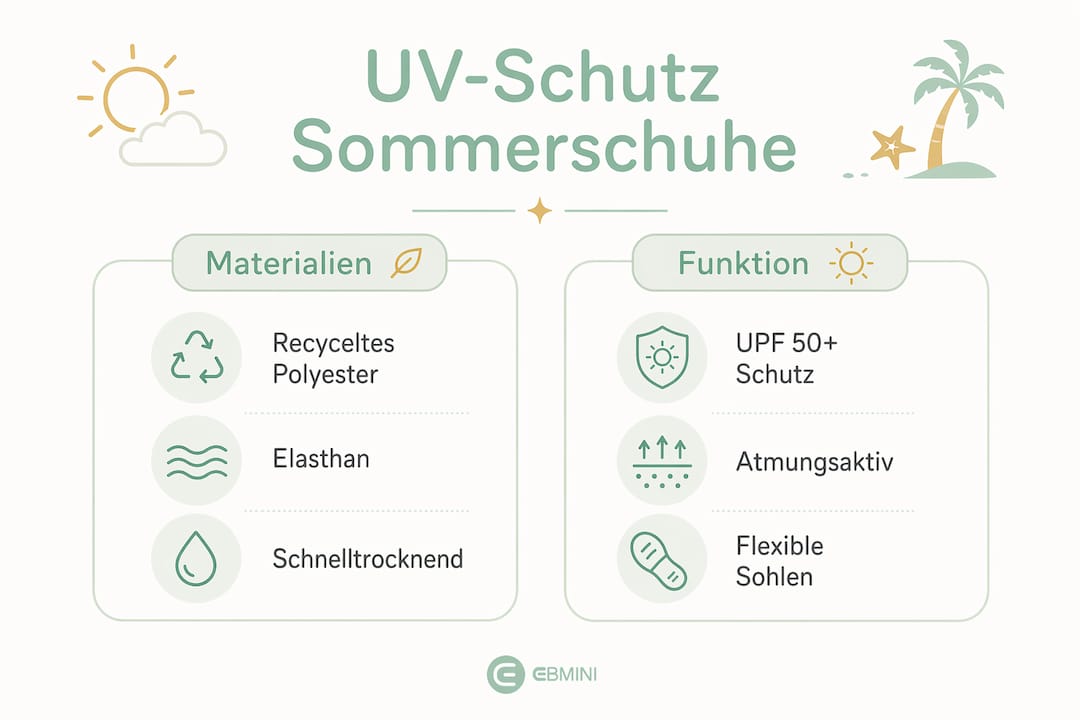
The heart of every UV-protective summer shoe is the upper material. Recycled polyester with elastane is now the standard because it achieves UPF 50+, dries quickly, and adapts to the foot shape. Sustainability plays a growing role: recycled materials will be the preferred raw material for leading manufacturers by 2026.
Not every material is suitable for every situation. Here is an overview of the most important options:
- Recycled polyester with elastane (UPF 50+): Offers the strongest UV protection, dries quickly, and is durable. Ideal for water shoes and beach shoes.
- Natural leather: Breathable and skin-friendly, regulates moisture well. No UV protection from the material itself, but comfortable for dry summer days.
- Technical mesh: Very airy, good for hot days. Offers little UV protection, but maximum ventilation.
- Cotton: Soft and skin-friendly, but slow-drying. Less suitable for summer shoes with UV protection requirements.
- Rubber and EVA (sole): Non-slip, lightweight, and flexible. EVA cushions well, rubber lasts longer and grips better on wet surfaces.
Pro Tip: When buying, pay attention to the exact material specifications in the product data sheet. A shoe with “UV protection” but no UPF rating often does not have a tested protection factor.
Quick-drying materials like recycled polyester usually dry in 15–30 minutes in the air. This prevents moist environments in the shoe, which promote skin irritation and blisters. This is a real advantage, especially for children who switch between water and sandpit.
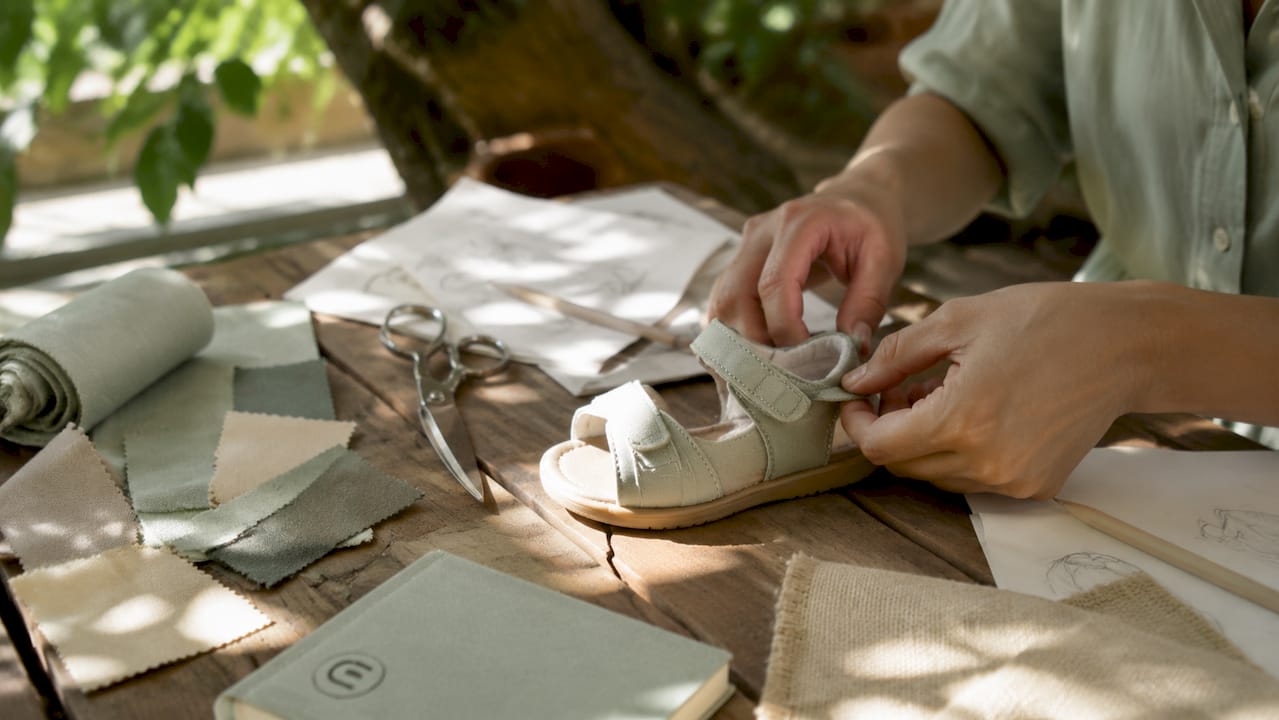
The material must also be breathable, flexible, and quick-drying to prevent overheating of children's feet and reduce blistering. These properties complement UV protection rather than replacing it.
How does UV protection in children's summer shoes work in practice?
The UPF factor indicates how much UV radiation a textile allows to pass through. UPF 50+ means that less than 2% of UV radiation reaches the skin. This sounds impressive. But the protection only applies to the skin areas actually covered by the material.
Open sandals and models with toe openings do not protect toes and insteps. Parents often underestimate this. Especially with toddlers who play outdoors for hours, toes and the top of the foot can quickly get sunburned.
How to ensure lasting UV protection:
- Choose the right fit: A shoe that is too tight stretches the material excessively. Stretched polyester-elastane loses its UV protection. The fit therefore not only protects the foot, but also the protective function itself.
- Clean gently: No dryer, no bleach. Hand washing or a gentle machine wash at a maximum of 30°C preserves the fiber structure.
- Rinse in cold water after use: Especially after saltwater or chlorine. Residues attack the material.
- Do not dry in direct sunlight: UV radiation degrades dyes and protective fibers. Drying in the shade extends the life of the UV protection.
- Avoid rough surfaces: Concrete and gravel abrade the upper material. This reduces the UPF value over time.
Pro Tip: Also apply sunscreen to toes, the top of the foot, and ankles, even if the child is wearing UV protection shoes. No shoe provides complete protection.
UV protection in textiles can quickly lose its effectiveness due to improper care and heavy use. Proper care is therefore not a minor matter, but a prerequisite for lasting protection.
What are the advantages of flexible and non-slip soles in sun protection summer shoes?
The sole determines safety and foot health. Flexible soles promote foot sensory perception and support natural foot development by allowing the foot to roll and grip when walking. Stiff soles block this movement and can hinder muscle development.
Non-slip properties are particularly critical in summer. Wet pool edges, hot stone tiles, and damp sand are dangerous surfaces for children. Rubber grips better on wet surfaces than EVA, but is heavier. EVA cushions well and is lighter, but is more suitable for dry summer days.
| Sole material | Slip resistance | Flexibility | Weight | Application area |
|---|---|---|---|---|
| Rubber | Very good | Medium | Medium | Wet surfaces, beach |
| EVA | Good | Very good | Light | Dry summer days, everyday life |
| Combined rubber and EVA | Very good | Good | Medium | All-round, summer |
- Sole thickness: Thin soles (3–5 mm) promote ground perception. Thicker soles cushion more, but reduce tactile sensation.
- Tread design: A good tread drains water and prevents slipping. Flat soles without a tread are risky on wet surfaces.
- Toe box: A wide toe box allows the toes to spread. This improves balance and stability, especially in toddlers.
- Freedom of movement: The shoe should leave about one centimeter of space at the front. Shoes that are too tight hinder foot development and stretch the material unnecessarily.
Experts recommend breathable materials combined with flexible, non-slip soles made of rubber or EVA for children's summer shoes. Together, these protect against injuries and promote healthy walking.
Care and use tips for children's UV protection summer shoes
Proper care maintains UV protection and significantly extends the life of the shoe. What many parents overlook: A shoe that is improperly cared for often loses its UPF value faster than it wears out.
How to care for UV protection summer shoes properly:
- Rinse in cold water after every use. Salt, chlorine, and sand attack the fibers. A short rinse is usually sufficient.
- Allow to dry in the shade. Direct sunlight degrades protective fibers and colors. A shady spot with air circulation is ideal.
- Hand wash or machine wash at 30°C. No dryer, no bleach. Both permanently destroy the fiber structure.
- Avoid rough surfaces. Concrete and gravel abrade the upper material. UV protection shoes are not designed for climbing on rocks.
- Choose the right size and check regularly. Children's feet grow quickly. A shoe that is too small stretches the material excessively and weakens UV protection.
Pro Tip: Buy UV protection shoes with a little extra room, but no more than one centimeter. Too much room leads to chafing and a poorer fit.
The correct shoe size and fit are crucial so that the UV protection material is not overstretched and long-term protection is maintained. This applies especially to toddlers, whose feet can change significantly within a few months.
Which UV protection summer shoes do experts recommend for different age groups?
The choice of the right model depends heavily on age. Toddlers need different support than school children. And material requirements shift with the activity level.
Children from 1 to 3 years:
- Closed sandals offer better support and protect the entire foot surface, including toes and instep.
- Velcro fasteners allow for easy on and off, even for small children's hands.
- Breathable materials like leather or mesh are recommended, as toddlers have little control over their activity and sweat quickly.
- Flexible soles with a good tread are mandatory because toddlers are still learning to walk and build balance.
Children from 4 to 7 years:
- Lighter models with more open designs are possible, as long as the upper material offers UPF 50+.
- Healthy summer shoes for this age group combine freedom of movement with sufficient protection.
- Quick-drying materials are important because children at this age actively switch between water and dry areas.
- A wide toe box supports natural foot development, which is not yet complete at this age.
Children from 8 to 10 years:
- More open sandals are possible, but sunscreen on uncovered skin areas remains mandatory.
- The weight of the shoe plays a greater role because children at this age cover longer distances.
- Non-slip soles remain important, especially for activities near water or on uneven terrain.
- Toe protection options like closed toe boxes protect against injuries while playing.
Experts emphasize the balance between support and flexibility in children's sandals, especially for toddlers, to promote healthy foot development. This applies to all age groups, even if the weighting shifts.
Key Takeaways
UV protection summer shoes for children are only effective if the material has UPF 50+, the fit is correct, and care is consistent.
| Topic | Details |
|---|---|
| Material Standard 2026 | Recycled polyester with elastane (UPF 50+) is the market standard for UV protection summer shoes. |
| Know Protection Limits | Open sandals do not protect toes and insteps; sunscreen is still necessary even with UV protection shoes. |
| Sole Selection | Rubber or EVA with a good tread protect against slipping on wet and hot surfaces. |
| Care Maintains Protection | No dryer, no bleach, no direct sunlight when drying; rinse after every use. |
| Age-Appropriate Choice | Toddlers need closed models with Velcro fasteners; lighter designs are possible from 4 years of age. |
What I've learned after years with children's shoes
Many parents buy UV protection summer shoes and think the job is done. That's not true. The shoe only protects what it covers. And it only protects as long as the material is intact.
What truly surprised me after years with barefoot shoes for children: Most damage to UV protection does not come from the sun, but from improper care. A shoe that regularly ends up in the dryer or is cleaned with bleach often loses its UPF value after just a few weeks. You can't tell that from the shoe.
I've also learned that parents often buy UV protection as a main feature and neglect sole flexibility and fit. Both are at least as important for foot health. A shoe with UPF 50+, but a stiff sole and a toe box that is too narrow, harms foot development more than it helps.
My honest advice: Buy a shoe that is first designed for healthy foot development. Wide toe box, flexible sole, light weight. Then check if the material offers UPF 50+. And still apply sunscreen to all uncovered areas. This is not being overly cautious. This is the only way that truly works.
Sustainable materials like recycled polyester are no longer just a marketing promise. They will be standard by 2026 and last just as well as conventional materials in everyday use, often even longer.
— Ebmini
Healthy barefoot shoes for summer from Ebmini
Ebmini develops barefoot shoes for children that combine foot health and sun protection. The models feature wide toe boxes, flexible soles, and light, breathable materials that are designed for active summer days.

Whether for the beach, the playground, or everyday life: Ebmini's barefoot sandals combine natural foot movement with the protection children's feet need in summer. Those looking for light, healthy summer shoes will find models for all age groups from 1 to 10 years in the Ebmini collection for children. Size advice and customer service are available directly on the website.
FAQ
What does UPF 50+ mean for children's shoes?
UPF 50+ means that the material allows less than 2% of UV radiation to pass through. It is the highest protection standard for UV protective clothing and shoes.
Do open sandals with UV material fully protect feet?
No. UV protective clothing and shoes only protect the covered skin areas. Toes and insteps remain unprotected in open models and require sunscreen.
How often should I replace children's UV protection summer shoes?
A fixed period cannot be specified because wear and care vary greatly. Regularly check whether the material is stretched or damaged, as this noticeably reduces the UPF value.
Which sole is better for wet surfaces: rubber or EVA?
Rubber grips better on wet surfaces and is more slip-resistant than EVA. EVA is lighter and more flexible, but is more suitable for dry summer days and everyday use.
At what age can children wear more open sandals?
From about 4 years of age, lighter and more open models are possible because children then walk more confidently and react better to their surroundings. For toddlers aged 1 to 3 years, closed models remain the safer choice.


