

Summer shoes: Preventing chafing in children
Every time your child takes off their shoes after a long summer's day, you risk overlooking something: red spots, small blisters, or irritated skin on their heels and toes. The tricky thing is that many children don't report chafing themselves. They simply keep playing. If you want to prevent summer children's shoes from chafing, you must act proactively and not wait for complaints. This guide shows you the most common causes, specific protective measures, and what you should really pay attention to when buying children's shoes for the summer.
Table of Contents
- Key Takeaways
- Why Summer Shoes Chafe Children's Feet
- What Makes Good Summer Shoes for Children
- Practical Tips to Prevent Chafing in Everyday Life
- Recognizing Pressure Points and Chafing and Responding Correctly
- Buying the Right Summer Shoe
- My Experience with Children's Feet and Summer Shoes
- Healthy Summer Shoes from Ebmini for Your Child
- FAQ
Key Takeaways
| Point | Details |
|---|---|
| Children rarely report chafing | Active inspection of feet after taking off shoes is essential, not just when there are complaints. |
| Fit is crucial | Children need 10 to 15 mm of toe space and regular size checks every 3 to 4 months. |
| Material choice makes a difference | Breathable materials like leather and textiles significantly reduce sweat and thus the risk of chafing. |
| Breaking in prevents blisters | New shoes require gradually shorter wearing times before they are worn all day. |
| Barefoot walking is the best prevention | As much barefoot time as possible strengthens the foot and reduces reliance on footwear. |
Why Summer Shoes Chafe Children's Feet
Chafing rarely results from a single mistake. A combination of friction, pressure, and moisture makes the difference between a comfortable shoe and one that causes blisters after two hours. Especially in summer, sweat is an aggravating factor. Moist skin chafes more easily than dry skin.
Here are the most common causes that parents often underestimate:
- Incorrect fit: Shoes that are too tight press sideways against the toes and heel. Shoes that are too wide allow the foot to slip, causing friction at the heel.
- Non-breathable materials: Synthetic plastics significantly increase the risk of blisters because they trap sweat instead of wicking it away.
- Worn shoes: Worn soles and abraded inner linings increase the risk of chafing, just like incorrect sizes.
- Wearing too quickly: New shoes worn all day immediately don't have time to adapt to the foot.
- No active feedback from the child: Children often don't notice pressure points because children's feet are soft and malleable. They adapt to the shoe instead of raising an alarm.
The last problem is particularly important. Children's feet adapt to shoes, which can cause long-term deformities without the child ever complaining of pain. So don't wait for complaints. Look for yourself.
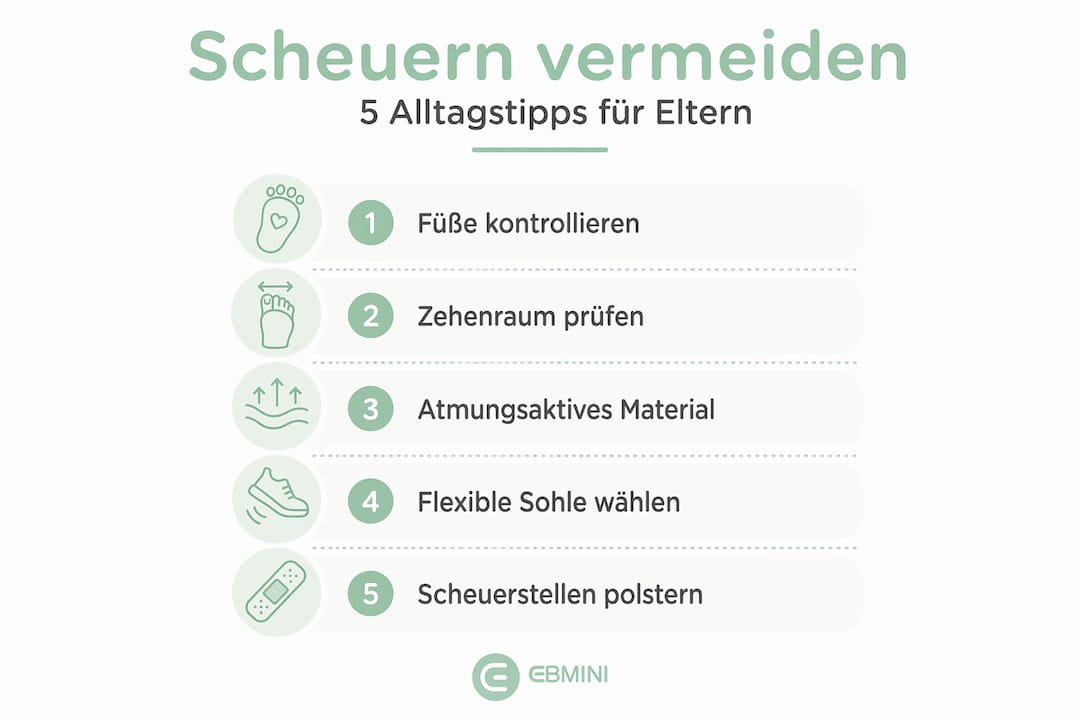
Pro Tip: After every longer outing, check your child's feet immediately after they take off their shoes. Redness is most visible in the first few minutes before it subsides.
What Makes Good Summer Shoes for Children
Not every shoe sold in summer is a good shoe for children's feet. Finding summer shoes without chafing means paying attention to very specific features that many manufacturers unfortunately omit.
Toe Room and Fit
Children need 10 to 15 mm of toe room in the shoe, and toddlers learning to walk need between 5 and 10 mm. This is more than most parents suspect. A thumb's width between the longest toe and the tip of the shoe is a rule of thumb. In addition, there's the width: a shoe that is too narrow squeezes the toes together and creates lateral friction.
It's also important to note: foot length does not match internal shoe length, because manufacturers measure differently. If in doubt, pull out the insole and place your child's foot on it. This way you can immediately see if the length and width fit.
Materials and Breathability
| Material Type | Properties | Recommendation |
|---|---|---|
| Leather (natural) | Breathable, molds to the foot, durable | Very suitable |
| Textile fabric | Lightweight, breathable, washable | Well suited |
| Synthetic leather / PVC | Air-tight, traps sweat | Not recommended |
| Rubber (sole) | Flexible, non-slip | Good as sole material |
Breathable shoes are not a luxury, but a necessity. Expert recommendations show that breathable shoes actively support foot health by wicking away moisture and regulating skin temperature.
Sole and Heel Support
A flexible sole that bends with the foot is significantly superior to a stiff plastic bottom. Barefoot-like shoes with thin, flexible soles follow the natural movement of the foot, thereby reducing friction points. At the same time, a child's shoe needs enough heel support so that the foot does not slip. Not tight like a corset, but stable enough to guide the foot.
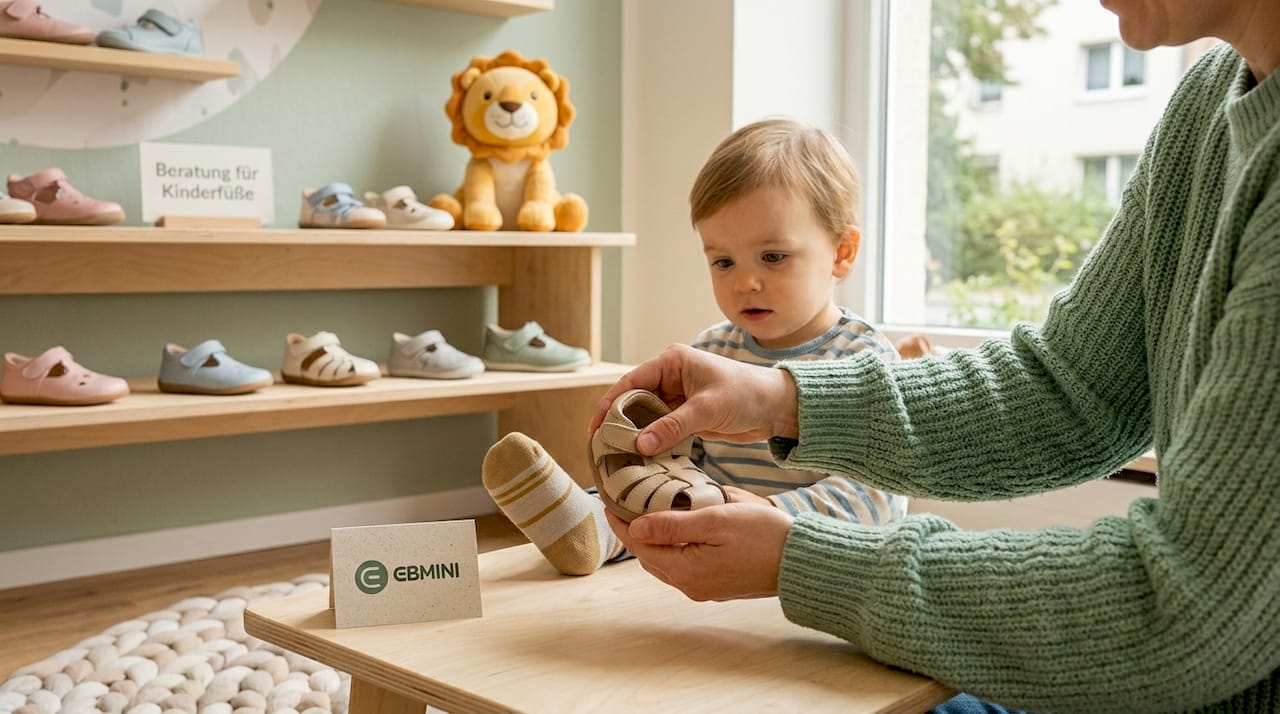
Pro Tip: Bend the shoe in the middle at the store. A good children's shoe should bend easily but not simply collapse. If it's board-stiff or flimsy like a rag, don't buy it.
Those looking for comfortable summer shoes that meet all these criteria often find a very good solution in barefoot sandals for children. A wide toe box, flexible sole, and breathable materials are not an exception there, but the standard.
Practical Tips to Prevent Chafing in Everyday Life
Even the best shoe can chafe if used incorrectly. These measures will help you actively prevent chafing.
-
Measure feet regularly. Children's feet grow quickly. Remeasure every 3 to 4 months, always in the afternoon or evening, when feet are slightly swollen. Feet measured in the morning can appear up to half a size larger in the afternoon.
-
Break in shoes gradually. On the first day, wear new shoes for only one hour. On the second day, two hours. Increase gradually. Gradual breaking-in is the most effective method to prevent blisters from the start.
-
Use protective insoles for children. Stick gel pads or blister plasters on typical friction points such as the heel, little toe, or ball of the foot before wearing the shoe. Applying blister plasters preventively and only removing them when they come off on their own protects the skin and promotes healing at the same time.
-
Choose the right socks. Breathable socks made of bamboo or cotton without bothersome seams at the toe significantly reduce friction. A wrinkle-free fit is just as important as the material itself.
-
Plan barefoot walking. Let your child walk barefoot as often as possible, indoors, in the garden, on the beach. Experts recommend barefoot walking as the healthiest form of foot development. Children who walk barefoot a lot develop stronger foot muscles and cope well with less shoe contact. Practical tips on this can also be found in this guide to barefoot walking.
-
Check shoe condition. Worn inner linings and worn-through soles chafe just like incorrect sizes. Regularly look inside the shoe, not just at the bottom of the sole.
Pro Tip: For new sandals, stick a small piece of soft foam tape to areas that might rub at the ankle or heel. It costs a few cents and prevents hours of pain.
Recognizing Pressure Points and Chafing and Responding Correctly
The biggest problem with children is not the chafing itself, but that it often goes unnoticed. Children continue to play, even if their feet are burning. Therefore, active inspection by you as a parent is indispensable.
Look out for the following signs:
- Redness on the heel, ball of the foot, little toe, or side of the foot immediately after taking off shoes.
- Moist spots on socks, especially on the heel and ball. This indicates where friction occurs.
- Restlessness or hesitation when putting on shoes. If your child suddenly doesn't want to wear certain shoes anymore, it's often a silent cry for help.
- Visible blisters or irritated skin that feels warm.
If you discover such signs, proceed as follows:
First: Take off shoes immediately. Avoid wearing them a second time on the same day if possible. Clean and dry the skin, then protect it with a blister plaster as soon as the first signs of friction are visible. Never pop open blisters. This significantly increases the risk of infection.
If chafing occurs multiple times or repeatedly, you should generally check the shoe for fit, material quality, and the condition of the inner lining. If chafing recurs despite good shoes, a guide to foot health can help identify the cause. For persistent problems or signs of inflammation, medical advice is recommended.
Buying the Right Summer Shoe
Good purchasing decisions begin before you enter the store. Knowing what to look for means buying the right shoes faster and saving yourself multiple bad purchases.
- Measure in the afternoon. Feet are at their maximum daily size in the afternoon. Never measure in the morning for a purchase on the same day.
- Measure both feet. Most people have one foot that is slightly larger. Always buy according to the larger foot.
- Remove the insole. Place the shoe's insole on your child's foot. Does it fit? Then the shoe also fits in length and width.
- Pay attention to width. Many parents only focus on length. Narrow shoes in width chafe at the ball of the foot and the little toe, even if the length is correct.
- Note WMS certification. The Width-Measuring-System labels shoes according to width. Shoes with WMS certification are specifically tested for fit.
- Plan for sustainability. Well-preserved children's shoes can be passed on if the fit and inner lining are still intact. Used shoes with a good inner lining are better than new shoes made of poor material.
Comprehensive information on choosing the right shoes can be found in Ebmini's Children's Shoe Size Checklist.
Tips for barefoot shoes are particularly worthwhile in summer: Barefoot shoes naturally have a wide toe box, flexible soles, and no hard inner seams. This makes them summer children's shoes that demonstrably promote foot health. International experts also confirm that foot-friendly shoe features such as flexible soles and natural toe shape significantly reduce the risk of chafing.
My Experience with Children's Feet and Summer Shoes
Over the past few years, I've spoken with many parents who have all had similar experiences: they buy a good-looking shoe in the right size, and despite that, after a few weeks, the child complains of pain, or even worse, doesn't complain at all, and you only discover the blisters during bath time.
What I consistently observe is that the most common mistake is not the size, but the width. Parents check the length, press on the tip of the shoe, and nod contentedly. Meanwhile, the shoe is squeezing the side of the little toe because the toe box is too narrow. This doesn't show up immediately, but after a long day of play, the area is red.
My honest opinion: Many conventional summer shoes for children are simply too stiff, too narrow, and too heavy. They look solid but are not a good choice for a child's developing foot. Barefoot shoes may sound radical to some parents at first, but they simply follow the logic: less shoe means more freedom of movement, fewer friction points, and better foot development.
What I really recommend: Actively check your child's feet, at least once a week in summer. Not because you need to be suspicious, but because children are simply too busy playing to report pain. As a parent, you are the only reliable control mechanism.
— Ebmini
Healthy Summer Shoes from Ebmini for Your Child
If you are looking for summer shoes that are designed from the ground up to make chafing unlikely, Ebmini's barefoot shoes for children are worth a look.
Ebmini develops ultralight, flexible shoes with a wide toe box, thin sole, and breathable materials. All models follow the barefoot principle: maximum freedom of movement, minimal friction. For summer, Ebmini offers both light barefoot sandals and barefoot sneakers that are equally suitable for the playground, beach, and everyday life. Specially adapted shoes for first steps are available for toddlers learning to walk. Quality, foot health, and comfort are not contradictory at Ebmini.
FAQ
Why do new children's shoes chafe so often?
New shoes have not yet adapted to the foot. Hard material at the heel and ball of the foot creates friction, especially during long wearing times. Gradually breaking them in over several days reliably prevents blisters.
How do I know if summer shoes are too tight for my child?
After wearing, check the feet for redness on the toes, ball of the foot, and heel. A simple test: Place the removed insole on your child's foot and check if the foot shape extends beyond the sides.
What are protective insoles for children and when do I need them?
Protective insoles are gel pads or soft padding that are used at friction points such as the heel or ball of the foot. They are suitable both for prevention with new shoes and for protecting already irritated areas.
How often should I check my child's shoe size?
Experts recommend checking the size every 3 to 4 months, as children's feet grow very quickly. Measure in the afternoon, when the feet are at their daily maximum, and always check both feet.
Are barefoot shoes really better against chafing?
Barefoot shoes have a wide toe box, no hard inner seams, and flexible soles. This significantly reduces typical friction points. They also promote natural foot development, making them a good choice for summer shoes.


