

Reselling kids' shoes: When does it make sense?
Reselling children's shoes makes sense when the shoes are of high quality, have been worn minimally, and show no visible deformities or uneven wear. Children's feet grow quickly. This means shoes are often outgrown before they are truly worn out. Regularly checking the fit and knowing the right time to resell can save the family budget and also do good for other children. This guide shows when reselling children's shoes really makes sense, which types of shoes are suitable, and how to successfully sell them online.
When are children's shoes too small, and when should you resell them?
Children's feet grow particularly fast during the first years of life. Between the ages of one and five, a foot can grow by up to two sizes per year. After that, growth slows down but remains noticeable until the age of ten.
The crucial guideline is a margin of 10–15 mm between the tip of the toes and the end of the shoe. This distance gives the foot enough room to roll naturally without the child's foot sliding inside the shoe. If the margin falls below 10 mm, the shoe is too small.
Concrete signs that children's shoes no longer fit:
- The child stumbles more often than usual or complains of pain after walking.
- Red pressure marks or blisters are visible on toes and heels.
- Toes are visibly pressing against the upper material of the shoe.
- The child takes off their shoes themselves without being asked.
Pro-tip: Check the fit every 6–12 weeks, not just when buying new shoes. Children often don't feel pain when shoes become too tight because growth is gradual.
The ideal time for resale is precisely when the margin falls below 10 mm and the shoe is still in good condition. Waiting too long risks greater wear and tear and a lower resale value. Selling too early means losing out on wear potential. The 10–15 mm corridor is your guide.
Which types of children's shoes are particularly suitable for resale?
Not every children's shoe is equally suitable for resale. The decisive difference lies in the sole structure and the footbed.
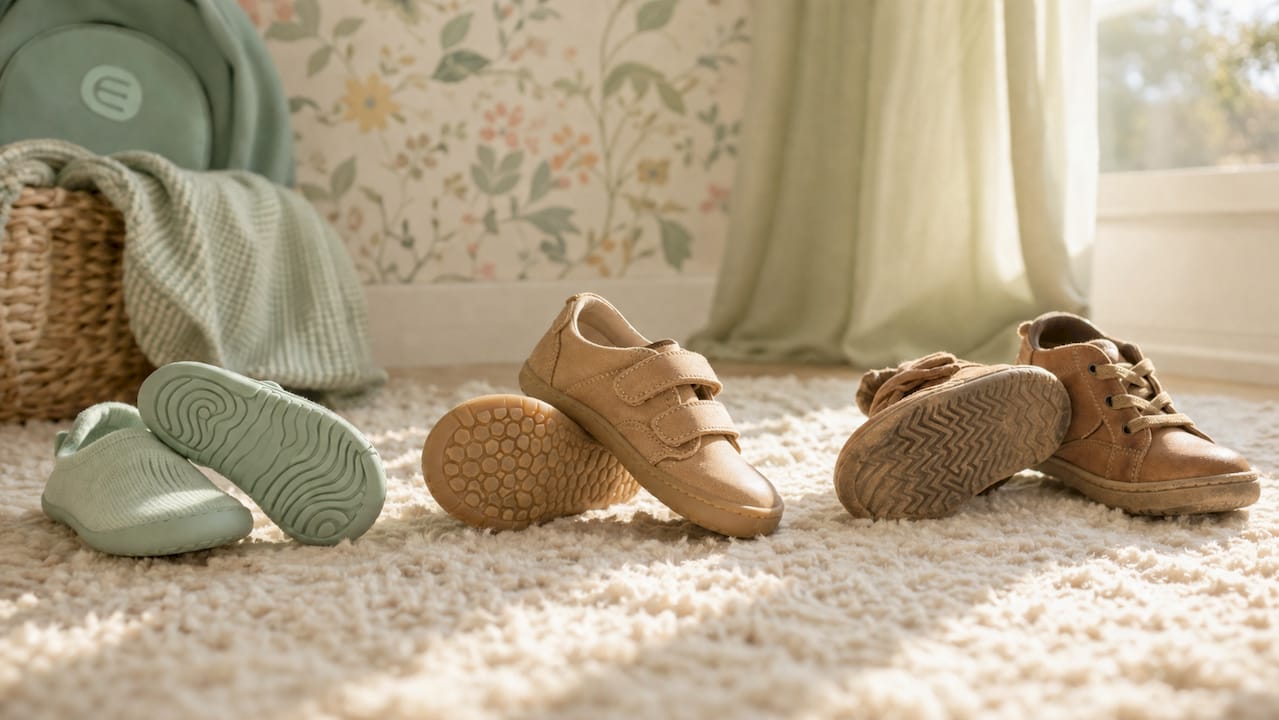
Conventional shoes with a molded footbed adapt over time to the individual gait pattern of the wearer. Deformed insoles can promote incorrect movement patterns in the next child. This is not a theoretical risk. It is the reason why orthopedists and podiatrists advise against passing on heavily molded shoes.
Barefoot shoes and minimalist shoes behave differently. They have a flat, flexible sole without a pre-formed footbed. This means they do not store an individual gait pattern. Barefoot shoes are therefore significantly better suited for resale than conventional shoes with a support structure.
| Shoe type | Resale suitability | Reasoning |
|---|---|---|
| Barefoot shoes / Minimalist shoes | High | No individual sole molding |
| Conventional shoes without footbed | Medium | Minimal gait imprint, but check sole |
| Shoes with molded footbed | Low | Store individual gait patterns |
| Orthopedic insole shoes | Not recommended | Highly customized to one person |
Pro-tip: When buying new children's shoes, consciously look for models with a flat sole and wide toe box. They are not only healthier for the foot but also retain a higher value when resold.
According to a study, 69.4% of children wear shoes that are too short. This shows how often shoes are worn for too long before parents react. Those who check early and sell early have better chances in the used market.
How can you increase the success of selling used children's shoes online?
Good photos are the most important factor in online sales. Poor images cost more sales than an excessively high price. Here's a proven approach:
- Take at least four photos: Outside, inside, sole, and insole. Buyers want to see the condition from all angles.
- Choose a neutral background: White or light grey surfaces make the shoes stand out clearly. Carpets or wooden floors are distracting.
- Use natural daylight: Artificial light creates shadows and distorts colors.
- Write an honest description: Size, brand, duration of wear in months, visible signs of use, and condition of the sole should be included in every listing.
- Set a realistic selling price: Use the "Sold" filter on platforms to see what comparable shoes actually fetched. Not what others are asking, but what buyers have paid.
Pro-tip: Optimized listings sell on average within 7–14 days. If your item is still online after two weeks, delete the listing and recreate it. This so-called relisting will bring you back to the top of search results.
Sales bundles work well for children's shoes. Offering two pairs of similar size together saves the buyer shipping costs and you effort. Quick responses to inquiries improve your ratings. Good ratings increase the visibility of your future listings. This is a cycle that pays off.
What should parents look for when assessing the condition of shoes before selling?
Before selling, every shoe needs an honest condition check. This protects the next child and your credibility as a seller.
You should systematically check the following points:
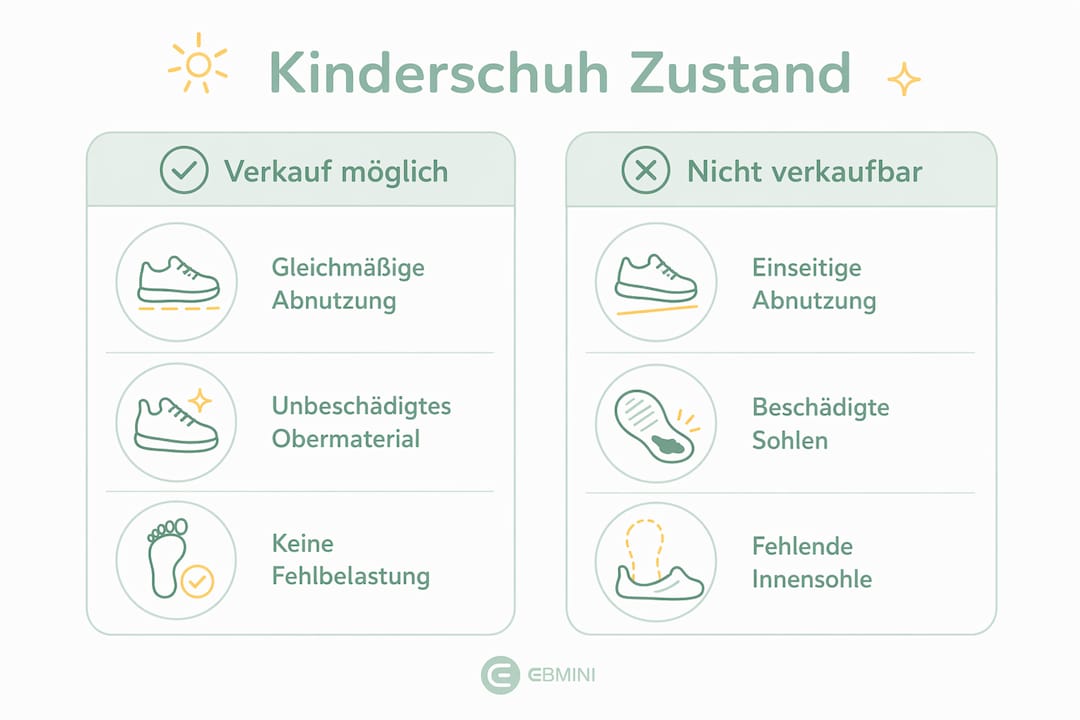
- Sole wear: Is the wear even or uneven? Uneven wear indicates an incorrect load pattern. You should not resell such shoes, as they can promote misalignments in the next child.
- Insole: Is it discolored, deformed, or heavily sweaty? A heavily deformed insole is a disqualifying criterion. However: The insole can often be replaced to make the shoe marketable again. New insoles cost little and make a big difference.
- Upper material: Tears, detachments, or severe discolorations in the upper material significantly reduce the value. Minor signs of wear are normal and acceptable.
- Velcro fasteners and laces: Do they still function reliably? A defective Velcro fastener is a common but easily overlooked defect.
| Check item | Can be sold? | Note |
|---|---|---|
| Even sole wear | Yes | Normal wear and tear |
| Uneven sole wear | No | Incorrect load stored |
| Deformed insole | Conditional | Consider replacing insole |
| Tears in upper material | No | Structural damage |
| Defective fastener | Conditional | Repair possible, adjust price |
The quality of the shoe's condition not only determines the price but also the foot health of the next child. Those who check honestly act responsibly.
Key insights
Reselling children's shoes makes sense if they are barefoot shoes or lightly worn shoes without improper loading and with intact insoles.
| Topic | Details |
|---|---|
| Optimal timing | Sell as soon as the toe space falls below 10 mm and the shoe is still in good condition. |
| Suitable shoe types | Barefoot shoes and minimalist shoes are best, as they do not store gait patterns. |
| Condition check | Honestly check the sole, insole, and upper material before selling. |
| Online selling tips | Four photos, honest description, and realistic prices speed up sales. |
| Fit control | Check every 6–12 weeks to not miss the right selling point. |
What I've truly learned after years with children's shoes
Many parents first think of money when reselling. That's understandable. But the real question is different: Is this shoe good enough for the next child?
At Ebmini, we see this every day. Parents buy barefoot shoes because they understand that a wide toe box and a flexible sole allow the foot to develop better than a stiff, molded model. And precisely these shoes are the ones that can be easily passed on after being worn. This is no coincidence. It is the result of a shoe philosophy that respects the foot instead of shaping it.
What always surprises me: Many parents underestimate how much a deformed footbed can cause damage. A shoe that has stored another child's gait pattern is not a bargain. It is a risk. Knowing this means checking more carefully before buying and selling more honestly before selling.
My honest advice: It's better to buy a high-quality barefoot shoe, wear it briefly, and resell it promptly. That's more sustainable than three cheap shoes that fall apart after a month and no one wants anymore.
— Ebmini
Ebmi barefoot shoes: healthy to wear, good to resell
Investing in the right shoe quality from the start offers double benefits. First, through healthier children's feet, and second, through a better resale value.

The barefoot shoes from Ebmini are ultra-light, flexible, and have a wide toe box that allows the foot to remain in its natural shape. Because the sole is flat and without a pre-formed footbed, they do not store an individual gait pattern. This makes them one of the few types of shoes that can be easily passed on after being worn. Those who value foot health and sustainability will find models for every season and occasion in the Ebmini range.
FAQ
When is the best time to sell children's shoes?
The best time is when the space between the toe tip and the end of the shoe falls below 10 mm and the shoe is still in good condition. Checking every 6–12 weeks ensures you don't miss this moment.
Are used children's shoes safe for health?
That depends on the type of shoe. Barefoot shoes with flat soles are safe because they do not store a gait pattern. Conventional shoes with a molded footbed can promote misalignments in the next child.
How do I know if children's shoes are still suitable for sale?
Check sole wear, insole, and upper material. Even wear is normal. Uneven wear or a severely deformed insole are disqualifying criteria for resale.
How do I set the right price for used children's shoes?
Use the "Sold" filter on selling platforms to see what comparable shoes have actually fetched. Unrealistic prices significantly delay the sale.
Can I replace the insole to make the shoe marketable again?
Yes. A new insole can replace a deformed or discolored insole and bring the shoe back into a marketable condition. This is especially worthwhile for high-quality models.


