

Winter Boots for Kids: How to Evaluate Thermal Performance
The thermal performance of children's winter boots depends on four key factors: insulation material, waterproofing, fit, and activity level. No single shoe will provide the same warmth under all conditions. The testing standard ISO 20877:2011 defines how cold protection is measured, but even certified shoes deliver different results depending on the child. Understanding the most important factors for children's winter boots will lead to much better decisions on your next purchase.
Which materials determine the thermal performance of winter boots?
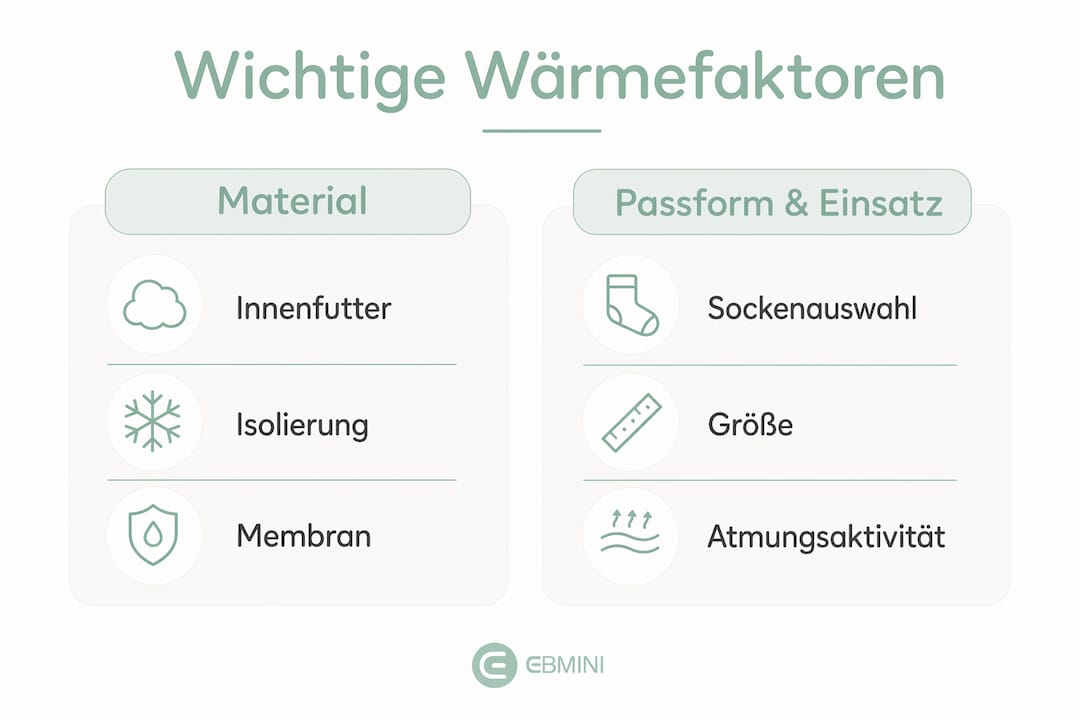
The lining is the most important factor for the thermal insulation of children's winter boots. Virgin wool and lambskin naturally regulate moisture and maintain foot temperature even when wet. Synthetic insulation materials like PrimaLoft or Heatseeker offer similar warmth with less weight and dry faster after contact with water.
Waterproof membranes are not a luxury but a basic requirement. Damp lining almost completely loses its insulating ability. A shoe without a membrane that absorbs snow will hardly provide any warmth. Modern technologies like Gore-Tex combine waterproofing with breathability, allowing sweat to escape.
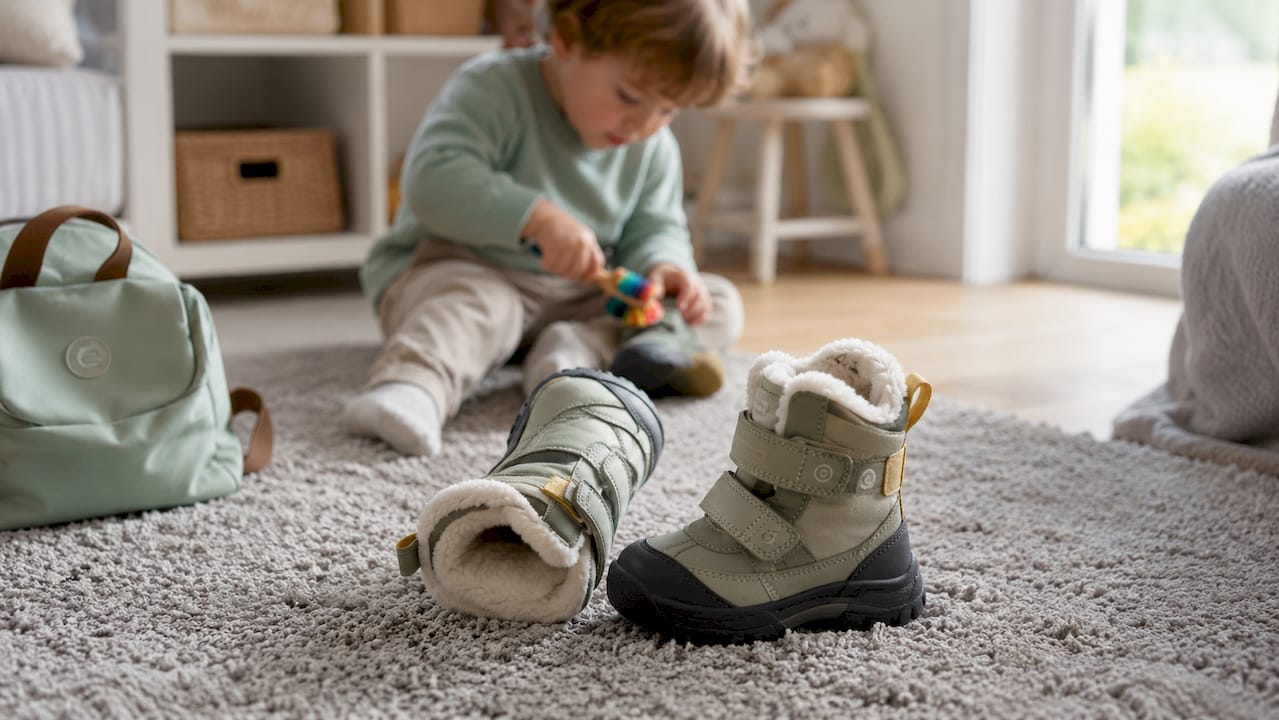
The sole is often overlooked. Thin or low-quality soles become brittle in the cold and conduct cold directly from the ground into the shoe. A thick, cold-resistant outsole with insulation underneath is just as important as the lining.
Here's an overview of common materials:
- Virgin wool and lambskin: Natural moisture regulation, very warm, but slower to dry
- PrimaLoft: Synthetic, lightweight, retains warmth even when wet
- Heatseeker: Similar to PrimaLoft, often used in everyday models
- Fleece: Inexpensive, lightweight, but less effective in extreme cold
- Gore-Tex and comparable membranes: Waterproof and breathable, prevents moisture build-up
Pro-Tip: When buying, check if the lining is removable. Removable linings can be dried separately and retain their insulating properties much longer.
How does the intended use influence the choice of the right winter boots?
Not every winter day is the same, and not every child needs the same shoe. Snow boots with thick insulation offer the best protection in very cold conditions and deep snow. For the walk to school or the playground, an everyday model with moderate lining is perfectly sufficient.
Too much insulation is actually a problem for active children. Excessive insulation leads to sweating during a lot of movement, and wet feet feel colder than dry ones. This sounds paradoxical, but it can be explained physically: moisture conducts heat away much faster than dry air.
Here's how to categorize the intended use:
- School run and everyday use at 0 to -5 °C: Moderately insulated shoe with a breathable membrane, no heavy snow boot needed
- Playground and longer outdoor stays: A bit more insulation, waterproof outer materials, non-slip sole
- Deep snow and winter hikes: Snow boots with 200 g insulation or more, high shaft, reinforced waterproofing
- Transitional periods with changeable weather: Lighter models with vapor permeability and water-repellent treatment
Breathability is often underestimated. A shoe must not only be warm but also moisture-regulating to truly prevent cold feet. Ignoring this means buying a shoe that feels warm in the store but fails on the way to school.
What role do fit and sock selection play in thermal comfort?
A shoe that is too tight warms less effectively than one that fits well. Shoes that are too tight restrict blood circulation, and without good circulation, even the best materials are ineffective. The shoe should be 12–15 mm longer than the foot to allow enough space for an insulating layer of air.
This air layer is not accidental. It is the actual thermal buffer between the foot and the outside world. If there is no free space, this buffer is eliminated. This is especially true when children wear thick winter socks.
What to pay attention to regarding fit and socks:
- Shoe size: At least 12 mm of space at the toe, measure with a winter sock when trying on
- Sock selection: Wool or merino socks regulate moisture and provide warmth even when slightly wet
- No cotton socks in winter: Cotton retains moisture and actively cools the foot
- Consider sock thickness: Thick socks require more space in the shoe; otherwise, pressure points will occur
Wool socks significantly improve thermal performance during longer stays in the snow compared to an additional insulation layer in the shoe. This is a point that many parents underestimate when buying.
Pro-Tip: Always have your child try on the shoe with the winter sock they will actually wear. A shoe that fits without socks may be too tight with thick wool socks and restrict blood circulation.
If you want to further improve thermal comfort, you can consider interchangeable insoles. They improve the fit and can noticeably increase the insulating effect in the shoe.
How does care influence the thermal performance of winter boots?
Proper care maintains a shoe's insulating ability throughout the season. The most common mistake: placing shoes on the heater after a wet day. Direct heat causes natural fibers in the lining to clump together. Clumped natural lining permanently loses its ability to store heat.
The correct method is simple: open the shoes, remove the insoles, and let them air dry at room temperature in a well-ventilated area. This takes longer but protects the material structure.
The following care points make a difference:
- Drying: Always at room temperature, never on the heater or in the dryer
- Cleaning: Wipe the outer material with a damp cloth, no aggressive cleaning agents
- Waterproofing: Renew water-repellent treatment after each cleaning to maintain membrane function
- Lining: Regularly check for odor and structure, wash separately if necessary
Low-quality shoes under 25 euros often offer poor insulation and lighter soles. This not only leads to cold feet but also faster wear and tear. A mid-range price level is realistic for shoes that last a whole winter season and stay warm.
More about the correct care of children's winter boots is explained in detail in the guide to children's shoes in winter.
How to correctly interpret temperature ratings for winter boots?
Temperature ratings indicate the outside temperature down to which a shoe provides warmth. They are not an absolute value but a guideline according to ISO 20877:2011. This means a shoe rated down to -20 °C will keep warm under laboratory conditions up to this temperature, not necessarily in everyday use.
Individual factors significantly change the result. An active child running on the playground needs less insulation than a child sitting still in a sled. Clothing, socks, and duration of activity all play a role.
| Temperature Rating | Typical Use | Note |
|---|---|---|
| 0 to -5 °C | School run, everyday use in mild winter | Often sufficient for active children |
| -10 to -15 °C | Playground, longer outdoor stays | Good all-rounder for Central European winters |
| -20 °C and below | Deep snow, winter hikes, very cold regions | Suitable for Scandinavia or high mountains |
Temperature ratings are particularly useful when comparing children's winter boots: they allow for an objective classification of different models. When comparing two shoes, the rating can be used as a guide, but the planned use must always be considered.
Tests according to ISO 20877:2011 are the recognized standard in the industry. Manufacturers like Reima provide specific temperature limits for models like the Hallava Quicklock. These specifications help with comparison but do not replace one's own judgment about the child's activity and clothing.
Key Findings
The thermal performance of children's winter boots depends not only on the price but on the interplay of material, fit, care, and the actual use of the shoe.
| Topic | Details |
|---|---|
| Insulation Material | Virgin wool and PrimaLoft are the most reliable for warmth, membrane prevents heat loss due to moisture. |
| Fit and Space | 12–15 mm of space in the shoe ensures blood circulation and the insulating air layer. |
| Sock Selection | Merino wool regulates moisture better than cotton and noticeably improves thermal performance. |
| Care and Drying | Drying at room temperature preserves the structure of the lining and thus the insulating capacity permanently. |
| Temperature Ratings | ISO 20877:2011 provides comparative values, not guarantees; activity level and clothing determine the outcome. |
What I've truly learned after years with children's winter boots
Many parents buy the warmest shoe they can find and then wonder why their child still complains about cold feet. The problem is almost never the shoe itself. It lies in the combination: wrong socks, too tight a fit, or a shoe built for deep snow but worn daily on the way to school.
At Ebmini, we see this regularly in customer conversations. Parents invest in high-quality shoes but neglect their care. After six weeks of drying on the heater, even the best lambskin lining loses its effectiveness. This is not a material defect. It's a care error.
What I really recommend: Don't buy based on temperature ratings, but on the intended use. A child playing actively at the playground needs a breathable shoe with moderate insulation, not an expedition boot. And if you want to remain flexible during transitional seasons, you'll often find transitional models to be a better choice than heavy winter boots.
The most underestimated factor remains the sole. Thin soles conduct cold directly from the ground into the foot, no matter how good the lining is. Pay attention to sole thickness and cold resistance, not just the lining.
— Ebmini
Healthy Winter Boots for Children at Ebmini
Warm feet and healthy foot development are not mutually exclusive. Ebmini offers children's shoes based on the principles of barefoot walking: a wide toe box, flexible sole, and zero drop, so the foot can move naturally, even in winter.

The children's barefoot shoes from Ebmini are waterproof, ultralight, and designed for use in winter conditions. Non-slip soles and child-friendly materials ensure safety on slippery paths. For those who want to combine warmth and natural foot health, Ebmini's range offers models that provide both, without constricting the foot or hindering development.
FAQ
What truly makes a children's winter boot warm?
Thermal performance results from the interplay of insulation material, a waterproof membrane, and sufficient space in the shoe for an insulating layer of air. Without moisture protection, even the best lining loses its effectiveness.
What does a temperature rating of -20 °C mean for children's shoes?
The rating according to ISO 20877:2011 indicates the temperature down to which the shoe provides warmth under laboratory conditions. In everyday life, the result depends on the child's activity level, socks, and clothing.
Which socks are best suited for children's winter boots?
Merino wool or wool socks regulate moisture best and provide warmth even when slightly wet. Cotton socks retain moisture and actively cool the foot, making them unsuitable for winter.
How big should a children's winter boot be?
The shoe should be 12–15 mm longer than the child's foot. This space ensures blood circulation and maintains the insulating air layer, which is crucial for warmth.
How do I dry children's winter boots correctly?
After wearing, open the shoes, remove the insoles, and let them dry at room temperature in a ventilated place. Direct heat, for example on a heater, causes the lining to clump together and permanently destroys its insulating ability.


